Mission Support Memo:
April 2026
As you read this story:
- What inspires you?
- Where have you been sharing Jesus’ call for justice and love?
Storytelling Engagement
Palm Sunday Path
A story from our Northwest Synod of Wisconsin
Across our country, Palm Sunday includes morning palm-waving processions in our churches and through our neighborhoods, but this year, these processions continued into the afternoon with journeys through downtown areas, around state buildings, in amphitheaters and in parking lots, as we and our denominational partners cried out for justice, peace and love. This is the Palm Sunday Path.
The grounding for the Palm Sunday Path is Matthew 25:31-46, which calls us to feed the hungry, heal the sick and welcome the stranger. In 2025, religious leaders, including ELCA bishops, decided to create an advocacy event that would provide a counterbalance to rising oppression, anti-immigrant rhetoric and white Christian nationalism.
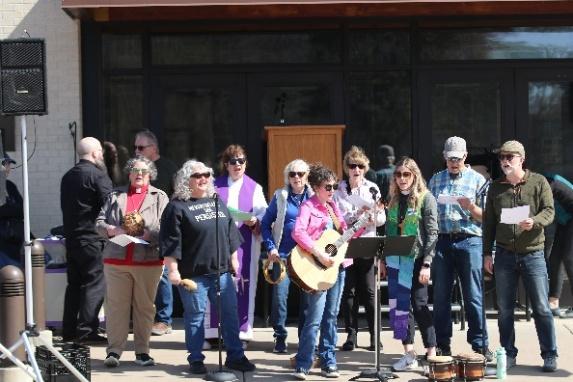
In one Midwest state, the Wisconsin Council of Churches (WCC) took up the charge to coordinate, resource and spread the word across denominations, synods, congregations and locales, so that their growing energy and enthusiasm might propel them down this statewide Palm Sunday Path together. Participants are called to carry their palms out of their sanctuaries and into the streets, proclaiming the faith values of peace, justice and love. The idea is to personally and physically embody Jesus, just as he entered Jerusalem 2,000 years ago, processing in the way of courageous love, humility and mercy.
Across Wisconsin, 11 events were planned, from major cities (Madison, Milwaukee) to smaller cities (Janesville, Oshkosh, Waukesha) to towns of less than 8,000 people and one just under 3,000. In Eau Claire — a city of almost 75,000, not far from the Minnesota border — the Rev. Martin Halom and the Rev. Diane House, the respective bishop and director for evangelical mission of the Northwest Synod of Wisconsin, were engaged in the initiative early on but were further driven to action by the January violence in Minneapolis and throughout Minnesota. They asked pastors to invite lay leaders to help drive the event, and when the time came to plan, the room was packed.
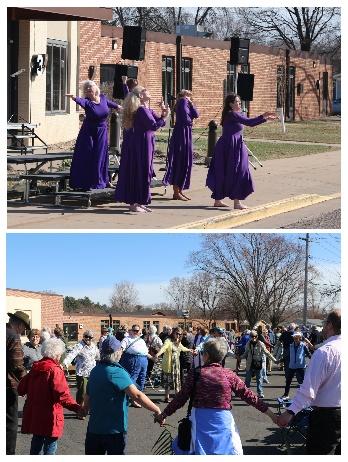
Working with Trinity Lutheran Church and a local grassroots network called Jonah Justice, Halom and House planned an ecumenical event in the church parking lot that included embodied prayer, liturgical dance, songs of resistance and calls for advocacy. Speakers included the bishop, a Catholic lay leader and other religious partners. One essential aspect is for the path to continue after the day, with participants taking action. They might promote structural commitments to feed the hungry, care for the sick and welcome the neighbor. They might engage in legislative or local government initiatives seeking peace or addressing other needs specific to the context of the community or state. How will you engage?
Engage with Us
The Stewardship of AI: Benefits and Concerns
Artificial intelligence (AI) has quickly moved from the plots of sci-fi movies and TV shows to office spaces and everyday activities. As the technology evolves, so should our thinking about how we are called to steward this tool with wisdom.
In collaboration with Ryan P. Cumming, ELCA program director for theological ethics, we’ll use a Socratic conversational style to dissect the potentially good and potentially troubling uses of AI and to think theologically about how we’re invited to steward this tool. Even if you don’t use AI, the topic is ubiquitous, and people will look to pastors and church leaders for perspective. This will be an opportunity to think critically about the topic through a cruciform lens.
Join us Monday, May 18, at 6 p.m. Central time.
https://zoom.us/j/93898552704?pwd=NbPvhYU7iIP6YIAwaqKlGuzIIJeHU7.1
Meeting ID: 938 9855 2704 & Passcode: 445123
Grateful
We are grateful for partners and individuals who advocate for justice, peace and love. These ways may include engaging with legislative and local government by writing letters, visiting offices and coming together with others in marches and neighborhood gatherings. It may be working with local organizations and advocacy groups within the ELCA or across religious initiatives. It may include generously giving of our time, finances and needed resources to help those oppressed and in need. We are grateful every time our church feeds the hungry, heals the sick, welcomes the stranger, seeks justice or shows love in Jesus’ name.
With deep gratitude,
Victoria Flood - Senior Director for Congregation and Synod Support, Nick Kiger - Director for Mission Support, Karen Kretschmann - Coordinator for Storytelling Engagement
 Download PDF here