 Logout
Lectionary for Feb. 1, 2026
Fourth Sunday after Epiphany
Micah 6:1-8; Psalm 15;
1 Corinthians 1:18-31; Matthew 5:1-12
When preparing to write this week, I had to look up πραεῖς (the word we translate as “meek” or “gentle” in Matthew 5:5). My Greek probably isn’t what it should be, and although I knew the word from context, I didn’t have a definition in my head. Strong’s translates it as “mild,” “humble” or “meek.”
In my first paragraph, I usually try to find some link between the lectionary theme and current events. So, I cast about for examples of meekness in the news. As I’m writing this, we have just passed the five-year anniversary of the storming of the U.S. Capitol. The president of Venezuela (illegitimate and brutal as he was) has just been seized, along with oil tankers in international waters. These examples of international anti-meekness help us embed ourselves in the contexts of this week’s lectionary readings.
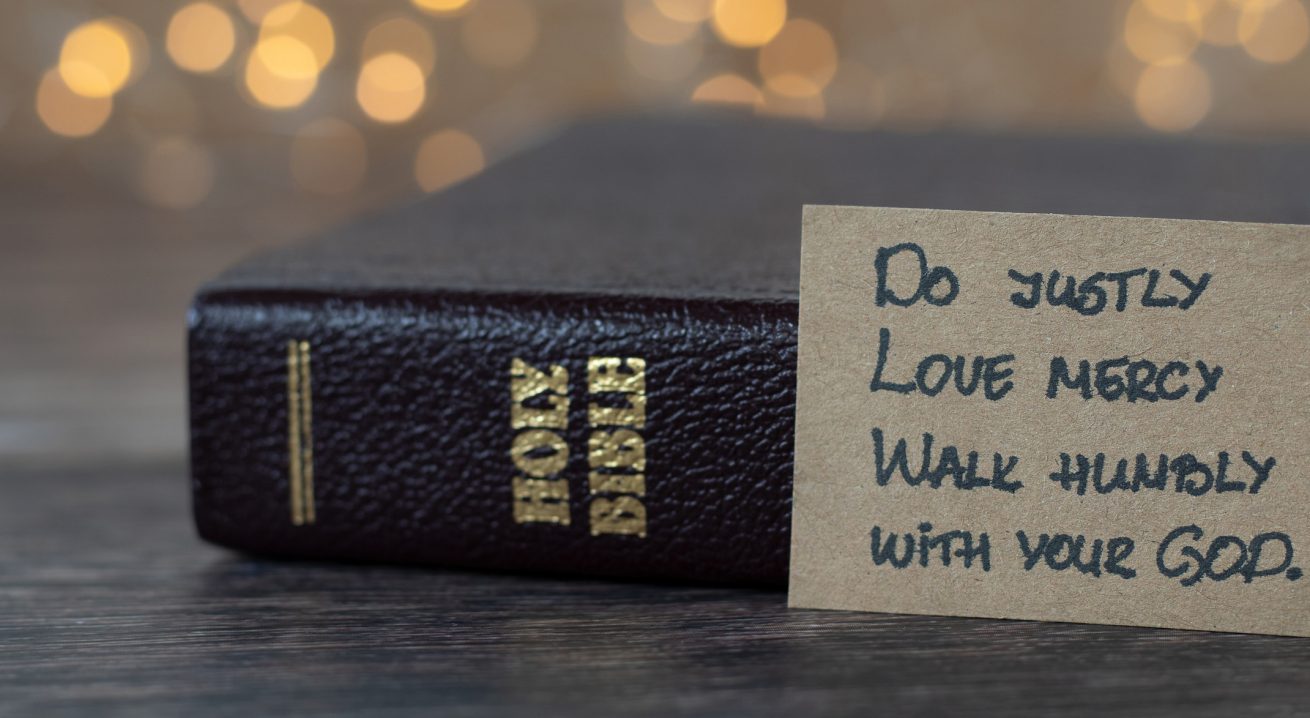
Micah 6:8 (do justice, love kindness, walk humbly with your God) is a famous and well-loved passage. But its context and that of the social milieu from which it spawned are often neglected. Micah 6 is a lawsuit brought by God against the people for failing to live up to a contract. God-through-the-prophet alleged that the people had not given God what God wanted, had given God what God did not want, and had given God things that God wanted to not have. This is like a child who loves cars and hates snakes, yet someone shows up to his birthday party without a car (disappointment), with an old record (indifference) and a new pet snake (revulsion).
God wants justice, loving-kindness and companionable presence. But Israel and Judah gave God none of those things. Instead, God received empty sacrifices that were unaccompanied by justice and loving-kindness. This is easy to do. Far too many Christians worship the Risen Lord on a Sunday and abuse or take advantage of the people for whom he died on Monday through Saturday. Micah insists that God is much more interested in what we do with our lives and resources outside of worship than in holy spaces.
But there is another, more insidious level of missing the mark with God. The people not only offered meaningless sacrifices instead of living worship through justice, but their leaders practiced evil. In Micah 3:1-12, God denounces leaders who abuse the poor among their people to enrich themselves. God condemns rulers who accept bribes to pervert justice. God reviles religious leaders whose love of money and power lead them to misrepresent God’s desire of justice. This is the context of Micah 6:8. God sees violent corruption at every level of society and cynical attempts to offer sacrifices to cover over governmental and religious injustice. God had already said what God wanted: justice, loving-kindness and togetherness. Since the people denied God, the Assyrians and Babylonians would conquer Israel and Judah.
When the empire passes away (and it will) what is left?” The answer: justice, loving-kindness, humility, peace, righteousness and the meek.
Just a few hundred years later, Jesus spoke to people living in the shadow of an empire. Some leaders practiced economic, spiritual and physical brutality like most of the Herodians, a few of the Jewish high priests and almost all the Romans. Jesus offered a different vision of what God values in humans.
Those with impoverished spirits would receive the kingdom of heaven. Those who mourned would receive comfort. Those who were meek would inherit the earth. Those who hungered for righteousness would receive it. The merciful, pure in heart and peacemakers would be blessed. And those who refused to participate in evil but clung to righteousness would be persecuted. The forces of an empire cannot tolerate waging peace, pursuing righteousness, or cultivating meekness or humility. This was true in Jerusalem, Samaria and the Galilee, and it is true wherever we live today. Those who wage peace will be persecuted, and those who eschew power will be targeted.
Look, I wish these passages were less relevant. I really do. I wish we could just have cross-stitched decontextualized Bible verses hanging from our walls to give us comfort. But that isn’t how Micah or Matthew came to us. Instead, these are dispatches from civilizations about to crumble. These are words about the dangers of coziness with power and expediency in the face of the lumbering giant of violent empire. Make no mistake, Assyria, Babylon and Rome are coming. And each of those empires met their own ends at the hands of other violent empires in turn.
What God wants amid violence is that we take a moment, catch our breath and ask ourselves, “Is the naked pursuit of power and wealth all there is and all there should be? When the empire passes away (and it will) what is left?” The answer: justice, loving-kindness, humility, peace, righteousness and the meek.