Logout

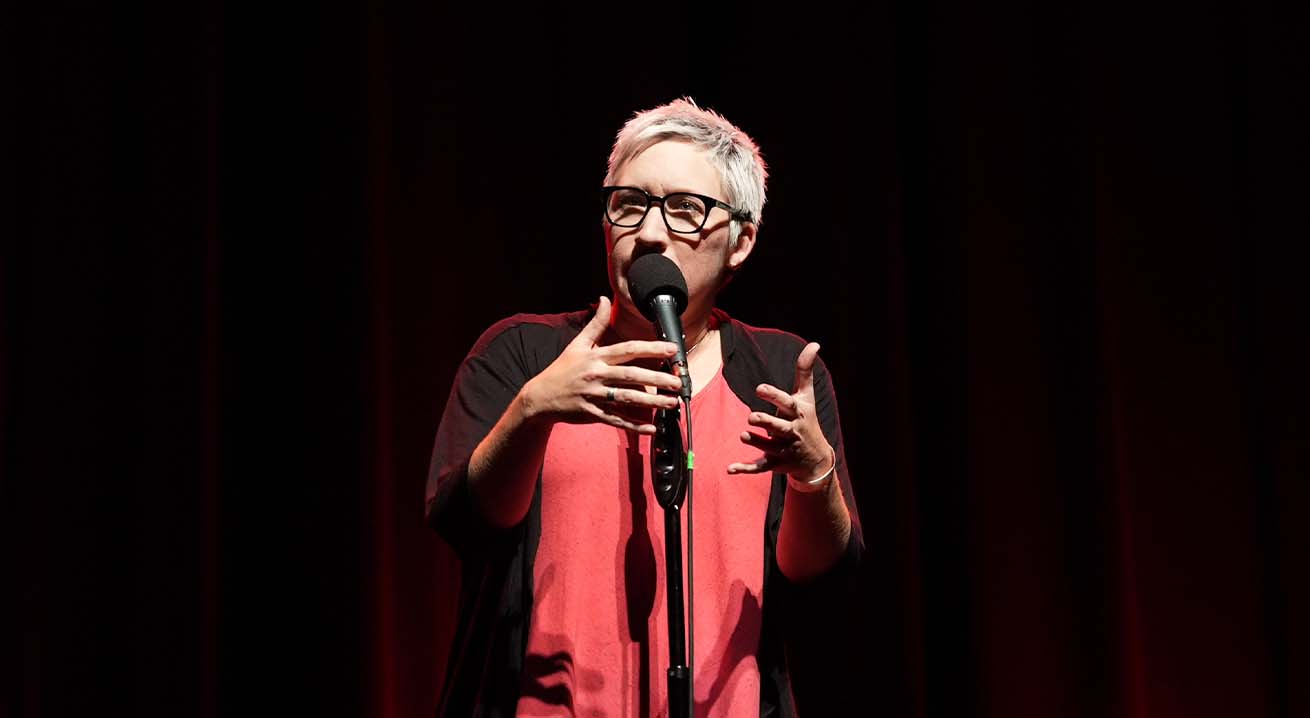
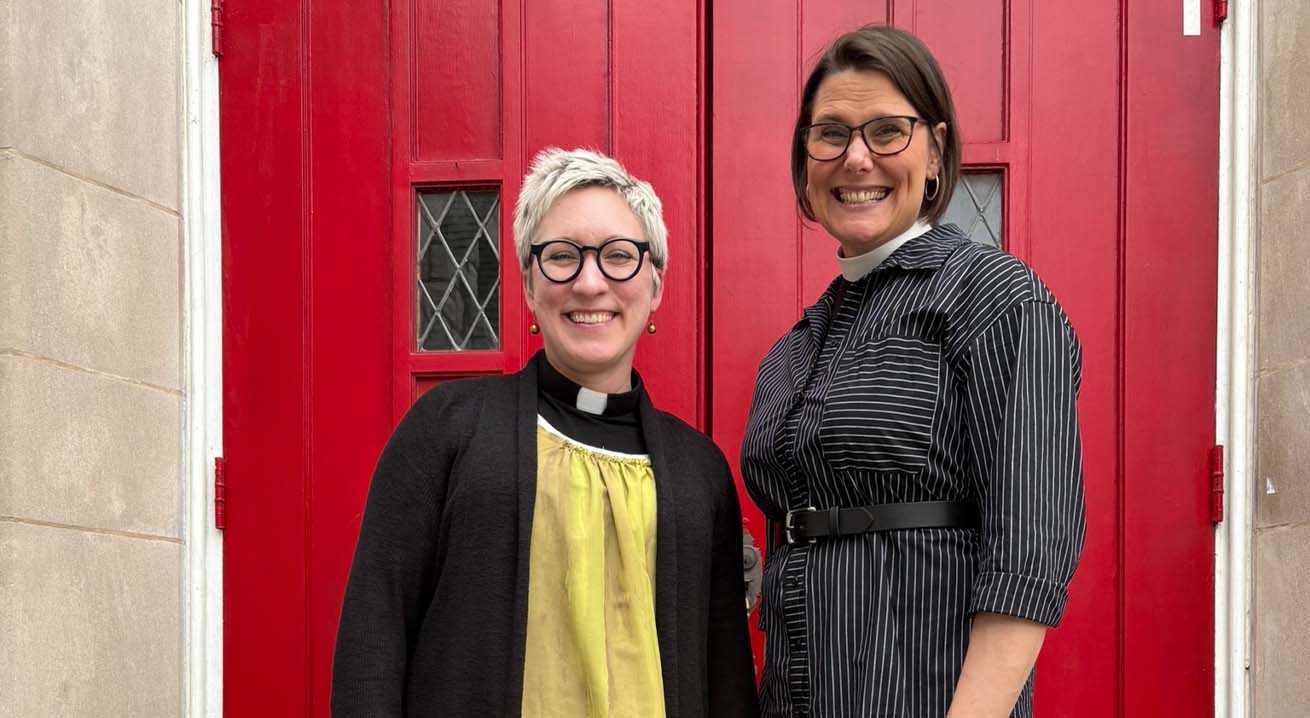

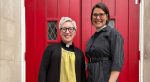

The first time Andrea Roske-Metcalfe attended a live event presented by the Moth, she had no idea what the global storytelling nonprofit was. “I ended up at a Moth Mainstage show in Boston in 2015, and I was just utterly captivated,” she said.
“None of the storytellers were like me, and none of the stories they were telling had anything to do with me.” But the specificity of what they were talking about? That instantly appealed to Roske-Metcalfe, pastor of Diamond Lake Lutheran Church in Minneapolis.
“Often a mistake that preachers make is trying to keep things general so that they connect to everybody. But I think that means you connect to nobody because there’s no hook,” she said. “But if you can be really specific—if I tell a specific story about fly-fishing and no one in the congregation has ever fly-fished before, they’re still engaged. They want to know more about it.”
By intermission, Roske-Metcalfe said, “I was changed. I had had this otherworldly experience.” She left immediately wondering how she could get involved. “I came away being like, ‘How do I do this?’” she said. “And I went to the very next story slam in St. Paul, [Minn.,] and threw my name in the hat and won.”
At Moth Mainstage shows—curated, ticketed events featuring a host and a live musician—five selected storytellers share 10-minute pieces centered on a shared theme. Moth StorySLAM events are open-mic storytelling competitions in which participants share a five-minute piece. GrandSLAMs are championship events in which 10 StorySLAM winners compete after they receive coaching from Moth directors.
Today Roske-Metcalfe is a three-time Moth Twin Cities StorySLAM winner and a Moth Twin Cities GrandSLAM champion. “I won two or three in the course of a year, and I won the GrandSLAM in 2017,” she said. “People started paying more attention after that.”
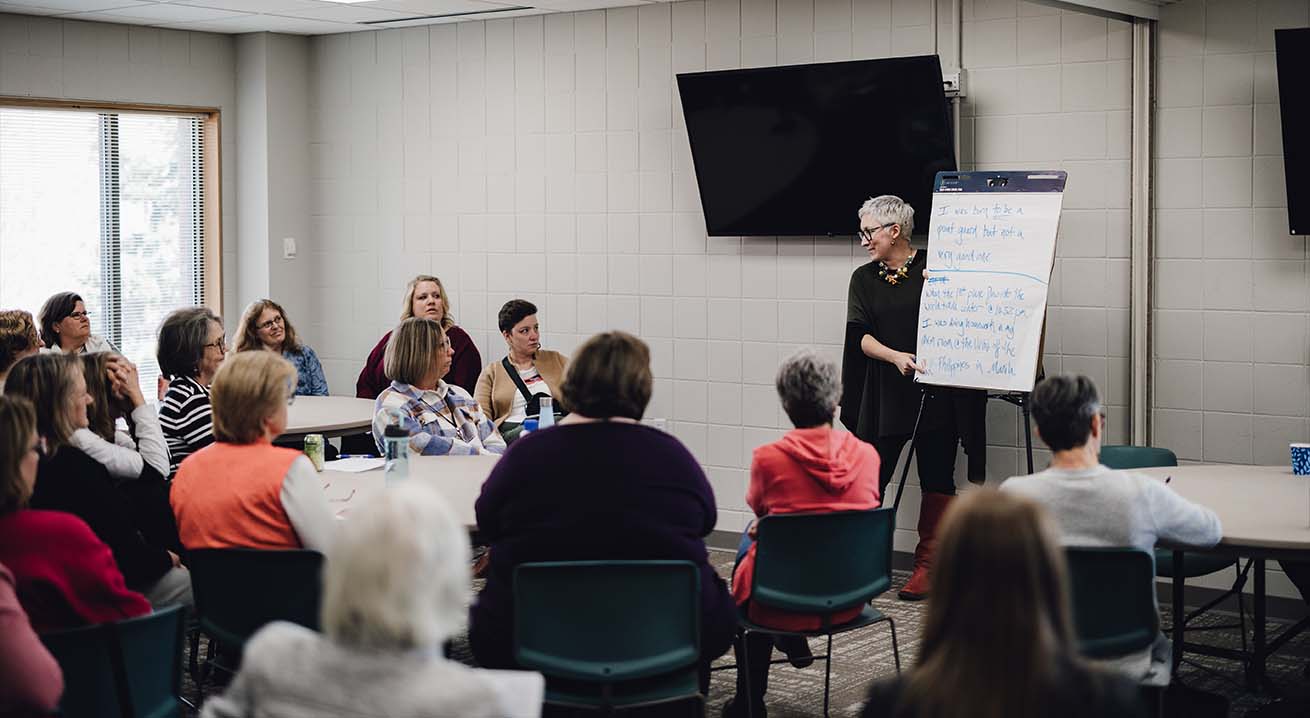
Congregations and communities began seeking out Roske-Metcalfe to lead workshops on the craft of storytelling, which she now does frequently. “It’s kind of my side hustle,” she said. “It’s really fun.”
The practice of imagination
Although Roske-Metcalfe sees a distinction between preaching and public storytelling, she has identified ways the craft of storytelling can apply to effective ministry.
“I don’t know that we work at our imagination, our collective imagination, as a church very well. I don’t know that it occurs to us,” she said. “I think storytelling has the potential to unlock some of that and to help us think in different ways, because it is so specific and contextual.”
As the founder of the popular Pray-Ground movement, which promotes a designated play area for children at the front of sanctuaries, Roske-Metcalfe continues to create space for children and imagination in her worship practice.
“I do a sermon on the steps [for children] every week,” she said. “Some weeks there’s so much going on in the service that I cut the sermon, but I never cut the sermon on the steps. And I tell the kids, ‘You have big imaginations, and I’m asking you these questions because the people out there, their imaginations are not as big as yours anymore. So we have to practice, and we have to practice in front of them so that they can keep working theirs too.’”
The idea of practice as it relates to story was new to Roske-Metcalfe when she began Moth competitions. But she has found it useful, both for herself and in her workshops and ministry.
“I didn’t understand that storytelling was a craft that you could practice,” she said. “I didn’t think of it as a thing to practice. I don’t think we’re very good at teaching one another as humans that we’re storytellers to begin with, and that we have the right to be, and that we can claim that. And we’re certainly not good at talking about this craft as something to practice, to get better at.”
That shift in understanding is what often makes the difference for Roske-Metcalfe’s workshop participants. She believes her ministry background helps her teach the storytelling approach to others.
“Certainly, a lot of my seminary training invited me to pay more attention to individual people, to people’s stories, and to notice and be curious in different ways,” she said.
“Part of my workshopping process is spent inviting the group gathered to offer feedback to a storyteller who’s just shared a story so that it gets better, for whatever the final result will be. And that’s entirely based on curiosity. I’m an inherently curious person, so inviting people to be curious is fun for me.”
“A profound gift”
Communities where Roske-Metcalfe has led workshops have often find the experience so rewarding that they invite her back for additional sessions.
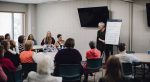
In May 2025, she visited Muhlenberg Lutheran Church in Harrisonburg, Va., for an initial weekend workshop. “Andrea was engaging and got even our quietest folks eagerly sharing stories,” said Lauren Eanes, pastor of Muhlenberg. That November, Roske-Metcalfe returned, this time spending a full week with the congregation.
Each evening, she led workshops in which participants shared told they’d prepared and received feedback. “One by one, people got up and shared personal stories that were, in turn, enlightening, affective, insightful and, sometimes, downright hilarious,” Eanes said. “Andrea was an incredible coach, giving feedback, suggestions and encouragement that were constructive and grace-filled.”
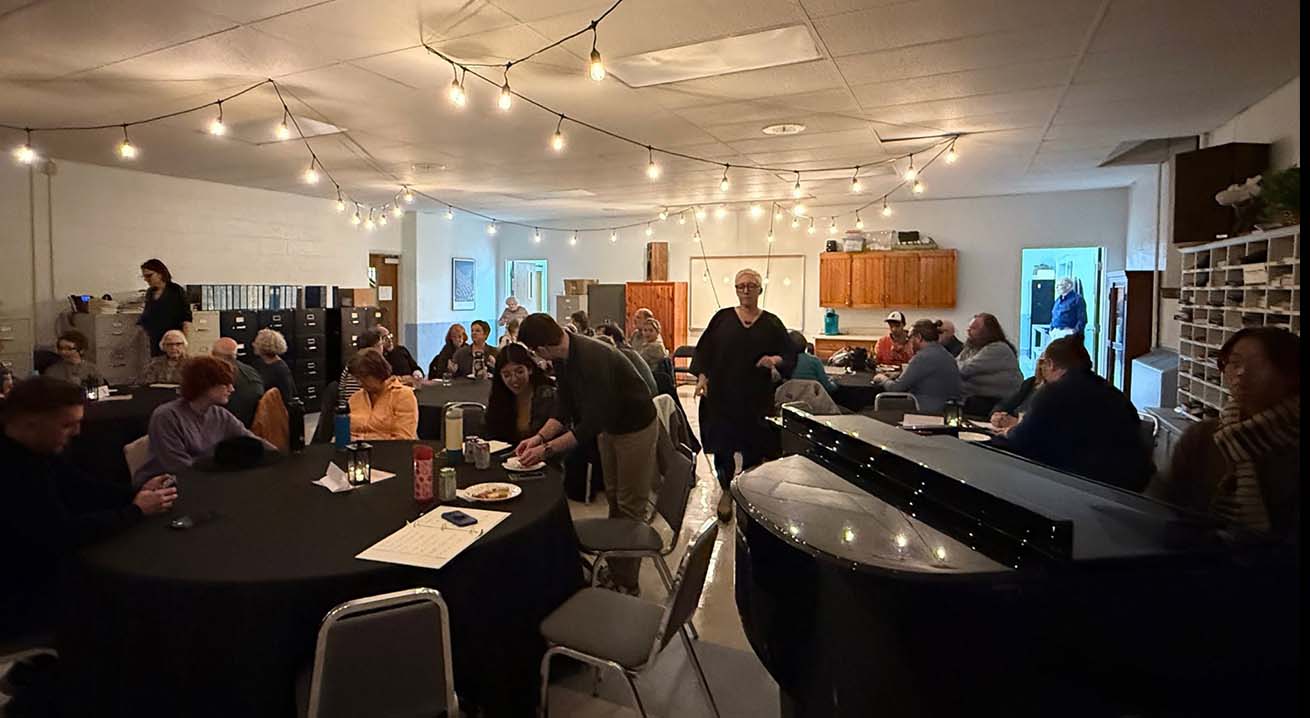
The week culminated in a Friday Night Story Slam that Muhlenberg hosted. The entire congregation and community were invited, and the church’s music room, with a small stage, was transformed into a café setting. Ten participants told stories, without notes to aid them, on the theme “You Are Here: Stories of Place.”
“We laughed, we cried, we all left with a sense that we’d experienced something quite special and holy,” Eanes said.
“We learned to appreciate stories as pure gift, as offering a part of ourselves to others, with no agenda.”
Thanks to the workshops, the congregation has become better at sharing their stories and receiving those of others. “We learned to appreciate stories as pure gift, as offering a part of ourselves to others, with no agenda,” Eanes said. “They led to deeper connections within the congregation, a greater appreciation of one another and an enduring awareness of the depths of each person’s life story.”
Kendra Grams, pastor of First Presbyterian Church of Hudson, Wis., had a similar experience. “Andrea is an exceptionally good facilitator,” she said. “She does such a great job of invitationally bringing people into the practice and modeling it.”
Last October, First, in partnership with the Phipps Center for the Arts in Hudson and the Hudson Area Public Library, asked Roske-Metcalfe to host a workshop for the community. This year, they are bringing her back for a workshop session cycle in November, with two more cycles scheduled for winter and spring.
The initial workshop was a testament to the idea that shared storytelling can bring communities together, Grams said, adding, “That was part of why I wanted to continue—this hope that, in a divided time, [we are] bringing people together to help see that there are so many ways that we are similar.”
Roske-Metcalfe was eager to continue building those connections. “In that case, especially, there were a few folks who had been holding onto stories for decades,” she said. “And to watch … some significant themes [be shared] with people who, just a few weeks before, were strangers, was a profound gift.
“I think that’s part of what made folks in the audience that night say, ‘When is this happening again?’ So that’s what we’re doing.”