 Logout
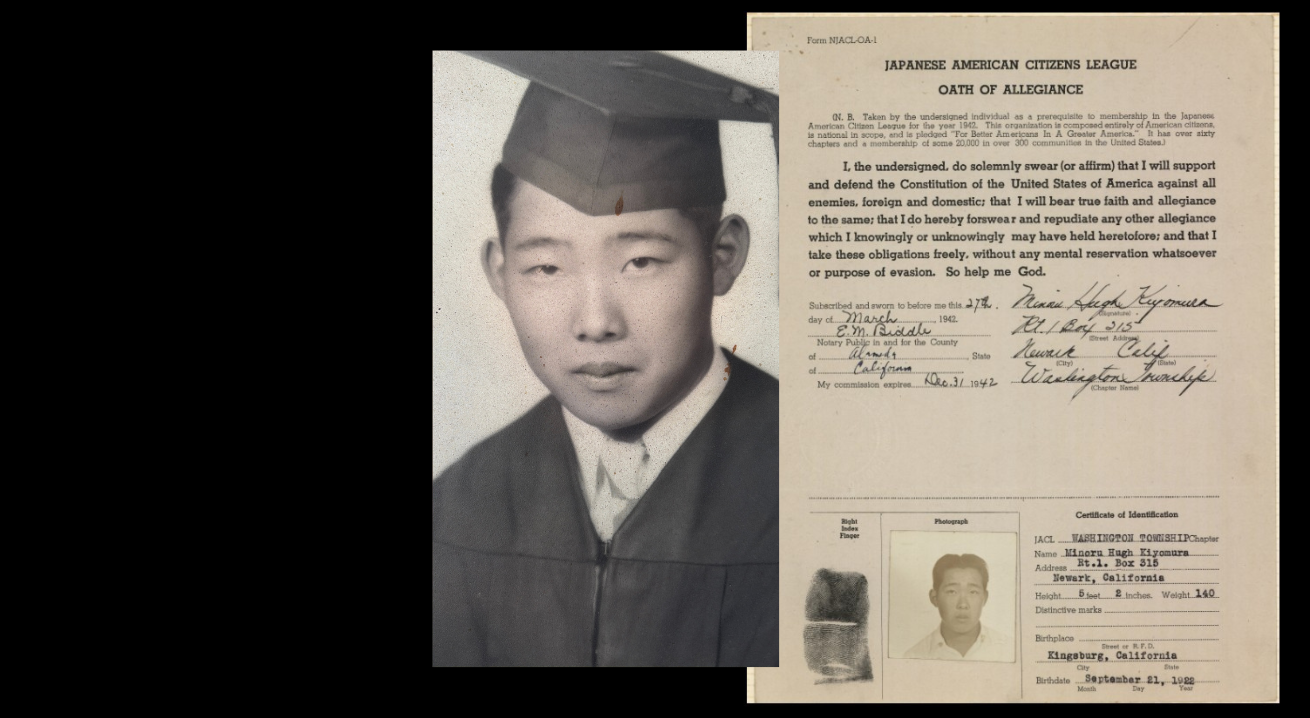
Editor’s note: In this first installment of a three-part Living Lutheran series, Gail Kiyomura reflects on her family’s experience of Japanese American incarceration.
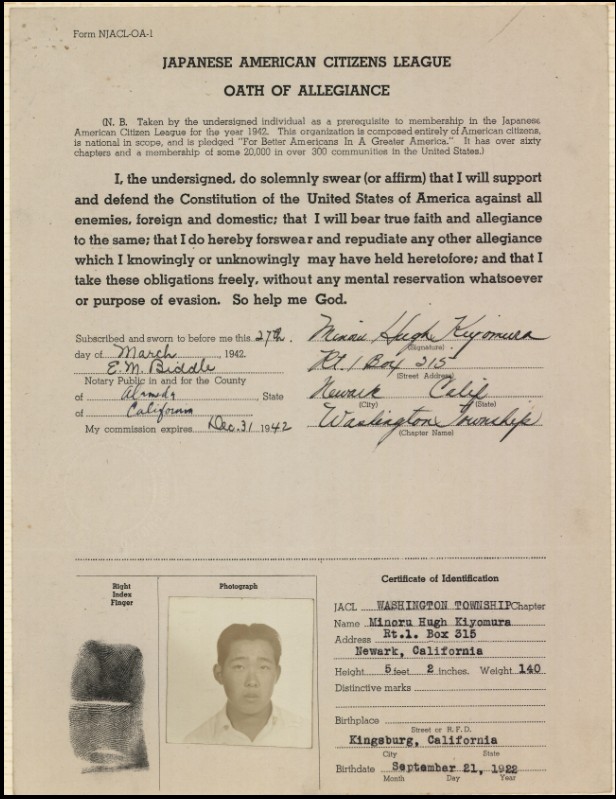
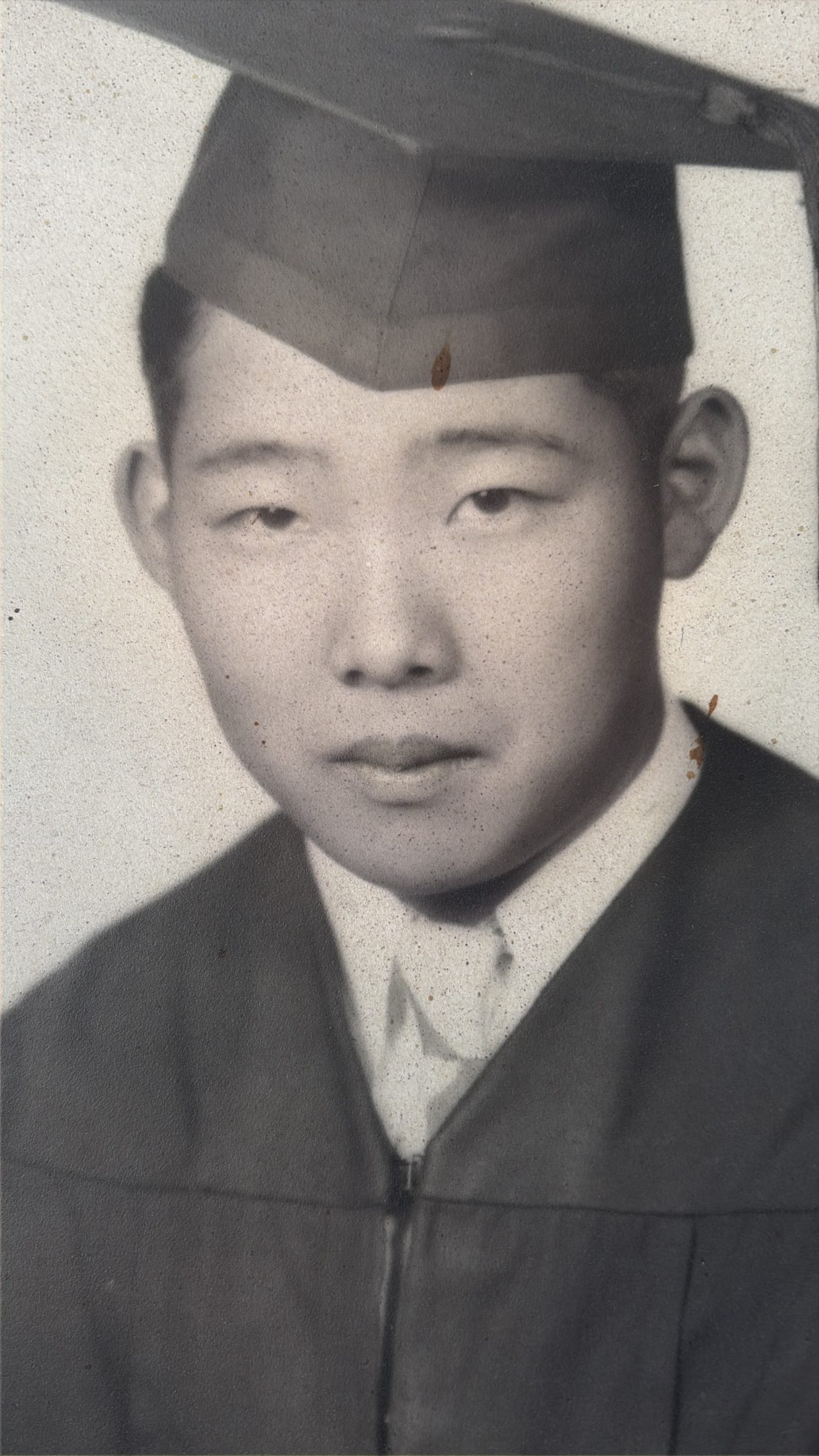
In 1941, shortly after Gail Kiyomura’s father was 18 years old—fresh out of high school, the eldest child in his family and, by every measure he understood, fully American.
Within weeks of the Pearl Harbor attack, that identity was called into question, not because of anything he had done but because of how he looked.
“He was … as American as apple pie,” said Kiyomura, former vice president of the Sierra Pacific Synod. “But he looked Japanese.”
That was enough.
Fear policy
In February 1942, President Franklin D. Roosevelt signed Executive Order 9066, authorizing the forced removal of people of Japanese ancestry from the West Coast. More than 120,000 individuals were uprooted—nearly two-thirds of them U.S. citizens.
Families were given days—sometimes only hours—to prepare. They could take only what they could carry. Businesses were shuttered. Farms were abandoned. Entire neighborhoods disappeared overnight.
There were no trials. No formal charges. No evidence of widespread disloyalty. Instead, there was a single, sweeping assumption: Ancestry alone makes someone suspect.
Kiyomura’s family followed orders. They reported first to a temporary detention site at a racetrack in California.
“They were stabled,” she said. “They were treated like livestock.”
From there, they were sent inland to Topaz, Utah, where they would remain for nearly four years. Over 11,000 individuals were processed through Topaz, many of whom sustained lasting trauma from their unjust detention.
Inside “camp”
Those held captive at Topaz survived extreme weather conditions such as dust storms and severe cold while crowded in tar paper barracks with coal stoves and communal showers. For many families, the language that survived this traumatic experience is telling.
“When we were growing up, it really wasn’t talked about much,” Kiyomura said. “If it was, it was talked about as ‘camp.’”
Not prison. Not incarceration. Simply “camp.”
But life inside Topaz was defined by confinement. Barbed wire and armed guards marked its boundaries. Food was rationed. Privacy was scarce. The knowledge that detainees couldn’t leave shaped every aspect of daily life.
And yet people found ways to endure.
“My dad would always talk about … playing baseball,” Kiyomura said. “There were good times.”
Fragmented memories of playing catch, building friendships and engaging in everyday routines were what Kiyomura’s father chose to share with the next generation. She says he never forgot the struggles through hard times, but his survival depended on living to remember something more from the time that was taken away from him.
The deeper wound of forced transformation from neighbor to suspect, from citizen to “other,” had a more complex, long-term healing process for her father and so many others.
Living history
After the war, incarceration did not simply end—it shifted, mutated and followed them beyond the gates of the camps they were forced into. Many Japanese American families returned to communities that no longer welcomed them. Property had been sold or seized. Jobs were gone. Anti-Japanese sentiment remained strong, particularly on the West Coast.
Kiyomura’s family rebuilt through sharecropping, working land owned by others before they eventually reclaimed a measure of stability. But having to start again from zero, through no fault of their own, left a lasting imprint, one that shaped how succeeding generations understood identity, belonging and responsibility.
“This should never, ever, ever happen again,” she said. Her father, who had been stripped of his rights as a young man, made a deliberate choice in the years that followed. “He understood his constitutional right to vote, and he did it.”
For Kiyomura, that act was not routine civic participation but a defiant reclamation.
“It’s your currency as an American,” she said. Her father took back his autonomy and freedom with every ballot cast. He was also sending a message to the people in power that he was still there, that he had survived their racist decisions and that he would be watching what they did next.
Inclusive faith
Kiyomura’s reflections are shaped by a life that bridges traditions. Raised Buddhist and active in the Christian community, she speaks harmoniously about her faith practices and traditions. Religion, for her, is not a zero-sum game. She points to the absence of an “other” in faithful practices.
“If you go back to what you believe in, no matter what religion, there is no other,” she said. “It is a ‘we.’”
That conviction resonates within the work of the ELCA’s Ministries of Diverse Cultures and Communities, which seeks to uplift voices and experiences often overlooked by the wider church. Kiyomura stays connected with Teresita Valeriano, ELCA program director for Asian and Pacific Islander Ministries, to generate awareness of and support for the larger network of Asian and Pacific Islander (API) voices in the church.
For Kiyomura, shared faith is not enough to sustain connections across communities. She seeks opportunities to share her experience and perspective as a member of the API community. She knows that belief without action is never enough. Regularly reaching outside her immediate community offers Kiyomura and others a way to prevent the disconnection and vulnerability that allowed divide-and-conquer tactics during the war to isolate and “otherize” an entire population of Americans.
“Silence is deafening,” she said. “Being complicit is also … buying into believing the ‘other.’”
Trauma echoes
Today, debates around immigration, detention and national belonging continue to unfold across the United States. Policies shift. Language hardens. Communities feel the weight of uncertainty.
For Kiyomura, the parallels between today and the traumatic times her family managed to survive are not abstract.
“Every time we have any type of demographic that becomes the ‘other’ or the ‘they,’” she said, “we are so good at pinpointing that it’s them …. It’s their fault. They are the problem. It happens so quickly—they are called out and dehumanized in every way.”
The lesson of Japanese American incarceration, she believes, is not only historical—it is instructional.
The lesson of Japanese American incarceration, she believes, is not only historical—it is instructional.
In her own community, that instruction takes practical form. She helps support a food pantry that serves immigrant families, many of whom live with the fear of being deported or detained. Illegal enforcement actions threaten them at every level. Despite this reality, Kiyomura and her fellow food pantry staff continue to provide for those in need.
“We don’t close the doors,” she said. “We’re not going to stop giving them food. We’re not going to buy into that fear.”
Volunteers stay alert and aware. Though they are prepared for worst-case scenarios, they focus on continuing to care for their pantry visitors. They do not relay the anxiety, stress and panic of their shared reality outside the pantry walls. Rather they remain steadfast in their roles and provide people in need with some sense of reliability without any added commotion.
“You don’t have to be loud to be effective,” she said. “Just get it done.”
Remembering to resist
Kiyomura’s story offers both an opportunity for witness and a unique invitation.
The incarceration of Japanese Americans is not ancient history. Survivors and their descendants are still among us. The consequences are still unfolding. And the conditions that made it possible—fear, silence and the exclusionary naming of an “other” — have simply shifted focus to another language and skin tone.
For people of faith, that may mean examining how language shapes perception. It may mean refusing narratives that dehumanize neighbors. It may mean taking small, concrete steps to ensure safety, dignity and belonging for those most at risk. Beyond prayer, now is the time for speaking up, taking a stand and finding ways to bridge the forced divide that threatens to conquer any chance of shared peace.
“You don’t give up,” Kiyomura said. “You also don’t forget.”
Memory, when taken seriously and shared, is never passive. Shared memories offer their own form of resistance. But this is not just a call to remember what happened. This is an invitation to ensure it never happens again.
Editor’s note: Thank you to Gail Kiyomura for sharing her story with Living Lutheran readers. In collaboration with Teresita Valeriano, program director for Asian and Pacific Islander Ministries in the ELCA’s Ministries of Diverse Cultures and Communities, Kiyomura works to ensure that congregants and communities better understand the needs and lived experiences of the API community. Contact Valeriano directly to learn more about her ministry and continued good works: Teresita.Valeriano@elca.org