 Logout
Lectionary for July 19, 2026
Eighth Sunday after Pentecost
Isaiah 44:6-8; Psalm 86:11-17;
Romans 8:12-25; Matthew 13:24-30, 36-43
Did you ever have a story or joke so good that you couldn’t wait to tell it again? I recently attended a church father-son camp where a group of boys sat around a campfire telling silly jokes and stories. I’m not going to pretend for a second that I understood all the punchlines, but we laughed late into the night. A good joke or story captures our imagination and makes us laugh or think. Jesus’ parables, when we wade into them, are powerful for a similar reason. With a few short words, they pack a punch by likening God, the kingdom of heaven or the end of the age to observable phenomena that the people already understand. This week, we look at the parable of the weeds.
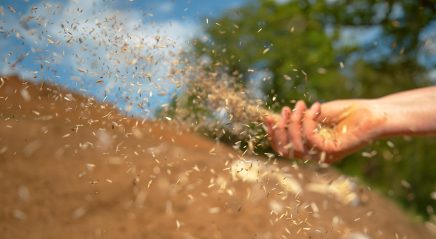
You can imagine the scene. A landowner caused good seed to be sown in his fields. While his servants weren’t watching or protecting the field, an enemy crept in and sowed weeds. The servants didn’t notice immediately and kept tending the field: watering, protecting the plants from animals and pests, and removing the more obvious weeds. It was only when the good seed and weeds put forth fruit that the deception of the landlord’s enemy became apparent (Matthew 13:26—this is important!).
The servants, of course, had been doing the right work all along. They were baffled as to how the weeds had grown in their midst and received their protection and care. They asked the landlord what was going on. The landlord knew instantly that his enemy had sown the seeds to make harvesting difficult, to use up resources and labor, and to cause him to overestimate his harvest.
The servants were incensed. Let us tear out all these weeds immediately! But the landlord urged caution. Don’t be so hasty to tear up what looks like a weed. Instead, wait until harvesttime. Then every plant that bears bad fruit will be collected and thrown into the fire. And the plants that bear good fruit will be collected and brought into the barn.
God plants good seed to produce a good harvest of good works.
The disciples waited until they had Jesus alone and asked for an explanation of this lively parable. Jesus didn’t mince words, and his parable should powerfully influence our ecclesiology, eschatology and participation in the world. Jesus said the good seed are children of God’s kingdom, and the bad seed are children of the evil one. Both sets of humans are placed strategically into the world with an expectation that they will produce a harvest that reflects the will of the one who planted them. God plants good seed to produce a good harvest of good works. The devil plants bad seeds to produce a bad harvest of evil works.
We should observe Jesus’ specificity in these parables. In his explanation, Jesus said those who purposefully construct traps for others (skandala is best understood here as a sort of intentionally placed snare or object that will trip others) and those who do the opposite of God’s justice (anomian as “anti-law”) are the weeds fouling the field. They will soon be burned. In this parable, Jesus says the devil specifically puts people in positions where they will try to trap others and ignore the social justice that the law, the prophets and new covenant command.
Crucially, though, the weeds and good seeds are not distinguishable until they start to bear fruit. In this parable at least, actions matter. What kind of harvest does each type of seed produce? Earlier, in the Sermon on the Mount, Jesus spoke a similar message using a different plant. Good trees produce good fruit. Bad trees produce bad fruit. Bad trees cannot produce good fruit, and good trees cannot produce bad fruit. You will recognize false prophets by their fruit (Matthew 7:15-20).
What does this mean? This parable portrays a world where God is a landlord looking for a good harvest. Isaiah helpfully reminds us that God wants a harvest of justice and righteousness (Isaiah 5:7). The devil, however, wants a harvest of entrapping neighbors and ignoring justice. The good news we hear in this parable is that there is still time to decide what kind of seeds we are. If everything was already set in stone, the point of his sermons, parables and exhortations would be moot.
Instead, Jesus wants his hearers to think about what kind of harvest we are producing in the world. Jesus warns that we can travel the world making converts yet produce children of hell if we ignore the kind of harvest that God wants from us and them (Matthew 23:15). So let’s receive Jesus’ gracious invitation to be transformed into good seeds that produce a good harvest for our good God.