 Logout
Lectionary for May 24, 2026
Day of Pentecost
Acts 2:1-21; Numbers 11:24-30;
Psalm 104:24-34, 35b;
1 Corinthians 12:3b-13; John 20:19-23
Since I don’t serve a congregation, I rarely put on a stole, and an alb even less. Although I do pulpit supply (I love celebrating the sacrament with God’s people!), the only time I really vest in my clerical gear is for ordinations, as the church gains another trustworthy servant. Red is worn for ordinations because it’s a sort of mini-Pentecost, when we hear the Spirit of God speaking anew. Pentecost is one of my favorite times of the year, as we are primed to listen to fresh expressions of God’s words, deeply contextualized for where, when and who we are in the moment. The lectionary passages this week are about God pouring out God’s Spirit.
First, a quick word for those who might think Pentecost was a Christian invention or was first celebrated in Jerusalem after Jesus’ death and resurrection. The Festival of Weeks/Shavuot/Pentecost is one of the big three pilgrimage festivals (Deuteronomy 16:9-11; Exodus 34:22-23) that had been celebrated for hundreds of years prior to the incarnation. It was a harvest festival at the inflection point of the close of grain harvests and the beginning of fruit harvests (Exodus 23:16; Numbers 28:26). Pentecost celebrates the first fruits of a promised harvest (this is important).
Traditionally, Pentecost was also the day that God began to speak to the Israelites and those with them at Sinai, 50(ish) days after the first Passover in Egypt (there’s a complicated reckoning based on Exodus 19:1 and the following cleansing days). Thus, the first Pentecost at Sinai was noted for “little fires” and the people hearing multiple “voices” (Exodus 20:18—translations like New American Standard Bible or study Bibles will have a footnote clarifying that “thunder” and “lightning flashes” are paraphrases of literal “voices” and “small fires”).
Second, we turn to Numbers (my favorite book of the Bible) and learn that Moses is absolutely overwhelmed and trying to do too much by himself. God’s response is that 70 elders—a sort of proto-Sanhedrin—be called to aid Moses in leading the people. At their commissioning ceremony, 68 of the elders come to the tent for the official ceremony while two others—Eldad and Medad—stay among the people. God sends the Spirit of leadership on all 70 elders, including Eldad and Medad, even when they didn’t go away from their people. This is a problem for Joshua, who is concerned for protecting the prestige of Moses as special and set apart. Moses, however, wishes that all God’s people were Spirit-empowered prophets (Numbers 11:28-29).
(As an aside, I’ve had the great pleasure of teaching for the Theological Education for Emerging Ministries and Theological Education for Indigenous Leaders programs, and I think of the congregation leaders who stay among their people in their context during their formation as modern Eldads and Medads!)
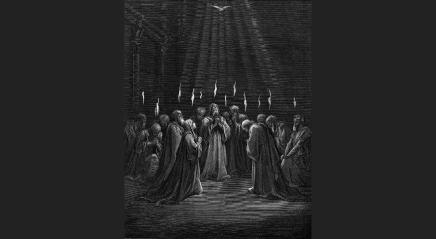
The first Pentecost at Sinai was noted for “little fires” and the people hearing multiple “voices.”
Third, fast forward to the Jerusalem Pentecost after the resurrection. Jews from all over the world have come to Jerusalem, as commanded in Exodus, Numbers and Deuteronomy (and elsewhere). It is not lost on me this year that the first national origins listed in Acts 2 are Parthians, Medes and Elamites—folks from ancient Iran (Acts 2:9). The list of places and ethnicities closes with Arab Jews (11).
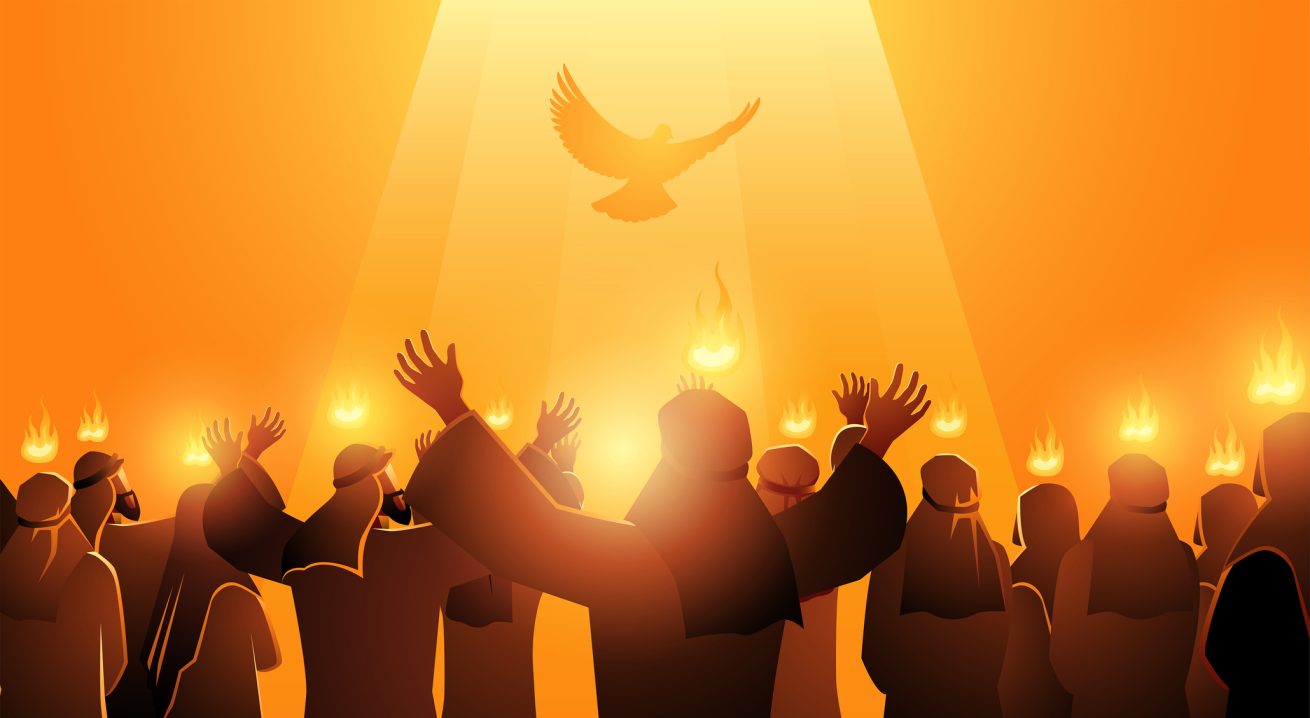
Just as we might expect if we know our history, God’s Spirit moving at the Jerusalem Pentecost is characterized by lots of voices speaking multiple languages and small flames floating around. The “Birthday of the Church” is a multiethnic, multilinguistic celebration that looks like it could be fueled by new wine (13). This is a Jewish-only event, as signified by Peter’s repeated addresses to “Jews, Men of Israel, and brothers” (14, 22, 29, 36-37). But news of the Jerusalem Pentecost travels to many diaspora homelands with the return of pilgrims. When the Jesus movement opens to Samaritans, Ethiopians and finally gentiles, the news of God pouring out the Spirit on all flesh is ready and waiting to be realized across the world.
Friends, Pentecost is some of the best good news that we have. On the day that celebrated the first fruits of a much larger harvest, God speaks and pours out God’s Spirit and words in ways that are perfectly calibrated for all hearers. The Spirit of God is delighted to undo the difficulty of Babel and unite people in the task of building up the kingdom of heaven. Let us celebrate the diversity of ways that the body of Christ senses God’s movement and leadership!