
 Logout
Lectionary for May 31, 2026
The Holy Trinity
First Sunday after Pentecost
Genesis 1:1–2:4a; Psalm 8;
2 Corinthians 13:11-13; Matthew 28:16-20
It seems like a lifetime ago, but I had the great blessing to work in ministry under Bill Gafkjen, who was then bishop of the Indiana-Kentucky Synod. Bill was called to help the synod imagine the new things that God is doing in our midst. Unsurprisingly, Isaiah 43:19 was one of his most-oft repeated verses:
“Behold, I am going to do something new,
Now it will spring up;
Will you not be aware of it?
I will even make a roadway in the wilderness,
Rivers in the desert” (New American Standard Bible).
Working for the people of the synod under his guidance has indelibly shaped my understanding of God’s mission. I believe that God wants to do the same things that God has always wanted to do, albeit in new and surprising ways. Moses, the prophets, Jesus and the early church championed God’s redemptive power for justice, neighbor care and the growth of God’s kingdom on earth. But how often do we really think about beginnings and new things? This week, the lectionary helps us focus on God’s new beginnings.
If we are to start with new beginnings, we could do worse than to look at Genesis 1. At the beginning of God’s creation of the heavens and the earth, the earth was unformed and wild. Oceans existed; darkness and the Spirit hovered above them. Then, God got to work. Light and dark were separated, and waters were placed below and above. Dry land contained the ocean. Then God circled back and modified and filled the work of the first three days on the next three. Sun, moon and stars for lighting the darkness. Birds and sea creatures to fill the mists above and the waters below. Land animals (including humans) for the dry lands. And rest to fill the Sabbath.
Does God doing this new thing feel very orderly, very intentional, and motivated by care and noticing? Others thought so too. There is no cosmic struggle of creation here in Genesis 1 (though we can find traces of it elsewhere). God speaks, sees, separates and gives a sobriquet. God creates spaces and then carefully fills them for life and flourishing. How might God be making space in your communities’ lives, and then longing to fill those spaces with lively flourishing?
Jesus intends the world to be full of disciples loving our neighbors—every neighbor—as ourselves. That is the new thing (well, maybe an old thing in a new way) that Jesus is doing.
One example of how God made space and then filled it is through Jesus’ Great Commission to his disciples. The disciples returned to the Galilee after Jesus’ resurrection. At the base of a mountain, they encountered Jesus who gave them a pre-ascension command. All authority on the earth and the heavens had been given to him (Matthew 28:18). Does this sound familiar? And Jesus wanted/wants to fill the heavens and earth. But with what? Disciples!
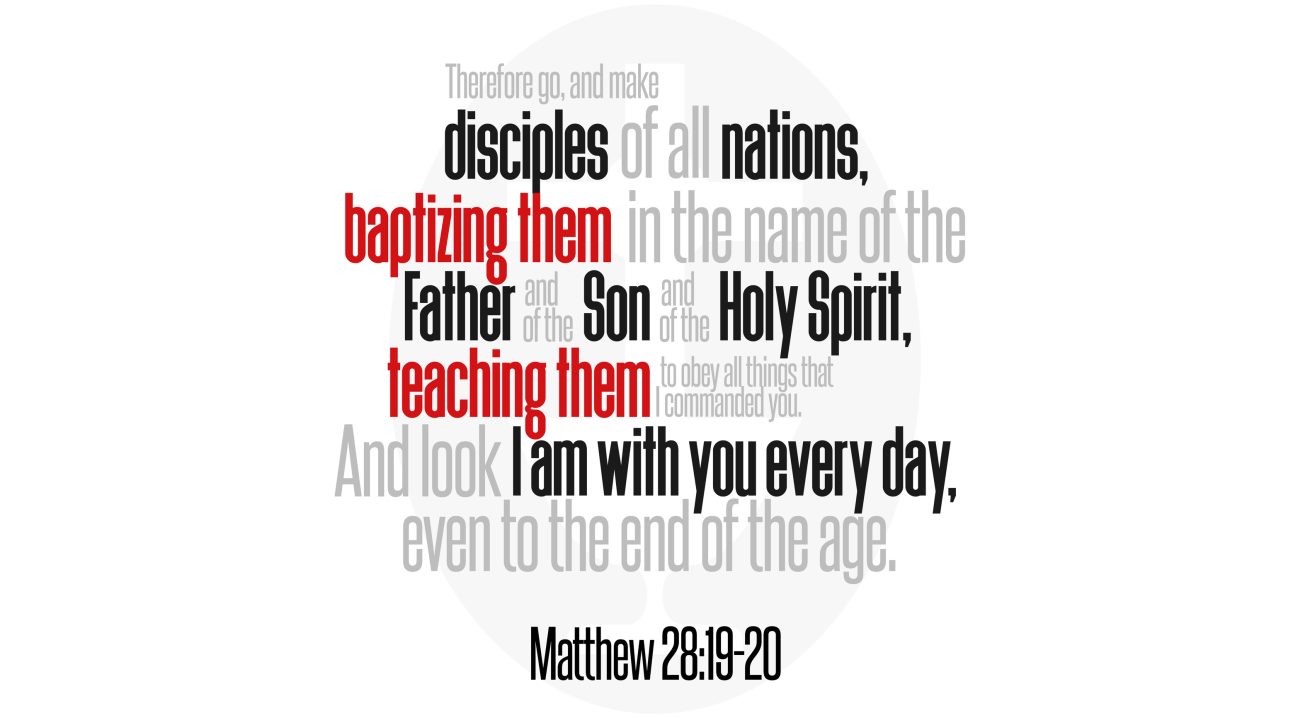
Jesus told his disciples to go into all the world and make disciples of every people-group. We need to be careful, or at least I do, in distinguishing “believers” from “disciples.” Jesus doesn’t commission his disciples to go out and simply help people believe that he is the Messiah. Instead, disciple-making is a twofold process. First, people are to be baptized into the life, death and resurrection of Jesus in the name of the Father, the Son and the Holy Spirit (19). Secondly, and this is forgotten all too often, the disciple is formed by learning to do all the things that Jesus commands, knowing that our Lord is always with us. When Jesus did a new thing, he created space and then filled it up for life and flourishing.
Believing is merely the first step toward baptism and then discipleship. Jesus commands his disciples to feed the hungry, clothe the naked, give drink to the thirsty, welcome the foreigner, visit the sick and those in prison (Matthew 25:31-46). Jesus intends the world to be full of disciples loving our neighbors—every neighbor—as ourselves. That is the new thing (well, maybe an old thing in a new way) that Jesus is doing.
So, if Jesus is really Lord, and God really wants to do a new thing, how would we notice that? Primarily, it seems like it would look for opportunities to do the things that God enjoys, in contexts where they are not happening yet. Is a foreign neighbor unwelcomed somewhere? This is an opportunity to begin a new friendship. Are people under-resourced somewhere? This is an opportunity for new serving. As my friend Jeff Shulman shows in his film What it Takes, there are always opportunities to begin loving those in prison. These are the new things that God longs to fill all of creation with!