 Logout
Lectionary for March 8, 2026
Third Sunday in Lent
Exodus 17:1-7; Psalm 95;
Romans 5:1-11; John 4:5-42
After taking a few decades off, I’ve been running again for the past couple of years. In Chariots of Fire, Eric Liddell says, “[God] also made me fast. And when I run, I feel his pleasure.” God did not make me fast. When I run, I feel sick and not anyone’s pleasure. But I do feel myself getting stronger and healthier afterward. And, as part of my running, I’ve been taking nutrition and general health more seriously. I’m drinking a lot more water and have given up my beloved DDP. Why am I telling you this? The lectionary passages this week are all about movement and combating thirst.
In the Exodus reading, the people had a legitimate concern. Having run out of water, they, their children and their animals were perilously close to dying of thirst. While they followed Moses’ instructions and God’s leading, that doesn’t mean they were home free by any stretch of the imagination. They were thirsty. That is problem No. 1.
Problem No. 2? They, as a people, didn’t know how to talk with or trust God yet. How could they? The national relationship had just begun. They hadn’t even received any commandments yet, aside from Passover instructions. Their complaints were a bit too directed and threatening, if Moses’ reaction was any indication. But God—at least in the Exodus text—didn’t seem to be offended.
Instead, God simply told Moses to put on a show. God instructed Moses to parade in front of all the Israelites with some of the elders (Exodus 17:5). Once he got the people’s attention, he struck a rock with the staff that he had used at the Nile River, and there was water to satisfy the very real thirst of the Israelites. But the place was called “Testing” and “Quarreling” because the people had asked Moses if God was with them or not.
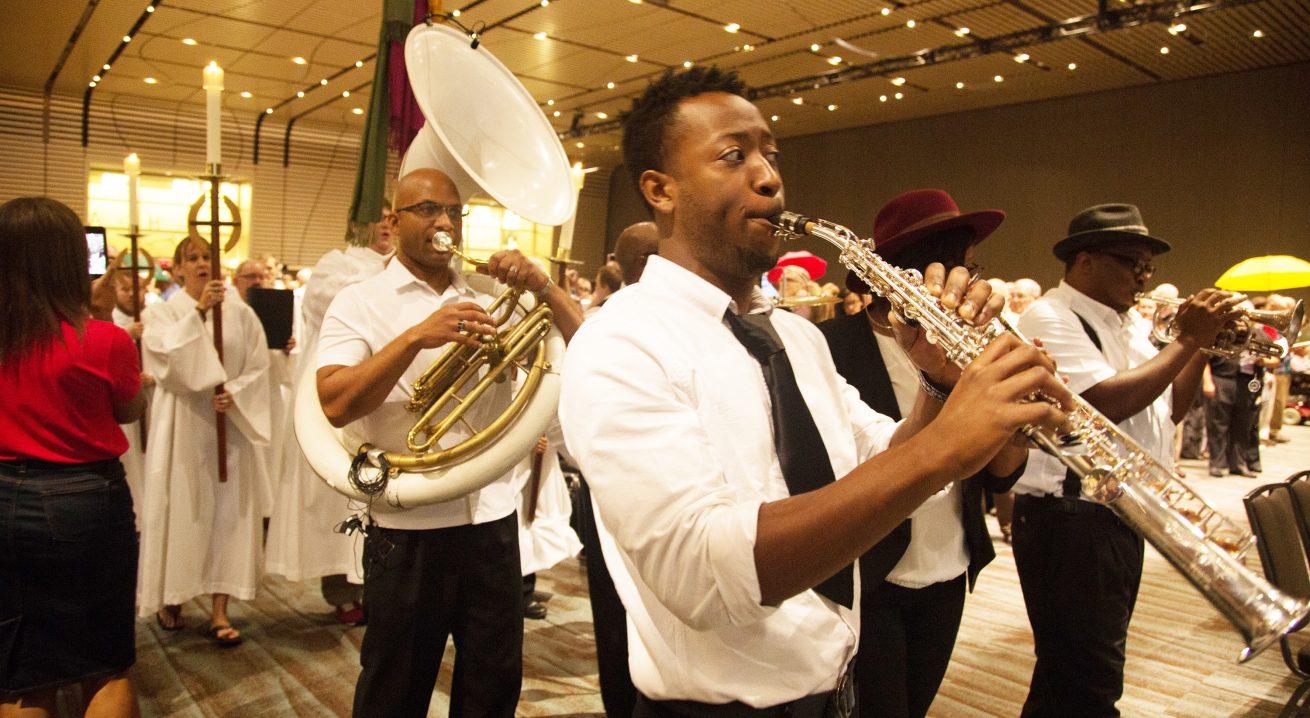
The psalmist calls to mind the episode from Exodus to warn the people against complacency in worship. The hearers of the psalm were told not to harden their hearts, as at Testing or Quarreling, and not to test God. What were they to do instead? The psalmist’s response: Move and sing! The first imperative verb of Psalm 95 is not “come” but Go! Walk! (The same verb root used when God commanded Avram to leave the land of his father.) And the psalmist does not command quiet, orderly singing but shouting (ranan) and war cries (rua). The people are to come to God’s presence with lots of noisy worship! In this psalm, God is thirsty for loud, bodily praise and worship, as if on a day of enthronement.
Hundreds of years later, Jesus was moving his body through Samaritan space. He came to a deep well and was thirsty. He asked a Samaritan woman to do the hard work of drawing some water up from the well to give him a drink. She balked—not because of unwillingness but based on her understanding of Jewish sensibilities. Jesus turned the tables, however, and said that she should be asking him for living water. As Jesus made his case, the woman was intrigued. She was tired of moving her body daily to collect water that did not fill.
The people are to come to God’s presence with lots of noisy worship! In this psalm, God is thirsty for loud, bodily praise and worship, as if on a day of enthronement.
What follows is a complex discussion about thirst for knowledge of the Messiah and in what direction people should move their bodies—Zion or Gerazim. The takeaway is that the woman and many of the Samaritans whom she told about the encounter came to find living water in Jesus that required no trips to a well or pilgrimages to mountains. And, while they still had to find water to slake their physical thirst, they found the person they scarcely knew they were seeking: the messiah who would lead them to salvation and knowledge of God.
What does all this mean? It’s OK to be thirsty and to acknowledge the needs of our bodies. We can respond to those needs in different ways, some of them healthy and some less so. God welcomes cries of desperation, need and even complaints (the psalms, prophets and even Jesus’ prayer life bear this out). What God will not abide is tests—“is God with us or not?”
We could follow the advice of the devil in the wilderness and test God with our bodies—risking the modern equivalent of throwing ourselves off the temple (Matthew 4:6). Or we could use our bodies to offer loud, bodily worship and praise for the times that God has met our thirst and hunger in the past, while we ask God to continue to do so in the future.