 Logout
This year, Lutherans—along with other Christians around the world—have an opportunity to enter the mysteries of water in worship. Over the five Sundays of the Season of Creation, water and its many forms will be contemplated, learned from and joyfully thanked in worship services around the world.
The celebration is ecumenical. In 1989, Dimitrios I, Ecumenical Patriarch of Constantinople (leader of the Eastern Orthodox Church), established Sept. 1 as the Feast of Creation, and Pope Francis adopted it for the Roman Catholic Church in 2019. The World Council of Churches extended the feast to become a season of creation, ending with the Feast of St. Francis of Assisi on Oct. 4. In recent years the Vatican and many ecumenical partners, including the ELCA, have adopted this new season.
Congregations may celebrate the Season of Creation in many ways. During my years as pastor of Ascension Lutheran Church in South Burlington, Vt., our congregation learned about, boated on and worshiped next to and in Lake Champlain. Children built sand and water trays at the ECHO, Leahy Center for Lake Champlain. For one memorable gathering, Ascension teamed up with the Lake Champlain Maritime Museum to take participants out on the lake in a boat. We heard speakers from various faith traditions reflecting on water, their words interspersed with times of silence. Some members recounted with appreciation that they had never experienced silence while on water. Ascension ultimately created the “Congregational Watershed Discipleship Manual” to encourage other congregations in water awareness.
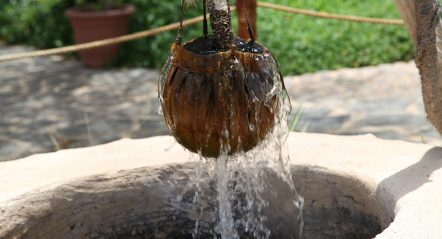
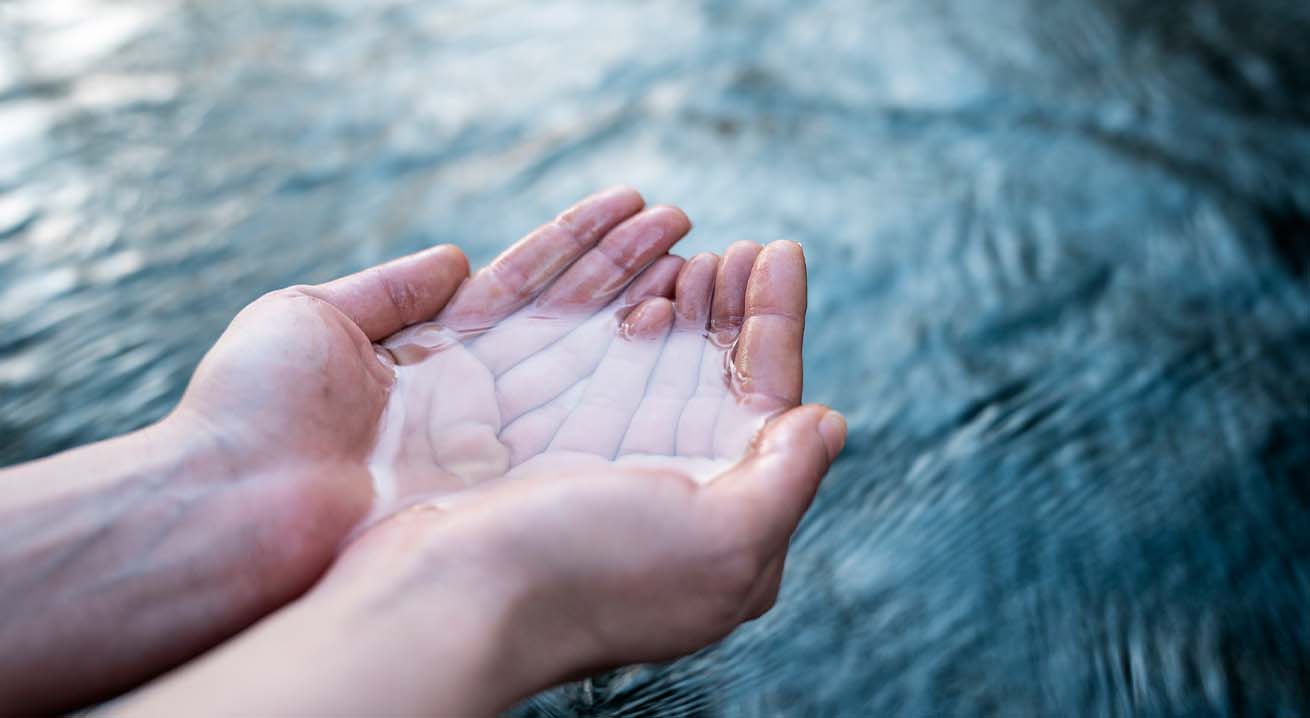
One of the most remarkable scenes in Scripture is Jesus’ encounter with the Samaritan woman at the well (John 4:4-22). Jesus refers to himself as “living water,” creating a profound connection between the living reality of Christ and the water that covers the earth. The image brings Jesus close to—indeed, inside of—every living being, as we are all made of water. In fact, so much water covers our planet that we might call Earth the water planet.
Water is the mysterious essence necessary for life, symbolic for Christians of a living relationship with Christ. Yet we still don’t fully understand the mysteries of water.
Listening to water
Can we reverentially listen to water and hear the messages that may signify the mystery of life? To be in silence near water can inspire awareness, wonder and prayer. Many people find meaning in drawing near to water in silence and reflection.
As we enjoy and learn about living water, we understand more deeply the concept of a watershed. As stated in “Resolution Urging Stewardship of the Gift of Water,” adopted by the 2016 ELCA Churchwide Assembly, a watershed is “the ground that water flows within as it moves toward a stream, river or lake, and is a natural boundary within God’s creation, unlike arbitrary and haphazard geopolitical boundaries, and all of God’s creatures live in a watershed.”
Coming close to the watersheds that embrace our congregations, we learn to recognize our kinship with all of life. We are also led to ask about justice issues. Who truly has access to this water? Is it clean enough for our baptismal bowls—or for us to baptize people in it? What plants, fish and amphibians rely on this same water for life? How can our worship services express our gratitude and embeddedness within the watershed? Eco-justice issues abound.
Coming close to the watersheds that embrace our congregations, we learn to recognize our kinship with all of life.
“Season of Creation Celebration Guide 2026: Living Water” provides an encompassing vision of these challenges: “Although access to drinking water is a human right for all, the multifaceted water crisis disproportionately affects vulnerable communities, future generations, and non-human life that has no voice in political or economic systems.” Further, “the impact on ecosystems and biodiversity is devastating: according to the World Wide Fund for Nature, we are facing catastrophic declines in aquatic wildlife, with freshwater populations dropping by a staggering 85% and marine populations by 56% in the last 50 years.”
At the heart of these crises, climate change and rampant deforestation foster droughts and intense rain events. Such events interfere with the atmospheric water cycle, intensifying desertification around the world and further weakening the forests and other ecosystems necessary to sustain the well-being of the living community and the web of life.
While enjoying the Season of Creation and moving our worship and spiritual practices as close to Earth’s living water as we can, congregations can be educated about water and encouraged to support groups that advocate for it (such as Ocean Conservancy, the Natural Resources Defense Council, the World Wildlife Fund and Lutheran World Relief). We can also raise awareness of excellent books and resources. Finally, we can vote for political candidates who address climate change and other environmental issues.
May we all love, foster and come home to living water.