 Logout
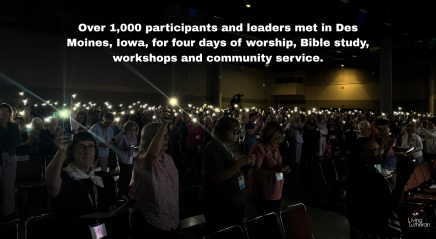
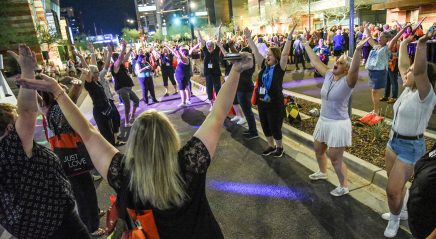
As Election Day approaches, political messages are coming from all corners of the political landscape, promoting division in an us-versus-them narrative, leaving little room for reflection or community building. At the Women of the ELCA Triennial Gathering, July 16-19 in Des Moines, Iowa, participants were invited to engage civic life differently.
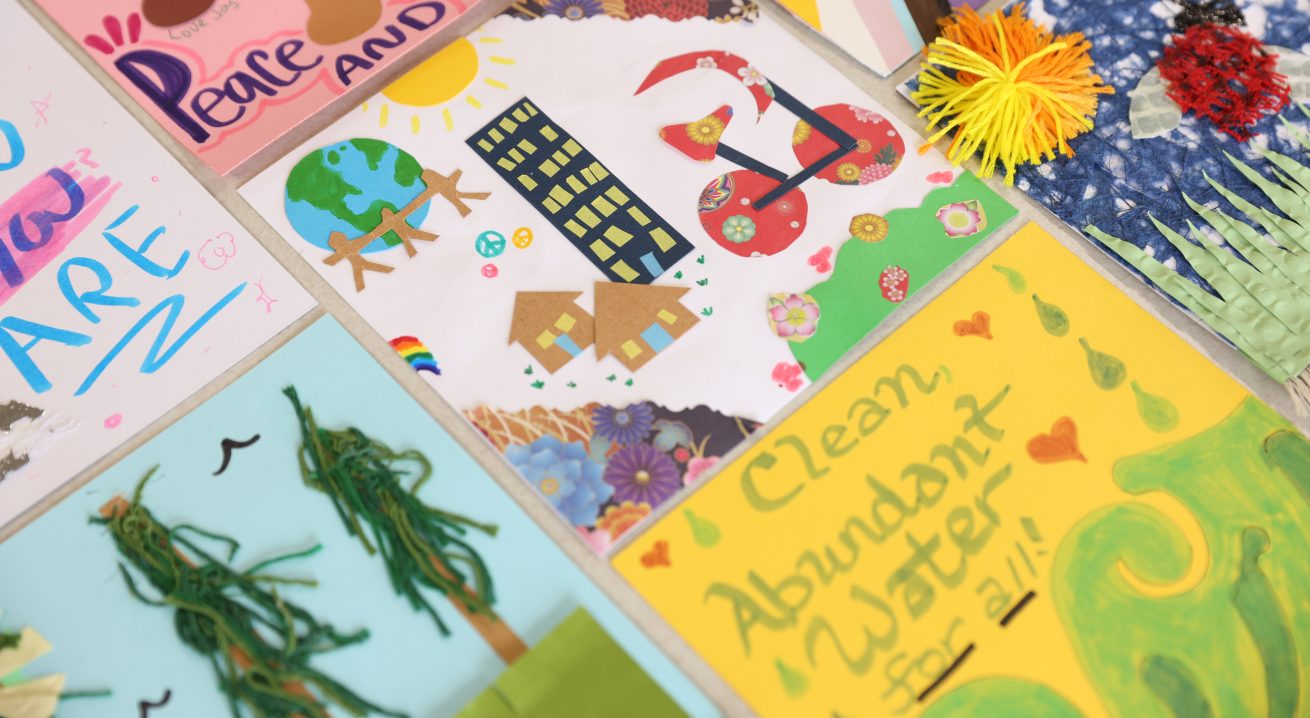
Through a project called “Craftivism as Advocacy: Quilting God’s Dream for Our Nation,” participants created paper squares filled with messages of hope, justice, care for creation and love of neighbor. They were then added to a larger “quilt,” a patchwork display that hung on one of the walls at the event.
As women approached the craftivism station, several were drawn in by the craft supplies, curious to find out about the project hosted by Witness in Society, the advocacy arm of the ELCA. People would sit down, talk with team members and begin working on their own square, said Kacy Kostiuk, director of the Lutheran Office for Public Policy in Wisconsin. While they crafted, they got to know other women attending the gathering.
“The activity seemed to draw in some women who were in groups and wanted to do an activity together, as well as women who were walking around alone and were seeking a chance to connect with others,” Kostiuk said.
Each person was invited to pause, listen, think and pray before they began creating their square. Kostiuk said that some were hesitant to engage at first, with several not considering themselves crafty. But once they were willing to try, they found themselves enjoying the experience and the chance to be part of something larger.
Crafting leans into different tenets of advocacy work, from prayer to community building, as well as conversation, writes Sarah P. Corbett in her book How to Be a Craftivist: The Art of Gentle Protest (Unbound, 2018).
The approach allowed people to partake in advocacy in nonviolent, community-building ways, leaning into core ideas of the ELCA’s “Faith and Civic Life: Seeking the Well-being of All” social teaching. In the statement, the church holds that government is a gift where God works to preserve life and promote justice for the neighbor.
“It showcased the ways we can be different and the unique gifts each person brings, and also the ways we can work together to create something even more beautiful and meaningful when we come together.”
Craftivism and quilt-making as a form of advocacy work aren’t something new in the United States. One of the most recognized advocacy quilts is the NAMES Project AIDS Memorial Quilt, more popularly known as the AIDS Memorial Quilt, which has been displayed on the National Mall in Washington, D.C., numerous times. The quilt has become a 54-ton community project, covering more than 1.3 million square feet.
Other craft projects include the Monument Quilt, a patchwork project displayed in 2019 at the National Mall that remembers more than 3,000 survivors of sexual assault and gender-based violence, and Marianne Jørgensen’s anti-war Pink Tank project, where she knitted a large quilt to cover a World War II-era tank in 2006 in Denmark.
In Des Moines, the project was a way to bring groups together as well as strengthen the bonds between different women in the same family.
“One afternoon, a group of women who were part of a multigenerational family group came to our craftivism table and made paper quilt squares together,” Kostiuk said. “They brought a great energy to the table and seemed to have a great time doing the project together, laughing and joking, talking about what they were creating, and encouraging each other when someone felt ‘stuck.’”
Rather than focus on election outcomes, many of the quilt squares reflected concerns that have long been part of the ELCA’s advocacy work. Several highlighted access to clean water while others focused on safe neighborhoods and the ability for everyone to live full lives.
“It showcased the ways we can be different and the unique gifts each person brings, and also the ways we can work together to create something even more beautiful and meaningful when we come together,” Kostiuk said of the Des Moines quilt. “The paper quilt displayed powerful messages and imagery about peace, justice, care for creation, welcome and inclusion, and loving our neighbors.”
Communities throughout the United States are invited to participate in their own quilt projects, using resources provided by the church at elca.org/elections. There, people can find instructions on how to participate in the project, including a prayer to help center people and ideas on what to do with the patchwork quilt after completing the project.