 Logout
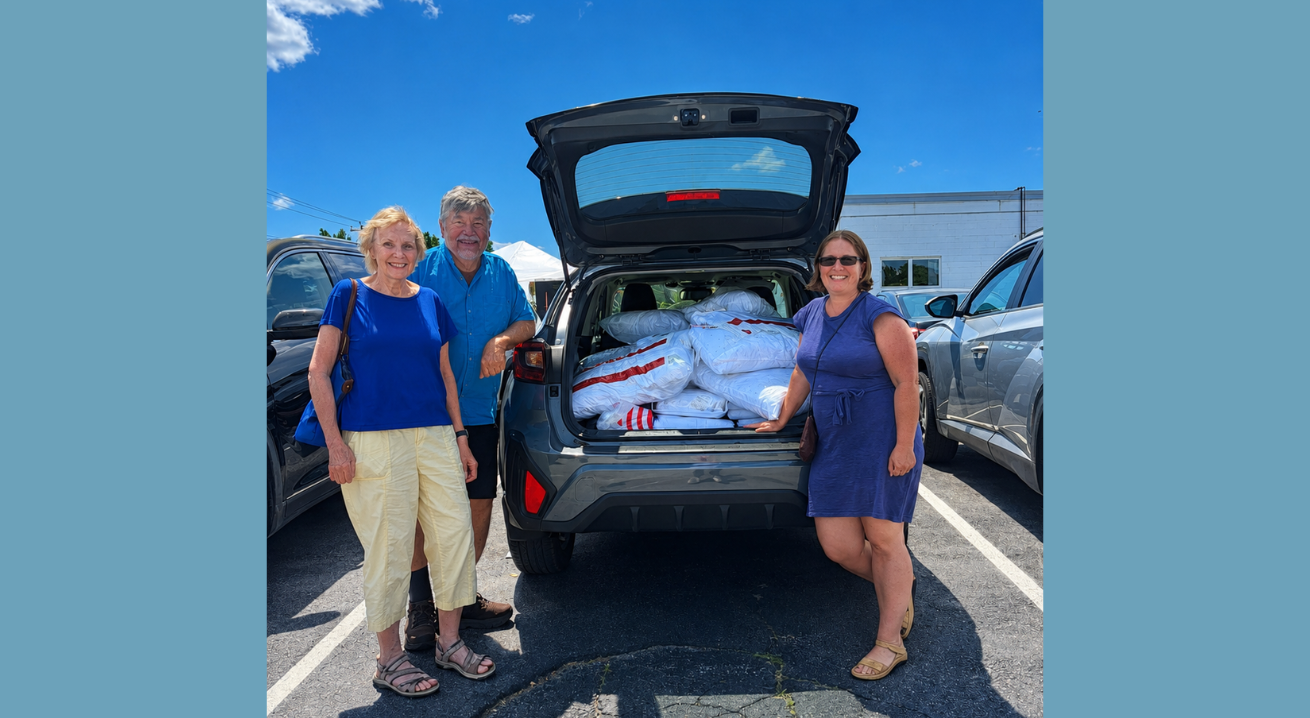



If you’re searching for real-life examples of the breadth of work ELCA World Hunger does, look no further than Doreen and David Rinas.
For the Rinases, 50 years of marriage has meant 50 years of service to community and church. A former school counselor and retired Lutheran pastor respectively, Doreen and David have supported refugees and sponsored asylum seekers, led the New England Synod Global Mission Team’s companion relationships with partner Lutheran churches in Honduras, chaired the synod’s Refugee and Immigration Task Force, and co-chaired the synod’s ELCA World Hunger team. As part of the World Hunger Leader Network, they’ve led advocacy trainings and hands-on service-learning opportunities and helped award hunger-related grants to local congregations.
“I always support Doreen’s work, she always supports mine,” David said. “We’ve developed quite a ministry team together.”
Similarly, the ministry of ELCA World Hunger and its partners extends across every part of the church, both in the United States and around the world: from the Lutheran Center in Chicago, to synod-level hunger teams, to the ELCA World Hunger Leader Network, to congregations with hunger-related ministries, to partner nonprofit organizations that address hunger and the issues connected to it.
World Hunger’s work is about more than simply providing food for immediate hunger relief. It’s about tackling the overlapping root causes of hunger and poverty.
“Food alone is not the whole answer if people cannot access food because of lack of transportation, lack of a job, lack of geographic accessibility to a store, need to care for family members, and so on,” wrote Vernita Kennen, a hunger and creation care advocate in Minnesota, in a Saint Paul Area Synod blog post.
“Just feeding people is never the question,” affirmed Peter McLellan, ELCA program director for hunger education. It’s about relationships first.
“Because we’re in relationship with people, we can ask … ‘What is it that you need?’” McLellan said. “Through relationship, we can understand why hunger and poverty exist. By walking with communities, we can have a fuller understanding of what doing anti-poverty ministry looks like beyond going to a soup kitchen. It’s deeper than that. Sometimes it involves things like education or organizing or advocacy. But it starts with relationship that’s rooted in the church and the gospel.
“This is how our church addresses poverty.”
Accompaniment near and far
This commitment to a holistic approach to hunger and poverty led ELCA World Hunger and the Rinases to partner with Domestic Hunger Grant recipient Greater Portland Family Promise (GPFP) of Portland, Maine. GPFP primarily supports families experiencing homelessness and housing insecurity, focusing especially on helping immigrants and asylum seekers in their community.
However, GPFP’s mission isn’t just about helping families find housing. The organization provides transitional housing to bridge the gap between homelessness and finding affordable and available housing. They help immigrant families, primarily from Angola and the Congo, navigate the housing process alongside the mountains of paperwork involved with applying for asylum, getting work authorizations, taking work certificate programs, applying for municipal and federal benefits, and learning English. They host arts and crafts days, gatherings at local parks and cultural celebrations in which client families prepare food from their home countries to share.
Recognizing the value of a sense of home, GPFP runs an ELCA World Hunger grant-funded culturally appropriate food program, which provides 50 families with an African or culturally appropriate food delivery each month.
Responding to rising U.S. Immigration and Customs Enforcement activity in Maine, GPFP recently shifted to helping families secure legal representation for getting family members out of detention and assisting affected families with rent, extra food and connection to a caring community.
The list of programs offered goes on and on. “Our whole goal is to help families create a sense of home, community, belonging,” said Michelle Lamm, GPFP executive director. “We try to do that with wraparound support that is so much more than just finding an apartment and dropping someone off.”
They don’t do this work alone. Congregations like First Lutheran of Portland offer support that goes beyond finances. That support also looks like serving as the storage location for donations of bedding and household items. First Lutheran volunteers package these items into “move-in kits” for families transitioning into their new homes.
“There have been some beautiful moments of community love and support blossoming up around these hard times,” Lamm said.
After first reviewing GPFP’s ELCA World Hunger Domestic Hunger Grant application four years ago, Doreen and David Rinas stayed connected with the organization’s work, expanding their support from dropping off donations to building a service-learning educational experience for Portland area Lutheran churches. Funded through an Education and Networking Grant, “Accompaniment Near and Far” showed workshop participants how ELCA World Hunger and organizations on the ground like GPFP partner to address the root causes of hunger and poverty.
“A project like this is an obvious one to support because it’s taking the learnings of our hunger leaders and expanding them to a larger network, to invite more people into their work,” McLellan said. “It’s teaching other folks who are passionate about fighting hunger in their communities what the root causes are and where they can plug in to make an impact.”
David Rinas first started supporting World Hunger in 1974, his last year of seminary. Fifty years of service hasn’t dimmed his passion for its work.
“If the church as a whole is going to do one thing, this is it,” he said.
“It’s exactly what Jesus said—to feed people.”
The feeding of the 5,000 is the only story that’s in all four Gospels. Feeding people is just so central to the gospel and to our heritage as Lutherans.”
If you’d like to get involved in ELCA World Hunger’s life-changing work to upend the cycle of hunger and poverty, you can take these actions:
- Contact ELCA World Hunger at hunger@elca.org.
- Reach out to your synod office. Almost all synods have an active hunger team. You can locate your synod on the ELCA Online Directory.
- Explore “What is a Hunger Leader?”, an online, self-paced course that introduces ELCA World Hunger and the ways you can plug into anti-poverty work in your community.