Logout

Editor’s note: One way the ELCA is a connected church is through Lutherans’ shared love of music. As Reformation Day approaches, we’re sharing a series of articles exploring how Martin Luther’s musical influence connected congregations in the past and continues to do so today; Gen Z’s ties to our historic liturgy and theology; readers’ reflections on their favorite hymns; and the 20th anniversary of Evangelical Lutheran Worship.
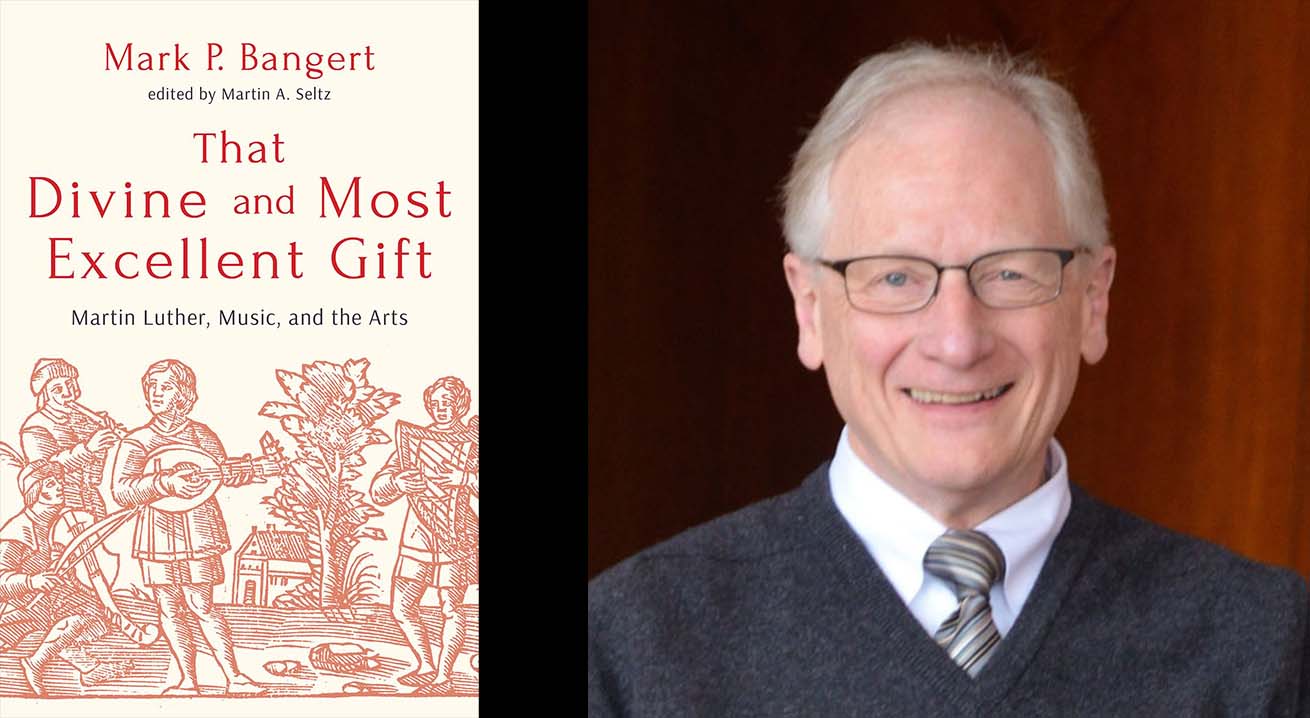
Ten years ago, scholar, pastor and musician Mark P. Bangert began work on a book about how Martin Luther’s theological valuation of music could inspire and inform today’s understanding and use of music, especially in Christian worship. When he died unexpectedly in 2023, retired ELCA pastor Martin A. Seltz stepped in as editor to complete That Divine and Most Excellent Gift: Martin Luther, Music, and the Arts (Fortress Press, 2025).
Living Lutheran talked with Seltz about how the collection pays tribute to both Luther’s theology and Bangert’s scholarship.
Living Lutheran: How do you describe That Divine and Most Excellent Gift to new readers?
Seltz: Music surrounds our daily lives in many ways. Earbuds are everywhere. TV and film rely on soundtracks. Many of us sing in church and some in the shower. What is music, anyway? Where does it come from? And for people of faith, what does God have to do with it? This book takes what one well-known music lover, Martin Luther, had to say about music and brings it into conversation with our experience of music in the 21st century.
Could you share a bit about your relationship with Mark Bangert?
Mark was my seminary teacher and a mentor for many years afterward. From his own experience juggling pastoral and musical ministry, he helped me navigate that balance. His fluency in both theology and music led to profound reflection on the relationship between the two that deeply influenced me.
How did this project come to be?
Mark’s interest in Luther’s theology of music goes back decades. … [After his death,] Mark’s spouse, Kristi, graciously invited me to help bring Mark’s work to publication. Kristi provided the manuscript as well as Mark’s voluminous notes, research materials and other unpublished writings. Together we chose from those writings several to include that would complement his manuscript.
How did Luther think about music?
For Luther, music is God’s biomusicology—like you and I and rock and rain and platypus and swan. This creature music is God’s gift to other creatures, such as birds and humans. For us, music brings joy, delight, comfort and ways of expressing ourselves beyond words.
But what’s more, this creature music is God’s highly excellent and effective way of communicating the gospel—especially when it’s attached to God’s word of grace and promise.
Luther uses a feminine image common to his time, Frau Musica (Lady Music), and calls her the Holy Spirit’s premier way of getting the gospel into the human heart. Heart is the place where, yes, emotion resides, but also will and wisdom. It’s the place where God plants faith, with music being a most powerful tool God uses to help it flourish.
What was unique about Bangert’s perspective on Luther’s relationship to music?
A unique and timely aspect of Mark’s work is how he brings insights about Luther’s theology of music into conversation with contemporary thought about music’s origins. Over the past three decades, the scientific exploration term “biomusicology” has developed. … Among the startling proposals emerging from this branch of evolutionary science is that human song came first and only later developed into human speech. Some researchers have studied songbirds and how their intricate melodies might have influenced music’s origins.
Luther was determined to provide songs that joined people’s voices in singing good news.
[In the book,] Mark leads us on a fascinating train of thought between Luther and today’s science. He reflects on the reformer’s fascination with birdsong, which is often related to his time in the Wartburg Castle, his “safe house” after being condemned for his teaching. The area was a haven for songbirds—notably nightingales. Luther marveled at how music’s gift showed up in many of God’s creatures, especially songbirds. … How might he have engaged the musical theorists of our time?
You write about Luther’s insistence that music isn’t a static concept but one that’s always in motion—im Schwang. Could you explain that idea?
Performing musicians will tell you that music is, above all, the making of music—“musicking,” some have called it. It’s much more than printed scores. Even recorded music—which, in the last century, has come to dominate our perception of music—is, in its way, not static. Luther insisted that the gospel of Jesus Christ must always be a sounded gospel: good news that’s sung, preached and spoken out loud, in real time—news so good it just has to be shared by living voices.
Music joined to words adds another dimension to the sounded gospel, making the combination especially powerful. It’s why Luther was determined to provide songs that joined people’s voices in singing good news. When people sing together, breathe together, move together, and the Spirit weaves her mighty work into the mix—that’s music im Schwang!
What do you hope readers take away from the book?
Lutherans can appreciate the ways Luther prized and promoted music’s gift and promise, both in their worship and in everyday life. Those who lead worship—pastors, deacons, church musicians, choirs—can find help here to ground and guide their tasks. How do we evaluate and shape music for our context? How do we make the most of its gift to sound the good news? And anyone who wonders what music is and what it’s for can enjoy Mark’s engaging take on these questions, from Luther’s time to our own.