 Logout
Martin Luther’s assessment that we as God’s people are simultaneously sinners and saints has sometimes rankled. Nonetheless, the older I become, the more I acknowledge Luther’s honest insight—and my own brokenness.
Loneliness, grief, anger, fear and power (and sometimes just intense fatigue) can too easily dismantle our best intentions and leave us standing shocked by our words and behaviors. I’m especially guilty in the car, judging and berating my freewheeling neighbors; during visits to my parents, when old patterns and memories tempt; and at the end of the school term, when energy is low and I long for more personal support.
Amid turbulent times, the inclination to point outward at what’s going wrong, at decisions and behaviors with which one disagrees, becomes especially strong. I could choose to direct significant energy into cursing warmongers and those wielding power to harm. Instead, lately I’ve concentrated on praying for the Spirit’s strengthening to become a wiser, more diligent peacemaker and peace-builder right where I find myself.
Additionally, I’m motivated to continue identifying places where I may yet grow in embodying God’s love and grace to others, especially those different from myself or those deeply in need.
I’ve also prioritized loving, intentional repair: that is, when I’ve made a mistake or behaved unkindly, to admit responsibility quickly, to acknowledge what went wrong, and to work toward healthy reconciliation. As many in the public sphere model opposite trends, it’s all the more reason to reach for daily humility and humanity, a generous grace, honest recognition of one’s mistakes, and acceptance that none of us walks this road perfectly.
I have hurt others. At times, I have harmed others with words, with actions or with my failure to act—and fallen short of God’s dream for me. Remembering such moments can be heart-eroding, coloring hours and days with the grays of guilt and shame. However, Jesus doesn’t want us to be mired in regret, inviting us instead to something that is both hard and liberating.
We are profoundly loved by God. We are seen; we are known by name; we are forgiven and restored.
My former husband and his father shared a painful past, rooted in generational abuse. During our marriage service, we chose to invite both prepared and spontaneous words of prayer from the gathered community. After two beloved individuals offered words of blessing, Stuart’s father came forward as we knelt at the altar. We both reached out an arm to welcome John between us. In a broken yet determined voice, he prayed, “It’s so hard. … But please, God, bless their marriage.”
Remembering that holy moment still brings tears to my eyes. Though not an apology, John’s prayer embodied vulnerability, recognition of hurt and longing for future hope. In many ways, he spoke the most honest words that day. As I daily call on our Lord’s help, I pray to be that courageous, both in naming truth in community and in willingly acknowledging my brokenness and sin.
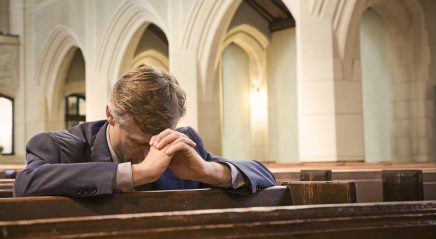
The older form of corporate confession and forgiveness remains the most powerful for my spirit: “We have not loved you with our whole heart. We have not loved our neighbors as ourselves .…” Each day, I fall short in loving God with the whole of myself and in loving my neighbors as I would wish to be loved. I need to name that, to do the interior work of self-searching, confession and accountability. I long to hear the freeing words of forgiveness in response. Above all, I need to receive Christ’s body and blood to strengthen me for the journey ahead, reminded that our Lord’s unconditional grace is still, and always, held out to me and embraces me.
We are profoundly loved by God. We are seen; we are known by name; we are forgiven and restored. More remarkable still, our gentle Savior rejoices over us with singing and calls us beloved children. May we walk each day in courage, humility and hope, trusting that our redeeming Shepherd’s love overwrites our sin, draws us home, and sets us free to become the fragile yet Spirit-led saints we’re also created to be. ✝