 Logout
My wife, Janie, recently reminded me of a Bible story I’ve read countless times but perhaps never fully understood.
In Mark 2, a paralyzed man is brought to Jesus by four friends. The house is packed. The crowd blocks the door. There is no room left, not even outside. Most people would have gone home. Instead, the men climb onto the roof, tear it open and lower their friend down on a mat before Jesus.
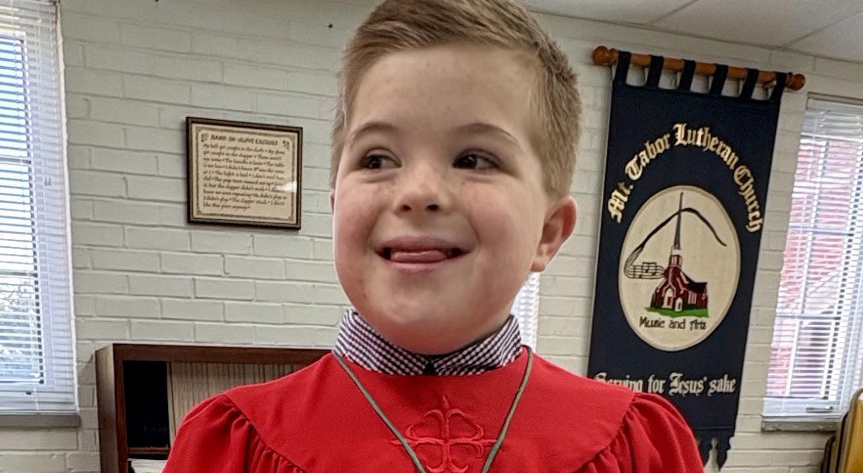
As parents of a son with Down syndrome, Janie and I immediately recognized ourselves in that story.
For much of Marsh’s life, we have felt like the people carrying the mat. We have advocated in schools and navigated sports programs. We’ve worked to help others understand who our son is and what he needs. Like many parents of children with disabilities, we have spent years opening doors, building bridges and, occasionally, climbing onto roofs. That is simply what parents do.
But Janie pointed out something I had overlooked. The people carrying the mat for the paralyzed man were not family. They were simply friends.
That realization stopped me in my tracks.
The miracle in this story begins because people who were not directly responsible for the man decided that his belonging mattered. The church has an opportunity to be those friends.
Sometimes carrying the mat means helping the person on it. Sometimes it means helping the people who have been carrying it for years.
For many families affected by disability, church can be complicated. We come carrying hopes and fears. We want our children to know Jesus. We want them to experience Christian community. We want them to discover their gifts and share them with others.
Yet many families quietly drift away from congregational life. Not because they have lost faith. Not because they reject the church. Often, it’s because they are exhausted, weary of being the only ones carrying the mat.
Over the years, our family has worshiped in different churches and participated in a variety of children’s programs, vacation Bible schools, youth activities, choirs and other congregational events. We’ve met many kind and faithful people along the way. Yet one lesson has remained consistent: families affected by disability often carry burdens that are invisible to others.
I don’t believe most churches intentionally exclude families like ours. The challenge is often not a lack of love but a lack of understanding.
Many parents arrive at church already exhausted from advocating at school, coordinating therapies, managing appointments and navigating daily challenges. What they long for is not perfect programs or expert volunteers. They long for a community willing to share the load. They simply need friends willing to help carry the mat.
Time to recharge
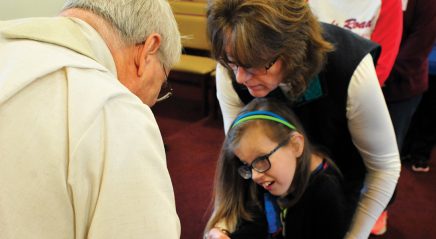
Families affected by disability also need something that is rarely discussed in church life: rest. One of the greatest gifts a congregation can offer is the gift of respite. A trusted volunteer. A buddy program. An inclusive youth activity. A few hours in which parents know their child is safe, valued and participating in the life of the church.
Those moments do more than provide a break. They allow parents and caregivers to recharge, strengthen their marriages and relationships, and return renewed for the work to which they have been called.
Sometimes carrying the mat means helping the person on it. Sometimes it means helping the people who have been carrying it for years.
The opportunity before the church is larger than many of us realize.
May every family who enters our churches discover what God intended all along: that they belong.
At the same time, many Lutheran congregations are wrestling with questions about the future. We pray for renewal. We seek ways to connect with younger families. We wonder how to strengthen our congregations for the next generation.
Perhaps one answer is already standing at the church door—or waiting to be lowered through the roof.
As Lutherans, we confess that our worth is not earned by what we can do—it’s given by God’s grace. Families affected by disability are looking for that grace, along with community, friendship and belonging. They are seeking a place where their child is seen as a beloved child of God. Like all of us, our son does not bear the image of God because of what he accomplishes. He bears the image of God because he is God’s child.
I believe the Lutheran church is uniquely positioned to lead in this work, not because inclusion is fashionable but because it is deeply rooted in the gospel.
Perhaps the next revival in the Lutheran church won’t begin with a program, a campaign or a strategic plan. Perhaps it will begin when congregations decide to become the friends on the roof.
As parents, Janie and I will continue carrying the mat. We will continue advocating for our son because that is what parents do. But the story in Mark 2 reminds us that the people carrying the mat were not family members. They were friends.
That is the opportunity before the church.
May we have the same courage. May we be willing to climb onto the roof. And may every family who enters our churches discover what God intended all along: that they belong.