 Logout
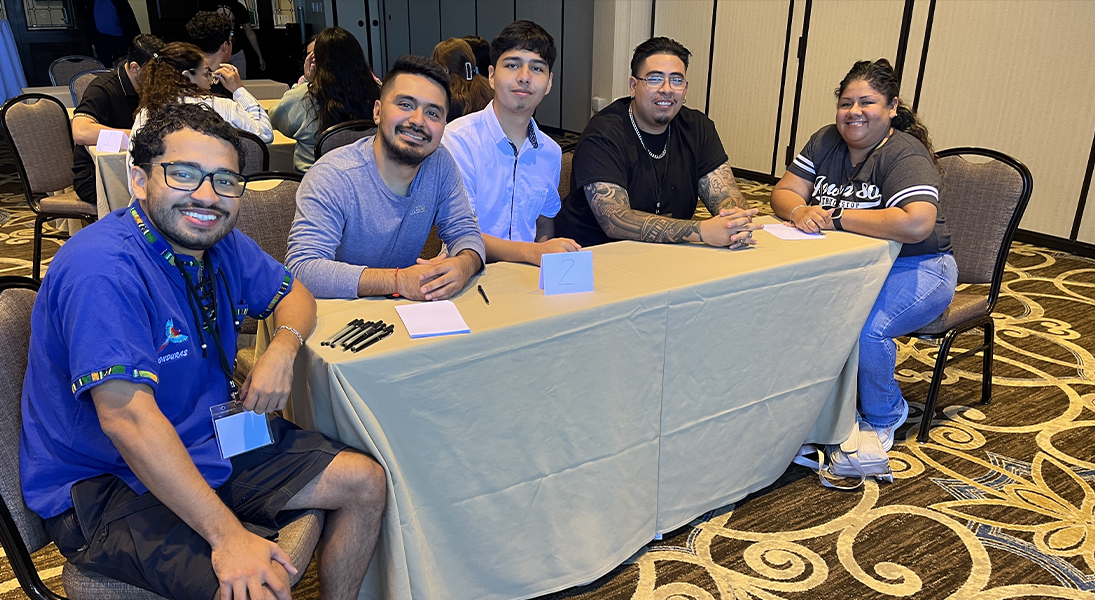
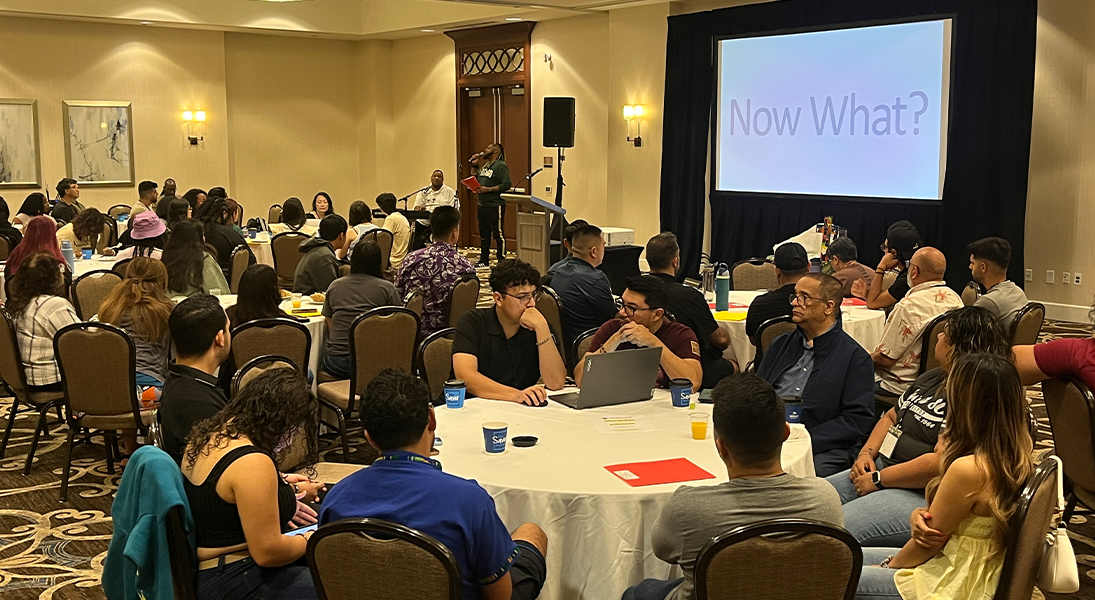


This fall, I had the privilege of attending the ELCA Multicultural Young Adult Event in New Orleans. Organized by the churchwide organization’s Ministries of Diverse Cultures and Communities, the gathering was held Sept. 4-7 at the Hilton New Orleans Riverside, along the city’s beautiful riverwalk.
I was honored to represent the ELCA’s Indigenous Ministries as a lay leader at the gathering. Through many different events, workshops, breakout sessions, meals and other programming, multicultural groups of young adult Lutherans were able to connect with one another and create networks across synods and regions. I got to know new people who I wouldn’t have met otherwise, and I was able to strengthen my connections with old friends.
Each day was structured with time to worship, and attendees were called upon to share their talents and skills. Full-group sessions allowed each youth group present to give details about their backgrounds, contexts and ministries. After these sessions, attendees from different community tracks met in conference with group leaders to begin building connections.
In the Indigenous Ministries sessions, we engaged in storytelling and conversation about how we might better engage with our communities. It’s a great feeling to learn together how to speak truth to power, and to be affirmed by your church, community and culture.
Manuel Retamoza, who helped lead the sessions, agreed. “One of the experiences that I had this year in New Orleans was a better understanding of the diversity that the ELCA holds, and how important it is that each person is a member of their community—whether it be through the ELCA or other contexts,” said Retamoza, a pastor of both St. Andrew Lutheran Church and the Border Church in San Diego, Calif.
One major theme that arose in the storytelling sessions was “where each individual came from.” Great importance was placed on how each of us can define who we are.
Many backgrounds were represented at the gathering, and all representatives were given time to present their history. Through our siblings of African-descent heritage, we had an opportunity to hear from survivors of Hurricane Katrina about the storm’s history as well as the government’s inequitable response to it, rooted in racism.
Highlights and challenges
I was proud to see this group of young adults actively taking on the multitude of issues that face our church’s many and diverse communities, across the country and beyond. Not only that, but we were able to express the different contexts from which we came. One of the most striking examples of this was the hymns we sang. My own context offers a very traditional style of worship, but I genuinely love the times we had to share how much creativity there is in different peoples’ contexts.
“I had an awesome time while I got to meet amazing young adults with different points of view and experiences within our faith,” said Gwendolyn Marie Alcocer, a member of Iglesia Luterana Santa Cruz in Chicago. “I also learned so much in a small period of time but had fun as we were learning.
“As a group, we [discussed the] thoughts, experiences and ideas to share with our congregations, either to make improvements or just to share our testimonies. I would like to bring Latino young adults to be part of our church as leaders to share their experiences and thoughts about our church.”
There was some showing and telling, but the bulk of the programming was focused on the interconnection of affinity groups rather than sharing perspectives as a larger group. Smaller groups commonly voiced their frustration that multicultural dialogue wasn’t being created at an event-wide level. Many felt called to take the next step themselves, personally reaching out to others. This is something I’ve worked to do in my own context.
This facet of the event reminded me that progress is an uphill battle. To actively express all cultures, church leaders are called to listen, learn and include everyone. That being said, I was inspired to see how the event leaders were encouraged to continue this work within their own communities and contexts.
During one of the historical learning sessions, everyone introduced themselves, and I learned about some of the Lutherans in my own community. I will continue to grow these connections and bring them into my own ministry, contexts and life. I’m always glad to meet people from across the church, and this is one reason I continue to answer the call to participate in such events.