 Logout
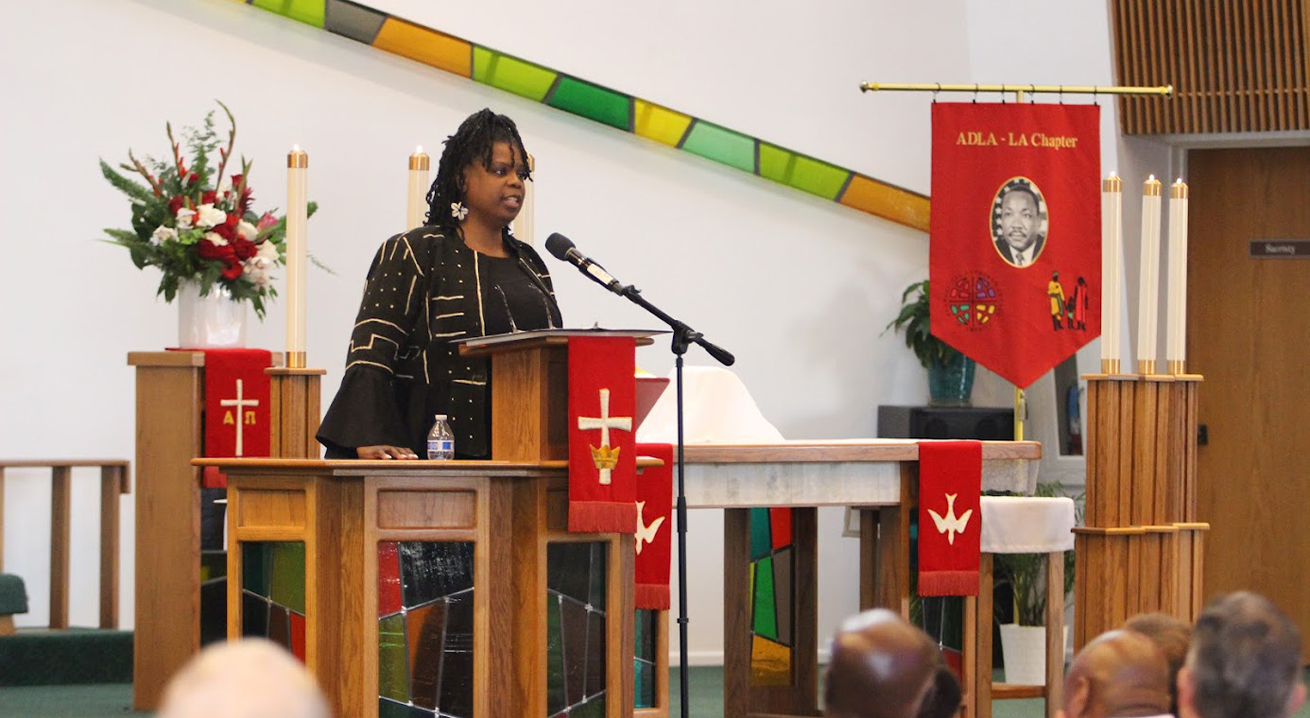
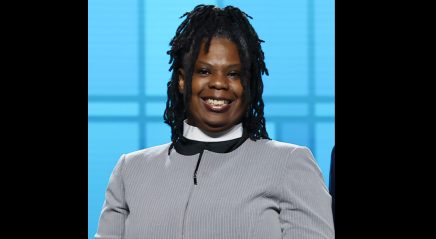
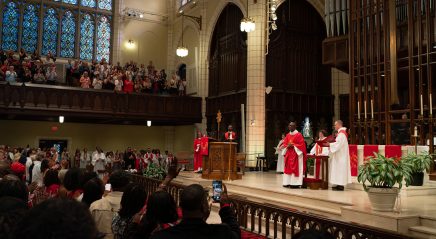
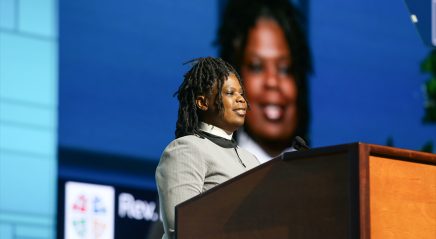
Editor’s note: On Jan. 18, Lucille “CeCee” Mills, secretary of the ELCA, delivered the sermon for the Rev. Dr. Martin Luther King Jr. celebration and commemoration worship service hosted by the Los Angeles Chapter of the African Descent Lutheran Association. In her sermon, Mills reflected on the Last Supper, when Jesus gathered with his disciples in the hours before his death. Excerpts from her sermon are presented here.
The text comes from a time when Jesus was with his closest friends. He was with those he had chosen to come and follow him. He’s trying to ready them and help them to understand why Jesus came. There were so many out there who were waiting for relief and release that they wanted someone to come in and to kill their enemies and put them on a high pedestal so that they could know the creature comforts of this life. Jesus was trying to help them to understand that that is not why he came.
Jesus spent a lot of time letting them know that if you follow me, it’s a way of suffering. Say suffering, church. Jesus wanted us to know that it does not mean that we will know all the creature comforts of this side of glory, but that we have peace in knowing that God is with us, regardless of what life brings.
The way to the cross, beloved, is filled with pain and challenges. And Jesus did not do it so that he could know glory, because he was already glorified. Jesus went through it because God had seen that possibility. I imagine, likewise, that Dr. King thought about the things that were being asked of him, as those who were part of the civil rights movement had much debate and much difference of opinion on how things should be done—and his name kept floating to the top.
I imagine that he saw the danger in it. I imagine he knew the weight of it and the responsibility of it. I imagine, though we didn’t get a glimpse of it, that there were times where he doubted: “Well, not me. Somebody else, Lord, not me.” But he had a strong example in his father, and he had a strong example in the way of Jesus, and he knew what was possible through love by what he read in Scripture. He had the example of Jesus facing his darkest hour. Dr. King knew that there were people within and without the government who wanted him dead. And we know that they were not distracted or dismayed to get to where they were going for the glory of God and the love of the community.
Telling the whole story
I often do anti-racism training, and I was doing one in North Carolina with rostered ministers when they first strongly suggested that the training would be part of the way we prepare leaders in the church—not just teaching them about financial or sexual misconduct but about being anti-racist. There were many in this meeting who were from settings with very conservative constituents. They said, “I can’t go back and say that. If I go back to my church and say that, they might not give me a raise next year. If I go back to my church and say that, they might vote for me to be removed from that congregation.”
And you know what I said? “I don’t care.” Because I have a son. He stands about 6 feet, 3 inches. Dark chocolate skin. And every night, I don’t know if he’s going to come home because someone’s going to see him and be consumed with their hatred and steal his life or perceive him as a threat. So I said, “I don’t care. I require you to risk it all. If you know your sibling is in danger, if you know your sibling is being mistreated, oppressed, I just want you to know, in my official capacity, in this moment, that I don’t care.”
Sometimes it feels overwhelming to try to articulate the pain that you experience. So anytime I’m invited, I tell the whole story. People say, “Oh, you’re being so vulnerable.” I say, “No, I need people to know the truth.” When they see me, they say I have a pretty smile, and I seem so happy. I am, because I have the joy of the Lord. It’s one of the reasons that I lean into my Africanness. Because we recognize that there will be struggle. But they don’t take away the love of Jesus that we know is being doled out to us.
Dr. King knew, when he kept stepping out and giving speeches in places that left him vulnerable, that anyone could shoot him. Watch some of the footage. You hear cameras popping, the way the light bulbs did then, and you watch him flinch because he knew that his life was in danger. But he also knew that he must honor and follow the will of God, and his peace only came through abiding in the Lord and knowing that the Lord abided within him. He understood the concept of love in a way that says, “We should love all people.” He loved even the ones who wanted him dead. It’s hard.
Answering God’s call
During the Last Supper, when Jesus saw the things that were happening in front of him, with his closest friends, he knew what this kiss would mean—he knew what this person was going to do. He was not dissuaded from his mission and continued to try to help those who were gathered that day to understand why he came and what his purpose was. He wanted them to understand this relationship with God that had grown to a level of intimacy that could never be disconnected. He wanted them to walk in the assured hope that God was with them every step of the way, every day, walking with them.
And if they felt that they were losing, that there were challenges that made them say, “The Lord doesn’t love me anymore,” he wanted them to understand that meant that what they were doing was so faithful that the enemy thought they were a threat—and that God was still with them. Beloved, people need to know that God is still with them. It’s one of the reasons why we are so awestruck at these Buddhist monks who are walking across the country, talking about peace and about rejecting the things that caused you to be preoccupied with taking care of yourself.
Jesus loved his friends so much that he wanted them to get what he came for, and he wanted them to understand the weight of the walk that they had agreed to when they answered the call to follow him. He wanted them to understand the danger, the trepidation. But he wanted them to know most intimately the peace they had from the intimate relationship of them abiding in God, and God abiding in them.
Jesus and Dr. King both saw the danger. And they went abiding in God’s peace.
These heroes that we have in our faith, in Jesus and Dr. King, both saw the danger. And they went abiding in God’s peace. That doesn’t mean that they didn’t see things that made them aware of the harm that could befall them. But it meant that they saw the love of the people, through the love that God had given them, and the awareness of how God called them to do that work.
So, if anybody’s out here thinking, “Oh, she’s not talking to me, because I can’t do nothing,” if you’re thinking, “Oh, I’m only 7 years old, I can’t do nothing,” I’m talking to you. If you’re thinking, “I’m 87, I can’t do nothing,” I’m talking to you. God is calling us. Jesus is inviting us, through this Scripture, to understand how God loves us and what that means. And that it indeed can change the world.
I encourage you this day to do what Jesus did, to come into the places where God has given you the ability to have friends. Whatever that looks like, whoever your forces are around you, whoever the people who you have influence over are around you, to go to them and to challenge them, and to say the hard thing. And when there are those who you feel are outside of that circle that God has placed in your path, to do the righteous thing. And to say it. Because God has a plan. God already knows what’s going to happen.