
 Logout
Lectionary blog for December 28
First Sunday of Christmas
Isaiah 63:7-9; Psalm 148;
Hebrews 2:10-18; Matthew 2:13-23
My “side hustle” is sometimes teaching Hebrew Bible classes at ELCA seminaries. One of the greatest pleasures I experience in teaching those courses is helping future deacons and pastors see the relevance and connections between books they know well (usually Luke, John and Romans) and books they don’t know well (usually Numbers, Leviticus and Deuteronomy). In the lectionary texts this week, the selected passages all discuss the importance of remembering all of God’s story, and discerning connections between the ancient stories and our own.
Toward the end of the Scroll of Isaiah, a voice promises to recount and remember the gracious deeds of God. God had, of course, shown many deeds of deliverance and salvation for the peoples of Israel and Judah by that time. And, with more than a hint of foreshadowing, the prophetic voice imagines God declaring, “Surely they are my people, children who will not act deceitfully” (Isaiah 63:8). The text emphasizes the point that it was not angel or messenger who saved the people, but God.
We know how the story goes (and if we don’t, just keep reading Isaiah 63): the people grieved the Holy Spirit in the days of Moses and after. The people went their own ways. Distance grew between the people and God. And then the people called upon God to remember the days of Moses, and God’s promises to Abraham. They reminded God that, even more than Abraham, God was their true father. The people remembered the old words and applied them to their time to provide help and comfort.
In the horrifying Gospel lesson of Jesus’ infancy narrative, the writer understands that everything happens because of the old words coming true(r). Three times we are told that events happened so that the words of the prophets would be fulfilled (Matthew 2:15, 2:17 and 2:23). Joseph was warned in a dream to flee from Herod’s kingdom to Roman Egypt. The holy family found asylum in Egypt and stayed until Herod died and his kingdom was parceled out to others. This happened so that Hosea’s words could be recalled: “Out of Egypt I called my son” (Hosea 11:1).
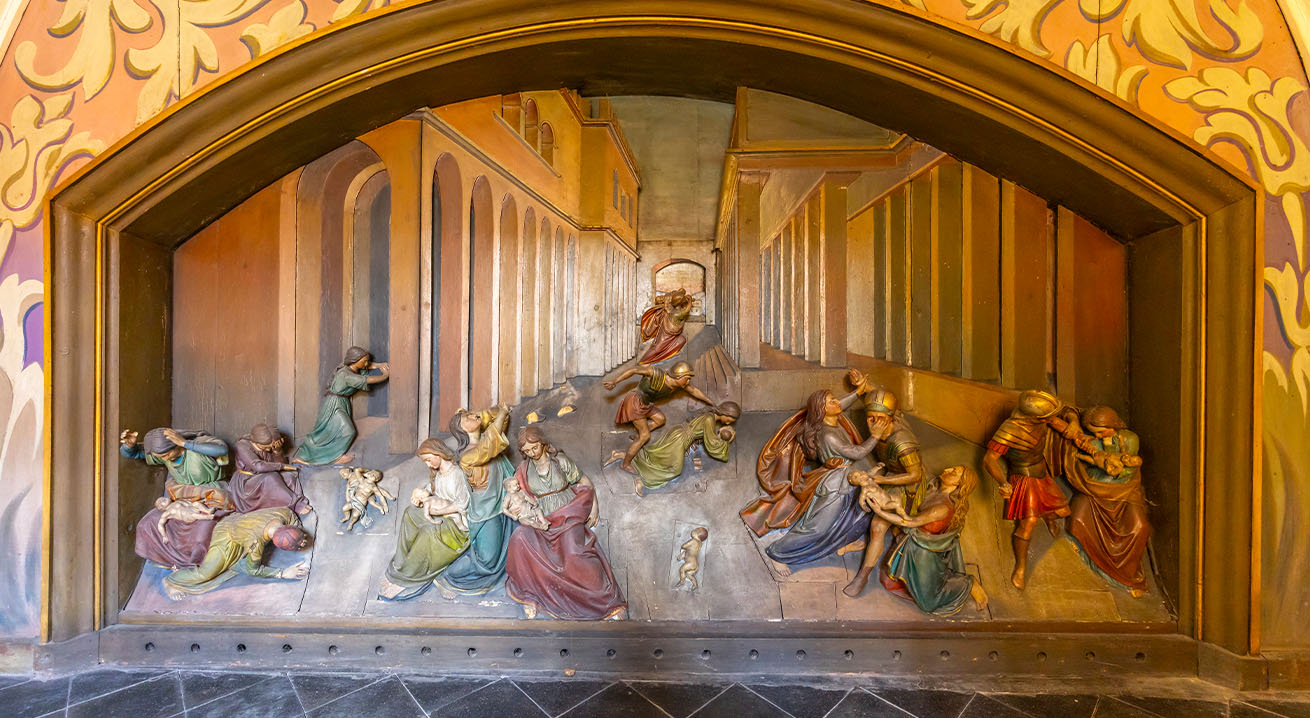
When the murderous Herod found that the magi would not be complicit in his plan to kill the new king, Herod slaughtered all the boys 2 years old and younger in the vicinity of Bethlehem. This fulfilled Jeremiah’s words about Rachel weeping for her lost children (Jeremiah 31:15).
Finally, Joseph correctly discerned that even though Herod was dead, his children still posed threats to the holy family. Another dream told Joseph to settle his family in Nazareth. There’s some fun wordplay here, and the Gospel writer is probably playing with the idea that living in Nazareth marks Jesus as the netzer (branch) of Isaiah 11:1.
So, what do all this murderous politics and harrowing travel have to do with Scripture? Why make the point to talk about prophesy fulfillment? And what comfort did prophesies provide for the other mothers of Bethlehem, who did not receive the warning to flee as refugees to another country? Only this: God knows their suffering.
In the days of the patriarchs, horrible things happened, and women wept. In the days of the prophets, horrible things happened and women wept. In the days of Jesus, horrible things happened and women wept. The death of holy innocents is costly in God’s sight (Psalm 116:15). The suffering of these families is worth noting to the Gospel writer, specifically because this is the kind of evil kingdom that Jesus is trying to replace. Jesus’ ministry holds a mirror up to Herod and Rome—and anywhere else that harms children as a matter of governance—and says, “You should have already known that God was against this. But let me remind you.”
The old stories continue to be relevant to us. The story of the Israelites’ perfidy when they abandoned community with God to engage in idolatry and injustice was relevant to Isaiah. The story of the loss and suffering of the exile was relevant to Matthew. And the story of Herod killing and disappearing children because he saw them as a threat to his power is relevant to us.
All Scripture is God-breathed for teaching, confronting, correcting and training in righteousness. The need for refugees to be safe and offered asylum, and the need to stand up to wicked rulers who hurt children as a matter of policy, are no less relevant in our time than they were in Jesus’ day.