Logout

Editor’s note: This article is adapted from “The Mustard Seed,” a quarterly newsletter from the Mission Investment Fund. For more information on MIF, visit mif.elca.org.
Augsburg Lutheran Church’s renewal began not with bricks and mortar but with a conviction: Church should be shaped by the neighbors it serves.
For years, Augsburg had hosted Winston-Salem’s winter-overflow shelter. Out of hundreds of conversations and shared meals, something deeper emerged—a call for a faith community where neighbors experiencing homelessness were not recipients of ministry but leaders within it.
That vision became the Dwelling, a federated ELCA and Moravian mission community born from deep listening through Augsburg’s shelter ministry. The community exists to be church by and for people navigating housing instability, poverty and isolation.
When the 135-year-old congregation set out to renew its campus, its first investment was not its historic sanctuary but its community center that houses the Dwelling.
“There was significant intentionality about the first portion of our renewal project being for another building on our campus across the street,” said Paul Wollner, a pastor of Augsburg. “We invested significantly in renewing this, not for our own use but specifically for the use of the Dwelling congregation. There is no question that people know that we are actively engaging with and loving our neighbor.”
With support from a loan from the Mission Investment Fund (MIF), that commitment moved from conviction to concrete action.
“We’ve been partners with MIF for decades,” Wollner said. “We’ve used them as an investment source, and we’ve recognized the work they’ve done for other congregations. MIF has always been part of our investment portfolio to ensure that we have the means we need to do God’s ministry in Winston-Salem.”
Where every voice leads
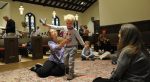
“The Dwelling is a community of belonging,” said Emily Harkins, its pastor. “We gather around worship, shared meals and mutual care, with a deep commitment to dignity and ‘with-ness’ in all we do.”
Core ministries include a mobile shower trailer, Sunday meals, a nightly winter warming center and seasonal shelters, a pay-as-you-can food truck, restorative writing, service learning, advocacy.
Augsburg’s renewal of the building triples the footprint of space available, allowing it to serve more community members while becoming a hub for nonprofits.
“One of the most meaningful impacts has been the way the updated space communicates value before a word is ever spoken,” Hawkins said. Entering a clean, thoughtfully renewed building reinforces what is preached every Sunday—neighbors are seen, named and loved.
“Augsburg’s investment in this space has not simply improved a facility; it has expanded our capacity for hospitality, worship and connection in ways that ripple far beyond the walls,” she added.
Enhancing accessibility
Once the Dwelling was renewed, Augsburg’s focus shifted to its historic 1927 building. Now, with increased use by the congregation and community, the revitalized historic landmark is poised for its next century of faithful ministry.
“Leadership knew for at least 10 years that there were multiple issues requiring care and was making a list,” said Kevin Kooken, chair of Augsburg’s Campus Renewal Steering Team.
“There is no question that people know that we are actively engaging with and loving our neighbor.”
From pathways to pews, the renewal reached every corner of the campus—outside and in—with accessibility and community needs at the fore.
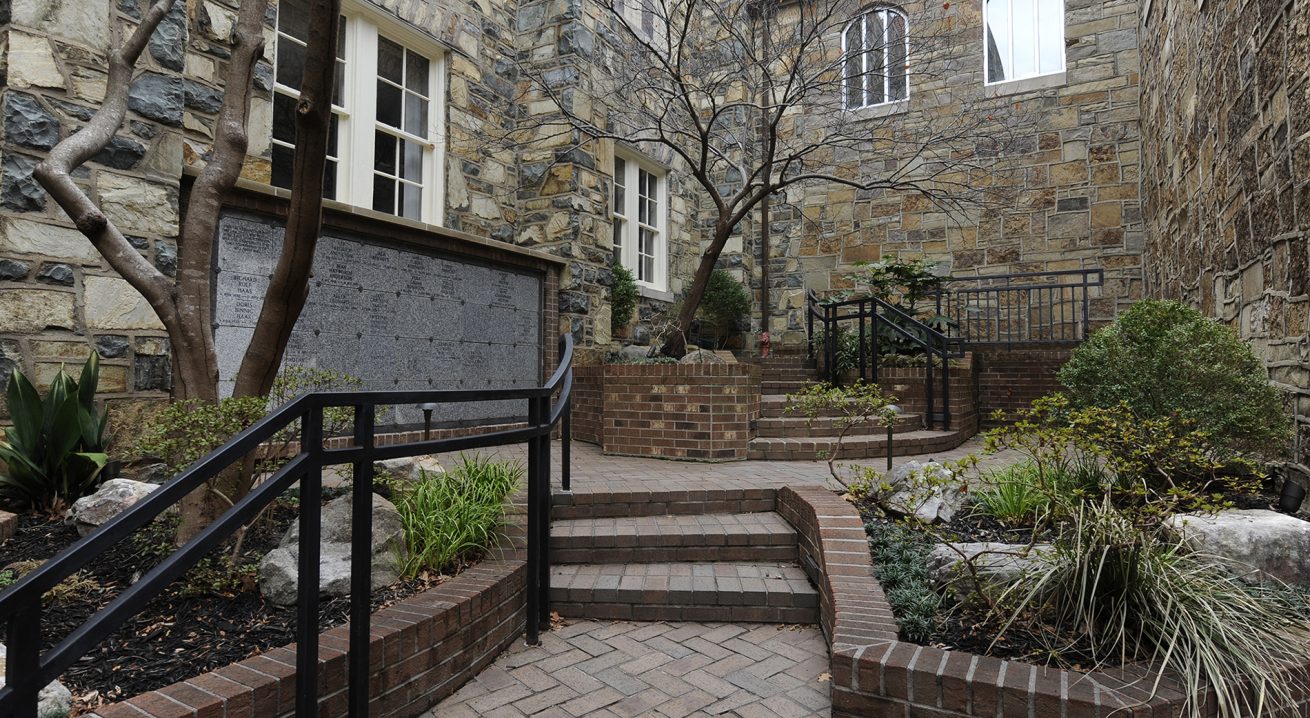
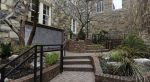
Exterior improvements include a fully restored terra cotta roof, new stormwater systems, significant regrading, an enhanced landscaping package, new Americans with Disabilities Act-compliant pathways and more than 40 additional parking spaces.
Because the site drops roughly three floors from front to back, parking and walkways were reworked to create a gradual slope, letting people move across the campus without the burden of stairs. The result is a new era of welcome—especially for those who find steps a challenge—and a more accessible campus for the entire neighborhood.
Flexible interiors
“Whatever we did in terms of renewal, we wanted to make sure that nothing we did was one-dimensional, that there be multiple ways to use spaces because we don’t know the needs of the future,” Wollner said.
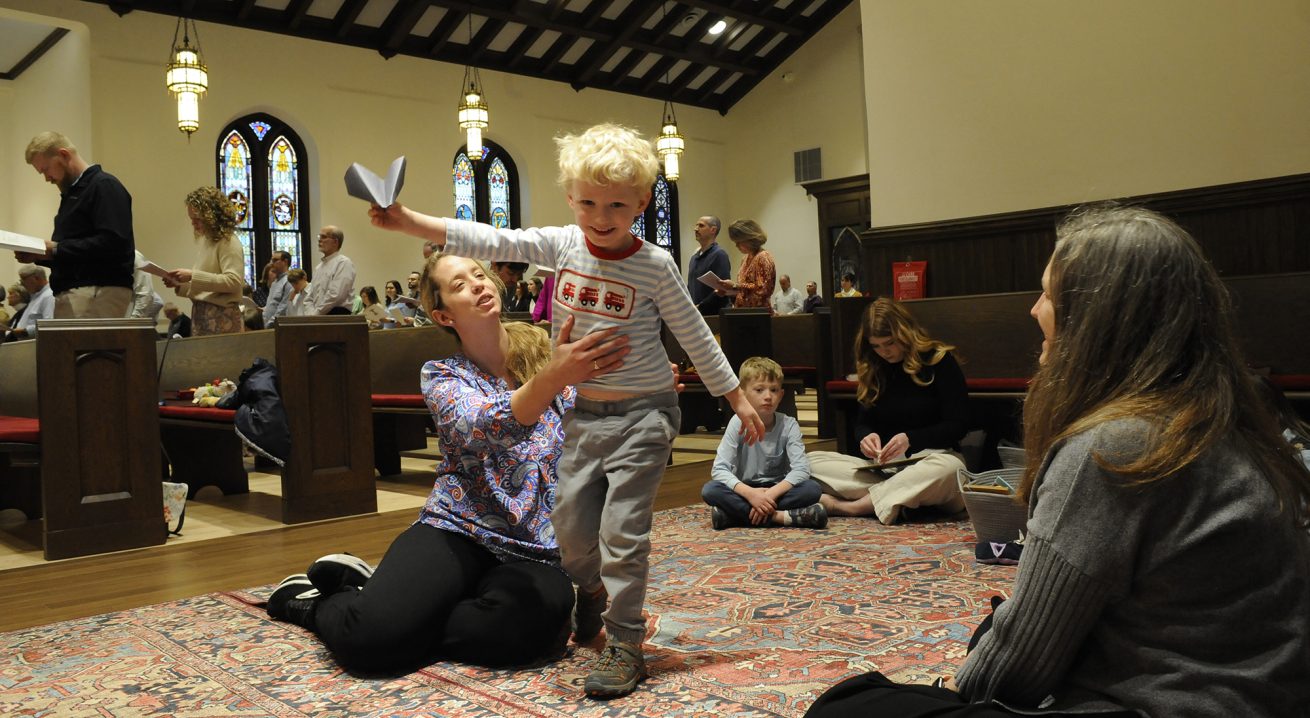
“Vibrant” and “versatile” were the bywords—used often and intentionally. “In our first year we’ve already used spaces in ways that we’ve never imagined. It has been so meaningful,” he said.
Updates include an enclosed narthex with custom stained-glass windows, designed in part with congregational input; a renewed fellowship
hall; refreshed youth and gathering spaces; children’s ministry rooms (including the nursery); and adult Sunday school classrooms.
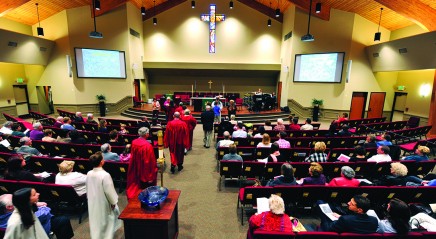
Vital for this singing congregation, acoustic improvements made the sanctuary sound more intimate. “We also hear the spoken word much better, and there is a warmth to the space,” Kooken said.
A local opera company now rehearses its choir there on Sunday evenings because the acoustics closely match those of its performance hall.
Honoring historic status
Historic designation brought special considerations. Augsburg made decisions in consultation with neighbors, local government and the area’s historical association.
The congregation prioritized architects and engineers with historic expertise. “This turned out to be really important because we only have fragments of the original drawings, and so a lot of things had to be figured out once things were opened up,” Kooken said.
“Our renewal really draws us back to the sacraments.”
This expertise mattered when, for example, historically improper items were removed and replaced in the sanctuary.
“When they got down to where the wooden studs met the stone itself,” Wollner explained, “the contractors and architects had never seen behind our walls to understand how our building was standing in such a unique way. They had to go to the Wake Forest University Library and get architecture books from the teens and 1920s that they referenced to make sure they put everything back together properly.”
Growing community use and visibility
“Since we’ve been in these new spaces, we’ve had a tremendous opportunity to share with neighbors,” Wollner said. “The seminaries of the ELCA held an event here, and local nonprofit boards and multiple concerts use the new spaces. Congregation members are now excited about throwing their life events at the church. We’ve had baby showers, graduation parties, receptions and all sorts of things.
“Instead of people in our congregation going and looking for a venue, they want to show off their church now and use these gathering spaces.”
The church has even appeared in at least five student films from the University of North Carolina School of the Arts.
Other changes emphasize Augsburg’s cherished Lutheran identity.
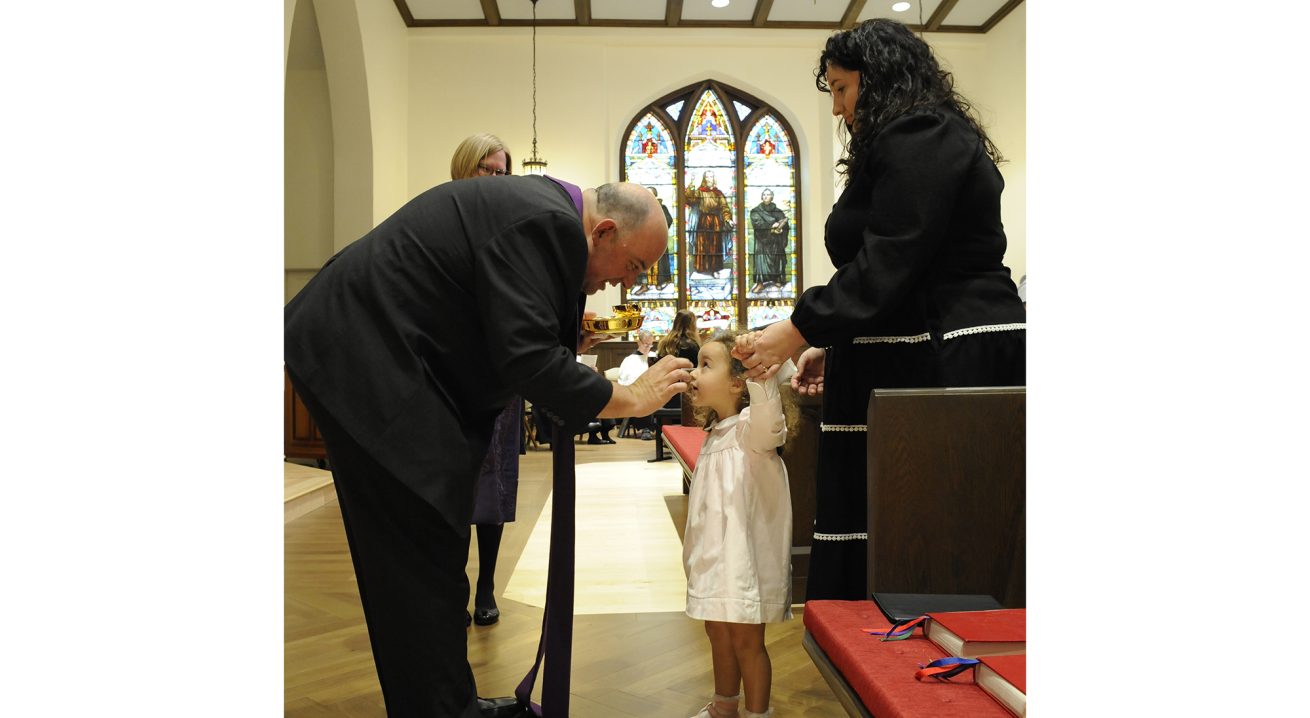
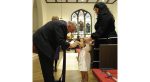
“Our renewal really draws us back to the sacraments,” Wollner said. “We moved the location of the font from off to the side to the center of the congregation, a reminder every time we gather that our lives begin at baptism.”
The altar was drawn out from the wall about 6 feet to create a table, giving the gift of being able to preside to the congregation.
Even the new floor carries symbolism. “The use of a herringbone pattern in the floor design created arrows,” Wollner said. “In one direction, the arrows point us from the font to the table. In the other direction, the arrows point us from the font out into the world—a reminder of our baptismal covenant every time we walk down the aisle.”
Always being made new
Listening to the community, Augsburg continues actively looking for ways to serve and share God’s love. Renewal at Augsburg did not end with the completion of construction. It continues in shared meals, accessible pathways and gathering spaces filled with worship and song.
For a congregation that began its renewal by serving neighbors, the work of engaging and loving the community remains at the center—now supported by spaces designed to sustain that ministry for generations to come.
“It would be naive to think that we’re done,” Kooken reflected. “We didn’t do everything that we had hoped to do. We still have areas of the building that can use some renewal. Until we figure out how to use those spaces, we’ll always be looking forward to how we continue to improve, to renew the spaces that we have to support future ministries that we can’t even imagine.”
Wollner added: “We had a tremendous response in the number of households in the congregation that participated in sharing their abundance in this project. A whole body of Christ—together—building this up for the world around us.”