 Logout
Women of faith can work more closely together to address the growing pushback against gender justice in countries across the globe. That was the key message from participants in an event on the sidelines of the 62nd session of the United Nations Human Rights Council, taking place in Geneva, Switzerland, from June 15 to July 7.
The event, titled “Faith and Feminism: Advancing Human Rights Through Inclusive Dialogue,” aimed to challenge misconceptions about religion and women’s rights, highlighting the vital role that faith-based actors play in promoting and protecting human rights. By inviting panelists to share good practices, it also sought to identify new pathways for cooperation between secular and faith-based organizations working on the frontlines against gender-based discrimination and violence.
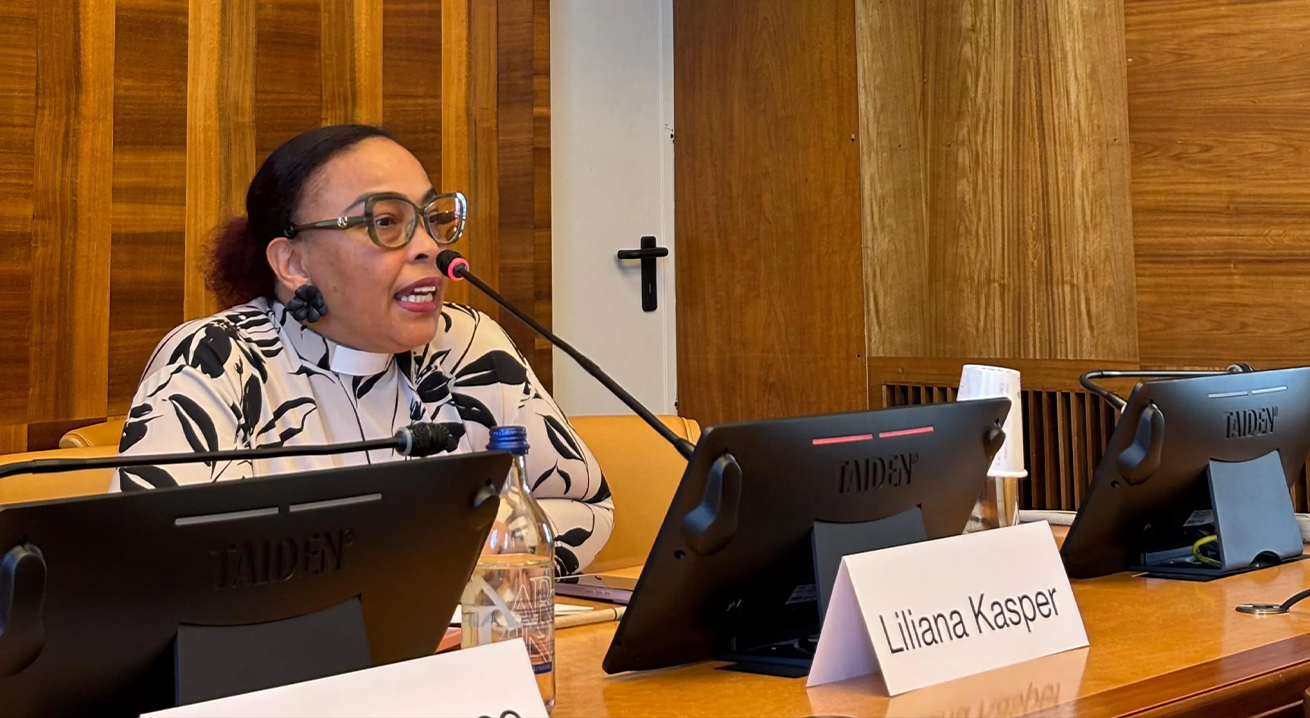
Lilana Kasper, the first female executive director of the Lutheran Communion in Southern Africa (LCUSA) represented the Lutheran World Federation (LWF) at the event, which was co-sponsored by the LWF and other ecumenical, interfaith and civil society organizations on the opening day of the Human Rights Council. LUCSA brings together 15 Lutheran churches in 10 countries across the South African region.
“Our churches and faith communities are challenging harmful practices and reclaiming narratives.”
“Faith is often portrayed as being in tension with gender equality, but this event highlighted the way that our churches and faith communities are challenging harmful practices and reclaiming narratives, while promoting dignity, equality and justice for all,” Kasper said. “Faith is often at the heart of why we are involved in promoting justice and preventing sexual and gender-based violence,” she added.
Kasper noted that there is increasing pushback against women’s rights and often very little support for those working with survivors to hold perpetrators accountable or challenge harmful norms and practices. “Though we may often feel that we are not making an impact, it is vital to continue working and finding new avenues of collaboration to address the challenges we face,” she said.
Among the faith-based organizations hosting the event were the World Council of Churches, the Latter-Day Saint Charities and the Baha’i International Community, all under the banner of the Faith and Feminism Forum. Participants noted that the panel discussion “served to build bridges” and marked “a timely conversation about the commonality and diversity within faith traditions,” with the shared goal of advancing human rights and “making every life matter.”
This story originally appeared at lutheranworld.org.