 Logout


Editor’s note: This story is the first in a four-part series on ministries supported by the ELCA African Descent New Start Reinvestment Project.
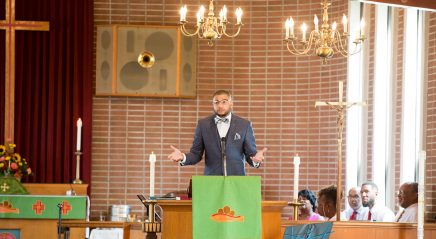
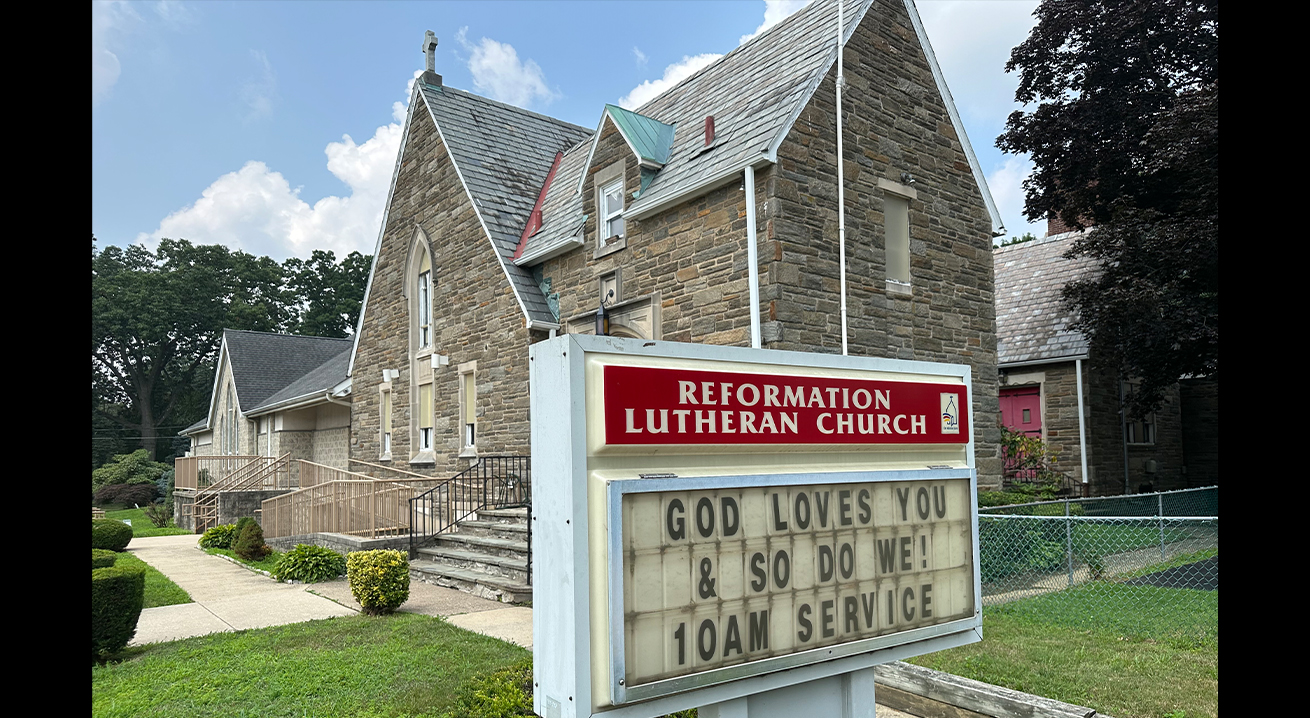
When Anthony L.D. Scott arrived at Reformation Lutheran in Philadelphia in 2023, he learned that the congregation had another name for itself. It was one that made a promise: “The Welcome Place.”
The phrase reflected a history Scott heard repeatedly as he got to know Reformation: good food and fellowship, dances and exercise classes, weddings and funerals, an accessible building and a willingness to open its doors for community activities. Yet in the narthex, he found a large empty store counter and signs left from the COVID-19 pandemic instructing people not to stand or congregate there.
He removed the outdated signage, deep-cleaned the space and, with support from the ELCA African Descent New Start Reinvestment Project, added lighting, a rug, chairs and couches. He assembled the furniture himself to create places for people to do exactly what those old signs had discouraged: stop, sit and stay for a while.
Scott said these changes are part of a larger, ongoing effort to “widen our welcome.”
“I’m making the space for refuge from the world,” he said. “I believe that’s what the church ought to be. It’s a sanctuary.”
Reformation is one of four ministries supported by the reinvestment project, part of the ELCA’s Ministries of Diverse Cultures and Communities. The project pairs financial support with coaching, consulting and cohort learning to strengthen leadership, sustainability and community engagement.
At Reformation, this investment model is helping create and restore spaces where people can gather long enough for deeper relationships to form.
Inheriting tradition, embodying change
Reformation’s participation in the reinvestment project predates Scott’s call to the congregation. Lamont Wells, pastor of Reformation from 2008 to 2014, helped connect the congregation with the project, allowing the support to continue across a period of pastoral transition.
In his new pastoral role, Scott inherited this opportunity for reinvestment alongside a congregation with an established identity, history and community role. Rather than push through a new agenda while still building trust with colleagues and congregants, he began asking what the Welcome Place had meant to those already there and what living up to that name required of them now.
That process also meant learning how race had shaped the congregation. Reformation began as a church of all white members, Scott said, with Black members increasingly joining in the 1970s and ’80s.
Raised Baptist before attending Wartburg, a historically white college in Waverly, Iowa, Scott arrived at a question he had been asking in different forms: “What does it mean to be Black and Lutheran?”
At Reformation, part of the answer was already embedded in the congregation’s history. Longtime members described it as a community where parishioners cooked meals for people who were sick or struggling and bought groceries for one another when money was tight.
“The name ‘The Welcome Place’ basically means ‘We’re open,’” Scott said. Its front door is open to all, and Scott is similarly open to learning about and meeting whatever needs a congregant brings to him.
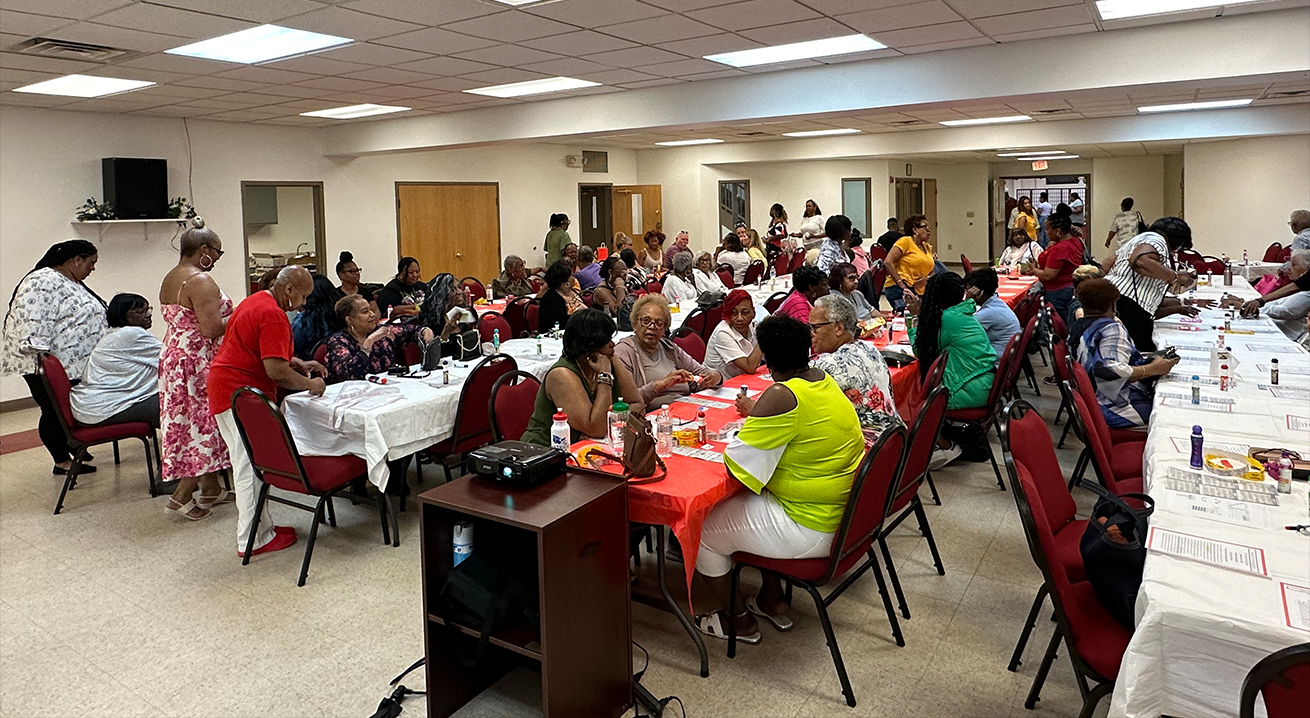
Reformation’s theme of openness goes beyond Sunday worship service. The West Oak Lane Alcoholics Anonymous group has met at the church three times each week for decades, and a local chapter of the National Association of Parliamentarians also holds meetings there. The congregation hosts concerts and community conversations, and nonmembers turn to Reformation for hosting funerals and weddings. After worship, Coffee Klatsch could mean coffee and pastries for attendees or a full breakfast buffet. Feeding fellow ministry members and anyone who wanders in off the streets is a routine labor of love for those who volunteer to cook and serve.
“I think we’re at our best when we’re sitting together at tables,” Scott said. Together, Reformation attendees break bread, swap life updates, crack jokes, shake hands and nourish one another with meaningful conversation and quality time.
Scott’s doctoral project, “Not Just Heaven: The Church’s Call to Work Toward the Wholeness of Mind, Body, and Spirit,” explores Christian ministry as care for tangible human needs as well as spiritual ones. That approach shapes how he thinks about Reformation’s physical space: its rooms should function well for all intended purposes, reflect the dignity of the people who choose to occupy them and remain open and accessible to anyone seeking space.
Welcome investments
In 2024 and 2025, Reformation used $20,000 in African Descent Mission Developer/Redeveloper funding to support worship, outreach and hospitality. Grant money helped bring in guest preachers, teachers, musicians and ministry leaders and supported programming around Black History Month, Holy Week and Easter, Juneteenth, Reformation Sunday and other occasions.
The congregation also invested in sanctuary displays, a camera, network equipment and cabling, extending its capacity to reach people beyond the building. Other investments—furniture, lighting and bathrooms—were less conspicuous but, for Scott, belonged to the same ministry.
He remembers his childhood pastor telling congregants, “You are first-class people. And this is a first-class church.” Scott understood the message as an affirmation of human dignity: “Your surroundings have to look like it.”
Adequate lighting, working bathrooms and comfortable seating can communicate whether the people entering a building are valued, he said. After installing brighter lighting in the narthex and improving lighting in the sanctuary, years of discoloration and wear became more obvious. The congregation sought bids and had the sanctuary and narthex painted, allowing the grant-funded work to help prompt additional congregational investment.
Reformation used African Descent Mission Developer/Redeveloper funding to support worship, outreach and hospitality.
For Scott, understanding that investment means understanding Reformation’s focus on being self-sustaining. The congregation regularly sends thousands of dollars in Mission Support to the Southeastern Pennsylvania Synod, he said, and one longtime member recalled a period when ensuring that contribution was sent took priority even before paying the mortgage or utility bills.
During the pandemic, while Reformation was without a pastor and had no staff eligible for federal Paycheck Protection Program funding, congregational leaders redirected available resources toward eliminating the church’s remaining debt. By 2020, Scott said, Reformation had paid off its mortgage.
He believes that history carried more than institutional loyalty or financial prudence. Some members, he said, were acutely conscious of being part of a Black congregation and did not want Reformation perceived as “freeloading” off the wider church. That awareness helped shape a strong expectation that the congregation would support itself while also contributing to the larger denominational system.
Such history complicates potential perception of the African Descent funding as a charity or rescue project. Reformation has been both a contributor to the larger church and a recipient of resources from it. Scott understood the reinvestment project as an investment beyond the congregation’s regular operating needs, not a substitute for what members were already supporting themselves.
“This is for programming,” he said. “This is for revitalization This is for doing a new thing, breathing new life into the church.”
The funding gives the congregation room to experiment without requiring every new idea to compete immediately with utilities and other costs of maintaining a large property. If the church needs a roof, Scott said, Reformation will raise the money and address it.
“What the grant funding does is allows us to do some dreaming,” he said.
Room(s) for possibility
Some of that dreaming has been focused on a portion of Reformation that has been largely dormant for decades. The church’s educational wing includes three large classrooms, bathrooms and access to a playground. Scott is replacing toilets and sinks. He envisions extending Wi-Fi into the space, making classrooms available to nonprofit organizations and potentially adding showers.
Those ideas are not responses to one specific request. They reflect Scott’s habit of watching what’s happening outside the church building and asking what the congregation may need to anticipate. Housing instability and programs that temporarily shelter families in churches make him wonder whether Reformation could take on more of the community burden. Public debates over school meals and cuts to school funding forced him to consider whether and how many children the church could feed.
Scott has already experienced what it means for an unexpected need to arrive at Reformation’s door. He recalled a man entering the church during what Scott described as a manic episode, convinced that people were trying to kill him.
“I just need a place, a safe place,” the man told him.
He offered the man something to eat and access to a restroom and a couch. He contacted city mental health services, which sent employees to speak with him. Scott continued offering what Reformation could provide in the moment. “I did what I could do just to make it feel like home,” he said.
The encounter gives practical meaning to Scott’s emphasis on preparedness. Food was already available. There was a functioning restroom, somewhere to rest and a pastor able to call for additional help without first asking whether the man belonged there. He connects the warmth people experience in the building to the work Reformation has been able to undertake with the reinvestment support.
For Reformation, “The Welcome Place” is a name worth preserving, a reputation to uphold and a promise the community is determined to keep.