 Logout
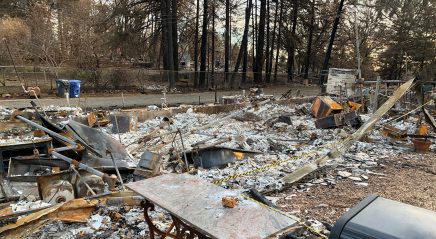
After a Christmas Eve service in 2020, parishioners of Good Shepherd Lutheran in Levittown, N.Y., left church for home. It was the height of the COVID-19 pandemic. Following protocols to keep parishioners safe, fans were left running in the church attic. Christmas Day had no services scheduled, typical in many Lutheran churches. Then the attic fans, dating from the 1950s, shorted out, causing a fire.
“I received a call from the fire chief on Christmas Day at around 11:45 a.m.,” said Remo Madsen, pastor of Good Shepherd. “When I arrived, 30 to 40 members of the church were already in the parking lot. When it was safe, we went into the church, spent time in prayer and talked about Jesus.”
The congregation, which calls itself a “Church of Joy,” made a firm decision that day: to rebuild.
“We can recover,” Madsen wrote at the time. “We can very much overcome a fire. As St. Paul reminds us in Romans 8:31, ‘What, then, shall we say in response to these things? If God is for us, who can be against us?’”
Only the foundation of the 70-year-old church building was usable, with the rest destroyed by water, smoke and fire. Not destroyed was the congregation’s resolve to continue.
“What are we doing Sunday?” was the next question. Determined to gather in worship, the congregation held a cold Sunday service outside in lawn chairs. “The fire department surrounded us on all sides with ladders and trucks and themselves,” Madsen recalled. “It was a special moment of care.”
Eventually, the congregation accepted the offer of a local Presbyterian church to worship in its social hall for a nominal fee.
Throughout this time, faith communities showed support, with the local Roman Catholic church giving funds, and individual Baptists, Presbyterians and others donating money for the congregation’s new building.
Loan helps pay for a new building
Even with insurance, Good Shepherd needed more funds to complete its vision.
Years ago when the congregation had looked at expanding, they had heard about the Mission Investment Fund (MIF). They were able to pay for the new building, in part, with an MIF loan. “The fire is what forced us to do something,” Madsen said. “[MIF] gave us a lot of advice on completing the forms and what to ask for, and were very supportive, caring and spiritual. We prayed together with the MIF regional manager and felt a real sense of Christian community.”
“It was great working with Good Shepherd,” said Jerry Johnson, a deacon and MIF regional manager. “Their faithfulness and outreach to the community are inspiring and an example of how a church can share the gospel in many different ways.”
The congregation wanted a bigger church, with a new footprint. “We reused as much as we could and poured a small additional foundation to expand out,” Madsen said.
“[They are] an example of how a church can share the gospel in many different ways.”
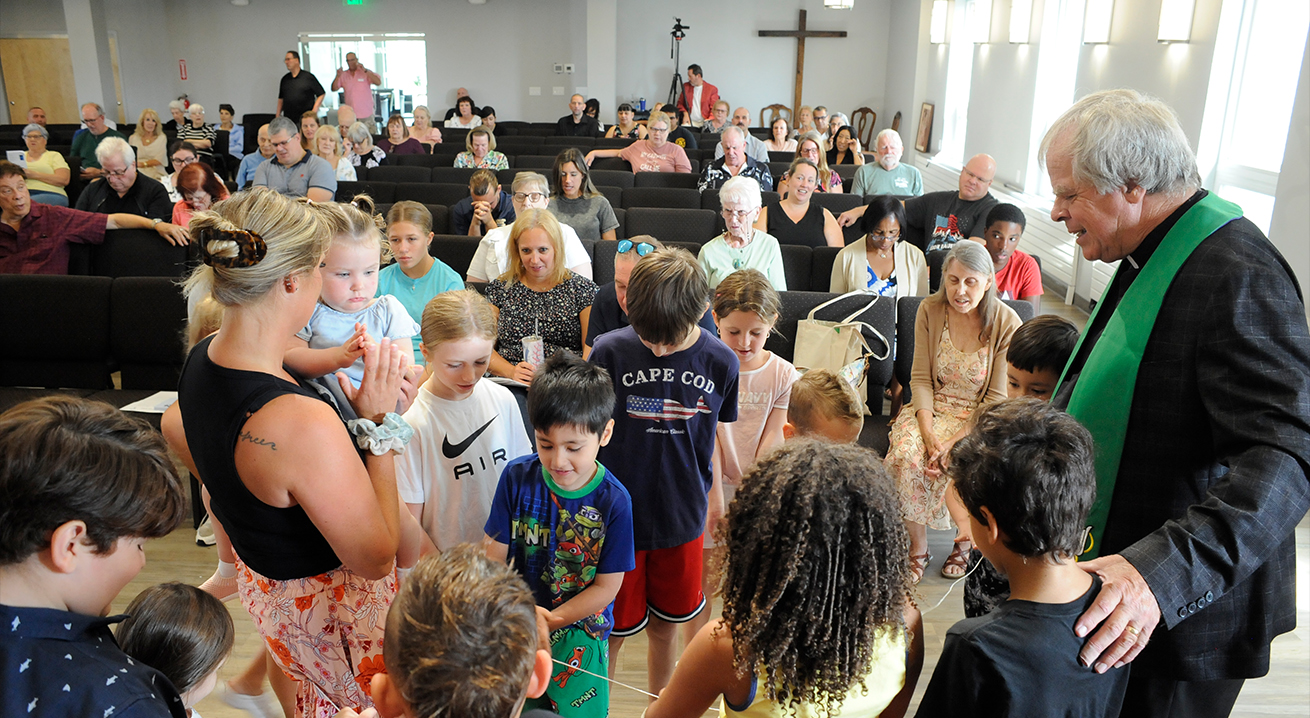
The new building—dedicated last year in a celebration with local political leaders cutting the ribbon before hundreds of community members—is more spacious, with room for fellowship and a meeting space.
“We had meetings with the congregation and asked, ‘What do we want?’” Madsen said. “Everyone had a voice, and we designed our own building.”
Alcoholics Anonymous (AA) is highly active at Good Shepherd, with upward of 15 groups meeting regularly. “Our goal is to have a group available every day, accessible if anyone ever needs help,” Madsen said. Several congregation members first connected with Good Shepherd through participating in AA.
During the rebuild, the congregation asked AA leaders what would make the building better for their meetings—now held in the sanctuary instead of the church basement. While the program is independent from Good Shepherd, the congregation’s hope was for the groups to feel like part of the church and of something bigger.
“They said they wanted a coffee bar,” Madsen said. “And now we have a wonderful coffee bar in a beautiful lobby built for socializing and mutual support.”
Building community in multiple ways
The new building has also allowed Good Shepherd to expand and build upon its outreach, including a thriving youth ministry program and Christian education. Multiple study groups meet each week, and 20 to 30 people gather regularly for sessions led by Madsen’s wife, JoAnn. A new Gen Z Bible study also recently launched, giving young people a place to ask questions and explore their faith together.
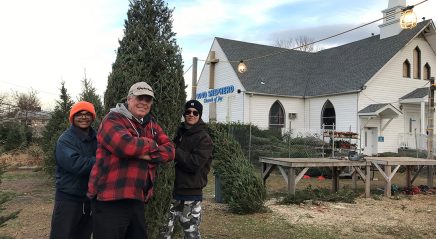
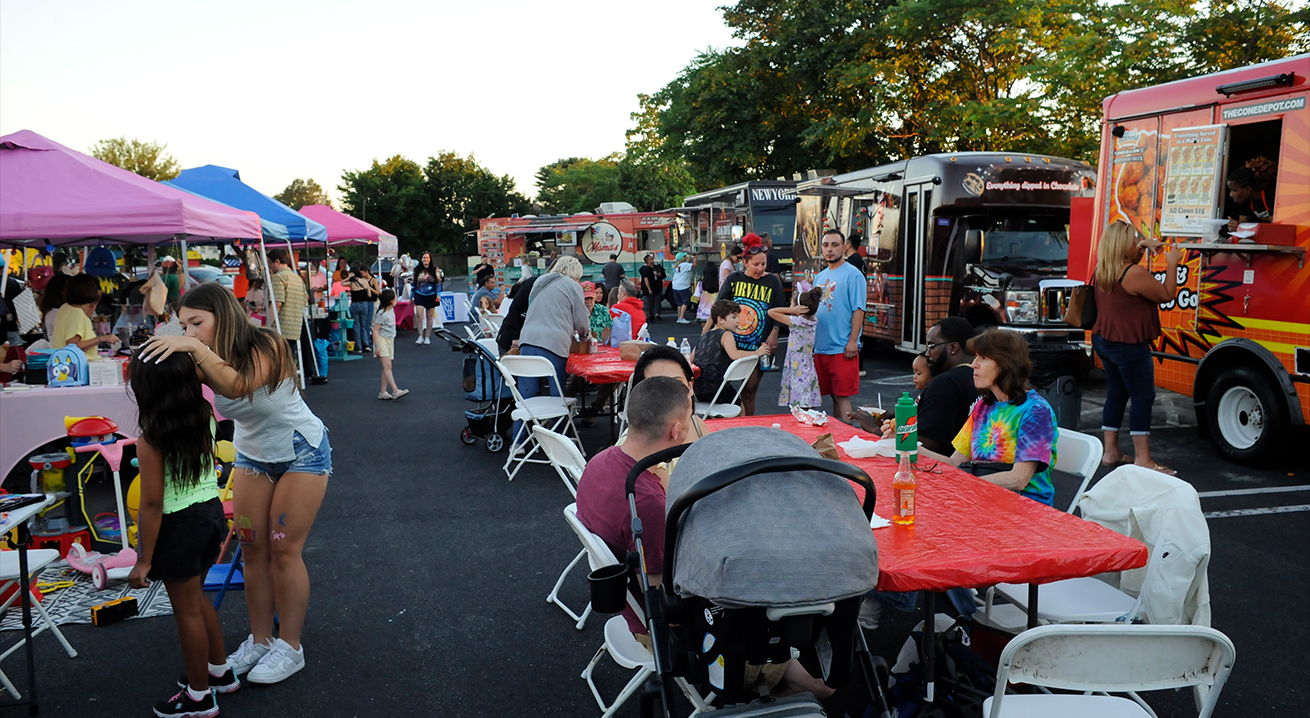
On Friday nights, the church lawn comes alive with food trucks, drawing as many as 700 people for music, a children’s corner, local vendors and even kid-sized food trucks. Saturday mornings bring the farmer’s market, while a pumpkin patch and Christmas tree lot add seasonal cheer. These gatherings often welcome more than 20 times the number of the congregation itself, creating moments of connection and conversation with the community.
Amid the fun and fellowship is a deeper hope: that these shared experiences might open doors to something more. “The purpose of the church is to make sure every person knows that they are valued and loved by God,” Madsen said. “Jesus loves them. People are not alone. We are not walking a journey alone. Jesus and Christ’s people are with them.”
To learn more about MIF, visit mif.elca.org.