 Logout
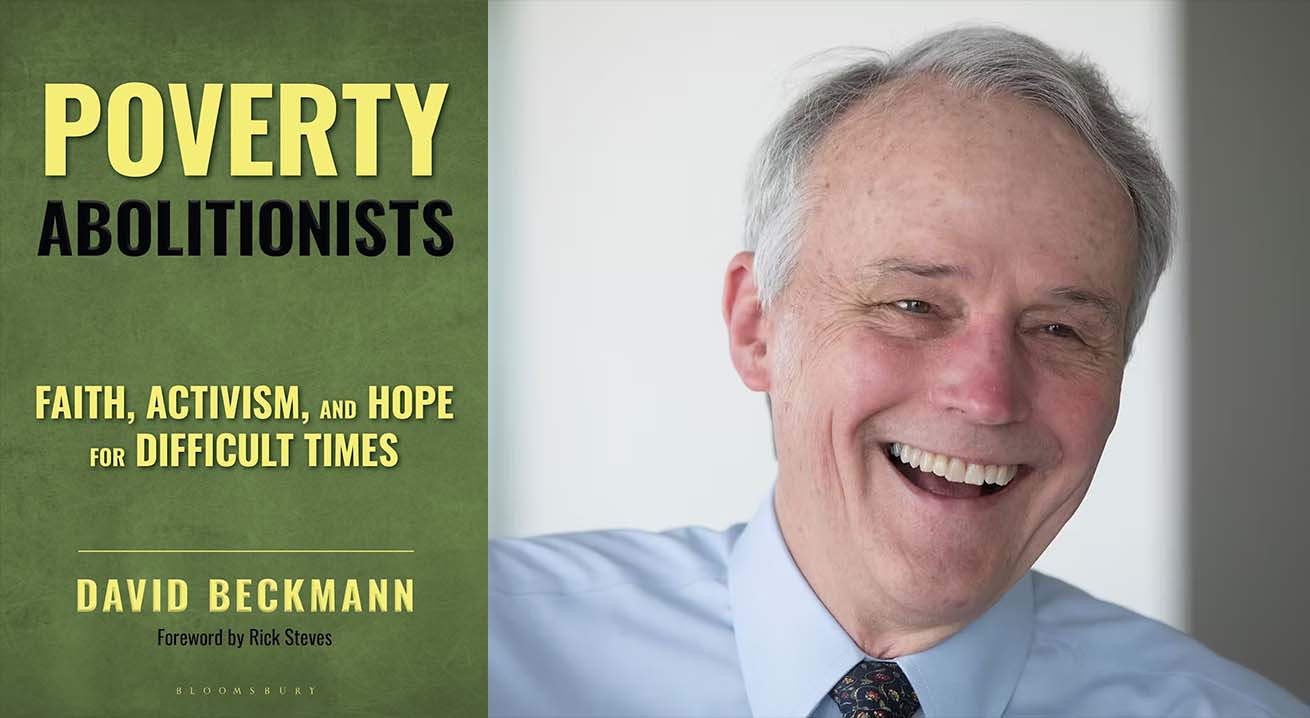
An ELCA pastor, economist, activist and World Food Prize laureate, David Beckmann has spent his varied career working to end poverty and hunger. Though there has been dramatic progress against global poverty in recent decades, Beckmann is clear-eyed about the reasons why that progress may be stalling today and what is needed to strengthen it once more.
His new book, Poverty Abolitionists: Faith, Activism, and Hope for Difficult Times (Bloomsbury), names five insights and 10 strategies for building a faith-based poverty-abolition movement comparable to the slavery-abolition movement of the 18th and 19th centuries. Beckmann confronts today’s uniquely challenging national and global political problems with data showing that poverty is solvable and with a hopefulness that stems from faith in a forgiving God.
Living Lutheran spoke with Beckmann about his new book and what readers and congregations can do to take action on the issues he identifies.
Living Lutheran: How do you describe Poverty Abolitionists to new readers?
Beckmann: Our country and the world have made dramatic progress against hunger and poverty in recent decades. Many Lutherans have helped achieve this by assisting struggling families directly, supporting ELCA ministries and participating in public policy advocacy.
But progress against poverty is now grinding to a halt in our country and worldwide, mainly because of what’s happening in our nation’s politics. Poverty Abolitionists offers 10 effective ways people can push back and get progress against hunger and poverty going again.
You refer to the book as “partly an organizing handbook, partly data and analysis, and partly a sermon.” How did you land on that approach?
When I was ordained to the ministry, I was called to be a “missionary economist.” That led me to work with the Lutheran World Federation in rural Bangladesh, 15 years as a World Bank economist and 30 years as president of Bread for the World. I’m a pastor but also an economist and activist.
How did you decide to write this book now? Were the actions of the current federal government the catalyst for developing a book on the poverty abolition movement and your thoughts on where it stands today?
Yes, our current federal government’s policies are doing tremendous harm to people in need—cuts in domestic and international aid programs, mass deportation and the reversal of civil rights and voting rights for disadvantaged groups. War in the Middle East is causing severe hardship among people in the region, including famine in Gaza. The closure of the Strait of Hormuz has raised prices for groceries and gasoline. Tariffs have also contributed to inflation in our country, which makes life yet harder for families who have trouble paying their bills.
Sharing the gospel of God’s forgiving love for the world changes hearts and can help make our nation more generous.
Many people are responding to increased need in our communities and around the world, but God is calling us to do more. Legislative advocacy still works. It’s important to give time, money and votes to candidates for public office who share our values. Churches can help to foster dialogue between conservative and liberal people. Sharing the gospel of God’s forgiving love for the world changes hearts and can help make our nation more generous.
One of the throughlines of the book is the apathy and discouragement—if not outright hopelessness—many Americans are feeling about today’s political environment. Why should readers feel hopeful about faith-based poverty abolition work creating change now?
Today’s political environment is discouraging, but our relationship to God can help us stay engaged. Moses might have decided that the Hebrews’ slavery in Egypt was a hopeless situation, but he responded to God’s call to confront the Pharaoh.
Jesus and his disciples also faced a daunting political environment. When Jesus was accused of being a threat to the Roman emperor, his disciples ran away. But Jesus’ resurrection and the coming of the Holy Spirit empowered them to preach the gospel of forgiveness and God’s coming kingdom throughout the Roman empire and beyond.
Where should readers and congregations looking to take action based on your 10 strategies start? How do you hope they engage with Poverty Abolitionists?
I hope people will read my book and find it helpful. For congregations and study groups, I’ve posted a study guide on my website. I’m also hoping this interview motivates some people to take action right away. The need is urgent.