 Logout
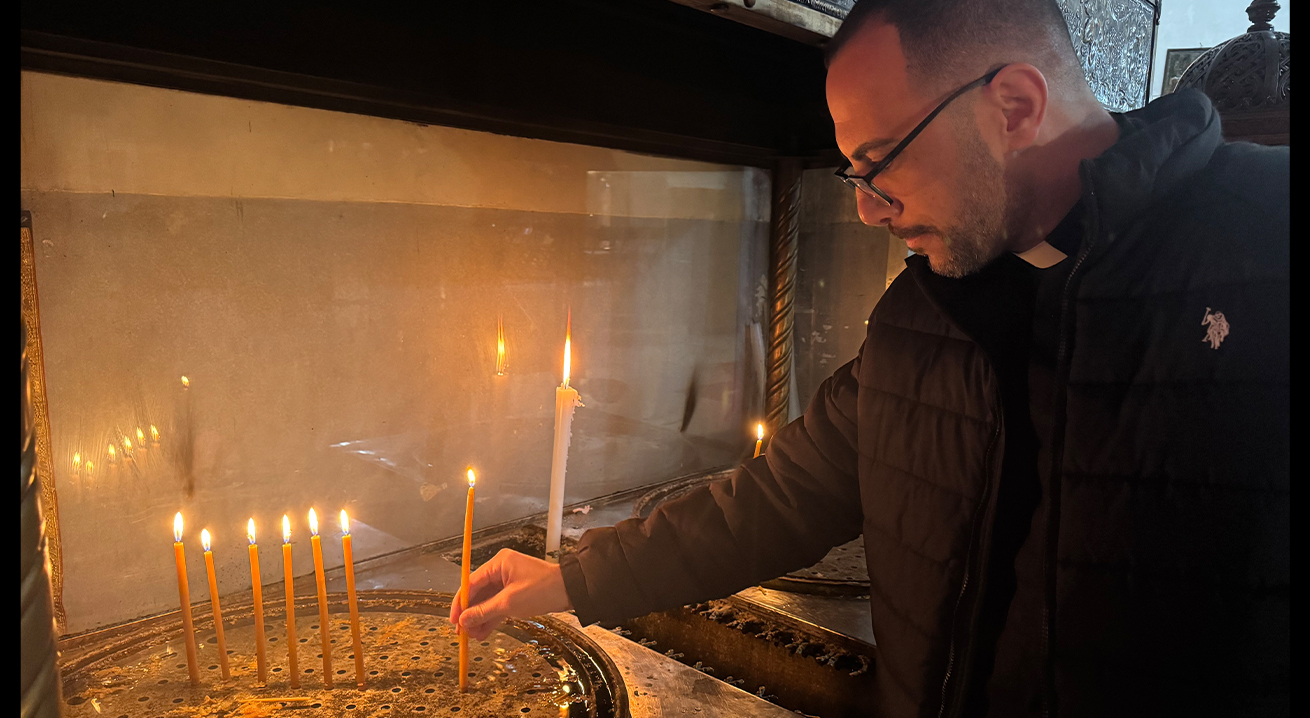
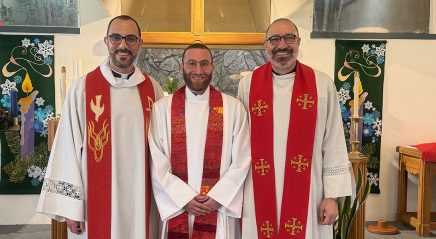
As a Palestinian Christian and ELCA pastor, Khader Khalilia occupies a singular and deeply personal role within the life of the church. Born and raised in Bethlehem, Khalilia maintains close family ties in both Israel and Palestine, connections that shape not only his identity but his ministry.
Now serving as program director for Arab and Middle Eastern Ministries with the ELCA Ministries of Diverse Cultures and Communities team, Khalilia carries with him the lived experience of Christian faith in the land where Christianity began—an experience marked by resilience, complexity and enduring hope.
“I’m rooted in the land and culture of the Bible,” he said. “The Holy Land is my fifth gospel. I carry my family with me wherever I serve. My calling is shaped by my upbringing in Bethlehem and by the people I love who are still there.”
In his leadership, Khalilia frequently invites members of his ministry into a deeper understanding of Christianity’s Middle Eastern roots and the realities facing Christian communities in the region and around the globe today. His work centers on accompaniment, education and pastoral care, particularly for Arab and Middle Eastern Lutherans navigating grief, fear and separation during a time of ongoing conflict.
As a Palestinian Christian leader living in the United States while family members remain abroad, Khalilia is personally affected by the latest federal travel bans. As reported by Time: “People holding passports from an additional 20 countries and the Palestinian Authority will be restricted or limited from travel to the United States, the Trump administration announced on [Dec. 16].”
In addition to the weight of distance, Khalilia said he is currently plagued by the uncertainty of when or if he can reconnect with family, as well as the exhaustion of watching another administration villainize his entire community. Stoking fear of specific people is, he added, a cheap, played-out approach all too familiar to those Arab and Middle Eastern people who remember living their daily lives in a post-9/11 United States.
A strong welcome is not a vulnerability but a strength, and remains one of the nation’s most enduring forms of defense.
“People see a label before they see a person, and that hides the truth of who we are,” he said. “We’re not bad people. We teach life and resilience.
“I hope the Trump administration lifts the travel ban so Palestinian families can stay connected. When you turn a whole community into the bad guy, it doesn’t just block travel, it deepens fear and isolation. I’m trying to pastor people through that pain while carrying it myself, and I’m praying for the day families can reunite without suspicion.”
That responsibility feels especially urgent amid evolving U.S. immigration and travel policies that have limited entry for many people fleeing war, violence and economic devastation, including Palestinians. Khalilia often points congregations to Scripture, reminding them that Jesus himself was displaced as a child and later wandered the desert in search of refuge and safety. In that story, he sees a clear call for the church and our nation: Welcome others fully—into congregations, communities and countries—without caveats, hesitation or reservations.
A strong welcome, he said, is not a vulnerability but a strength, and remains one of the nation’s most enduring forms of defense.
“As a Palestinian American living in New York, I love visiting the Statue of Liberty—and I do it often,” Khalilia said. “When I stand at the base and look up to Lady Liberty, I don’t see an asterisk. I see a promise. … As Christians, we’re called to recognize Christ in people who arrive seeking safety, dignity and belonging, and to welcome them fully. That’s the promise I made to my community, my Holy Land family and even to those in this administration keeping us apart.
“And I’m keeping my promise, despite the ongoing discrimination and cruelty, so I don’t think it’s too much to ask them to keep theirs.”
To learn more
Sumud for Justice in Palestine and Israel: Connects ELCA members to companions in the Holy Land and seeks to follow guidance, support leadership and amplify the voices of Palestinian partners. Together with Lutheran companions, it accompanies Palestinians and Israelis, and many other Jews, Christians and Muslims, in working to establish the justice required for peace. Visit Sumud.
Association of Lutherans of Arab and Middle Eastern Heritage: Creates a welcoming community for Arab and Middle Eastern individuals and promotes full participation within the ELCA. Search for ALAMEH here.
Ministries of Diverse Cultures and Communities: Works within the ELCA toward the goal of full partnership and participation of African Descent, American Indian and Alaska Native, Arab and Middle Eastern, Asian and Pacific Islander, and Latino people in the life of this church. Search for the team’s name here.