 Logout
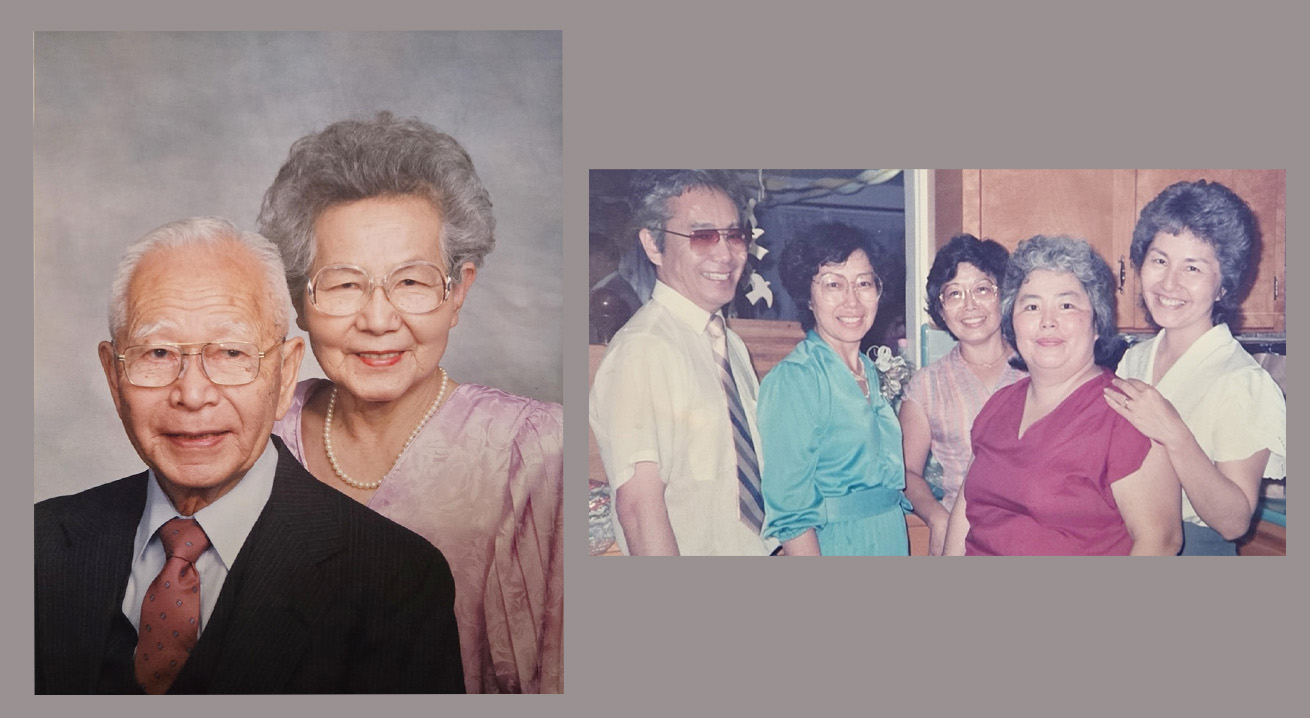
Editor’s note: In this second installment of a three-part Living Lutheran series, Deanna Kim Bassett, an ELCA pastor, reflects on her family’s experience of Japanese American incarceration—and what those stories require of a church called to confront fear, exclusion and injustices today.
Deanna Kim Bassett’s understanding of freedom begins with her grandfather.
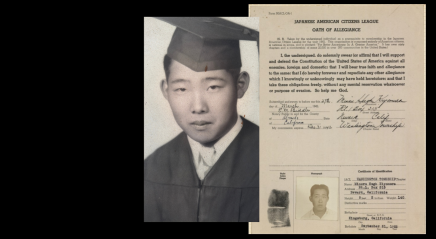
Tomozo Ishii emigrated from Japan to the United States in the early 20th century, driven by a belief that life here could be different. In Japan, a rigid caste system would have determined his and his children’s futures. In America, he believed, possibility was his to pursue.
“He was so proud to be a U.S. citizen,” Bassett said. “He would see me and say, ‘You can be anything you want to be because you are an American.’”
It was a promise he held on to, even after the country he loved turned against families like his.
Under Executive Order 9066, the family was sent to an incarceration camp, part of the mass imprisonment of more than 120,000 Japanese Americans, most of them U.S. citizens.
Pregnant with her fifth child, Bassett’s grandmother, Kimiyo, had little time to gather her young children and report to a detention site, where they stayed until they were sent to the camp. “They had four hours,” Bassett said. “Four hours to decide what to take, what to leave, and not knowing how long they’d be gone or even where they would go.”
Yet, Bassett’s grandparents rarely spoke of their time there. “They were so proud to be American,” she said. “I wonder if saying anything bad about it would have been too painful.”
Silence shaped her mother’s generation, and her mother’s assimilation for survival shaped Bassett.
Her mother, Mae, was born into confinement and into a community stripped of privacy, autonomy and dignity. She learned early on that fitting in wasn’t just desirable but necessary, so she avoided attention and never asked too many questions. The result, Bassett said, was a way of navigating the world that prioritized belonging, even at the cost of deeper understanding.
But years of observing the silence of elder generations sparked something different in Bassett. Whether through mentors who encouraged her to think for herself or through her grandparents’ steadfast belief in possibility, she developed a different relationship to freedom—one grounded in conviction, not conformity.
Her conviction would be tested more than once throughout her life.
The drive to overcome
Bassett has often found herself in spaces where her presence was questioned and her voice challenged.
Throughout her career in corporate accounting, she was often the only woman—and only person of color—in the room. Her work was dismissed or credited to others on multiple occasions. In the hours outside of her corporate job, she served with the local fire department and faced persistent efforts to discredit and exclude her.
“They tried to gaslight me at every stage,” she said. “They told me I was incompetent.” But Bassett didn’t internalize those messages. “I had nothing to lose,” she said. “I knew who I was.”
Her refusal to accept those imposed limits reflects a deeper inheritance—one that traces back to her grandfather’s belief in possibility, even when the country he trusted failed to uphold it.
“I had nothing to lose. I knew who I was.”
Long before those professional battles, Bassett experienced something that would shape her understanding of calling and courage. At age 9, she was inside a crowded ice cream parlor when a plane crashed into the building. In the chaos that followed, she regained consciousness, located her younger brother, and led him through smoke and debris toward safety.
While others fled the scene, Bassett stayed and instinctively cared for others, offering comfort through prayer. Later in life, she would learn to characterize her actions that day as “pastoral care.”
She also witnessed the lifesaving power of professional teamwork, organization and solidarity in action. “I remember seeing the firefighters come in,” she said. “They were doing incredible things. That was the moment I knew I wanted to be a firefighter.”
It would take decades and a willingness to challenge expectations, including her own family’s, to claim that calling. But when she did, she recognized the victory for what it was: her living expression of the freedom her grandfather envisioned.
Remembering to do better
For Bassett, freedom is never theoretical. It is deeply personal.
It is her pregnant grandmother stepping onto a bus with four children and zero certainty of what happens next. It is her mother growing up in confinement and learning how to adapt for survival. It is her own pursuit of education and experiences that allowed her to make informed decisions about her vocation, faith and advocacy.
Recently, Bassett experienced a profound moment within her family that led her to reflect again on what it means to live freely and authentically. In that moment, she found herself thinking of her grandfather—of the risks he took and the future he hoped to create.
Bassett recognized that her children might never have been able to live as their true selves without the sacrifices of her grandparents’ generation. She expressed gratitude, with added concern, for the fact that this loved one’s freedom was never guaranteed. She knows that future generations will lose the liberties they take for granted, and she fears regaining them will come at a greater cost.
The incarceration of Japanese Americans didn’t begin with the camps. It began with suspicion, rhetoric and policies that treated an entire group as suspect. Those same patterns, Bassett warns, are visible today with changes in immigration policy and a lack of checks and balances for law enforcement. Without intentional remembrance and action, Bassett believes that history has already started to repeat.
“I feel like I’m hearing the same things they heard back then,” she said.
Today, immigrants, refugees and communities of color are often described in ways that echo those earlier, prejudiced patterns. Suspicion becomes policy. Difference becomes danger. And slowly, the unthinkable becomes acceptable. History, Bassett’s story reminds us, doesn’t repeat itself all at once. It unfolds in steps—and it depends on who is willing to notice.
Read the first installment, “They called it ‘camp,'” here.