 Logout
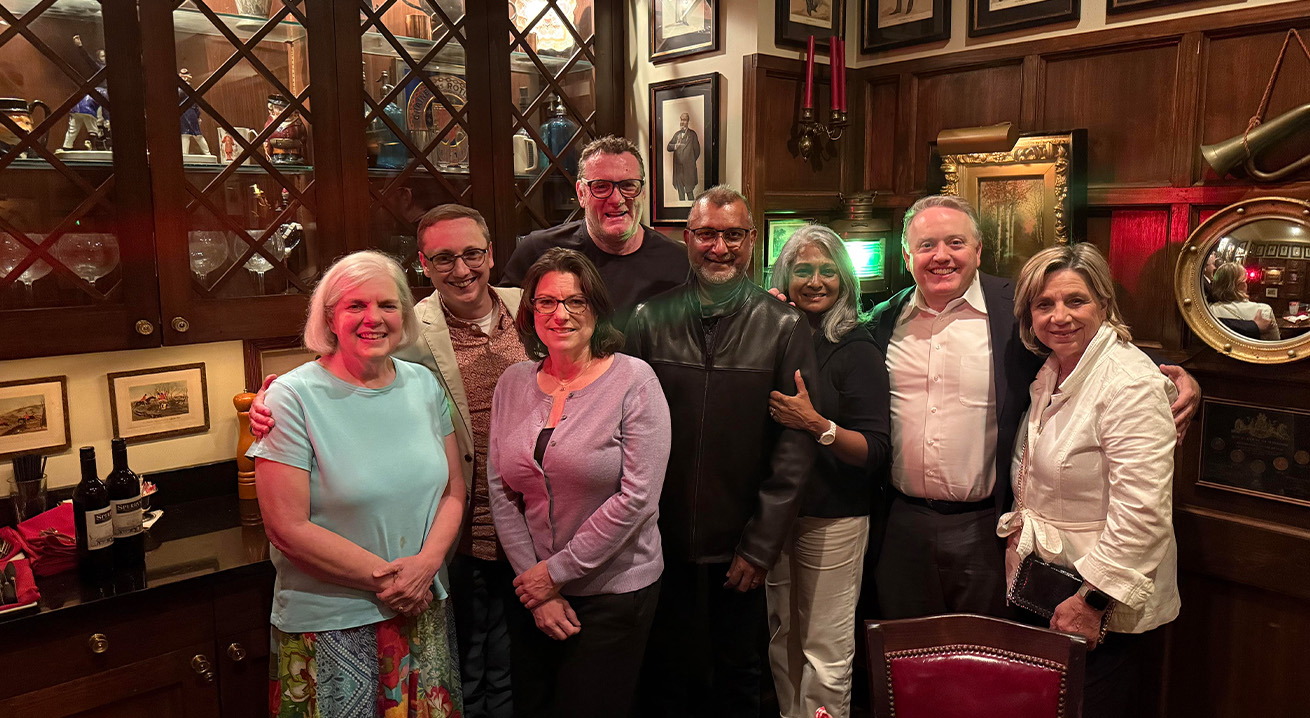


This time last year, I had a remarkable dinner with seven extraordinary people of faith.
The setting fit the celebratory occasion: a restaurant with wood-paneled walls that were decorated with framed 19th-century illustrations. Before the food arrived, we warmly welcomed our two guests of honor, Terrance and Crystal Jacob. The next day, we all gathered again. This time we presented Terrance to the congregation council of St. Andrew Lutheran in Franklin, Tenn., as the preferred candidate to become our next pastor.
Those who have served on a call committee know that the process isn’t for the faint of heart. It begins with serious study of the ministry setting and the surrounding community context. It continues with discerning the congregation’s priorities, then writing it all up in a long, standardized format, which can be—to put it mildly—quite challenging. It’s a process marked by sacred confidentiality and plenty of anticipation. Then there are the twists and turns—the inevitable moments that no one saw coming.
Like most call committees, our group was made up of a diverse group of people, including Brenda, a charter member; Jim, a consultant who had nearly left the congregation months before; Peter, a music executive we called “Switzerland” because of his diplomatic demeanor; Anne, a semi-retired psychiatrist who liked to remind us her family had been Lutheran since the Reformation; Beth, a nurse-turned-health-IT-professional and our steady chairwoman; and me, a religion researcher who had joined the congregation a month prior to the committee forming.
By its very nature, a call committee has one essential task: following the process outlined by the synod and selecting a finalist for a call as a rostered minister. This is serious business, with intense pressure to get it right.
What’s driving all this change to the church’s leadership landscape?
The eight of us did not agree on much. In fact, the only two things we agreed on during our year together were the final version of the ministry site profile (a divine intervention, I’m certain), and the vote to recommend our finalist. Our meetings were long, difficult and often required further debriefing at the bar a few blocks from church. By the time we gathered at the steakhouse, we were marking a new beginning but also an end to our work together as a committee.
The 89-page call process manual includes lots of details, including templates for communicating with candidates and helpful tips for interviewing. What it doesn’t mention is the possibility that the call committee may also become a ministry of mutual care.
Tucked between text messages to our group that dealt with arranging meetings and interview logistics were personal check-ins, birthday texts and prayers. As a committee we shared a lot of life together: three hip replacements, birthday celebrations, health scares, vacation photos and dispatches from an epic college visit road trip, to name a few. I was especially grateful for these texts after the baptism of my twin daughters and the week my mother spent in the hospital.
It’s not an overstatement to say that the call committee changed how I think about leadership in the church. Unlike some other traditions, the ELCA Model Constitution for Congregations imagines a partnership between lay leaders and rostered ministers. The call to lay leadership includes supporting rostered ministers, and the call to rostered ministry includes supporting lay leaders. Congregations are best served when these two forms of leadership are balanced and differentiated. This partnership begins with the work of the call committee.
As a member, my experience on that call committee was empowering. As a researcher, my experience surfaced questions about the future of leadership in our church.
A shifting landscape
While serving on the call committee, I was also conducting research across the ELCA’s leadership landscape, including major studies of pastoral leadership, synod-authorized ministry and diaconal leadership. The more I sat with the data and listened to rostered ministers across the church, the more I realized the landscape is shifting.
Just a few years ago, most ELCA congregations had an average worship attendance of between 50 and 250. Today the ELCA is composed mostly of small congregations with an average attendance under 50. Between 2015 and 2023, pastoral openings in the ELCA declined by almost 30%, meaning the number of opportunities for our rostered ministers are fewer and fewer.
The openings that do exist are most likely to be solo pastorates at congregations with an average worship attendance under 150. (See “The Future Need for Pastoral Leaders in the ELCA”.)
The number of congregations now led by synod-authorized ministers is also changing. These lay leaders are appointed by bishops for service in congregations where a pastor is not available or able to be called. Almost 10% of ELCA congregations are served this way. At first glance, this could be alarming. But forthcoming research on these leaders suggests that the vast majority of congregations served in this way find themselves surprisingly satisfied and confident in the future of their ministries. (See “The Use of Synod-authorized Ministers in the Evangelical Lutheran Church in America”.)
In recent years, the diaconate in the ELCA has undergone many changes. Today they serve in a wide range of ministry leadership, but they play an especially critical role in faith formation, education, administration, chaplaincy and social justice. Still, most of our deacons serve in congregations. (See “The Leadership of Ministers of Word and Service in the ELCA”.)
What’s driving all this change to the church’s leadership landscape? While we may not have all the answers, we do know several important factors.
God is doing a new thing
In the decades since the ELCA’s formation in 1988, there has been a profound change in the role religion plays in American society. At that time 80% of adults identified as Christian, whereas only 60% do today. In recent years, every Christian denomination and tradition has seen a decline in membership and participation. The only religious demographic that is growing is the percentage of those who claim no affiliation at all.
Perhaps even more important is that, of those in this group of Americans, 90% say they have no intention of joining a religious organization in the future.
Declining participation in religious life leaves congregations struggling to meet significant challenges with fewer resources. ELCA research estimates that 45% of our congregations cannot afford a full-time pastor without significant consequences for their mission and ministry.
And when communities and congregations change, it only makes sense that our leadership may change.
There might be something more going on here that may not appear in charts and graphs.
In the 1990s, a new bridge was built across the Choluteca River in Honduras. Shortly after it was opened, Hurricane Mitch ravaged the country with devastating floods. The bridge survived fully intact—a testament to its enhanced engineering. But the storm had shifted the course of the river such that the bridge now spans dry land. The river itself had moved.
Like that bridge, our leadership landscape has shifted out from under the church. As a theologian and ELCA member, I think there might be something more going on here that may not appear in charts and graphs. That “something more” is perhaps best stated as a question: Who is God calling into leadership now?
Of course, God continues to call people of faith to go to seminary to become pastors and deacons. And of course, God continues to call people of faith to serve in new ways in their congregations, whether on a call committee or a congregation council or volunteering to serve those in need in their communities. Those things aren’t changing. Yet it also seems as if God may be doing a new thing. It appears that God may be ahead of us, calling forth new kinds of Christian practice, new kinds of Christian community, new kinds of leaders and new kinds of leadership partnerships.
In the future there may be fewer call committees, fewer ministry site profiles and fewer senior pastorates to discern. But God’s mission has never been dependent on particular structures or processes such as these. As always, that mission relies on ordinary people of faith praying together, caring for one another and dreaming about the future God to which is calling them.