 Logout

Lectionary for June 7, 2026
Second Sunday after Pentecost
Hosea 5:15–6:6; Psalm 50:7-15;
Romans 4:13-25; Matthew 9:9-13, 18-26
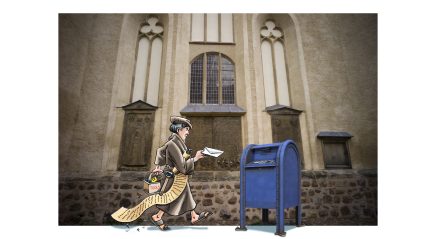
Have you ever been in a difficult position, such as financial trouble or a long illness? In such situations we might try to bargain with God or look for another savior. Famously, when Martin Luther was caught out in a terrible thunderstorm, he offered to trade his future to Anne, the patron saint of miners (his father, Hans, was a copper miner). Luther promised to become a monk if Anne would save him from the storm, a promise that set him on a collision course with his future. Happily, the key theme of this week is that God desires lovingkindness, not sacrifice (Hosea 6:6).
In the lectionary readings, Jesus performs three acts of deliverance without requiring anything in return. All three stories involve Jesus stopping people from profiting from the pain of others.
In the first act of deliverance, Jesus returns to “his own city.” Nazareth is inland from the Sea of Galilee, so this is almost certainly Capernaum, Jesus’ home base for his Galilean ministry. Jesus walks right up to the tax booth where duties are collected for Herod (and ultimately for Rome) on the major international trade route, the Via Maris. He commands Matthew, a tax collector, to follow him, and he did!
Now, some folks wonder why a tax collector, one in a relatively high-producing office, would follow Jesus. Helpfully, Luke narrates that just before the calling of Matthew (known as Levi in 5:27), Jesus performs the miracle of the massive catch of fish (1-11). Do you think there was a wealth-producing miracle in the region that the tax officials didn’t hear about? I believe Matthew and his tax collector friends couldn’t wait to talk with Jesus. And that’s just what they did during a party at Matthew’s house (Matthew 9:10, Luke 5:29).
Things really get interesting at this party! When the Pharisees who followed Jesus (yes, there were Pharisees among his followers) see who was in Matthew’s house eating with Jesus, they ask the obvious question: How can Jesus eat while surrounded by contamination from people whose jobs demand that they handle idolatrous currency daily? Even worse, the tax collectors serve the Idumean-Samaritan tetrarch, Herod Antipas and, ultimately, the Romans. The tax collectors make money from people’s pain!
Jesus takes the Pharisees’ concerns seriously, telling them that it’s not the healthy who need a doctor but the sick. He then quotes Hosea: “I desire lovingkindness, not sacrifice” (6:6). Jesus’ mission was not directed toward the righteous Pharisees but toward the sinful tax collectors. They had gotten mixed up in a terrible situation where they were complicit in sin that harmed their neighbors. Jesus freed soul, body and community. And he wasn’t done!
God wants what Jesus models: taking care of neighbors in their times of difficulties.
In Matthew’s telling, a local official comes to Jesus, knowing that his daughter had already died. He begs Jesus to come to his home and resurrect the girl. Jesus gets up from the table that he is sharing with the tax collectors and goes to the man’s house. While there, he sees that the mourning-industrial complex is already in place. Professional mourners are causing noisy chaos, and the funerary musicians are playing their sad songs. Jesus orders them all to leave. After all, the mourning-musicians make their money from people’s pain! They mock Jesus as they leave (Matthew 9:24). Only after this rabble leaves does Jesus take the girl by her hand and raise her up.
Jesus could have comforted the family by saying their innocent daughter was resting with God. Instead, he insisted on healing the body and returning joy to the community.
While Jesus is on his way to the house to revive the girl, another person needs his help. A woman who has been bleeding for 12 years comes up to touch the ritual fringes of Jesus’ outer garment. She had sought various treatments over the years to no avail. The Gospel of Luke supplies the important detail: many physicians had collected money from this woman’s pain but were unable to heal her (Luke 8:43). Out of desperation for deliverance, the woman finally grabs for Jesus’ garments. In Matthew’s telling, Jesus knows exactly what is happening and turns to look at the woman, telling her that her faith healed her (9:22).
Whether it’s unjust rulers collecting money to fund their brutality, emotionally manipulative artists profiting on the pain of others or ineffective health influencers abusing those in desperate situations, Jesus can’t tolerate economies built on suffering. God is not looking for you to repeatedly give up “just a little bit more.” Instead, God wants what Jesus models: taking care of neighbors in their times of difficulties.