 Logout
Lectionary for July 26,2026
Ninth Sunday after Pentecost
1 Kings 3:5-12; Psalm 119:129-136;
Romans 8:26-39; Matthew 13:31-33, 44-52
My wife and I lived in Morocco for several years. Around the corner from our apartment was an antique shop I loved to visit on my way home from work. They had neat stuff from the protectorate period, which I occasionally bought. But I was more interested in the older stuff, especially Jewish and Christian artifacts from homes and places of worship that had fallen into disrepair. As I was browsing one day, the antiques dealer said, “I never know to show you my old things or my new treasures.” It meant a lot to me to be known as someone who appreciated both the 20th century and the preceding centuries. This week, the lectionary readings help us cultivate an appreciation for treasures old and new.
In Psalm 119 the composer demonstrates a passionate love for God’s instructions, and the wisdom and faithful living that flow from that love. This isn’t an abstract appreciation at all. Instead, the psalmist describes opening his mouth and inhaling eagerly (some translations render it as “panting”) because of a longing for God’s commandments (131). The allusion to salivating after a delicious meal is intentional here. The psalmist can’t wait to consume God’s words to the fullest. Any distance between the psalmist and the living of God’s commandments produces a tearful response (136). This impassioned, bodily longing for God’s words and instructions highlights an ancient love of still more ancient teachings.
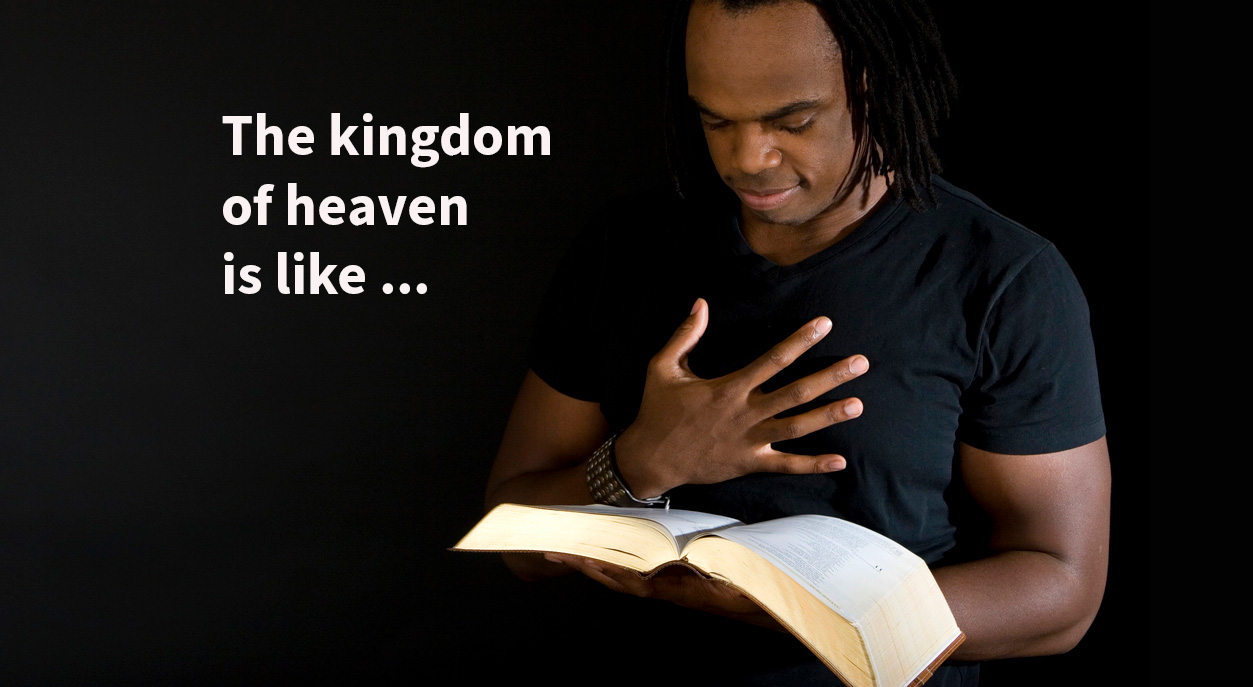
The collection and preservation of Jesus’ parables highlight a love of newer (but still ancient) wisdom and teaching. In the readings for this week, Jesus says the kingdom of heaven is like five things.
First, the kingdom is like a small mustard seed that has tiny beginnings but grows into a large and consequential form. Second, it is like yeast which, when mixed into a large amount of flour, provides leavening for everything it comes in contact with. Third, it is like treasure hidden in a field that is more valuable than everything a person might give up to acquire it. Fourth, the kingdom is like a merchant who will stop at nothing to acquire his own prize. Please note that both humans and God are willing give up everything to encounter the other in the kingdom. The kingdom is a treasure that is sought and the merchant seeking the pearl (that’s us!). Finally, the kingdom is like a dragnet that eventually scoops up everything and everyone in its path.
The kingdom parables are a distillation of God’s desires for humanity, and all of creation, as told by the one who lived, died and lived again to make them happen.
Interestingly, this week’s Gospel reading includes a coda in which Jesus checks in to see how the parables are being received. Unlike the earlier parables of the sower or the weeds, the disciples are pretty sure that they have understood these shorter parables without any need for explanation (Jesus gives an unprompted partial explanation of the dragnet parable).
Jesus said any scribe (someone well-versed in reciting and teaching on Scripture) who also became a student practitioner of the kingdom of heaven was like a person who brings forth both new treasures and old (Matthew 13:52).
I wonder how often we forsake treasures new or old? I subscribed to Luther Seminary’s Enter the Bible podcast series. As the esteemed hosts and guests work through the Bible one book at a time, many of the episodes include a disclaimer along the lines of “this book is probably not super familiar” or “this book is probably not on the most-read list.” That’s fine, of course. We all have our favorites. But I wonder if we fail to take Jesus and the psalmist at their words when they describe all the Scripture available to them at that time as a “treasure” and a “delight.”
Look, the kingdom of heaven as described in the parables is not in opposition to God’s long interaction with humans either before or after the incarnation of Jesus. Instead, the kingdom parables are a distillation of God’s desires for humanity, and all of creation, as told by the one who lived, died and lived again to make them happen. Jesus says the one who knows and lives the kingdom parables and the rest of Scripture is like someone who owns treasures old and new.