 Logout
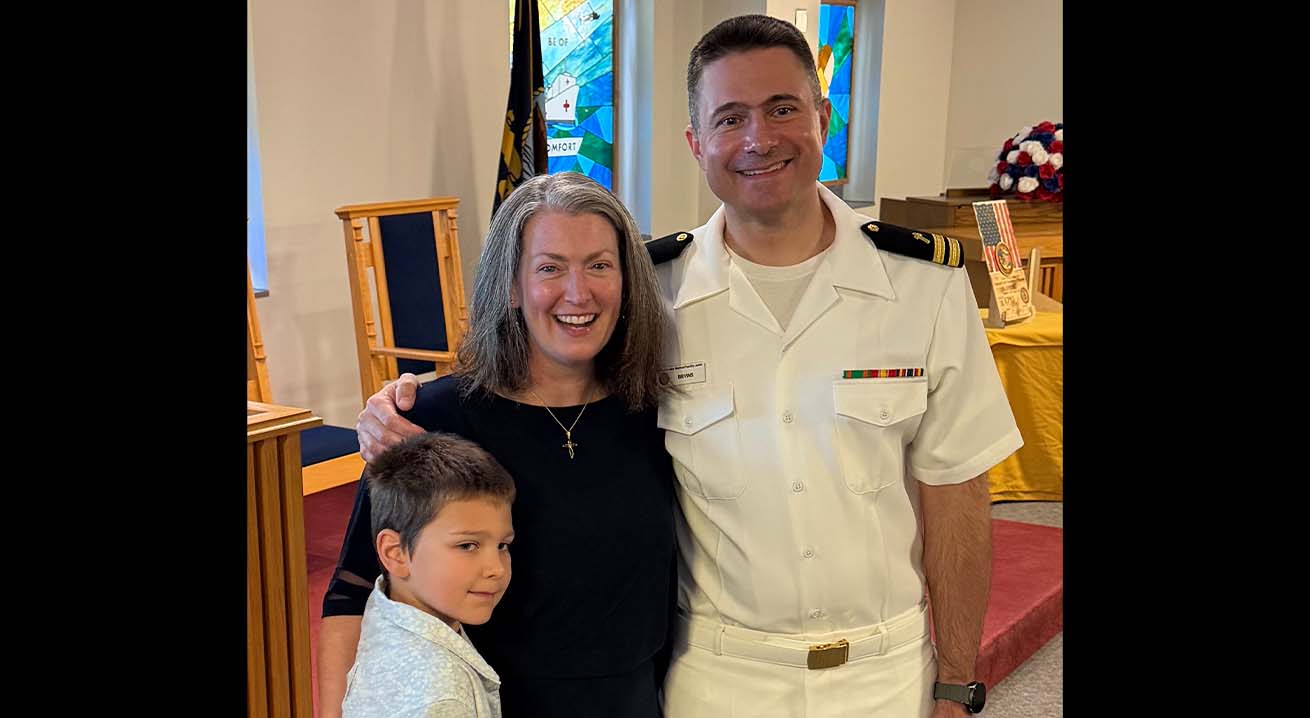
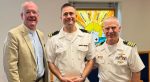
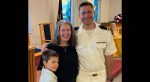
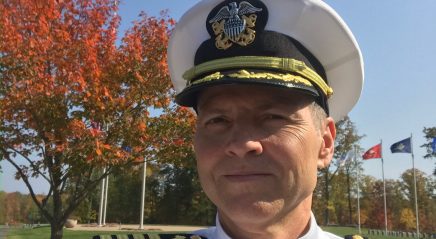
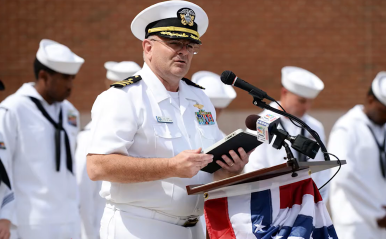
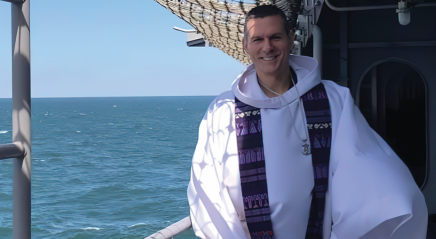
Lieutenant Commander William Bevins, a Navy chaplain, finds that ministry and the military have a lot in common. Both attract a certain kind of person, he said—one who isn’t afraid of sacrifice, who feels a strong calling to be part of something greater than oneself and, above all, who is driven by a sense of service to others.
“Chaplains are officers in the military, and the vast majority of chaplains I’ve been honored to serve alongside understand that rank and elevation and leadership are never really about us—it’s about what we’re entrusted to do with the gifts that God has given us,” Bevins said.
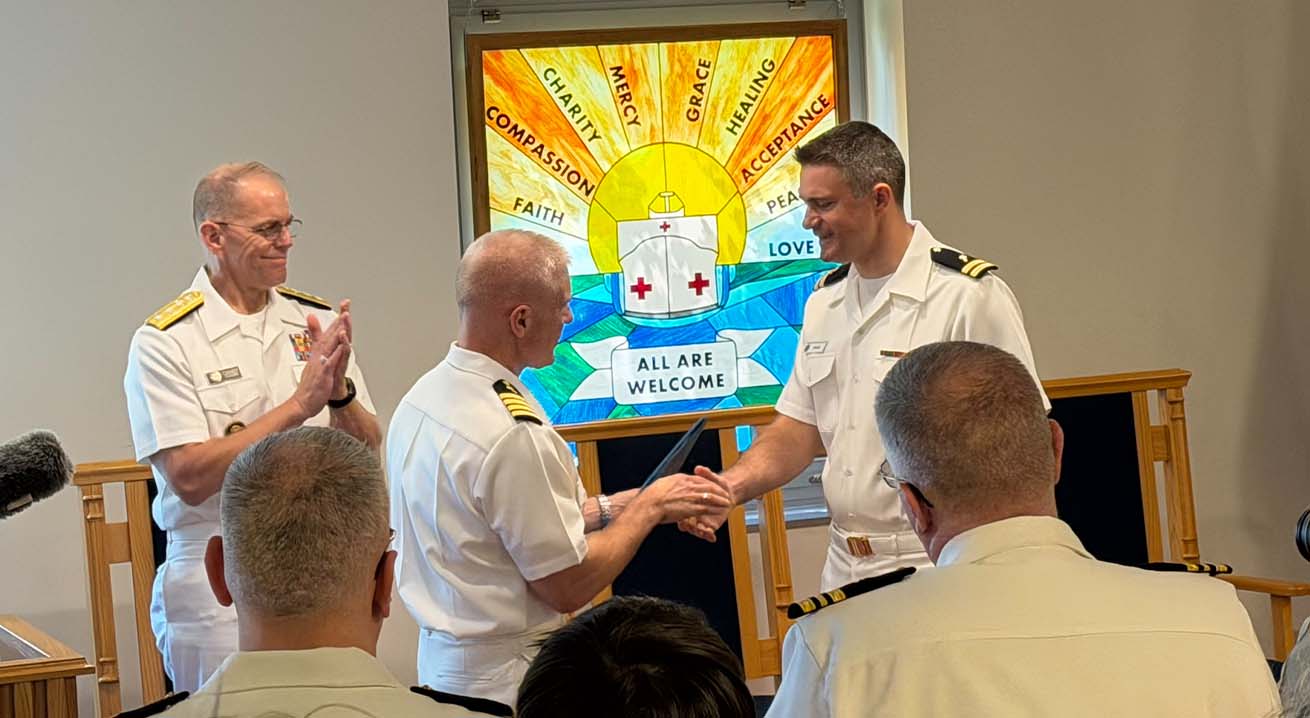
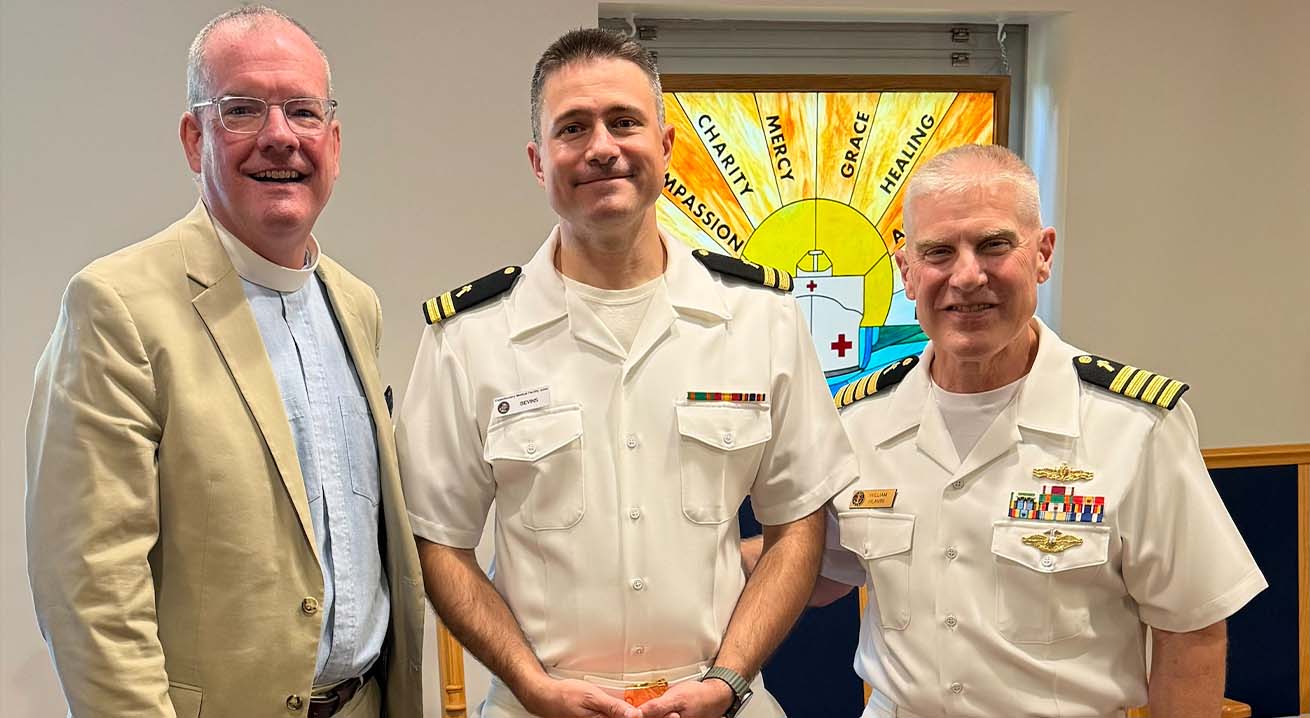
Bevins, who has served as an ELCA Navy chaplain for nearly six years, was recently honored with two prestigious chaplaincy awards. In August, he received the Professional Naval Chaplaincy Excellence Award, and in September, he received the Father Vincent Capodanno Chaplain of the Year Award.
The award was named for Vincent Capodanno, a chaplain who refused medical aid for severe wounds so he could administer last rites to soldiers and who died while rushing to aid a wounded corpsman in the Vietnam War. The Capodanno Award recognizes military chaplains who exemplify that same spirit of selflessness, spiritual leadership and devotion to service.
“Father Capodanno, who was known as the ‘Grunt Padre,’ is a personal hero of mine, and it’s such an honor to be associated with his legacy,” Bevins said. “He was known for refusing to leave his people—he was the shepherd who stayed with his flock, no matter the cost. And I think the award belongs to so many people along with me.”
Serving at Naval Medical Center Portsmouth (Va.), Bevins has taken an active role in creating a new model of clinical pastoral education (CPE) within the U.S. Navy Chaplain Corps. Working from the ELCA’s model, Bevins has helped the Navy create its own version of the program for its chaplains.
“I was already certified as a supervisor educator through clinical pastoral education, and the Navy saw that as probably the best option to build their own program,” he said. “So they tapped me, allowing me to stay at the same hospital to build and lead the first cohort.”
Bevins educates chaplains in a clinical context, preparing them for specific duty positions in expeditionary medicine and Naval medicine in general. The training helps chaplains better understand working in medical situations both in naval hospitals and during deployments, offering spiritual care to patients and medical staff.
Due to the nature of military life, with chaplains serving all around the globe, the CPE program offers a hybrid model that allows participants—including ELCA seminarians—to learn remotely as well as during a residency period in Portsmouth and at the Naval Medical Center San Diego.
“What Will has done is taken a highly specialized pastoral training program and applied it across the entire Navy, which is pretty incredible,” said Christopher Otten, senior director of the chaplain corps and specialized ministries for the ELCA. “He’s brought ministry and continuing education to chaplains who are in places where civilian pastors can’t reach them.”
“It has been fun to see what God has done”
Bevins’ experience made him the ideal person to create the CPE international program: he served as a classroom instructor in the Peace Corps for several years and as a curriculum director for the Fulbright Program prior to answering the call to ministry just over a decade ago.
“My experience in education and policy development all came together for this, and it has been fun to see what God has done,” Bevins said. “To be able to work with incredibly experienced, caring and accomplished military chaplains, helping them hone their skills in the clinical setting—it’s a dream come true.”
Otten believes that the program Bevins developed has the potential to allow the ELCA to connect with and support chaplains in arenas, such as the military, where barriers such as security clearance make it more complicated for them to work together.
“Will is an exceptional chaplain who is quite literally shaping the future of the Navy’s chaplain care by forming leaders and making disciples.”
“He’s reaching places that no one else can reach,” Otten said. “To get into a naval hospital, you have to have an ID—unless you’re in an ambulance and need immediate care, they’re not going to let you through the gate. [ELCA seminaries] and educators have recognized that something is going on here that is at the front edge of being able to minister to people.”
Such innovation, combined with humility and a heart to serve others, is why Bevins has been so widely recognized, Otten said. “The Capodanno Award is one of the highest awards to honor a chaplain,” he said. “Will is an exceptional chaplain who is quite literally shaping the future of the Navy’s chaplain care by forming leaders and making disciples.”
Bevins said that being able to create the CPE program to support his fellow chaplains has been one of the great highlights of his career, and he’s grateful that God led him to serve in this way.
“The people in my heart have always been service members, and I felt like God was connecting me with them,” he said. “They have spiritual needs, emotional needs, practical needs, and if I can be one place in their life where they can share themselves authentically and receive advisement and care, it is such a privilege to get to do that.”