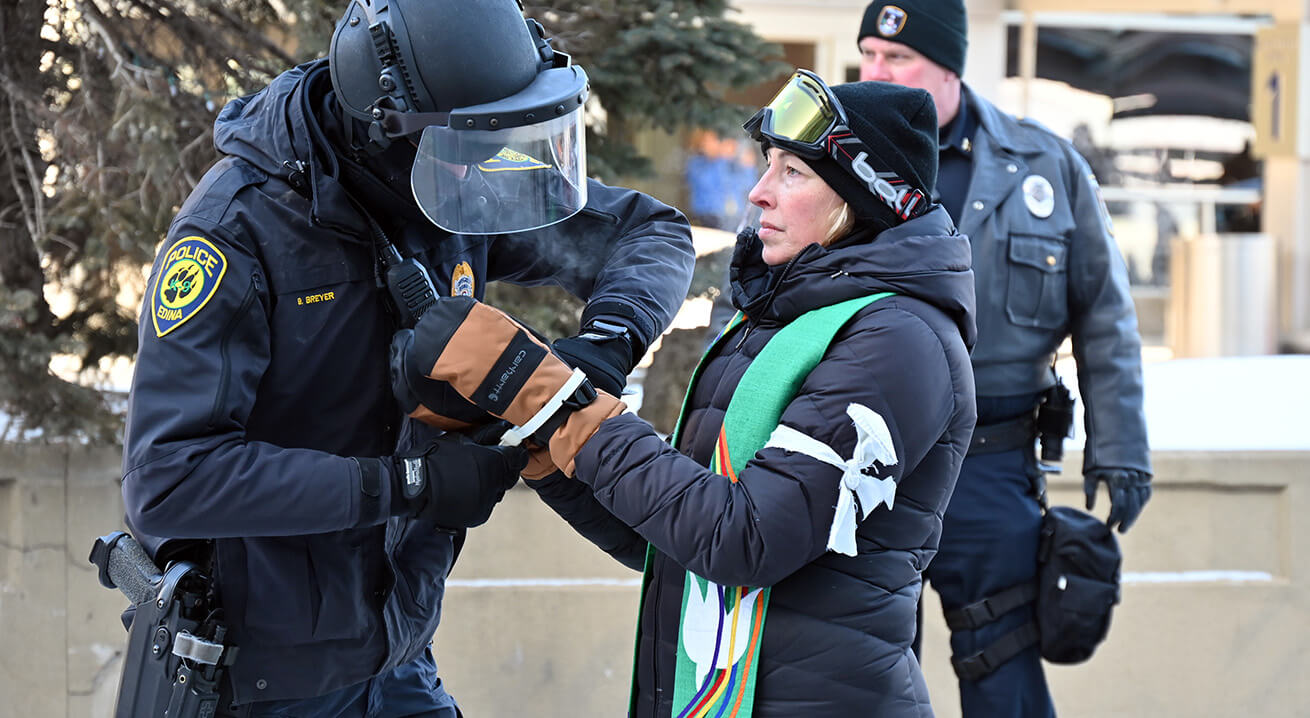
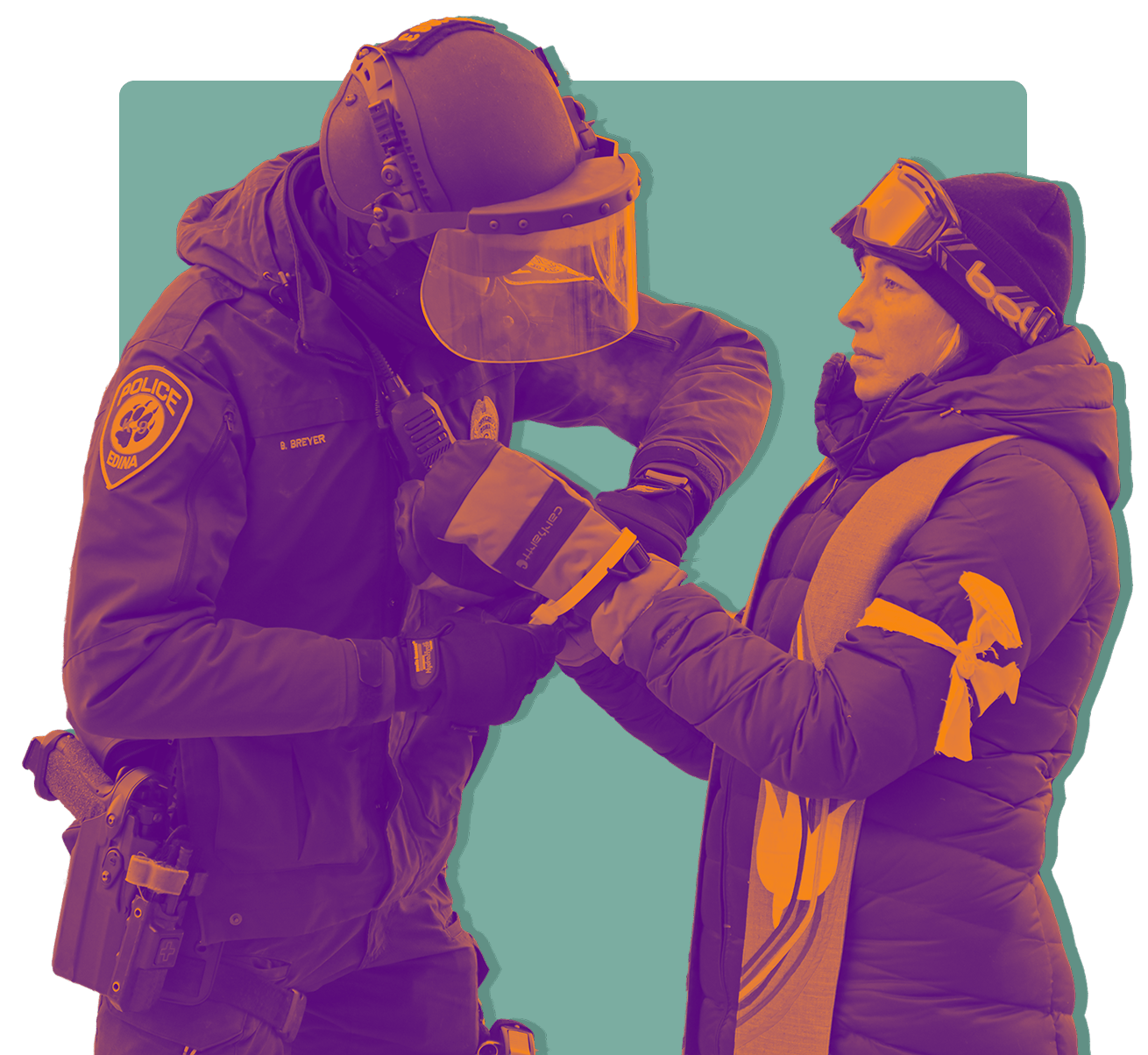
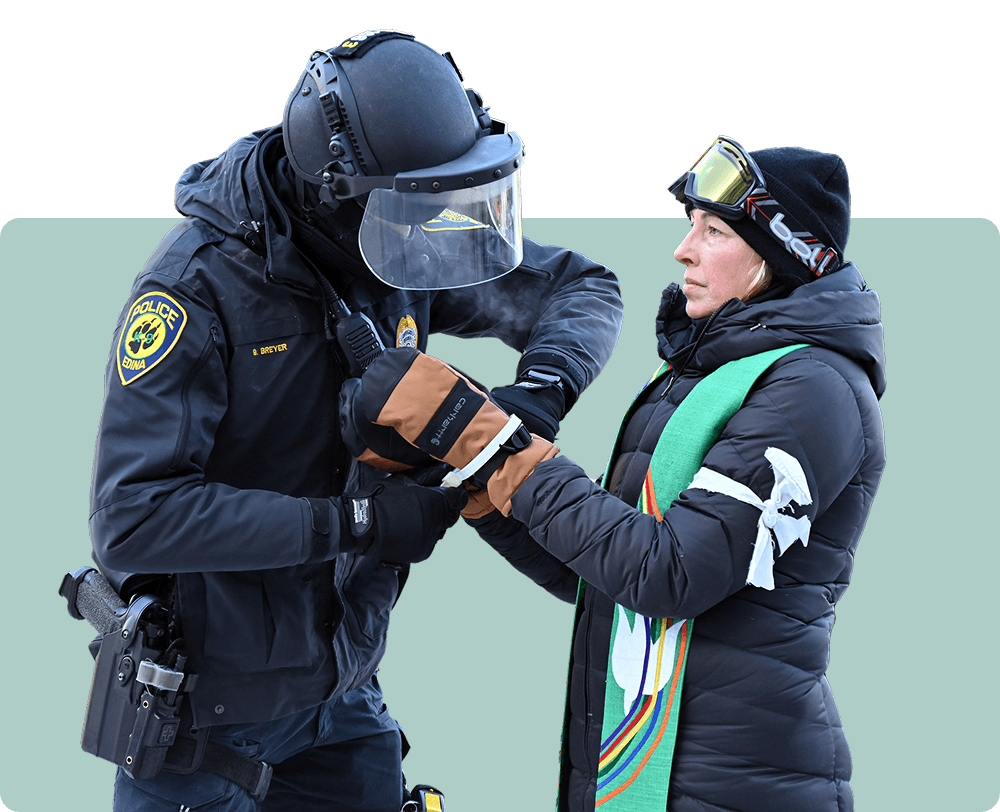
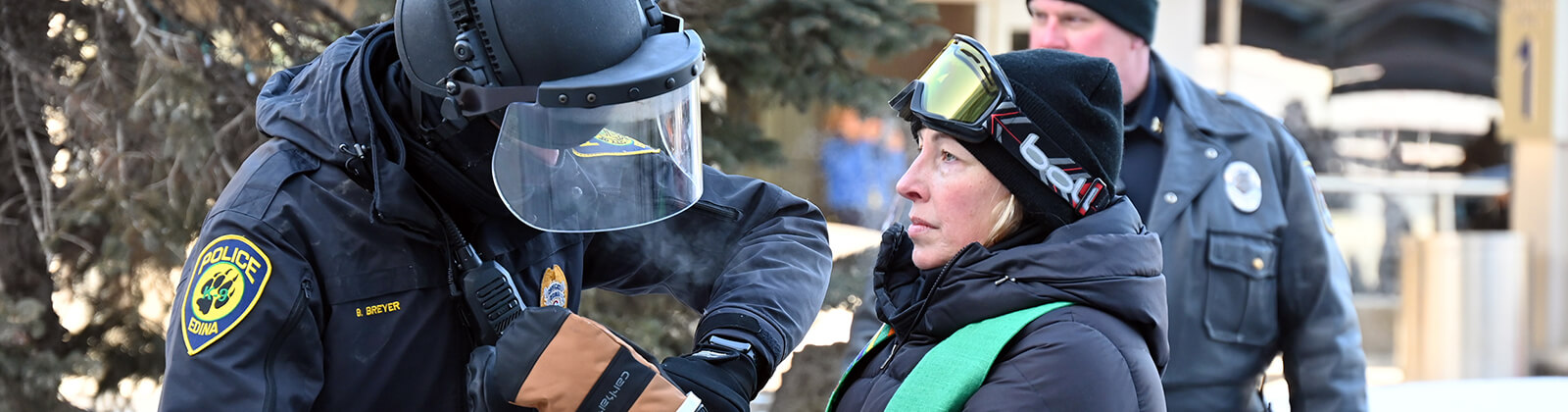
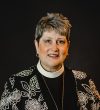
Ingrid Arneson Rasmussen is arrested with other clergy members leading a demonstration against U.S. Immigration and Customs Enforcement tactics at the Minneapolis-St. Paul International Airport in January. Photo: RNS/Jack Jenkins
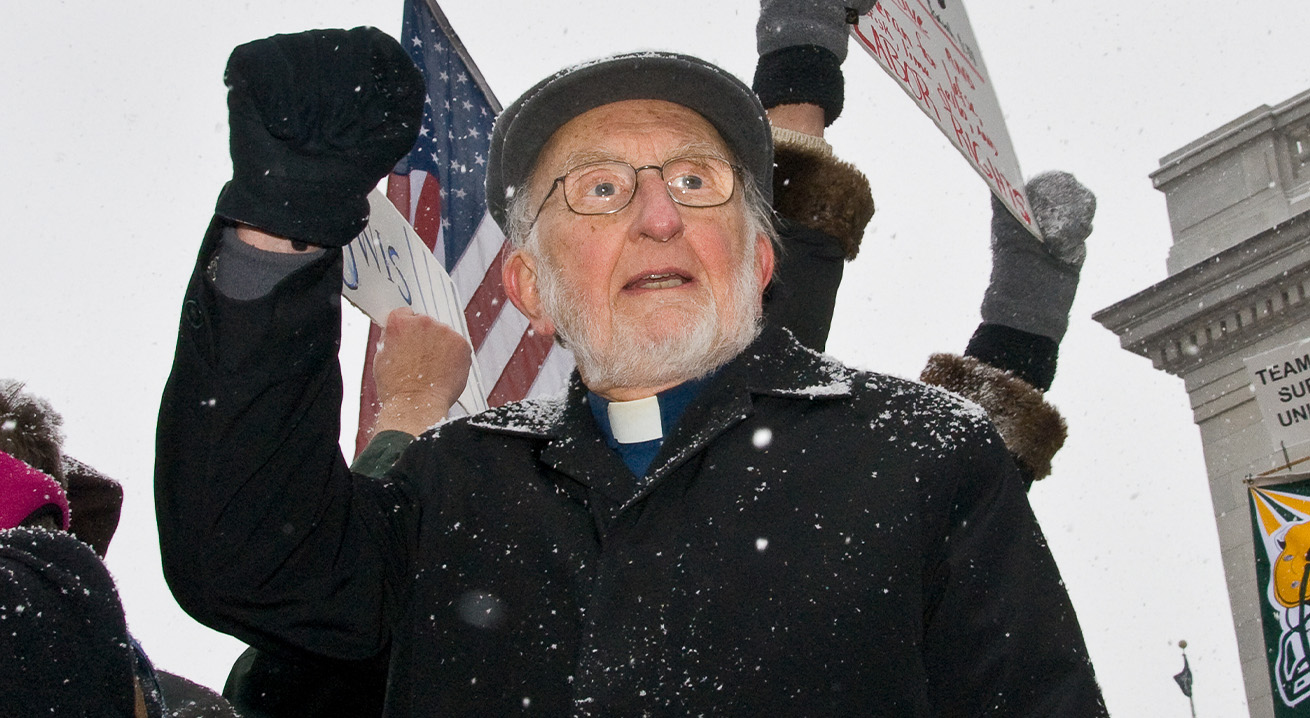
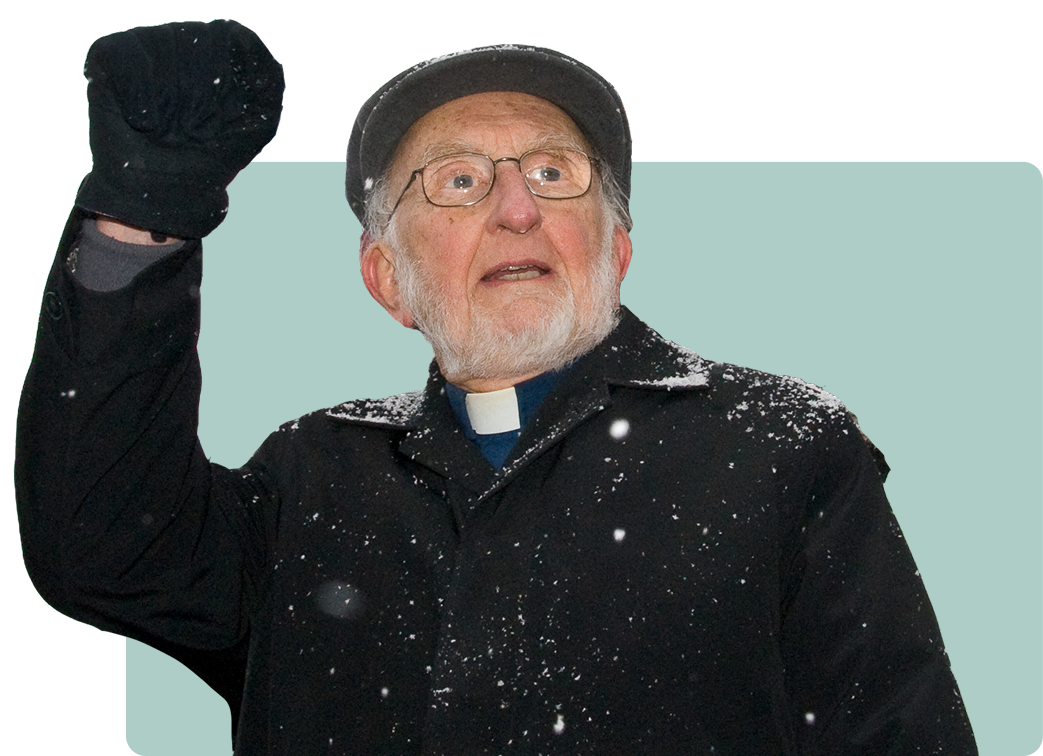
Retired ELCA pastor Joseph Ellwanger, pictured here at a rally for worker’s rights outside the Wisconsin State Capitol building in Feb. 2011, has a history of civic activism stretching back to the 1950s. Photo: Wikimedia Commons/Susan Ruggles
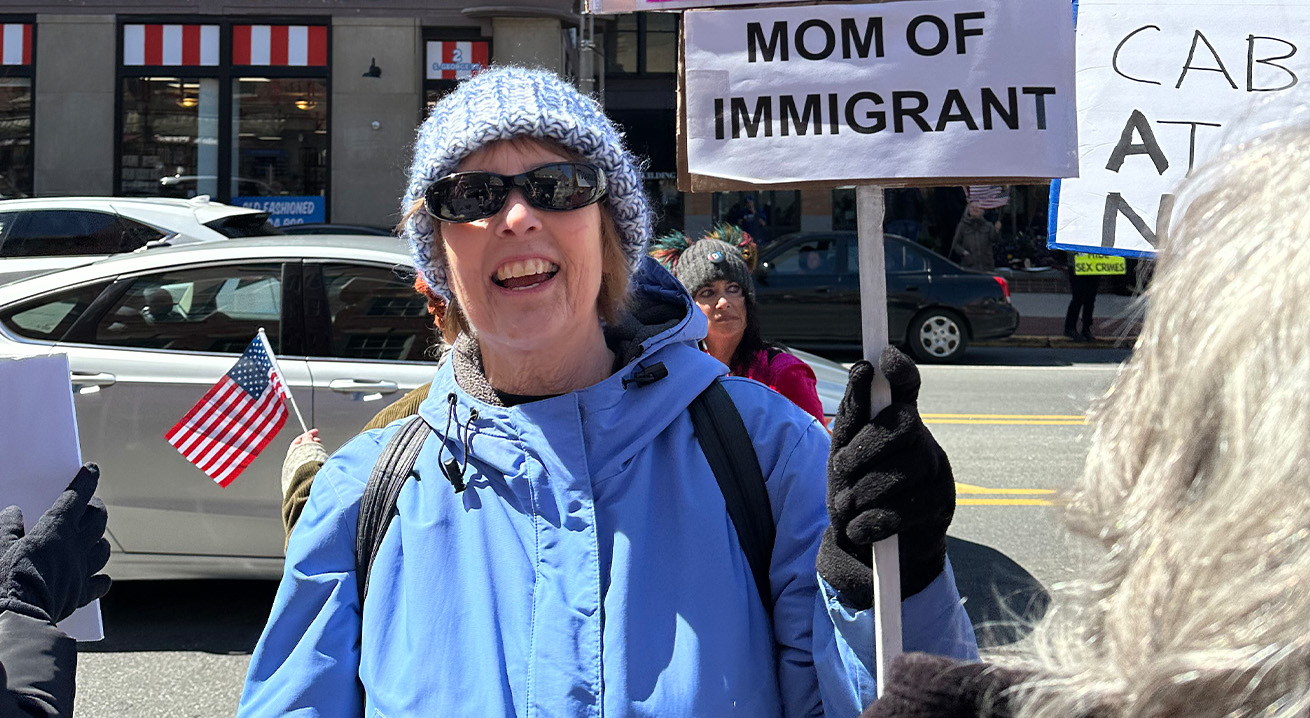
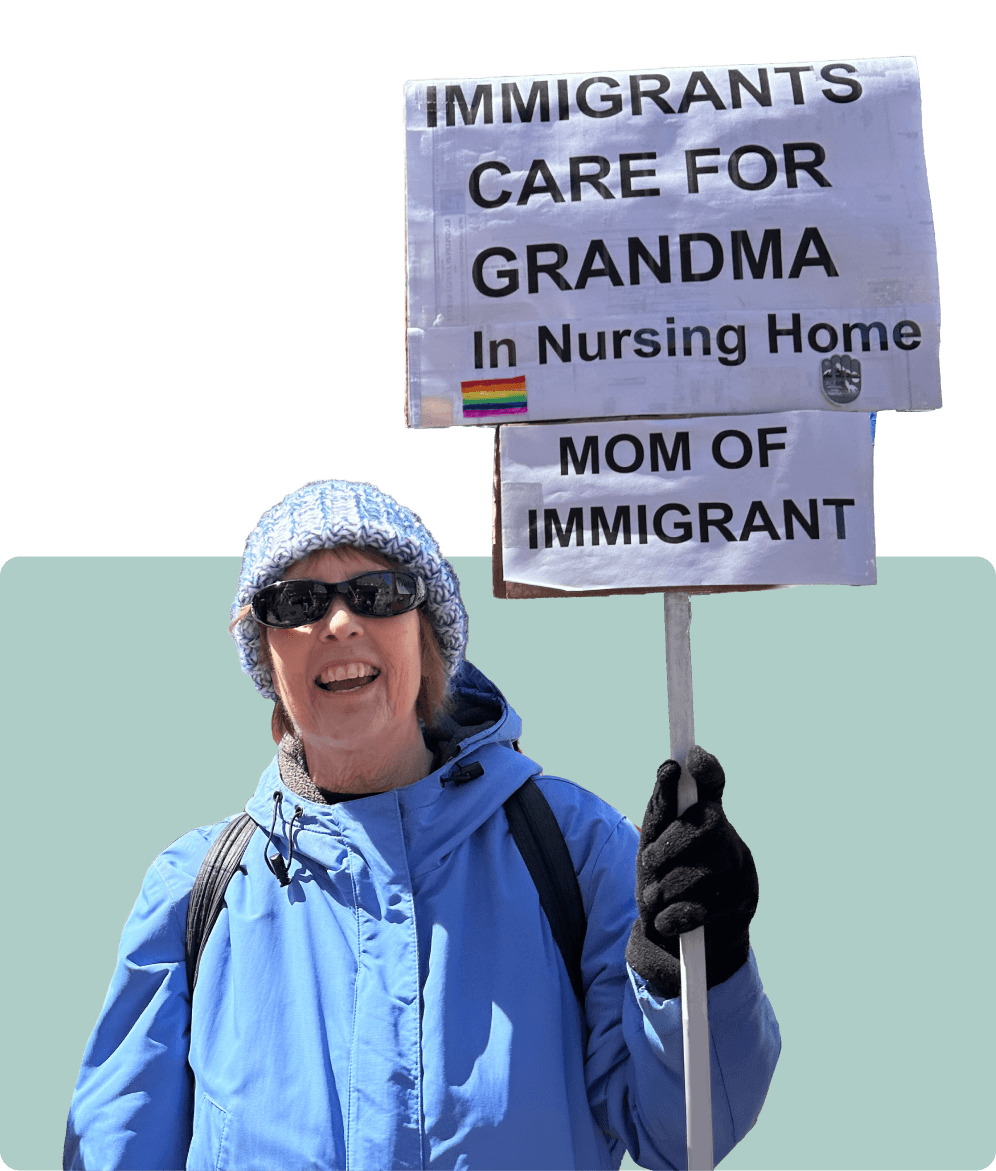
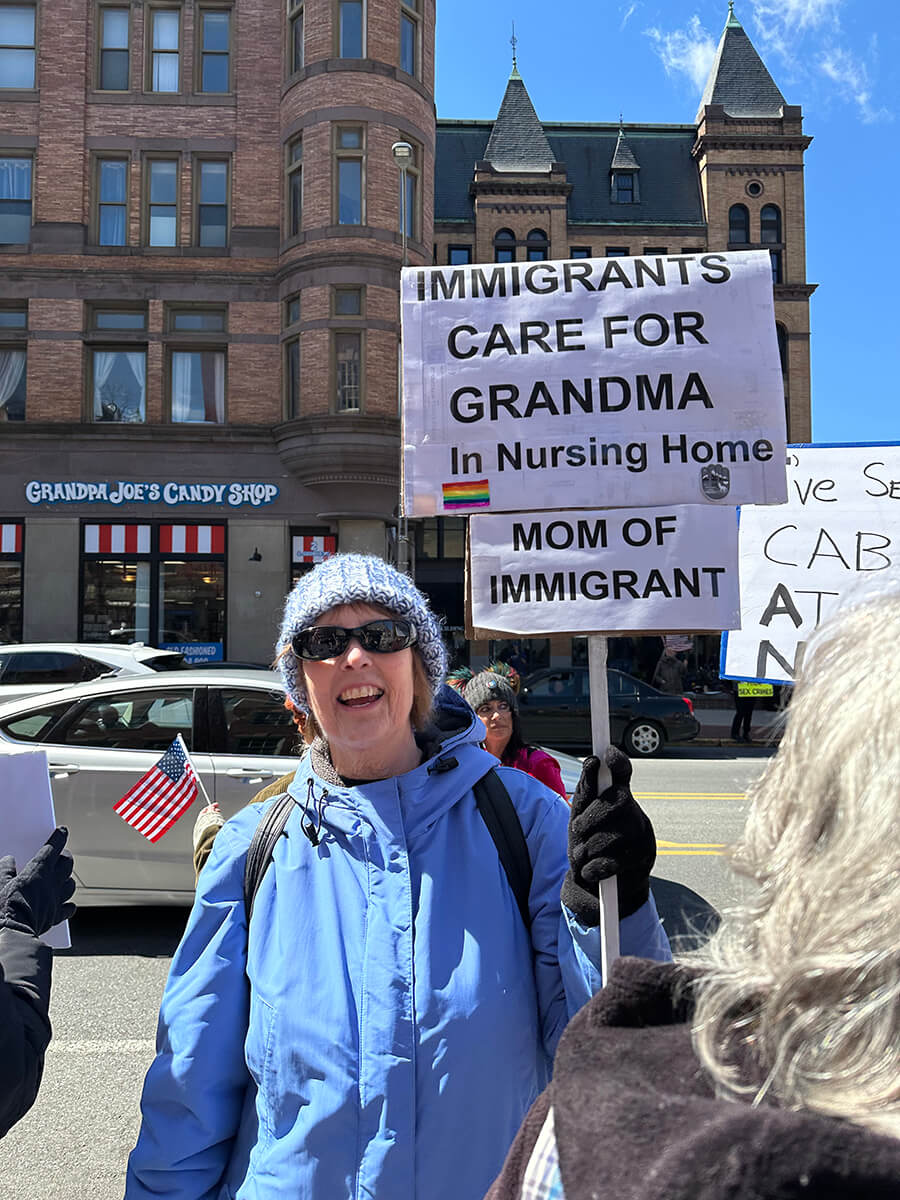
Lori Wise and other ELCA members participates in a No Kings rally in York, Pa., joining one of the largest single-day protests in U.S. history. Photo: Courtesy of Lori Wise
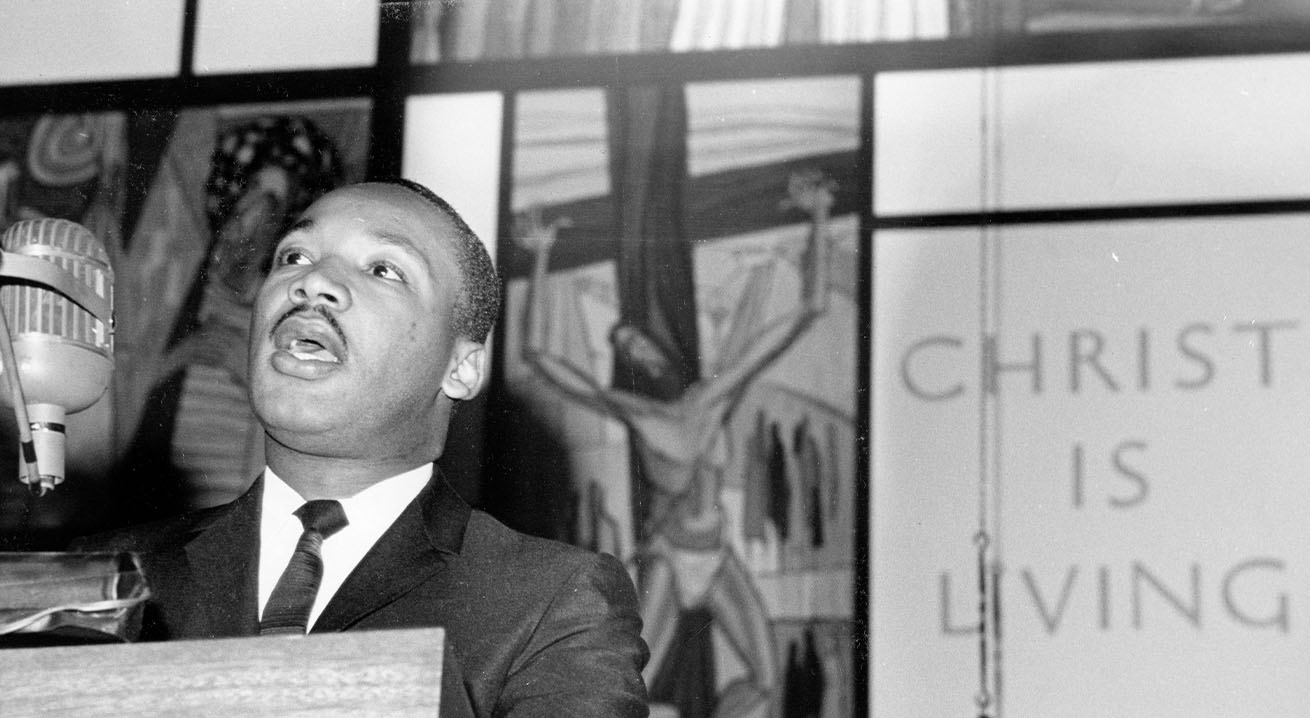
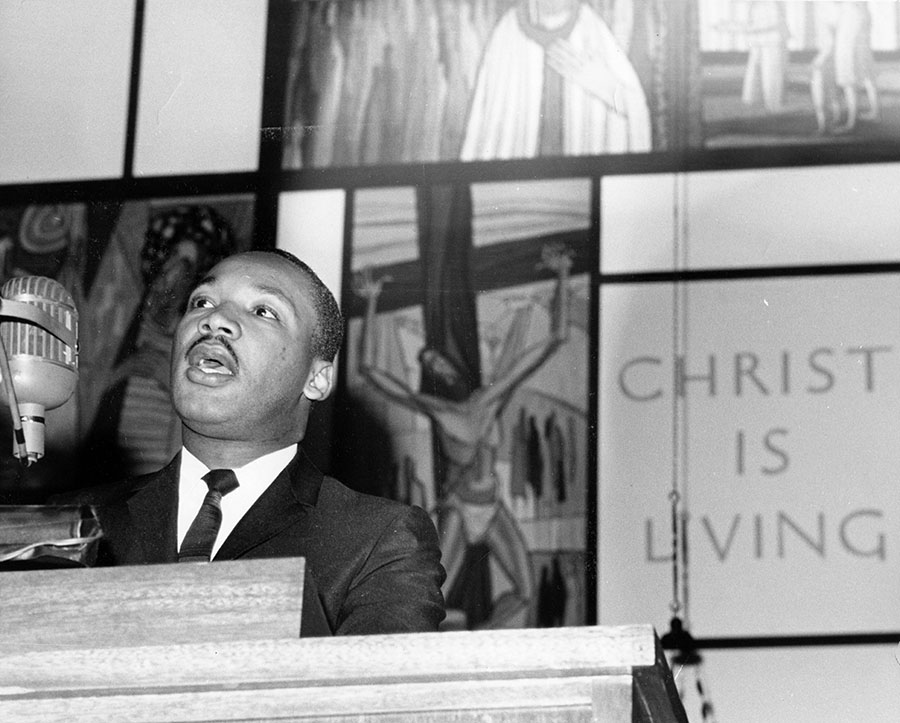
Martin Luther King Jr. speaks to the American Luther League Convention in Miami Beach in 1961. Photo: ELCA Archives
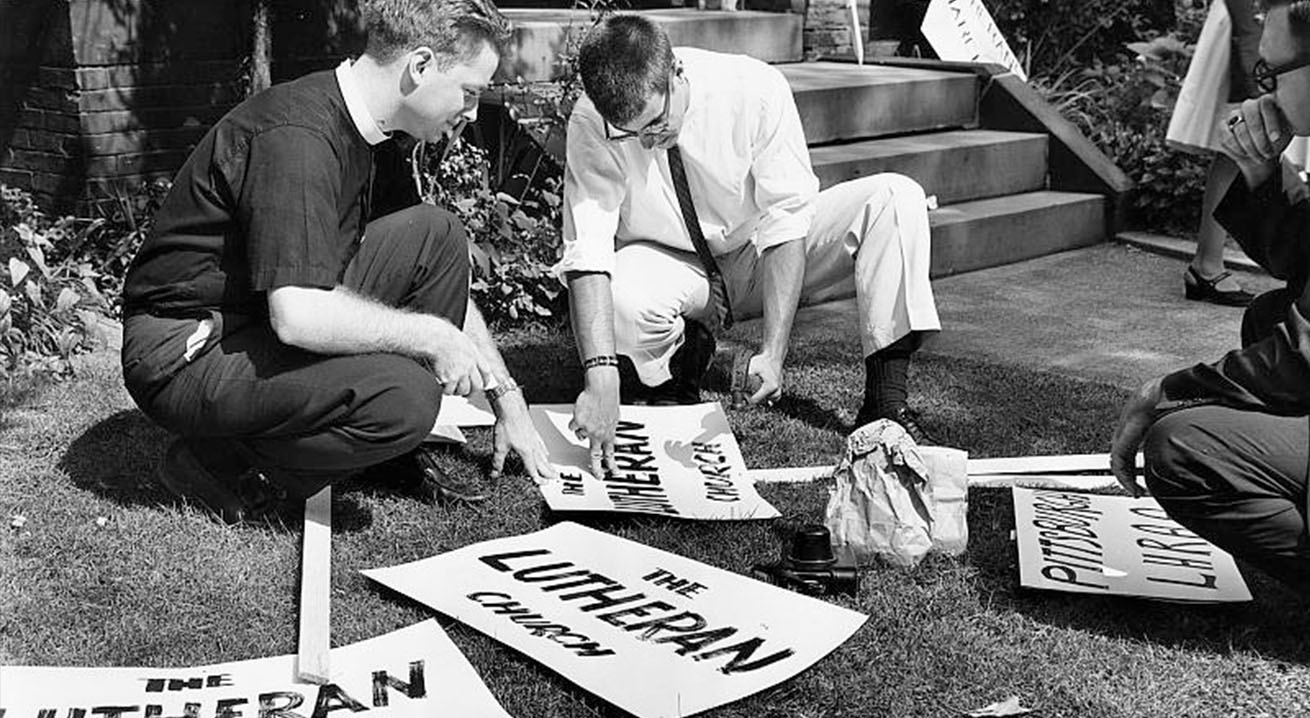
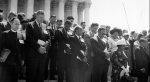
Lutherans gather in Washington, D.C., to prepare for the March on Washington for Jobs and Freedom in 1963. Photo: ELCA Archives
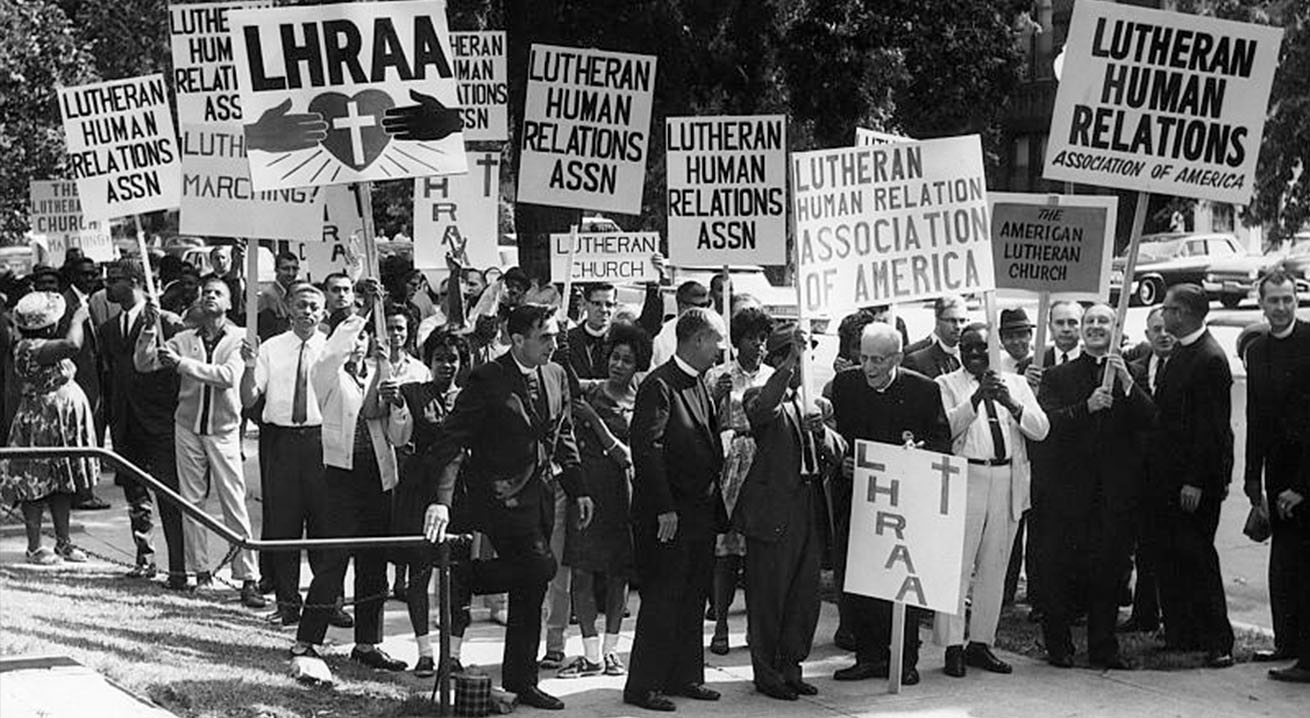
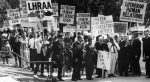
Lutherans and the Lutheran Human Relations Association participate in the March on Washington for Jobs and Freedom in 1963. Photo: ELCA Archives
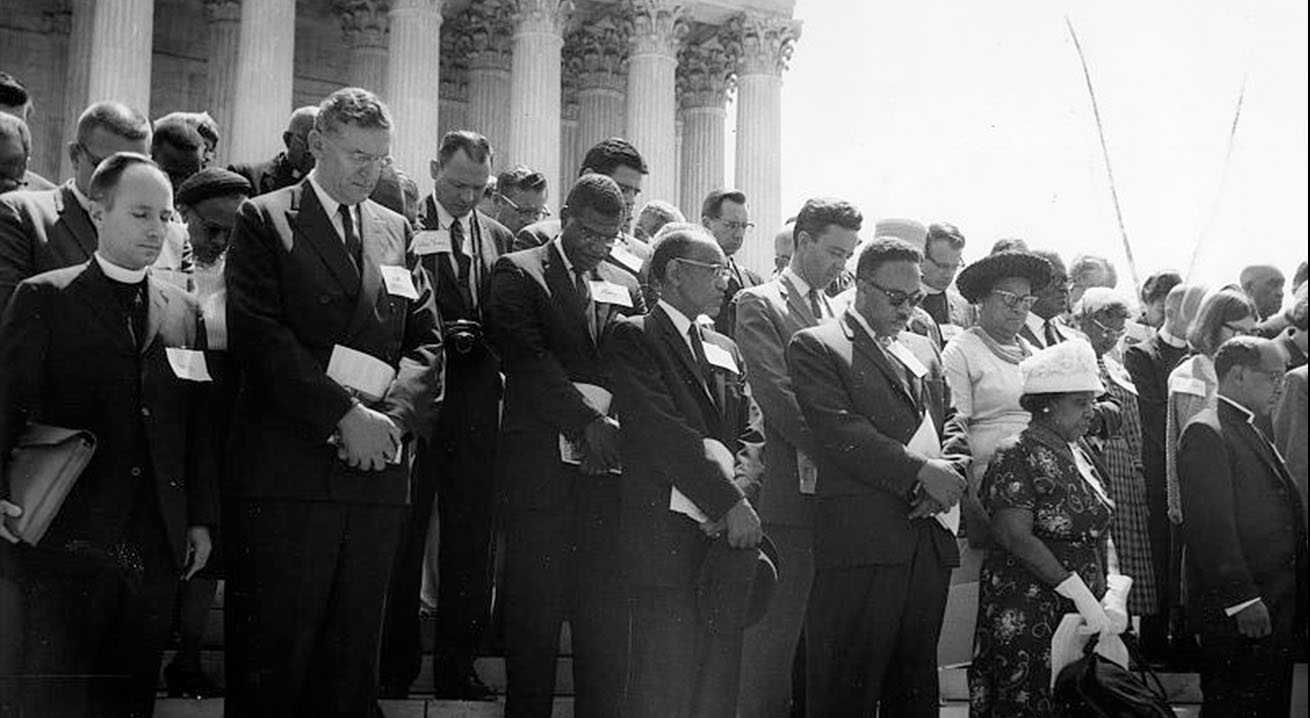
Lutherans and Protestant groups gather in Washington, D.C., to commemorate the 10th anniversary of the Supreme Court ruling mandating desegregation in 1964. Photo: ELCA
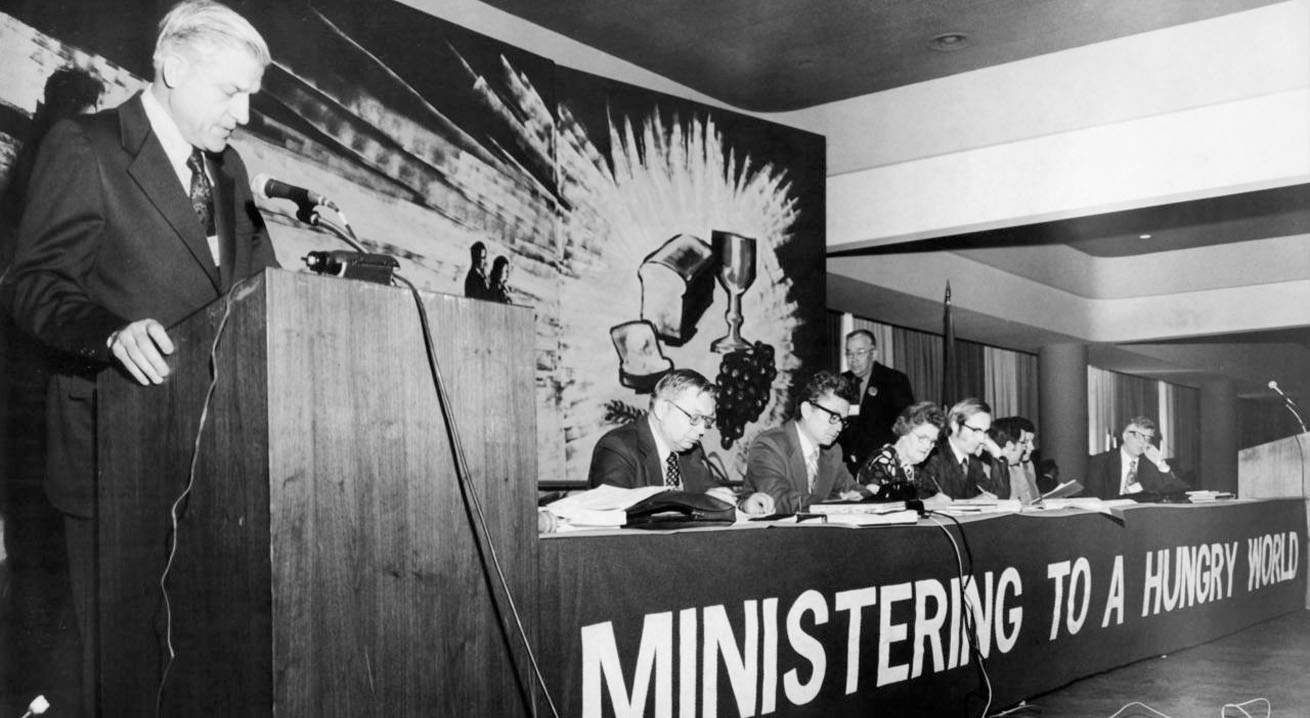
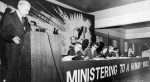
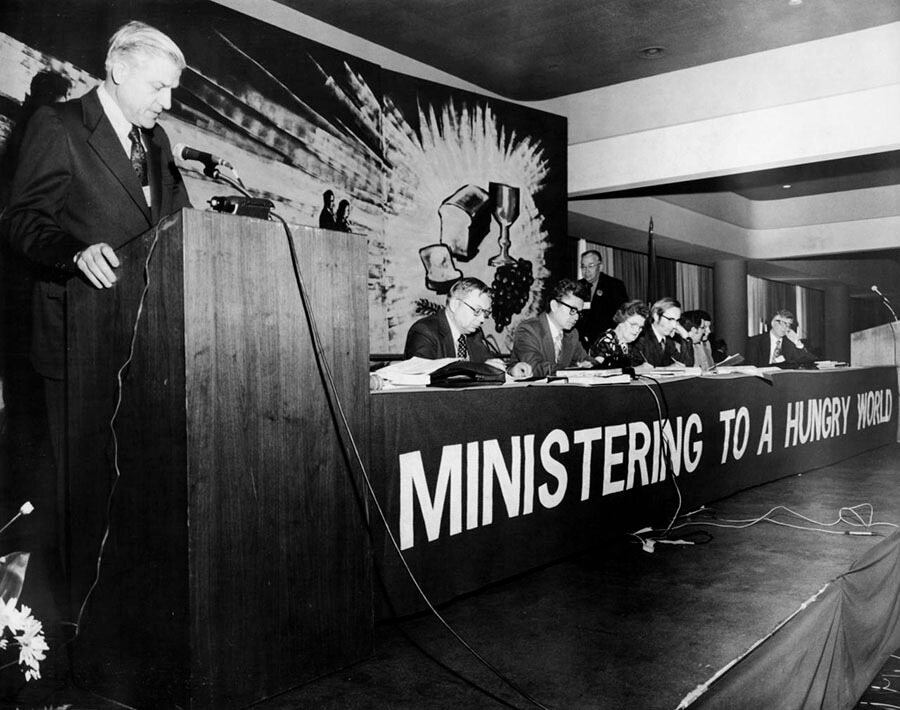
David W. Preus, president and presiding bishop of the American Lutheran Church (ALC), speaks about the creation of the ALC’s World Hunger Appeal at the 1974 general convention. Photo: ELCA Archives
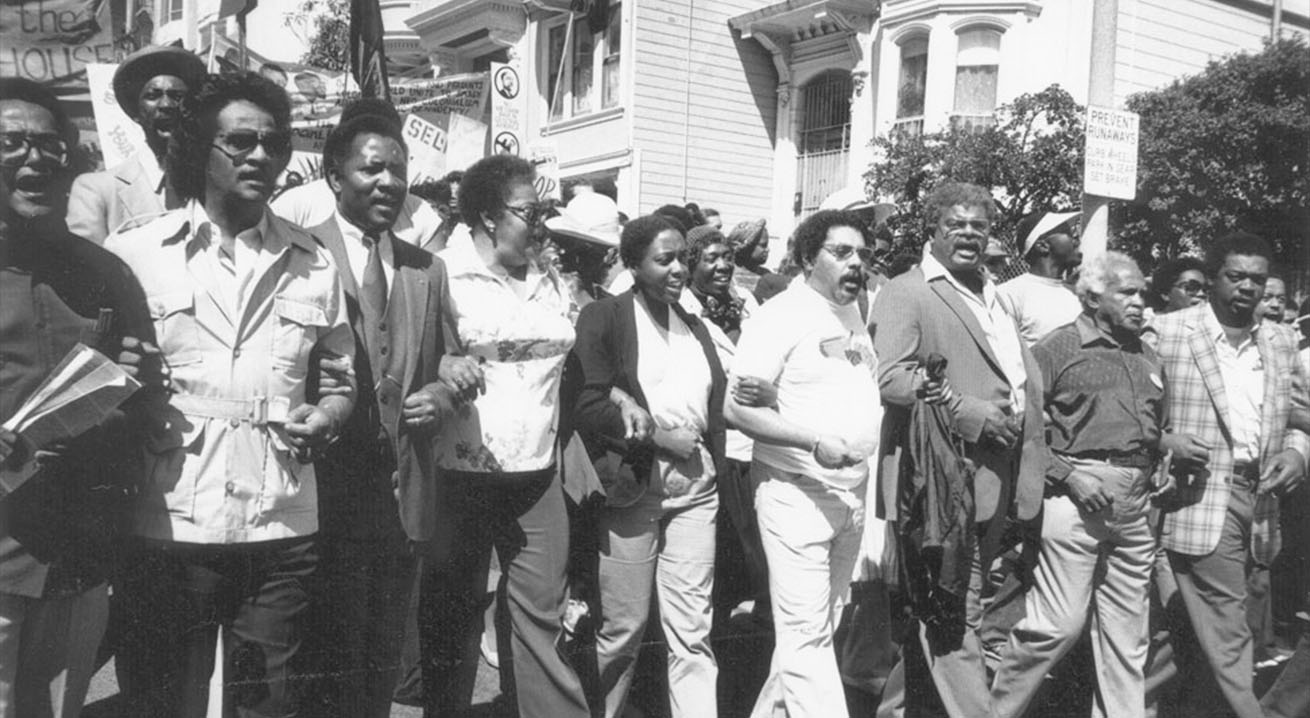
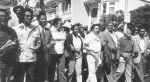
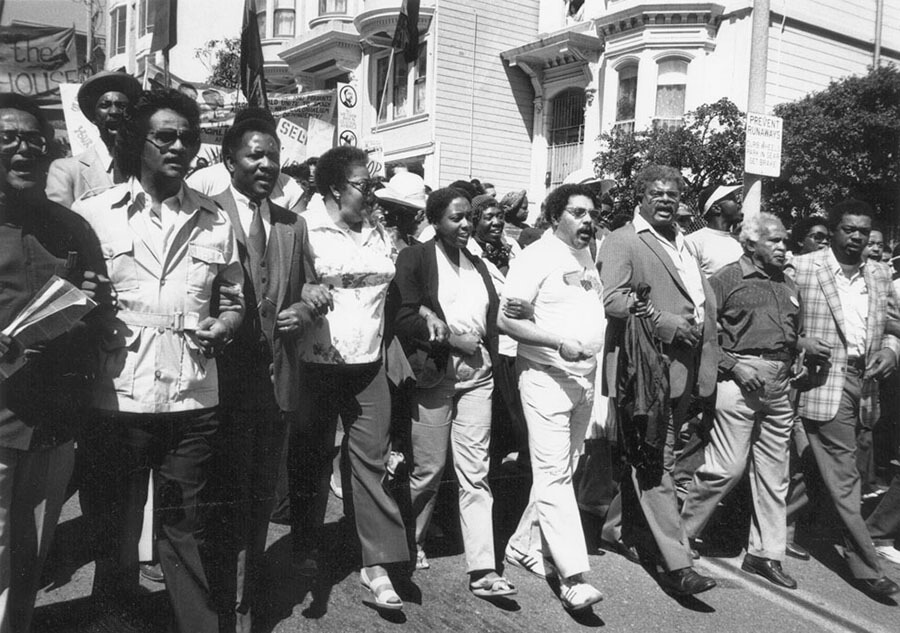
Will Herzfeld, presiding bishop of the Association of Evangelical Lutheran Churches (third from left), joins civil rights activists in San Francisco to commemorate the 20th anniversary of the March on Washington for Jobs and Freedom in 1983. Photo: ELCA Archives
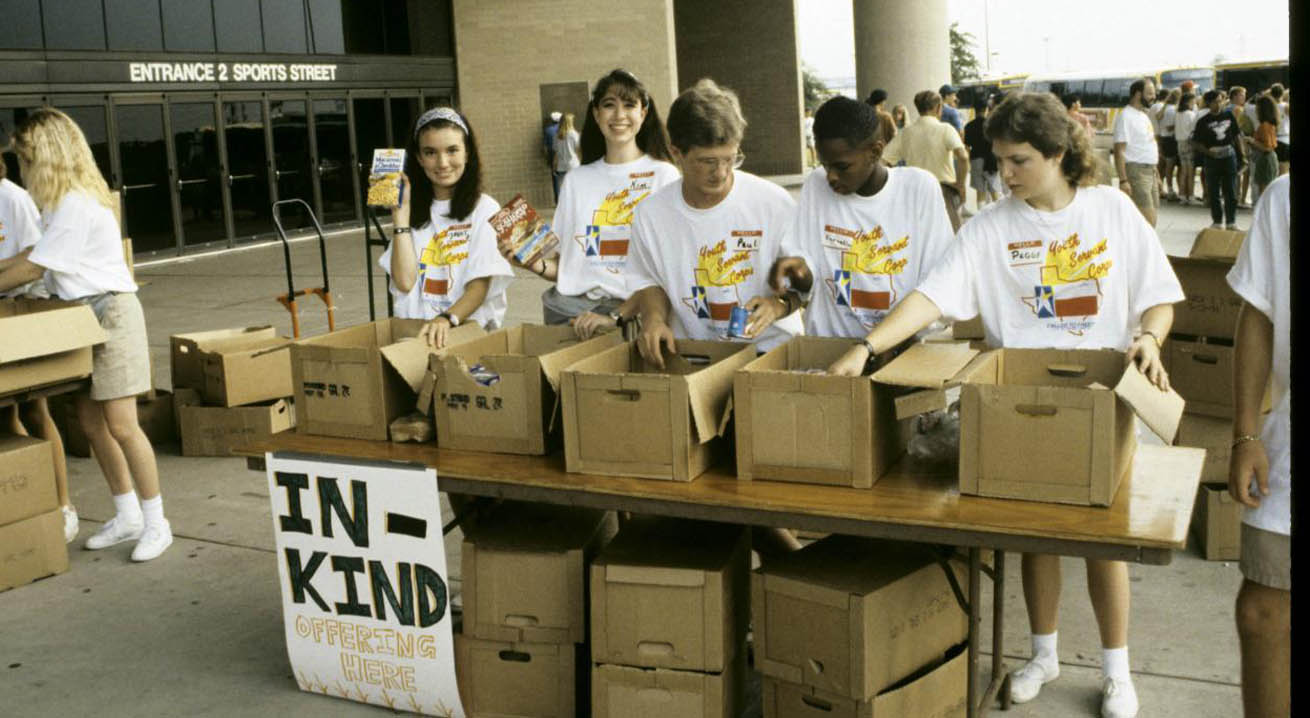
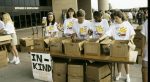
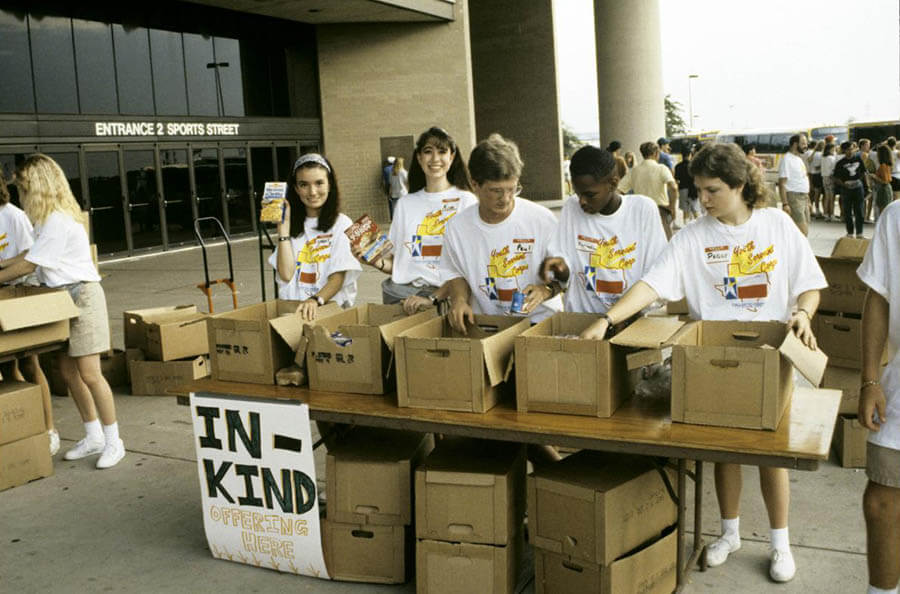
Participants of the 1991 ELCA Youth Gathering in Dallas run a food drive. Photo: Rod Boriack
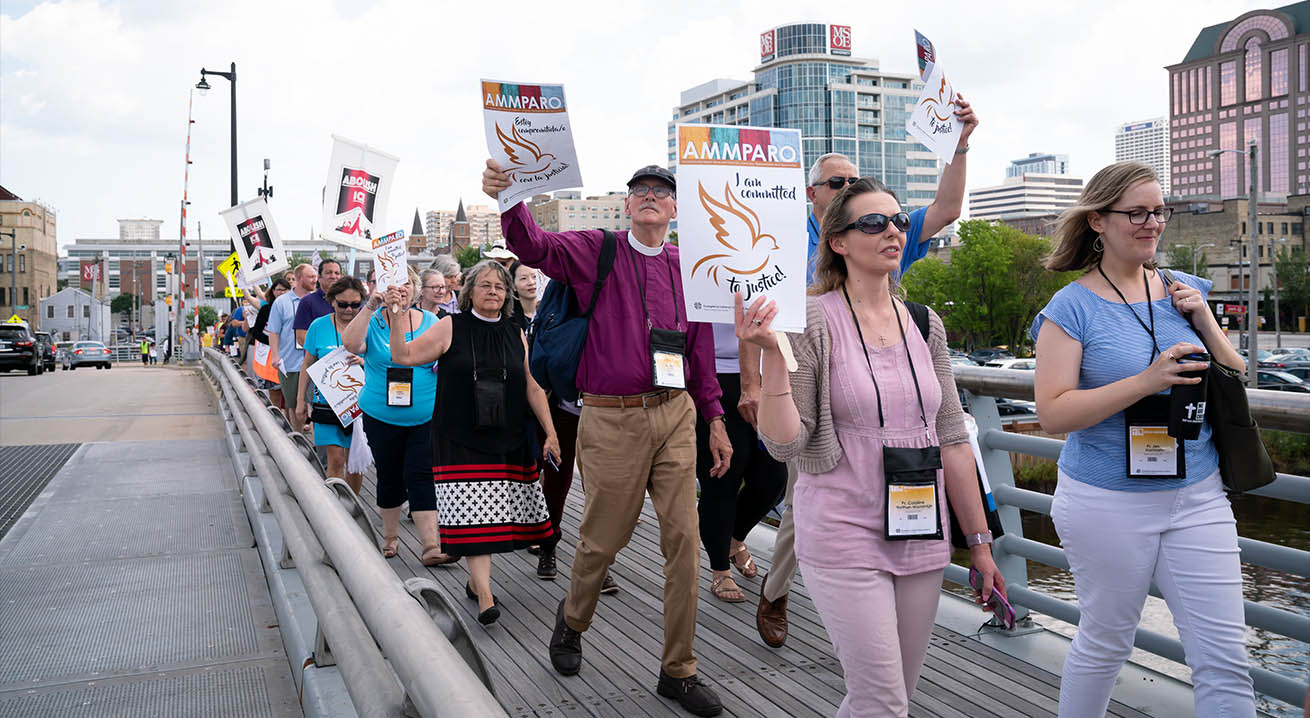
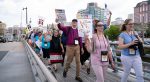
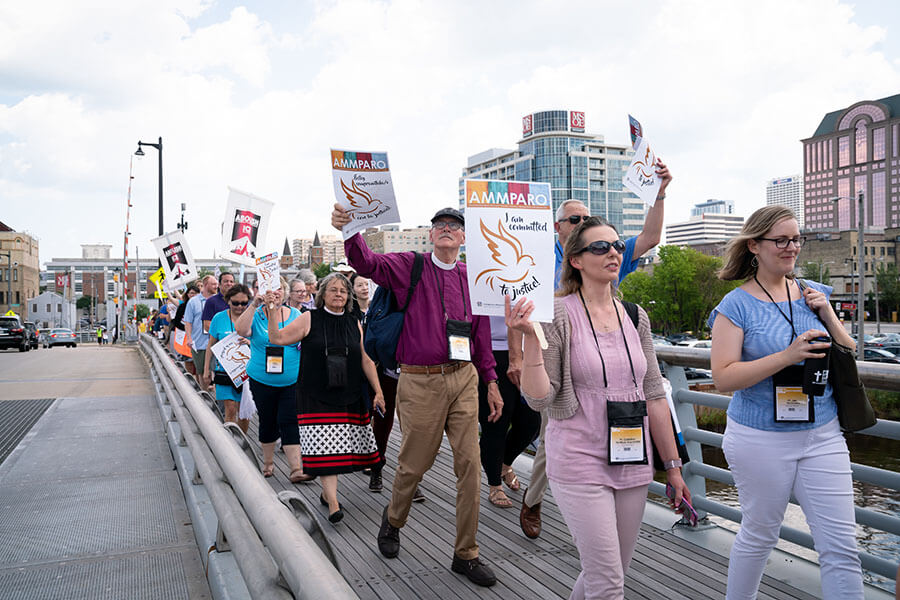
2019 ELCA Churchwide Assembly attendees participate in the AMMPARO walk and prayer vigil in support of migrant families on Aug. 7 in Milwaukee. Photo: ELCA/Janine Truppay
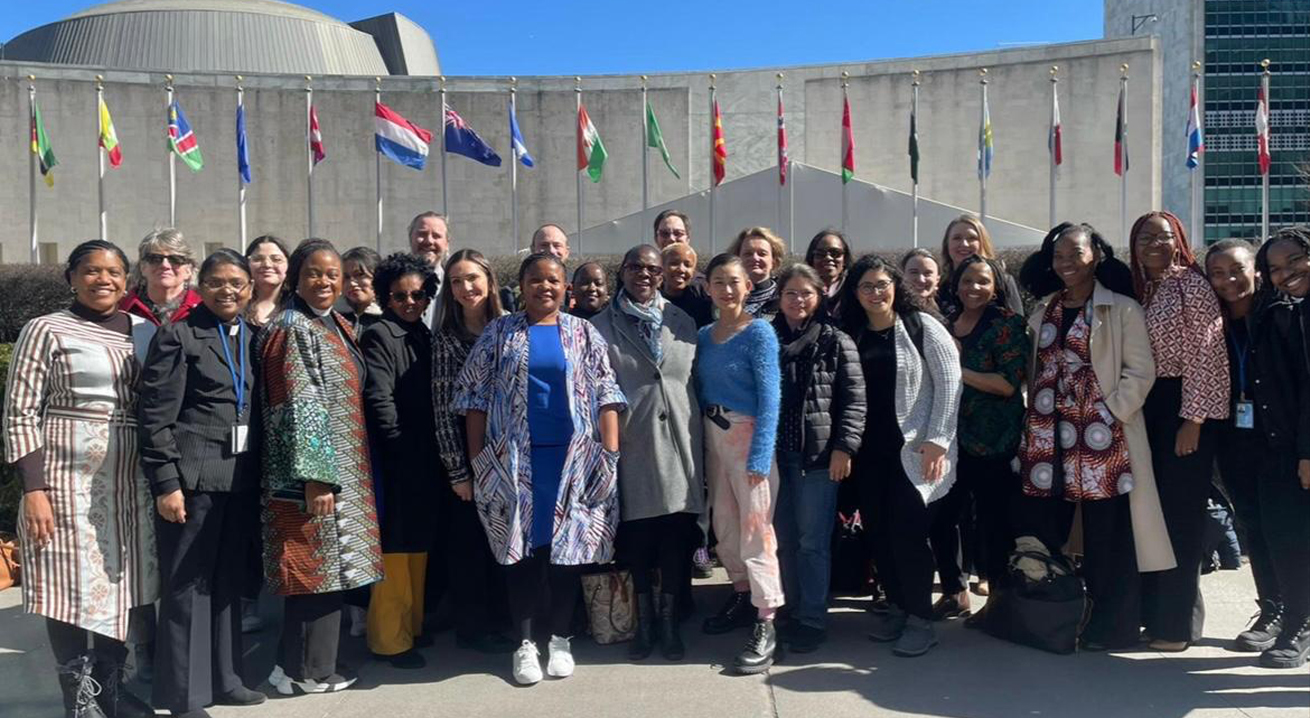
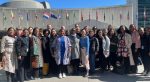
An international delegation organized through the Lutheran Office for World Community (LOWC) participates in the 68th session of the Commission on the Status of Women at the United Nations in March 2024. Photo: LOWC
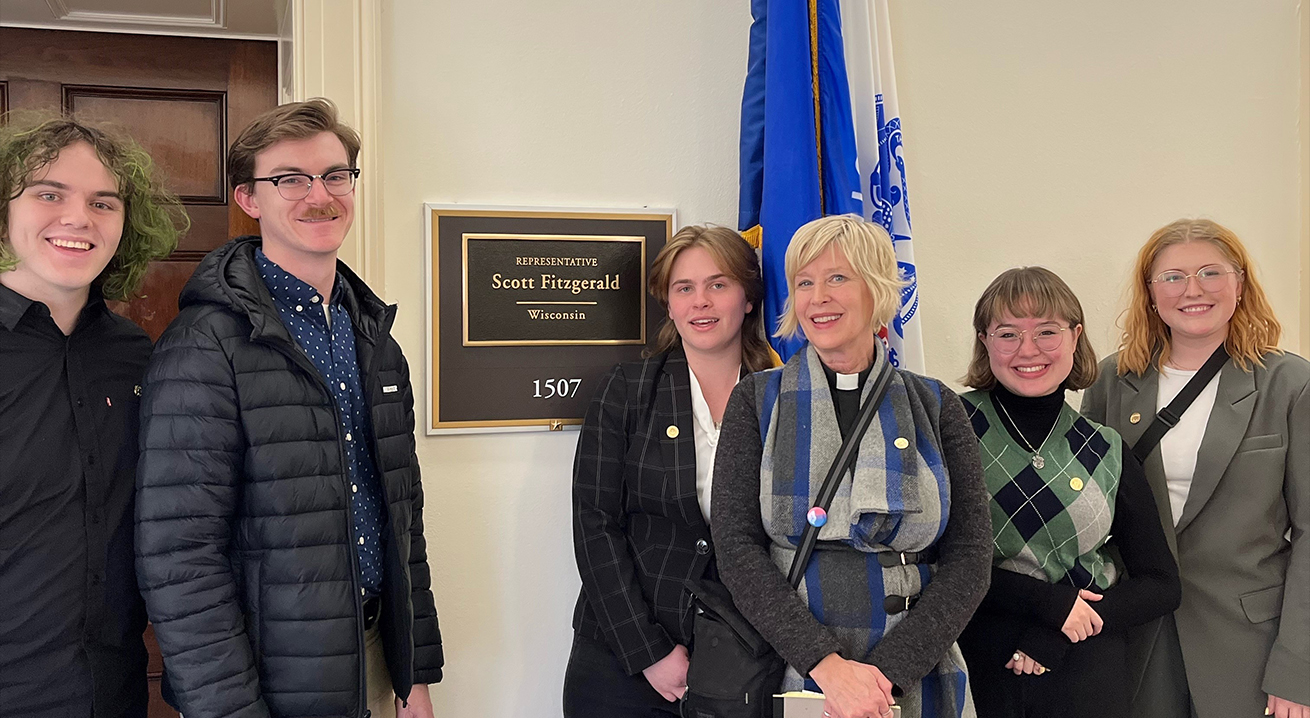
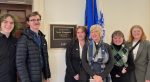
A group of Lutheran Campus Ministry of Greater Milwaukee students and Pastor Rachel Young Binter meet with their representatives on Capitol Hill alongside ELCA advocacy staff in March 2024. Photo: ELCA Witness in Society
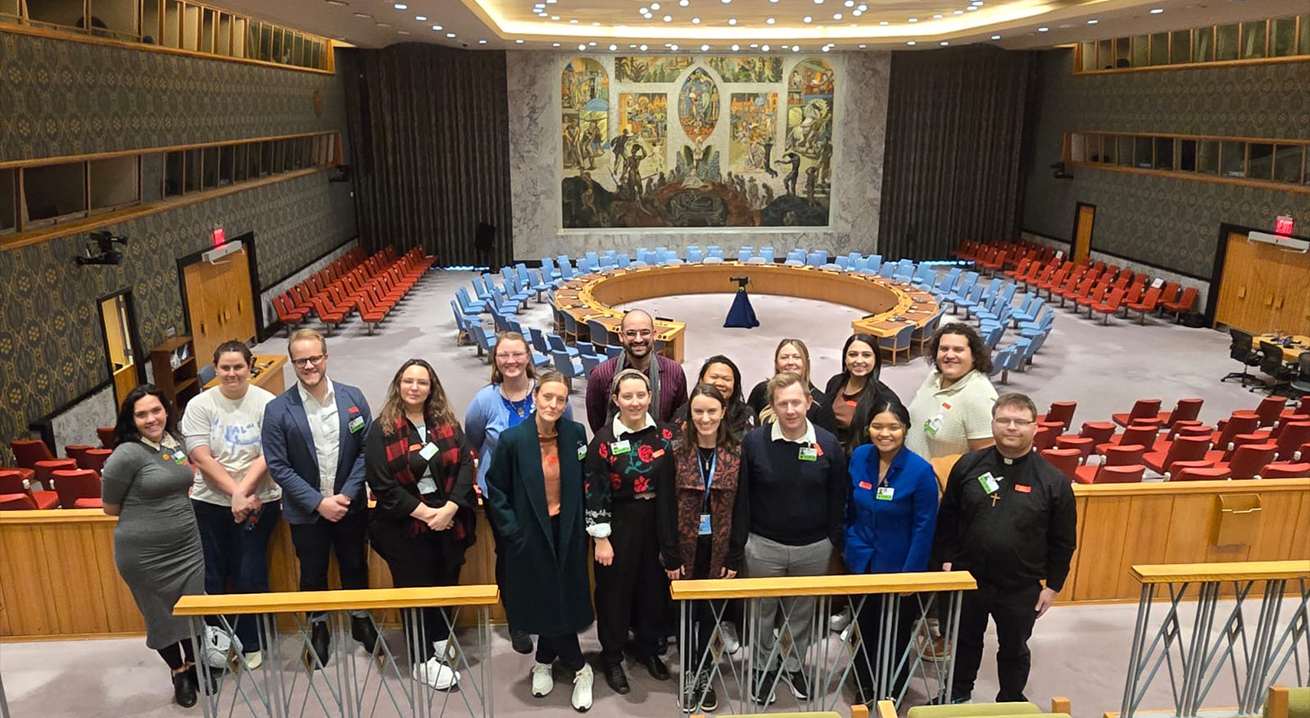
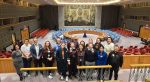
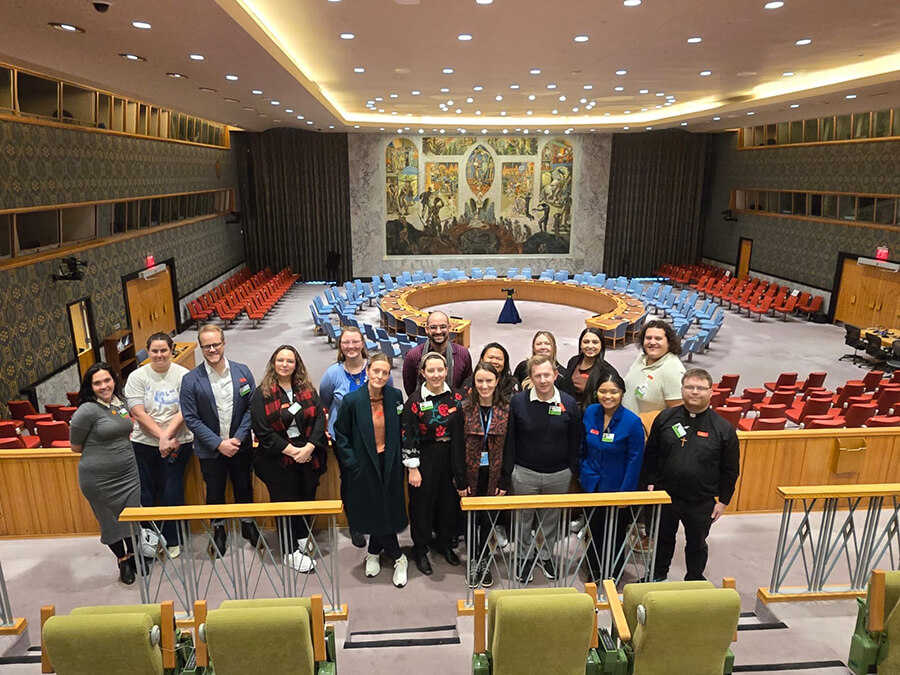
ELCA Young Adult Climate Immersion participants and accompanying staff advocate for climate action in the United Nations Security Council chamber. Photo: ELCA Witness in Society
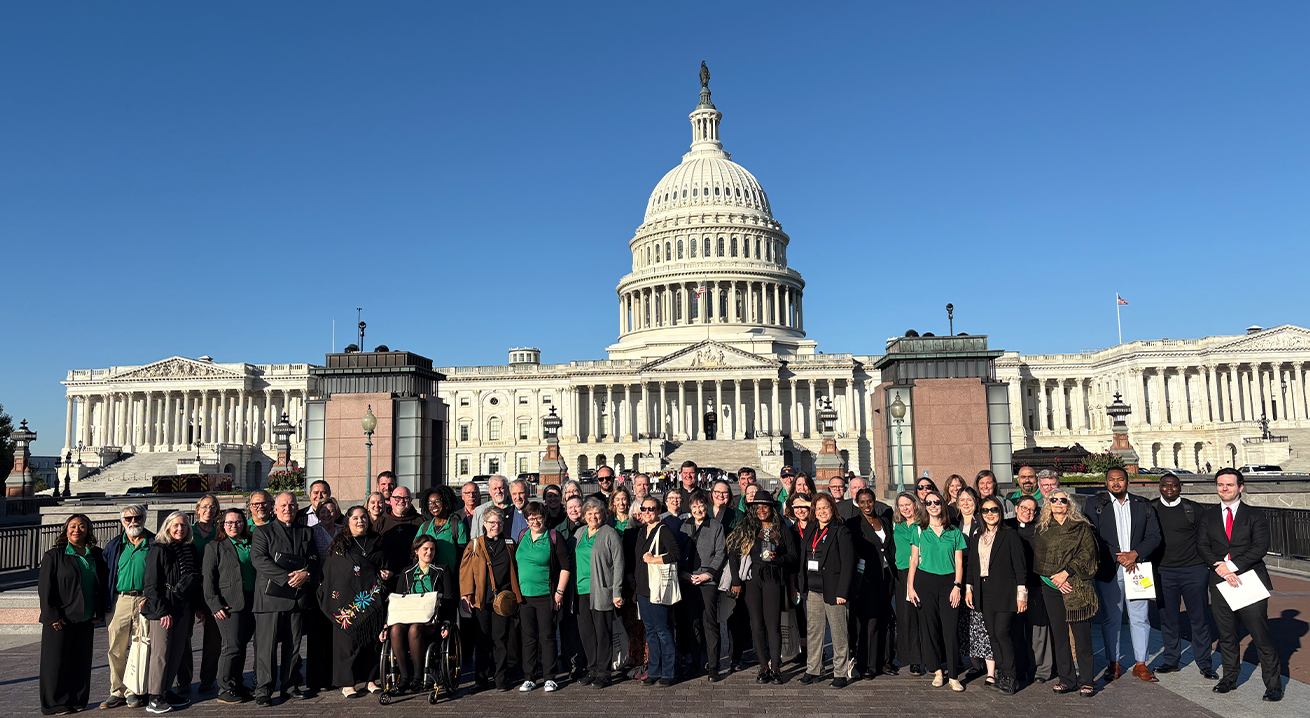
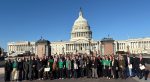
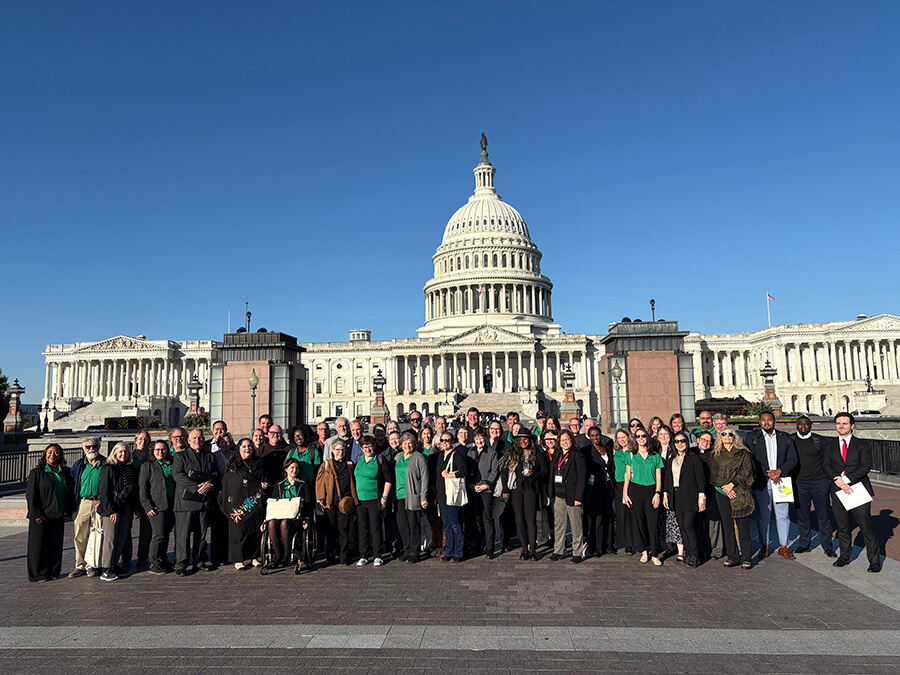
Lutheran Disaster Response leaders advocate for positive policy reforms for disaster response and recovery on Capitol Hill. Photo: ELCA Witness in Society
Rooted in the Protestant Reformation, the Lutheran faith has been expressed through civic activism throughout its history. Some examples of significant moments of activism in the life of the ELCA and its predecessor bodies are highlighted here.
1830s
Protests against slavery
Protests against slavery in the United States were organized into the 1830s by the Franckean Synod and Daniel Alexander Payne, the first African American admitted to a Lutheran seminary.
1862
Resolution denouncing slavery
A resolution at the 1862 General Synod denounced slavery.
Late 1800s to early 1900s
Welcoming immigrants
In the following decades, Lutherans supported and welcomed waves of immigrants as they arrived in the United States.
1950s-1960s
Civil rights movement
Lutherans were also deeply involved in the civil rights movement of the 1950s and '60s.
1958
Ellwanger called to Birmingham
In 1958, nearly 70 years before he rallied with other Milwaukeeans in April, Joseph Ellwanger, who is white, was called as pastor of St. Paul Lutheran Church, an African American congregation in Birmingham, Ala. He remembers the call as a blessing:
"It was the right place at the right time for me to learn and grow into what it means to really proclaim the gospel and live it."
The first church he served, from 1958 to 1967, was in Alabama, the center of the civil rights struggle.
"It was the right place at the right time for me to learn and grow into what it means to really proclaim the gospel and live it."
— Joseph Ellwanger
Martin Luther King Jr. speaks to the American Luther League Convention in Miami Beach in 1961. | Photo: ELCA Archives
1961
MLK speaks to American Luther League Convention
1962
Lutheran leaders attend JFK declaration
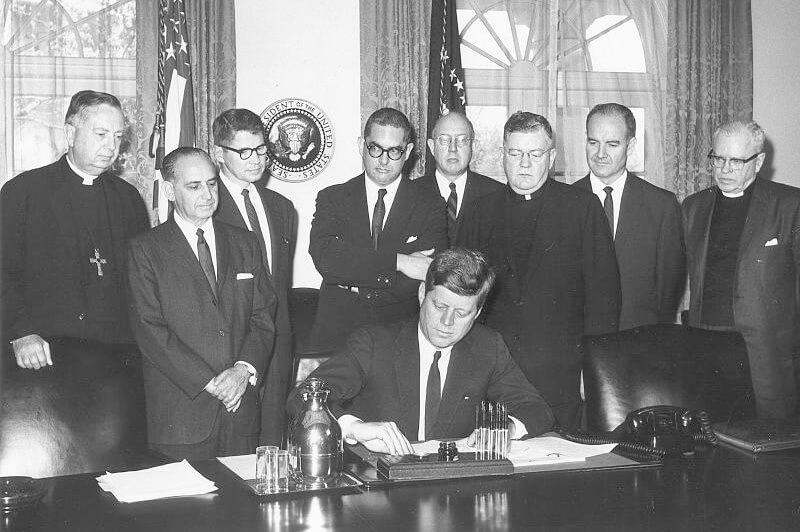
Lutheran leaders attend President John F. Kennedy's declaration of Voluntary Overseas Aid Week. | Photo: ELCA Archives
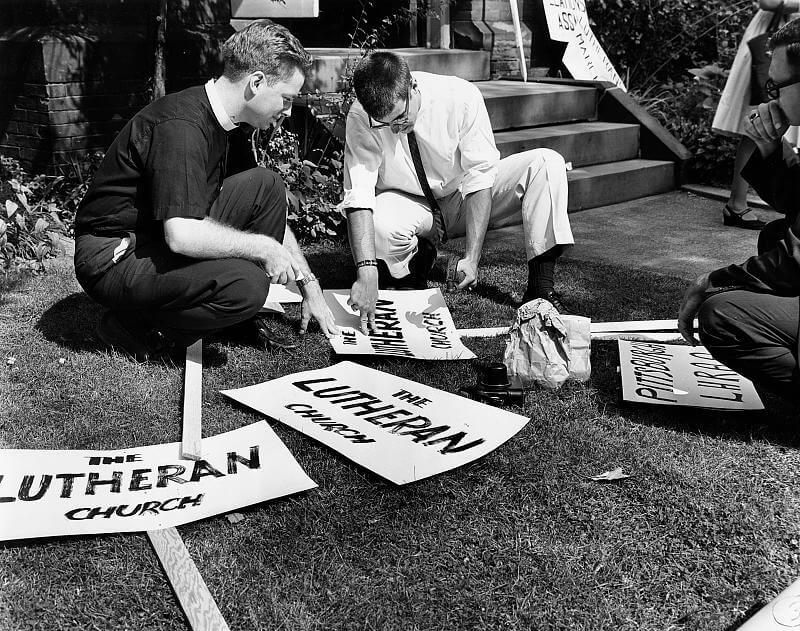
Lutherans gather in Washington, D.C., to prepare for the March on Washington for Jobs and Freedom in 1963. | Photo: ELCA Archives
Aug 1963
Lutherans participate in the March on Washington
Sept 1963
16th Street Baptist Church bombing
St. Paul was deeply affected that September when a bomb planted by the Ku Klux Klan exploded at 16th Street Baptist Church in Birmingham, killing four schoolgirls. One of them, 11-year-old Carol Denise McNair, had attended the Baptist church with her mother, but her father was a member of St. Paul. Ellwanger participated in the funeral for McNair and two of the other girls.
"That was a very important part of my life and my experiences," he said. "It was becoming more real. Obviously it was a very emotional moment in the life of our congregation and in my work as the pastor."
"It was becoming more real. Obviously it was a very emotional moment in the life of our congregation and in my work as the pastor."
— Joseph Ellwanger
Nov 1963
Civil rights demonstrations in Birmingham / Ellwanger joins picket lines
Stepping into activism wasn't immediate for Ellwanger. "The first time that I really went public and walked with the civil rights workers in Birmingham was in November of 1963, which was after the civil rights demonstrations of that spring," he said.
After those demonstrations, five Birmingham department stores had committed to each hire one African American clerk. When they didn't follow through, Ellwanger joined picket lines outside the stores. "They didn't live up to their promise," he said. "So we picketed to remind them and the public of their promise."
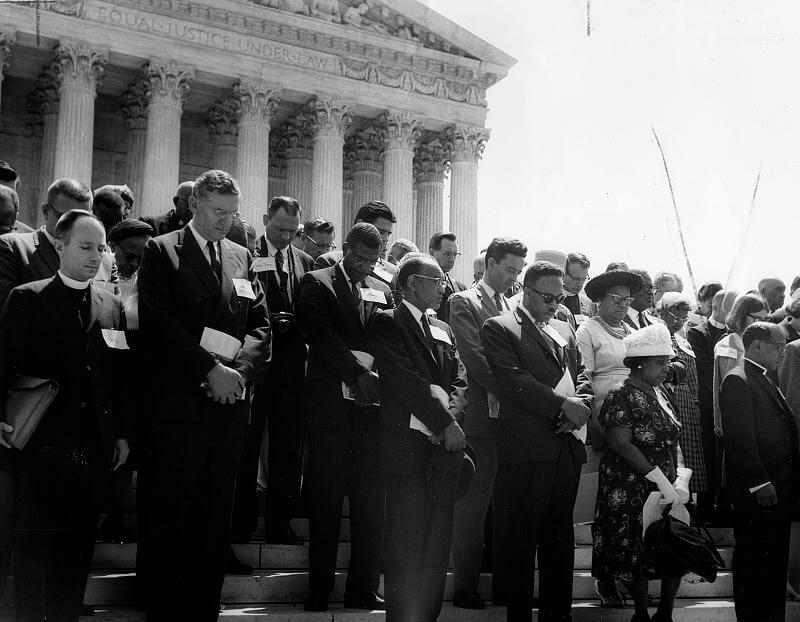
Lutherans and Protestant groups gather in Washington, D.C., to commemorate the 10th anniversary of the Supreme Court ruling mandating desegregation in 1964. | Photo: ELCA Archives
March 6, 1965
Voting rights march, the day before Bloody Sunday
Ellwanger said these events were part of a natural progression that drew him to activism and advocacy as part of his ministry. He not only joined the Greater Birmingham Council on Human Relations but was elected president. Through that role, he led more than 70 white protesters in a voting rights march on March 6, 1965—the day before "Bloody Sunday," when Black protesters marching from Selma to Montgomery were attacked by state troopers on horseback as they crossed the Edmund Pettus Bridge.
Though no violence occurred on March 6, both days were a critical turning point in the civil rights movement, directly leading to the Voting Rights Act of 1965.
Aug 6, 1965
Voting Rights Act passed
After the passage of the Voting Rights Act and the collapse of legal segregation, Ellwanger felt significant progress had been made. He is dismayed by the opposition from elected leaders that he sees again today.
1967
Coalition of Urban Congregations
When Ellwanger moved to Milwaukee for a new call in 1967, he supported forming a coalition of urban congregations to work for justice and establishing school breakfast programs in public schools.
May 1968
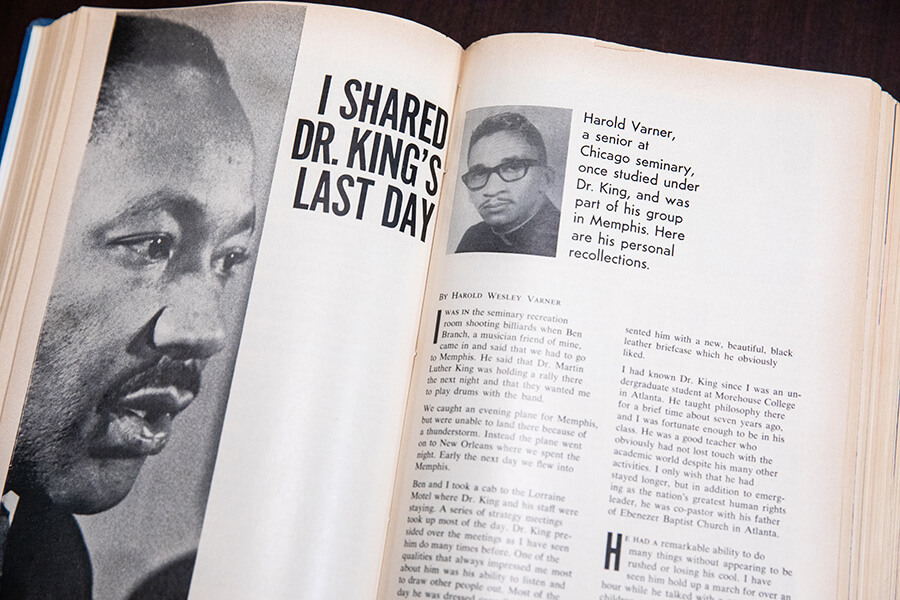
"I Shared Dr. King's Last Day" published
The Lutheran's May 8, 1968, edition included a first-person account by then-Lutheran School of Theology at Chicago student Harold Wesley Varner, who was feet away from King when he was assassinated weeks earlier. | Photo: ELCA
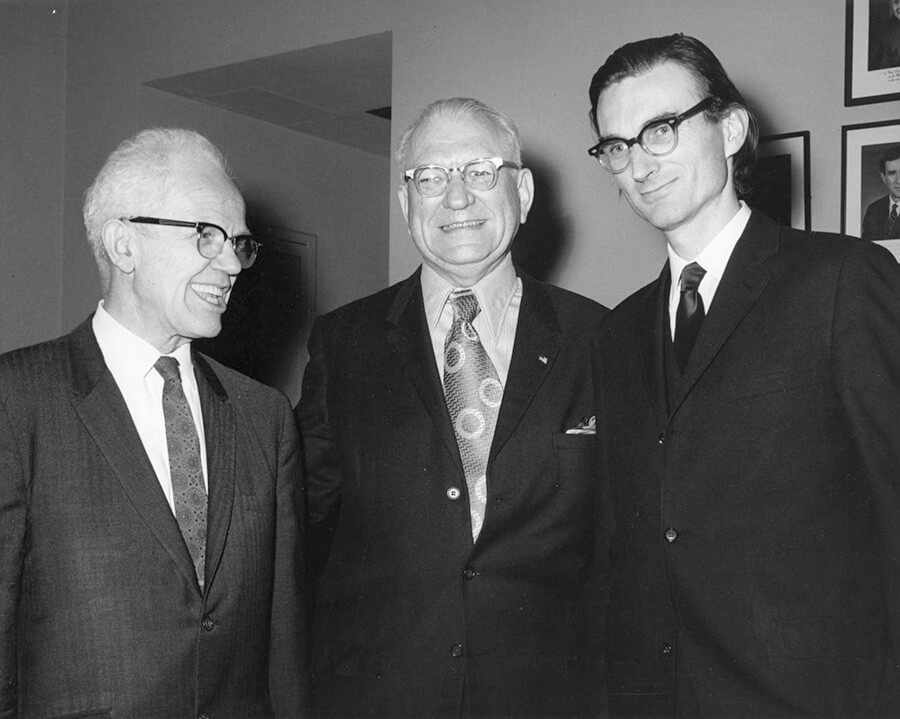
Robert Van Deusen (left), director of the Lutheran Council in the U.S. Office of Public Affairs, and Richard Niebanck of the Lutheran Church in America's Board of Social Ministry (right) meet with U.S. Rep. F. Edward Hebert (center) to discuss the recognition of conscientious objectors to the Vietnam War. | Photo: Del Ankers Photographers/ELCA Archives
1971
Conscientious objectors recognized
1974
ALC World Hunger Appeal launched
After the passage of the Voting Rights Act and the collapse of legal segregation, Ellwanger felt significant progress had been made. He is dismayed by the opposition from elected leaders that he sees again today.
David W. Preus, president and presiding bishop of the American Lutheran Church (ALC), speaks about the creation of the ALC's World Hunger Appeal at the 1974 general convention. | Photo: ELCA Archives
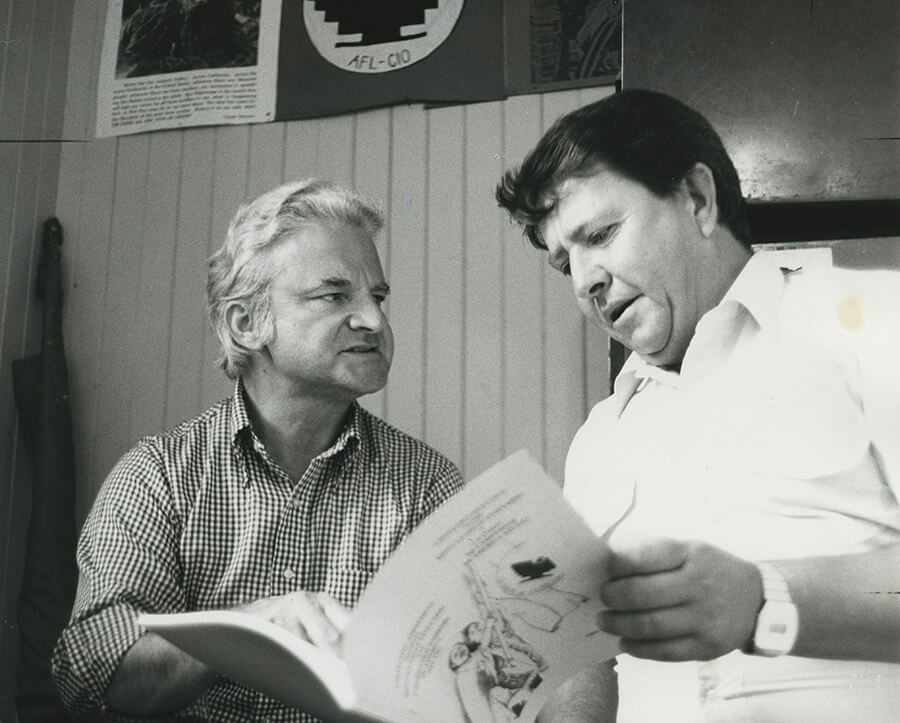
John Nasstrom (left), western regional representative for The Lutheran Council in the USA and chair of the Nation Farm Workers Ministry Board, meets with Emilio Mendoz Garcia of the United Farm Workers ranch committee in 1980. | Photo: The Lutheran
1960s-1980s
Participation in the national farm labor movement
1983
20th anniversary of the March on Washington
Will Herzfeld, presiding bishop of the Association of Evangelical Lutheran Churches (third from right), joins civil rights activists in San Francisco to commemorate the 20th anniversary of the March on Washington for Jobs and Freedom in 1983. | Photo: ELCA Archives
1990s
Christ Ascension and the AIDS epidemic in Philadelphia
Bruce Davidson, a retired pastor of urban congregations to work and member of Christ Ascension for justice and establishing Lutheran Church in Philadelphia:
Served in Philadelphia during the AIDS epidemic, Christ Ascension helped to reverse neighborhood resistance to a treatment facility in the area. "That was pretty gutsy back in the '90s," he said.
1991
ELCA Youth Gathering food drive
The ELCA Youth Gathering has its own long history of participants engaging in service and advocacy projects.
Participants of the 1991 ELCA Youth Gathering in Dallas run a food drive. | Photo: Rod Boriack
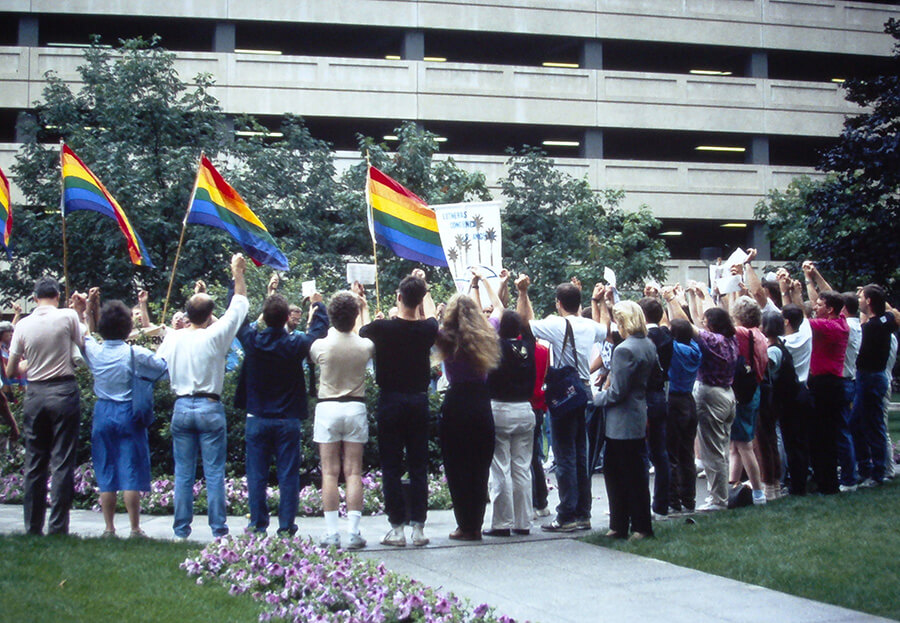
Lutherans for Lesbians and Gay Concerns demonstrate at the Lutheran Center in Chicago in July 1990. | Photo: J. Lyles/ELCA Archives
1990s-2000s
Groups such as Lutherans for Lesbian and Gay Concerns and Extraordinary Lutheran Ministries advocate for the full participation of LGBTQIA+ people in the life and ministry of the church.
2011
Joseph Ellwanger rallies at Wisconsin State Capitol
Retired ELCA pastor Joseph Ellwanger at a rally for worker's rights outside the Wisconsin State Capitol building in Feb. 2011. Photo: Wikimedia Commons/Susan Ruggles
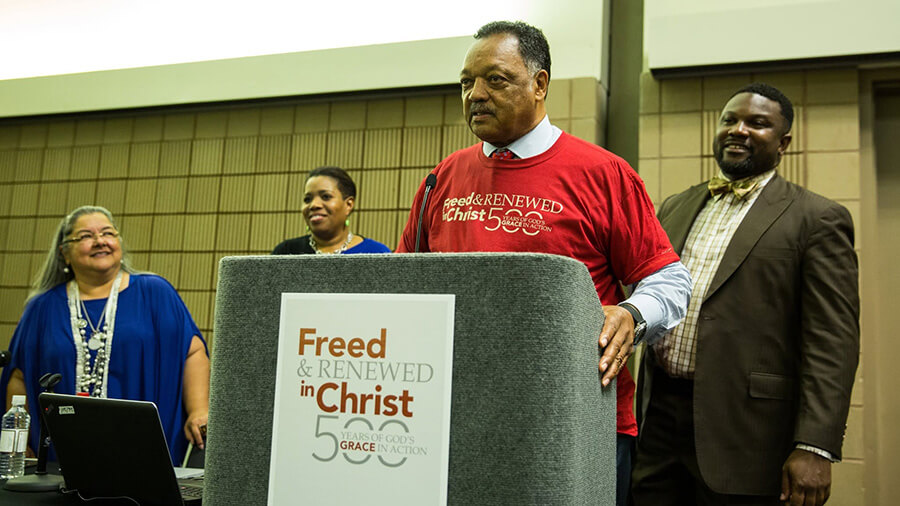
Jesse L. Jackson Sr., an advocate of faith, reconciliation and activism, visited a workshop at the 2016 ELCA Churchwide Assembly, where he shared reflections with the African Descent Lutheran Association. He also spoke at the 1979 American Lutheran Church Youth Gathering. | Photo: ELCA
2016
Jesse L. Jackson Sr. addresses churchwide assembly
April 2018
Lutherans participate in Rally to End Racism
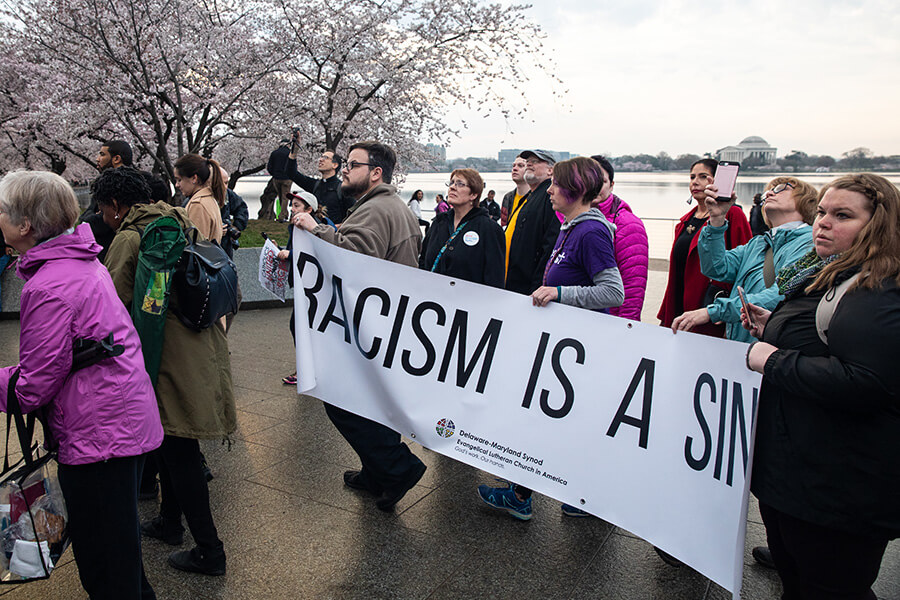
ELCA leaders march in the National Council of Churches' ACT Now Rally to End Racism in Washington, D.C. | Photo: ELCA/Will Nunnally
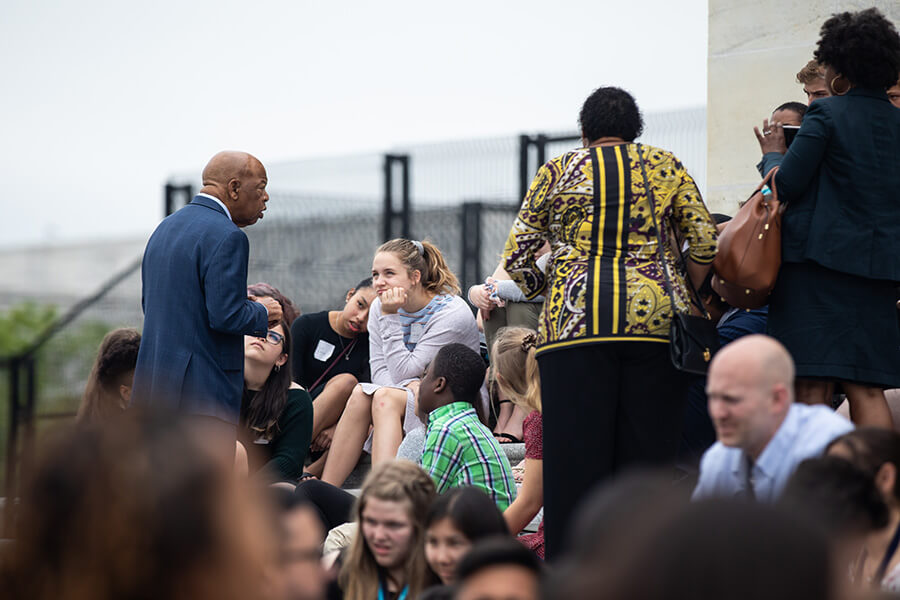
U.S. Rep. John Lewis speaks to constituents during an ELCA advocacy convening. | Photo: ELCA/Will Nunnally
May 2019
John Lewis addresses advocacy convening
Aug 2019
ELCA Churchwide Assembly — AMMPARO vigil / Social statement requested
2019 ELCA Churchwide Assembly attendees participate in the AMMPARO walk and prayer vigil in support of migrant families on Aug. 7 in Milwaukee. | Photo: ELCA/Janine Truppay
ELCA Young Adult Climate Immersion participants and accompanying staff advocate for climate action in the U.N. Security Council chamber. | Photo: ELCA Witness in Society
July 2025
ELCA Young Adult Climate Immersion
Oct 2025
Lutheran Disaster Response — Capitol Hill advocacy
Lutheran Disaster Response leaders advocate for positive policy reforms for disaster response and recovery on Capitol Hill. | Photo: ELCA Witness in Society
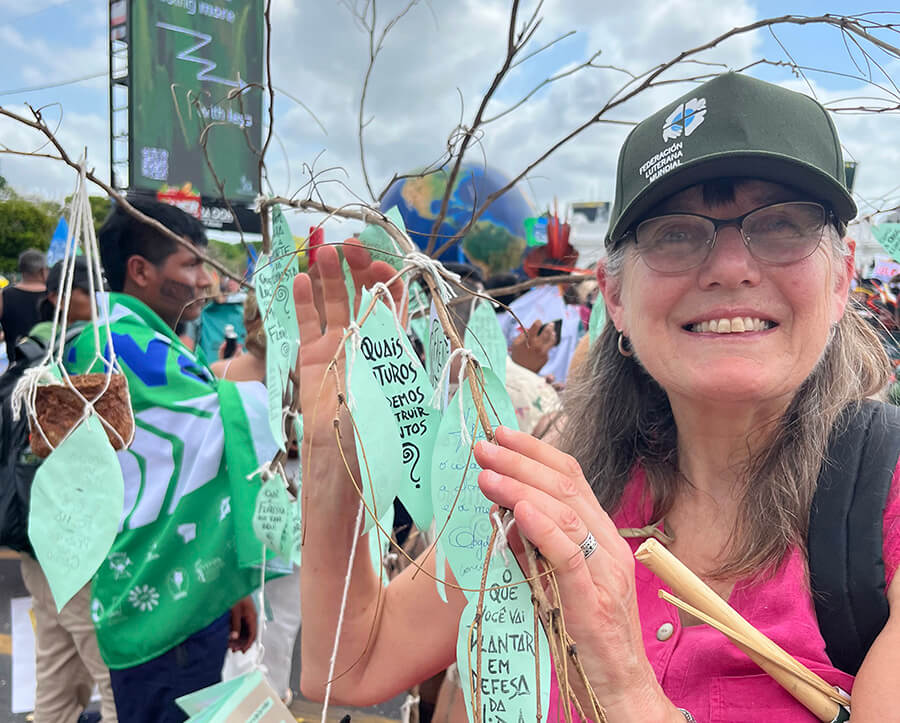
Lutheran leaders such as ELCA pastor Barbara Rossing (pictured) joined nearly 70,000 others in the People's Climate March in Belem, Brazil, on Nov. 15, 2025. | Photo: Courtesy of Barbara Rossing
Nov 2025
Lutherans join People's Climate March
2025
"Faith and Civic Life" social statement adopted
The social statement—a primary teaching document of the ELCA—was adopted by the 2025 assembly.
Ingrid Arneson Rasmussen is arrested with other clergy members leading a demonstration against U.S. Immigration and Customs Enforcement tactics at the Minneapolis-St. Paul International Airport in January. | Photo: RNS/Jack Jenkins
Jan 2026
Operation Metro Surge — ICE enforcement in Minneapolis-St. Paul
During Operation Metro Surge, residents of the Minneapolis-St. Paul area—including many Lutherans—made news around the world for establishing a rapid-response network to monitor ICE arrests and protect potential detainees. But the network was only a natural extension of the ways ELCA congregations had been caring for their communities for years.
Ingrid Arneson Rasmussen, a pastor of Holy Trinity Lutheran Church in Minneapolis, was handcuffed and arrested in January for kneeling in the middle of a road at the Minneapolis-St. Paul International Airport. Along with about 100 other clergy members, she was protesting at a site used by U.S. Immigrations and Customs Enforcement (ICE) to dispatch immigrants and asylum-seekers to detention centers around the country during Operation Metro Surge, a three-month escalation in ICE enforcement in the area.
2026
Christ Ascension drafts protection plan
When ICE became active in the city, the congregation drafted a plan for how to respond should agents try to enter the preschool housed at the church. "We mapped out 'Here is the law, and we will follow the law,'" he said.
Christ Ascension committed to not allowing federal agents into its private spaces without an arrest warrant. "A significant number of people in the congregation needed to make it clear where we stand," Davidson said, "and we're going to protect people here."
Bruce Davidson, a retired pastor and member of Christ Ascension Lutheran Church in Philadelphia, participated in a No Kings rally there as an exercise in both patriotism and faithfulness. He attended with other members who participate in advocacy campaigns, sign petitions and write letters to elected leaders.
The congregation isn't large, Davidson said, but it has a history of activism, especially regarding poverty, hunger and immigration.
"A significant number of people in the congregation needed to make it clear where we stand, and we're going to protect people here."
— Bruce Davidson
Lori Wise and other ELCA members participate in a No Kings rally in York, Pa., joining one of the largest single-day protests in U.S. history. | Photo: Courtesy of Lori Wise
March 28, 2026
No Kings rallies — one of the largest single-day protests in U.S. history
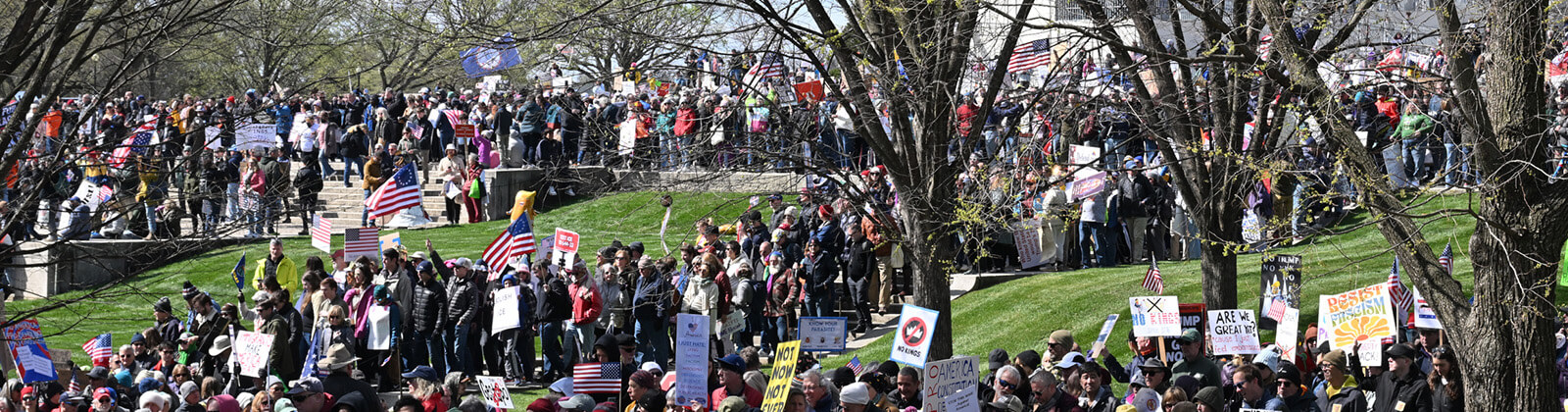
When Wise and other ELCA members participated in the No Kings rally on March 28, they took part in one of the largest single-day protests in U.S. history. Eight to nine million people gathered at 3,300 coordinated events in all 50 states to protest immigration enforcement, the Iran war and the erosion of democratic norms.
April 2026
Ellwanger rallies in Milwaukee
At 93, retired ELCA pastor Joseph Ellwanger is still recovering from a stroke, but he rallied with others in Milwaukee on the Sunday after Easter to protest the detention of a Muslim man who'd lived and worked in the United States legally for more than 30 years. The man had been targeted for detention, protesters argued, because he had been vocal in his support of Palestinian rights.
He is dismayed by the opposition from elected leaders that he sees again today.
"It's a reminder that injustice does not die easily, and it is important for people of faith to be awake and aware to how people are being treated," he said. "That's why we need to stand up for justice and truth. As long as there is injustice, we have to stand up against it."
"It's a reminder that injustice does not die easily, and it is important for people of faith to be awake and aware to how people are being treated.”
— Joseph Ellwanger
Present
The long arc continues
Today the ELCA continues the tradition of Lutheran civic activism, in part by connecting faith with public life through its Witness in Society office.
The church in society: A Lutheran perspective
Rooted in the Protestant Reformation, the Lutheran faith has been expressed through civic activism throughout its history. All three have been called to action by faith. They carry on a long tradition of Lutheran activism rooted in Jesus’ commandment to love our neighbors.
“As long as there is injustice, we have to stand up against it,” Ellwanger said. “Love of neighbor requires that we stand up for fair and just treatment of our neighbor, and everyone is our neighbor. And especially everyone in need. … This is part of living the gospel.”
Reumann points to another ELCA social statement, “The Church in Society: A Lutheran Perspective,” which includes the following passage: “With Martin Luther, this church understands that ‘to rebuke’ those in authority ‘through God’s Word spoken publicly, boldly and honestly’ is … ‘a praiseworthy, noble, and … particularly great service to God’” (page 4).
“With Martin Luther, this church understands that to rebuke injustice through God’s Word opens publicly, boldly and honestly is to be wise, useful and particularly good service to God.”
— Amy Reumann
“These [statements] really inform us that we have a grounding in our theology,” she said. “There can be a lot of reticence to protest injustice, and here we have it directly from Luther, saying this is one way that God’s word works. It needs to be proclaimed loudly and boldly.”
For More Information
Explore ELCA social statements on civic life and justice, and learn how Witness in Society equips Lutherans to advocate for their neighbors.
Ingrid Arneson Rasmussen is arrested with other clergy members leading a demonstration against U.S. Immigration and Customs Enforcement tactics at the Minneapolis-St. Paul International Airport in January. | Photo: RNS/Jack Jenkins
All Hands on Deck
In the aftermath of Operation Metro Surge, Rasmussen believes it will take years, if not decades, for portions of the city to recover.
"What we are living in right now is the economic crisis that follows what I would describe as an experience of wartime, in at least our area of Minneapolis," she said. "Many people in our community were necessarily sheltering in place, not leaving their homes and not working. The byproduct of that is fewer people were doing things like buying groceries or eating out. What we find ourselves in at this moment is a serious rent crisis, utility crisis, small business crisis."
At the height of ICE activity there, Holy Trinity members responded in myriad ways.
"We had a lot of congregants involved, whether they were on street corners [checking] license plates or on school watch at drop-off and pickup times, doing legal observing down at the federal building, food distribution to thousands of families who were receiving groceries at their doorstep, medication distribution," Rasmussen said. "Congregants who are less able to leave home because of age or ability were finding ways to participate in the public outcry by calling senators or representatives, saying this is not the way the world has to be and that we can imagine more for our communities.
"It was 'all hands on deck' in a thousand different ways for this community. This congregation is deeply connected to the wider neighborhood."
"It was 'all hands on deck' in a thousand different ways for this community. This congregation is deeply connected to the wider neighborhood."
— Ingrid Arneson Rasmussen
Rasmussen said Holy Trinity spent its entire pastoral discretionary fund in the first 14 days of the year, responding to individual and communal crises among residents.
One of the ways the congregation responded financially was by hiring lawyers. "The legal aid that is required by people who were touched by the occupation is like nothing I've seen before," she said.
Local congregations helped those who had been wrongfully detained to file habeas petitions, which are used to challenge unlawful detention or imprisonment. "In all of our cases that we were able to have an attorney work on a habeas, the judge deemed the arrest unlawful and released the person from detention," Rasmussen said.
The legal case against Rasmussen ended in April when she and many of those arrested with her pleaded guilty to a petty misdemeanor and paid a fine.
She didn't imagine her life as a pastor looking this way.
I'm a farm kid who grew up in a small town, and now I have the great joy of serving in the center of the city. I never imagined this for my own vocation or for my life or my family's life," she said. "I think living in this time as a Lutheran leader or any public leader requires courage. I don't think any of us are born with that. We learn it in the context of community. To my great delight, I have been placed in a congregation and in a neighborhood and in a city that is passionate about acting collectively for the common good. That's the Spirit's call to us in this particular time."
The March 28, 2026 No Kings rally was one of the largest single-day protests in U.S. history, including this Washington, D.C. gathering near the Lincoln Memorial. Members of Christ Ascension Lutheran in Philadelphia say they participated in a No Kings rally in their city as an exercise in both patriotism and faithfulness. | Photo: Wikimedia Commons/G. Edward Johnson
Lori Wise
Lori Wise participated in a No Kings rally in York, Pa., in March. Drawn to the rally with other members of Zion Lutheran Church in York, she was protesting for personal reasons. She had watched her adopted son, an immigrant, struggle while growing up in the United States. She uses her voice now because she believes civic leaders have emboldened cruelty toward immigrants.
"My faith is about working with the vulnerable and needy in our society," said Wise, a medical administration professional. "I worked in substance abuse and mental health as a clinician for many years. I feel very strongly about the mission of helping people."
"My faith is about working with the vulnerable and needy in our society. I worked in substance abuse and mental health as a clinician for many years. I feel very strongly about the mission of helping people."
— Lori Wise
Wise said she witnessed the pain of stricter immigration enforcement when medical colleagues working legally in the United States left the country to vacation or visit family and were denied reentry. "We had doctors who couldn't get back into the country," she said.
Being the mother of an adopted immigrant son "triggered me to go out and do this," she said. "So I don't feel alone in this, and I'm with like-minded people."
Lori Wise and other ELCA members participate in a No Kings rally in York, Pa. | Photo: Courtesy of Lori Wise
Advocacy: The Toolbox We Use
As senior director of Witness in Society, Amy Reumann leads the church's public advocacy and witness in the world. "You almost have a toolbox of resources for how we respond to human suffering, to crisis, to caring for creation," she said. Advocacy, mobilization and community-based organizing are among those tools. So is prayer.
Public prayer was particularly important during the resistance to ICE in Minnesota this year, Reumann said, adding, "Holding vigils, doing it publicly, talking about where people are feeling pain has been important. And the church is doing it publicly and visibly."
Reumann acknowledges that the work of advocacy can feel overwhelming, given the number of global public crises Lutherans attempt to engage with today. But she believes that the ELCA's social policies ground members in God's call to seek justice for all people.
"Faith and Civic Life," Reumann said, can guide church members in even small steps to make change. "We can preserve and care for what is immediately in our vicinity," she added. "There are simple things you can do in your community, through support for election officials, volunteering to be a poll worker. We find what our small part is, and those small parts make a difference."
"There are simple things you can do in your community, through support for election officials, volunteering to be a poll worker. We find what our small part is, and those small parts make a difference."
— Amy Reumann
Reumann refers to the work of advocacy as "farming redwoods"—planting, cultivating and tending.
"What we do in advocacy, we're not going to see all the fruit of it," she said. "Public policy takes time to forge and implement. It needs to be corrected and funded. You really need a long view for what we're doing."
In other words, faith expressed through civic activism is what the ELCA has been doing, is doing now and will be doing tomorrow.
Ingrid Arneson Rasmussen, a pastor of Holy Trinity Lutheran Church in Minneapolis, was handcuffed and arrested in January for kneeling in the middle of a road at the Minneapolis-St. Paul International Airport. Along with about 100 other clergy members, she was protesting at a site used by U.S. Immigrations and Customs Enforcement (ICE) to dispatch immigrants and asylum-seekers to detention centers around the country during Operation Metro Surge, a three-month escalation in ICE enforcement in the area.
Lori Wise participated in a No Kings rally in York, Pa., in March. Drawn to the rally with other members of Zion Lutheran Church in York, she was protesting for personal reasons. She had watched her adopted son, an immigrant, struggle while growing up in the United States. She uses her voice now because she believes civic leaders have emboldened cruelty toward immigrants.
At 93, retired ELCA pastor Joseph Ellwanger is still recovering from a stroke, but he rallied with others in Milwaukee on the Sunday after Easter to protest the detention of a Muslim man who’d lived and worked in the United States legally for more than 30 years. The man had been targeted for detention, protesters argued, because he had been vocal in his support of Palestinian rights. Ellwanger is no stranger to civic activism: the first church he served, from 1958 to 1967, was in Alabama, the center of the civil rights struggle.
All three have been called to action by faith. They carry on a long tradition of Lutheran activism rooted in Jesus’ commandment to love our neighbors.
During Operation Metro Surge, residents of the Minneapolis-St. Paul area—including many Lutherans—made news around the world for establishing a rapid-response network to monitor ICE arrests and protect potential detainees. But the network was only a natural extension of the ways ELCA congregations had been caring for their communities for years.
Rooted in the Protestant Reformation, the Lutheran faith has been expressed through civic activism throughout its history. Protests against slavery in the United States were organized in the 1830s by the Frankean Synod and Daniel Alexander Payne, the first African American admitted to a Lutheran seminary. A resolution at the 1862 General Synod denounced slavery.
In the following decades, Lutherans supported and welcomed waves of immigrants as they arrived in the United States. They were also part of the civil rights movement of the 1950s and ’60s.
“As long as there is injustice, we have to stand up against it,” Ellwanger said. “Love of neighbor requires that we stand up for fair and just treatment of our neighbor, and everyone is our neighbor. And especially everyone in need. … This is part of living the gospel.”
All hands on deck
In the aftermath of Operation Metro Surge, Rasmussen believes it will take years, if not decades, for portions of the city to recover.
“What we are living in right now is the economic crisis that follows what I would describe as an experience of wartime, in at least our area of Minneapolis,” she said. “Many people in our community were necessarily sheltering in place, not leaving their homes and not working. The byproduct of that is fewer people were doing things like buying groceries or eating out. What we find ourselves in at this moment is a serious rent crisis, utility crisis, small business crisis.”
At the height of ICE activity there, Holy Trinity members responded in myriad ways.
“We had a lot of congregants involved, whether they were on street corners [checking] license plates or on school watch at dropoff and pickup times, doing legal observing down at the federal building, food distribution to thousands of families who were receiving groceries at their doorstep, medication distribution,” Rasmussen said. “Congregants who are less able to leave home because of age or ability were finding ways to participate in the public outcry by calling senators or representatives, saying this is not the way the world has to be and that we can imagine more for our communities.
“It was ‘all hands on deck’ in a thousand different ways for this community. This congregation is deeply connected to the wider neighborhood.”
Rasmussen said Holy Trinity spent its entire pastoral discretionary fund in the first 14 days of the year, responding to individual and communal crises among residents.
One of the ways the congregation responded financially was by hiring lawyers. “The legal aid that is required by people who were touched by the occupation is like nothing I’ve seen before,” she said.
Local congregations helped those who had been wrongfully detained to file habeas petitions, which are used to challenge unlawful detention or imprisonment. “In all of our cases that we were able to have an attorney work on a habeas, the judge deemed the arrest unlawful and released the person from detention,” Rasmussen said.
The legal case against Rasmussen ended in April when she and many of those arrested with her pleaded guilty to a petty misdemeanor and paid a fine.
She didn’t imagine her life as a pastor looking this way.
“I’m a farm kid who grew up in a small town, and now I have the great joy of serving in the center of the city. I never imagined this for my own vocation or for my life or my family’s life,” she said. “I think living in this time as a Lutheran leader or any public leader requires courage. I don’t think any of us are born with that. We learn it in the context of community. To my great delight, I have been placed in a congregation and in a neighborhood and in a city that is passionate about acting collectively for the common good. That’s the Spirit’s call to us in this particular time.”
Proclaiming and living the gospel
In 1958, nearly 70 years before he rallied with other Milwaukeeans in April, Ellwanger, who is white, was called as pastor of St. Paul Lutheran Church, an African American congregation in Birmingham, Ala. He remembers the call as a blessing: “It was the right place at the right time for me to learn and grow into what it means to really proclaim the gospel and live it.”
Stepping into activism wasn’t immediate for Ellwanger. “The first time that I really went public and walked with the civil rights workers in Birmingham was in November of 1963, which was after the civil rights demonstrations of that spring,” he said.
After those demonstrations, five Birmingham department stores had committed to each hire one African American clerk. When they didn’t follow through, Ellwanger joined picket lines outside the stores. “They didn’t live up to their promise,” he said. “So we picketed to remind them and the public of their promise.”
St. Paul was deeply affected that September when a bomb planted by the Ku Klux Klan exploded at 16th Street Baptist Church in Birmingham, killing four schoolgirls. One of them, 11-year-old Carol Denise McNair, had attended the Baptist church with her mother, but her father was a member of St. Paul. Ellwanger participated in the funeral for McNair and two of the other girls.
“That was a very important part of my life and my experiences,” he said. “It was becoming more real. Obviously it was a very emotional moment in the life of our congregation and in my work as the pastor.”
“As long as there is injustice, we have to stand up against it.”
Ellwanger said these events were part of a natural progression that drew him to activism and advocacy as part of his ministry. He not only joined the Greater Birmingham Council on Human Relations but was elected president. Through that role, he led more than 70 white protesters in a voting rights march on March 6, 1965—the day before “Bloody Sunday,” when Black protesters marching from Selma to Montgomery were attacked by state troopers on horseback as they crossed the Edmund Pettus Bridge.
Though no violence occurred on March 6, both days were a critical turning point in the civil rights movement, directly leading to the Voting Rights Act of 1965.
When Ellwanger moved to Milwaukee for a new call in 1967, he supported forming a coalition of urban congregations to work for justice and establishing school breakfast programs in public schools.
After the passage of the Voting Rights Act and the collapse of legal segregation, Ellwanger felt significant progress had been made. He is dismayed by the opposition from elected leaders that he sees again today.
“It’s a reminder that injustice does not die easily, and it is important for people of faith to be awake and aware to how people are being treated,” he said. “That’s why we need to stand up for justice and truth. As long as there is injustice, we have to stand up against it.”
“We’re going to protect people”
When Wise and other ELCA members participated in the No Kings rally on March 28, they took part in one of the largest single-day protests in U.S. history. Eight to nine million people gathered at 3,300 coordinated events in all 50 states to protest immigration enforcement, the Iran war and the erosion of democratic norms.
“My faith is about working with the vulnerable and needy in our society,” said Wise, a medical administration professional. “I worked in substance abuse and mental health as a clinician for many years. I feel very strongly about the mission of helping people.”
Wise said she witnessed the pain of stricter immigration enforcement when medical colleagues working legally in the United States left the country to vacation or visit family and were denied reentry. “We had doctors who couldn’t get back into the country,” she said.
Being the mother of an adopted immigrant son “triggered me to go out and do this,” she said. “So I don’t feel alone in this, and I’m with like-minded people.”
Davidson participated in the rally as an exercise in both patriotism and faithfulness.
Bruce Davidson, a retired pastor and member of Christ Ascension Lutheran Church in Philadelphia, participated in a No Kings rally there as an exercise in both patriotism and faithfulness. He attended with other members who participate in advocacy campaigns, sign petitions and write letters to elected leaders.
The congregation isn’t large, Davidson said, but it has a history of activism, especially regarding poverty, hunger and immigration. When he served in Philadelphia during the AIDS epidemic, Christ Ascension helped to reverse neighborhood resistance to a treatment facility in the area. “That was pretty gutsy back in the ’90s,” he said.
When ICE became active in the city, the congregation drafted a plan for how to respond should agents try to enter the preschool housed at the church. “We mapped out ‘Here is the law, and we will follow the law,'” he said.
Christ Ascension committed to not allowing federal agents into its private spaces without an arrest warrant. “A significant number of people in the congregation needed to make it clear where we stand,” Davidson said, “and we’re going to protect people here.”
Advocacy: The toolbox we use
Today the ELCA continues the tradition of Lutheran civic activism, in part by connecting faith with public life through its Witness in Society office.
As senior director of Witness in Society, Amy Reumann leads the church’s public advocacy and witness in the world. “You almost have a toolbox of resources for how we respond to human suffering, to crisis, to caring for creation,” she said. Advocacy, mobilization and community-based organizing are among those tools. So is prayer.
Public prayer was particularly important during the resistance to ICE in Minnesota this year, Reumann said, adding, “Holding vigils, doing it publicly, talking about where people are feeling pain has been important. And the church is doing it publicly and visibly.”
Reumann acknowledges that the work of advocacy can feel overwhelming, given the number of global public crises Lutherans attempt to engage with today. But she believes that the ELCA’s social policies ground members in God’s call to seek justice for all people.
Development of the most recent ELCA social statement, “Faith and Civic Life: Seeking the Wellbeing of All,” was requested at the 2019 Churchwide Assembly to clarify “the role of government, the nature of civic engagement, and the relationship of church and state.” The social statement—a primary teaching document of the ELCA—was adopted by the 2025 assembly.
Reumann refers to the work of advocacy as “farming redwoods”—planting, cultivating and tending.
“Faith and Civic Life,” Reumann said, can guide church members in even small steps to make change. “We can preserve and care for what is immediately in our vicinity,” she added. “There are simple things you can do in your community, through support for election officials, volunteering to be a poll worker. We find what our small part is, and those small parts make a difference.”
Reumann refers to the work of advocacy as “farming redwoods”—planting, cultivating and tending.
“What we do in advocacy, we’re not going to see all the fruit of it,” she said. “Public policy takes time to forge and implement. It needs to be corrected and funded. You really need a long view for what we’re doing.”
In other words, faith expressed through civic activism is what the ELCA has been doing, is doing now and will be doing tomorrow.
Reumann points to another ELCA social statement, “The Church in Society: A Lutheran Perspective,” which includes the following passage: “With Martin Luther, this church understands that ‘to rebuke’ those in authority ‘through God’s Word spoken publicly, boldly and honestly’ is … ‘a praiseworthy, noble, and … particularly great service to God'” (page 4).
“These [statements] really inform us that we have a grounding in our theology,” she said. “There can be a lot of reticence to protest injustice, and here we have it directly from Luther, saying this is one way that God’s word works. It needs to be proclaimed loudly and boldly.”
For more information
Read the “Faith and Civic Life: Seeking the Well-being of All,” “The Church in Society: A Lutheran Perspective” and other social statements at elca.org/socialstatements. Social messages, which focus attention and action on timely, pressing matters of social concern to the church and society, can also be found at the above link.
Learn more about the advocacy work of ELCA Witness in Society, find resources and sign up to join its network at elca.org/advocacy.
Study guide
Download a free, five-page study guide for this story.
You have attempted to access a feature of this website that is only available to members of livinglutheran.org.
A free membership gives you a customized dashboard for curated content based on your interest, the ability to like and save articles, an optional subscription to a weekly email digest “LL Stories”, and more.
Our new and improved website has an updated login system.
If you are a subscriber to the LL Stories email digest from before the introduction of the new website in December 2025, your account is intact, but your password will need to be reset unless you have a login for another ELCA website.
If you have a login for another ELCA website like community.elca.org, directory.elca.org or others you can use the password associated with that login.
Create a free account to access to exclusive online content, like and save articles, and optionally subscribe to our weekly email newsletter - LL Stories.


 Logout