 Logout
Editor’s note: Throughout the summer, Living Lutheran is commemorating the 250th anniversary of the adoption of the Declaration of Independence with articles reflecting on the church’s role in civic life and Lutheran contributions to the history of the United States. All articles carry our America 250 logo. In this article, retired ELCA pastor P. Richard Grove from Philadelphia shares a firsthand account of the church’s role in attaining benefits for Pennsylvania’s older adults.
Think about this: Over the past 53 years, from 10-cent off-peak bus fares in Philadelphia to more than to 37 billion in benefits, the Pennsylvania Lottery remains the only state lottery in the nation that designates all its profits exclusively to programs and services for older adults.
The story of today’s lottery funding for older adults begins in the late 1960s when Lutheran pastor Rufus Cornelsen served as the executive director of the Metropolitan Christian Council of Philadelphia. In synodical minutes from that time, he reported that the council, at his initiative, approved the formation of the Council on Community Organization (COCO) to raise funds to hire a trained person to organize a five-county citizens group around a single issue of importance to the metropolitan community. COCO successfully raised funds from five Christian denominations, the Jewish Community Relations Council, three foundations and a few interested individuals.
Upon the recommendation of William A. Janson, bishop of the Southeastern Pennsylvania Synod, and with the approval of the synod’s executive board, the Board of American Missions of the Lutheran Church in America adopted three recommendations at its meeting in Moorhead, Minn., on May 9-12, 1971:
- That the synod send one person to attend a school for middle-class organizing administered by the Saul Alinsky Industrial Areas Foundation in Chicago.
- That a two-year grant of $10,000 be approved (in current dollars around $80,000!).
- That funding be contingent upon at least 10 congregations
On Nov. 1, 1970, I began my call as director of the Northwest Philadelphia Lutheran Parish. On Dec. 12, Janson appointed me as the synod representative to COCO. I was elected chair of the executive committee at my first meeting and given a “scholarship” to attend a six-month course in Saul Alinsky-style community organizing in Chicago, held every other week from Monday through Wednesday.
Roger Harless, a Presbyterian pastor, was hired as the lead organizer for COCO. He identified senior citizen groups, both religious and secular, as an existing five-county base of organizations that could be brought together around an issue that mattered to them. Age, income and mobility made the cost of public transportation the issue that the groups chose. To unify and legitimize their efforts, they convened an organizing convention on Feb. 1, 1973, at which Matin Heineken, a retired systematic theology professor at the Lutheran Theological Seminary at Philadelphia (now United Lutheran Seminary), gave the keynote address. The result was the formation of the Action Alliance of Senior Citizens.
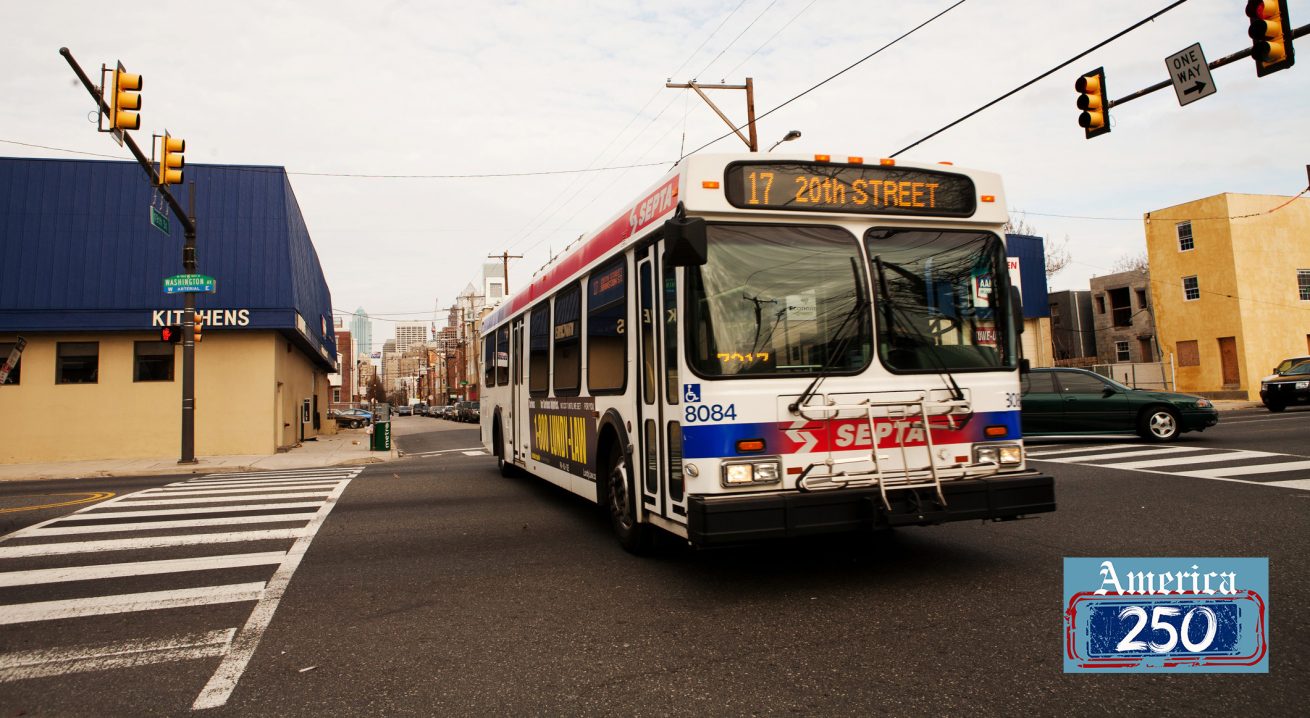
As politicians were awakened to the concerns of older adults and their voting power, the need to solve the problem of funding for these new benefits led the state to create the Pennsylvania Lottery. According to the lottery’s website, proceeds were initially targeted to provide property tax relief for older adults. To ensure that revenue from the lottery was dedicated to this age group, the Action Alliance’s first campaign sought 10-cent fares for older adults on public transportation, later reduced to 5-cent fares. In addition to other benefits such as property tax and rent rebates and prescription assistance, lottery proceeds today help provide free and reduced-fare transportation for older adults, including more than 25.8 million free transit rides each year.
As a young person, the cost of public transportation for senior citizens didn’t seem like a big deal at that time. Now, some 50 years later, I recognize just how important the role the Lutheran church and the Southeastern Pennsylvania Synod played at the beginning of the Pennsylvania Lottery, a contribution that is worth writing down and remembering.