 Logout
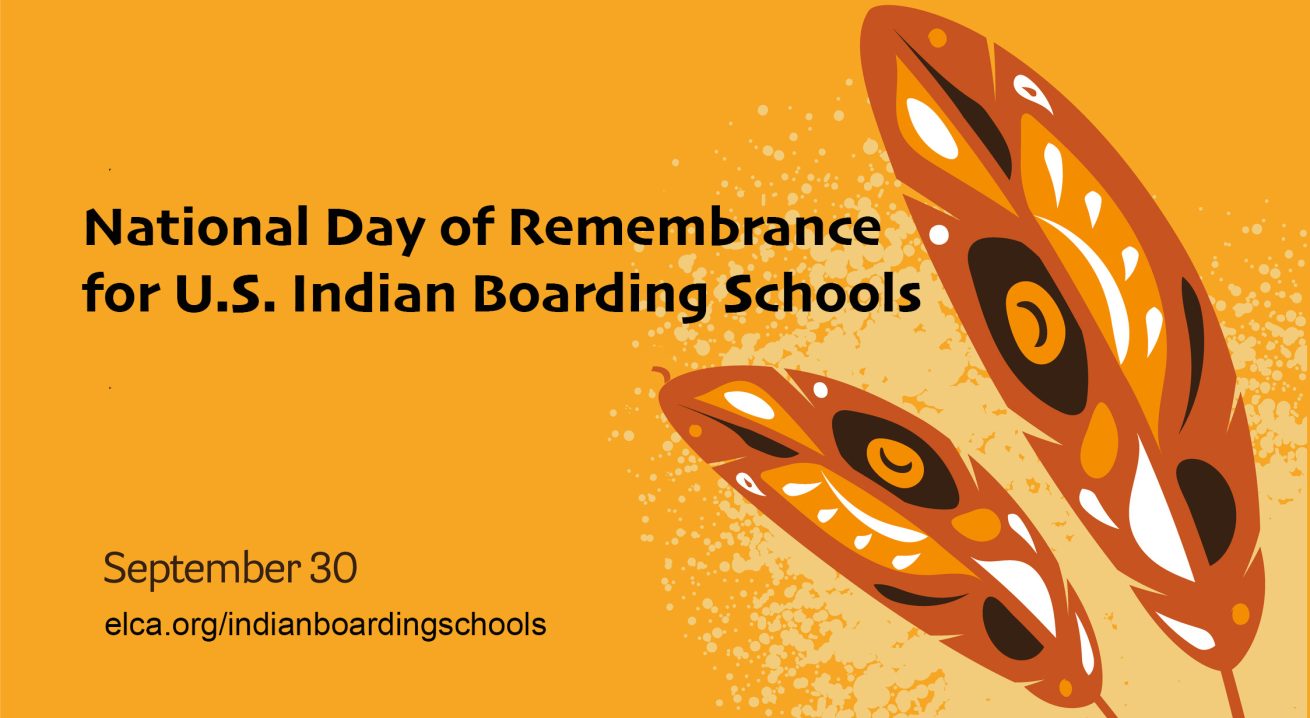
In 2025, the ELCA Churchwide Assembly committed to encouraging and equipping congregations, synods and affiliated ministries to observe the National Day of Remembrance for U.S. Indian Boarding Schools annually on or near Sept. 30. The action also calls for continuing education, research, truth telling, healing and repair related to the church’s involvement in Indian boarding schools.
One year later, Indigenous Ministries, part of the Ministries of Diverse Cultures and Communities (MDCC), is drawing attention again to the Indigenous children who were forcibly removed from their families and communities and sent to schools designed to suppress their languages, cultures and identities. The day also recognizes boarding school survivors, descendants, families, tribal nations and communities still living with the consequences of a system in which Christian churches, including Lutheran bodies, participated.
Sept. 30 is also observed as Orange Shirt Day, named for boarding school survivor Phyllis Webstad’s account of having her orange shirt taken from her on her first day at a residential school. Wearing orange has become a visible way to remember Indigenous children affected by boarding schools and the loss of culture, identity and belonging those institutions sought to impose.
A personal story
Wanda K. Frenchman, a member of the Oglala Lakota and Lenape tribes, currently serves as the interim director of Indigenous Ministries. Here she shares her story:
“One day in September, the 30th, is set aside to remember Indigenous children who died, those who survived and the families and communities impacted by the federal boarding school era. As an Indigenous person who was raised by Catholic boarding school survivors, that one day becomes every day.
“My Lakota grandparents were raised at Holy Rosary Catholic Mission in Pine Ridge, S.D., in the 1930s by German-speaking Catholic nuns and priests. They weren’t offered God’s love as grace and kindness but shown God in the worst light possible through punishment for the sin of being born as Lakota people.
“My grandparents weren’t parented by their own Lakota families. Therefore, they parented their kids much as they were raised. The cycle of generational trauma was started with young children at boarding schools and continues still today.”
Frenchman’s family history with Indian boarding schools extends beyond her grandparents’ experiences as students. Her mother taught at the federally operated Phoenix Indian School in the early 1970s, and her paternal grandmother worked there as a dorm matron in the 1960s.
Truth seeking and truth telling
Frenchman’s story and others like it are the impetus for remembrance, truth seeking and truth telling.
The 2025 Churchwide Assembly approved the ELCA resolution on boarding schools by a vote of 779-7 after memorials were submitted by 22 synods. The first of six actions call on the churchwide organization to encourage and equip ELCA congregations, synods and affiliated or related ministries to observe the National Day of Remembrance. The remaining actions extend beyond Sept. 30 through education about Christian and Lutheran involvement in boarding schools, continued research into the church’s history, preservation and responsible access to records, healing and repair, and funding to sustain the work.
Central to those efforts is the Indigenous Ministries’ Truth Seeking & Truth Telling Initiative. Launched in September 2022, it organizes Lutherans to research and acknowledge Lutheran and broader Christian involvement in Indian boarding schools and their continuing impact on Native peoples.
“They weren’t offered God’s love as grace and kindness but shown God in the worst light possible through punishment for the sin of being born as Lakota people.”
The initiative began with 15 synods across four Midwestern states and expanded in 2023 to 27 synods across 10 additional states. In 2026, the work is expanding to synods nationwide. More than 100 laypeople and rostered ministers have participated in the initiative through gatherings, discussions, research and educational efforts.
The project connects research into boarding and day schools sponsored or supported by Lutherans with opportunities for worship and learning, all as part of an ongoing process of truth and healing. This research requires the church to examine its own history. The ELCA acknowledges that many white Christians, including Lutherans, participated in the physical and cultural genocide of Native peoples and supported boarding and day schools that separated Native children from their languages, cultures, families and communities.
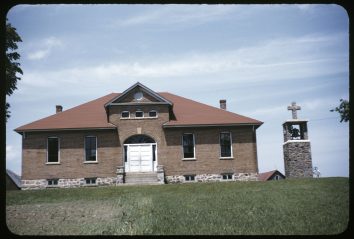
Researchers have identified Bethany Indian Mission and School in Wittenberg, Wis., which was operated by ELCA predecessors with federal funding. The ELCA holds extensive archival materials related to the school and is digitizing them.
The assembly action also addresses what should happen to information uncovered through this research. It affirms that the boarding school records belong to survivors, their descendants, communities and tribal nations and can support healing. It also calls for survivors and their families to have responsible access to the records and related research. In addition, the action calls for funding to support continued research and the digitization and labeling of Indian boarding school records held by the ELCA Archives.
Healing in community
The work of addressing generational trauma is also taking place within Indigenous communities served by ELCA ministries.
At Native American Urban Ministry in downtown Phoenix, a weekly Talking Circle launched in August 2024 has grown into an intergenerational community of about 50 people. The circle provides a culturally grounded space for Indigenous people seeking community and support while navigating experiences that include substance abuse, domestic violence, grief, homelessness and loss of culture.
Participants gather for conversation, prayer and traditional practices. Frenchman said six established leaders now help sustain the circle each week, which incorporates singing in participants’ tribal languages, prayer, tobacco offerings and ceremonial smudging. Some participants have expressed surprise at being able to practice Indigenous traditions openly within a Christian church.
“The cycle of generational trauma was started with young children at boarding schools and continues still today.”
In Fargo, N.D., The Way (formerly Native American Christian Ministry) gathers Indigenous community members weekly for Native and Christian worship with traditional singing, prayer, food and fellowship. The Eastern North Dakota Synod identifies caring for people in recovery and those experiencing addiction as a central focus of the ministry. Frenchman said The Way also helps community members attend a weekly sweat lodge by providing transportation to the ceremony, including for some participants experiencing substance abuse and homelessness.
Both ministries offer examples of communities restoring traditions, relationships and cultural practices that boarding schools and colonization worked to suppress.
Continuing the work
MDCC Indigenous Ministries has developed the “ELCA Truth-seeking and Truth-telling Initiative on Indian Boarding Schools Learning Toolkit” and other resources to help congregations, synods, educational institutions and organizations participate in the work.
Resources include a prayer service honoring children who were taken to boarding schools, workshop materials, educational handouts, and tools for congregational and organizational learning. The initiative also welcomes people interested in research, data collection, education, organizing and leadership to participate in gatherings, educational opportunities and research projects.
For the ELCA, the National Day of Remembrance offers an annual opportunity to remember. The initiative and the work of Indigenous ministries across the ELCA also demonstrate ways that remembrance can continue through education, research, truth telling, cultural restoration, healing and repair throughout the year.
For more information, see elca.org/indianboardingschools.