 Logout
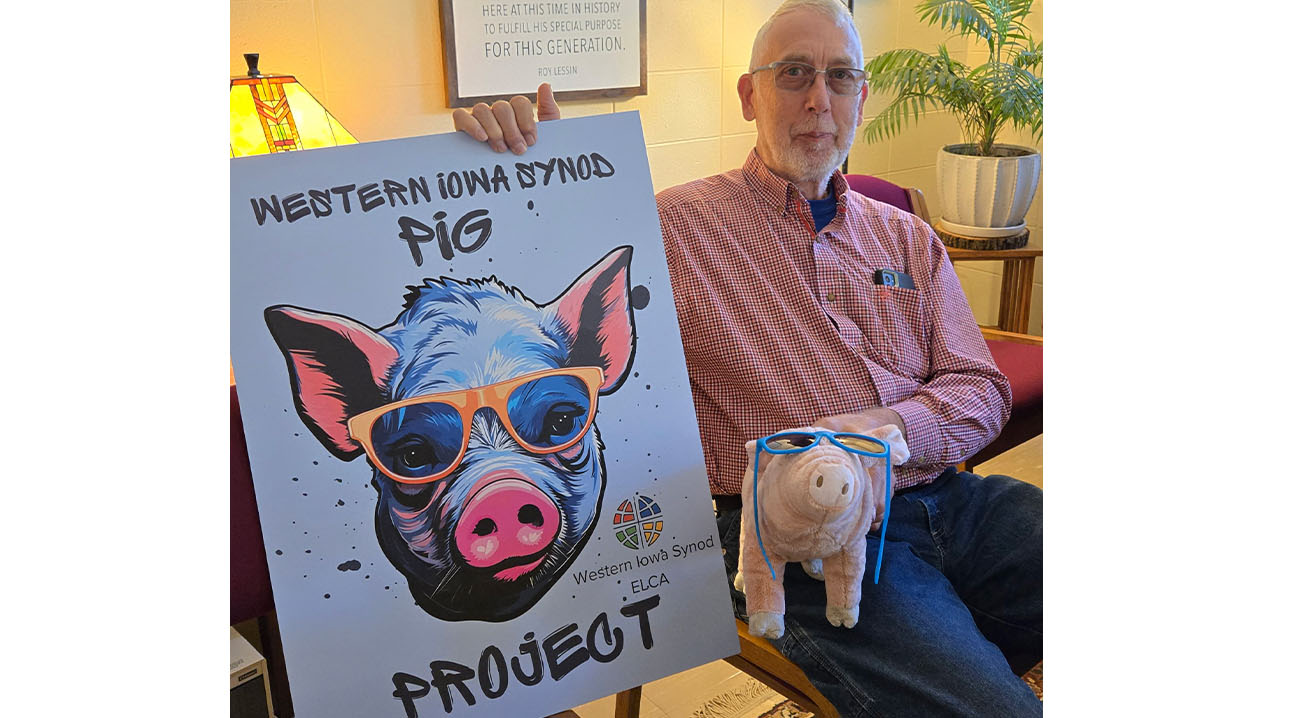
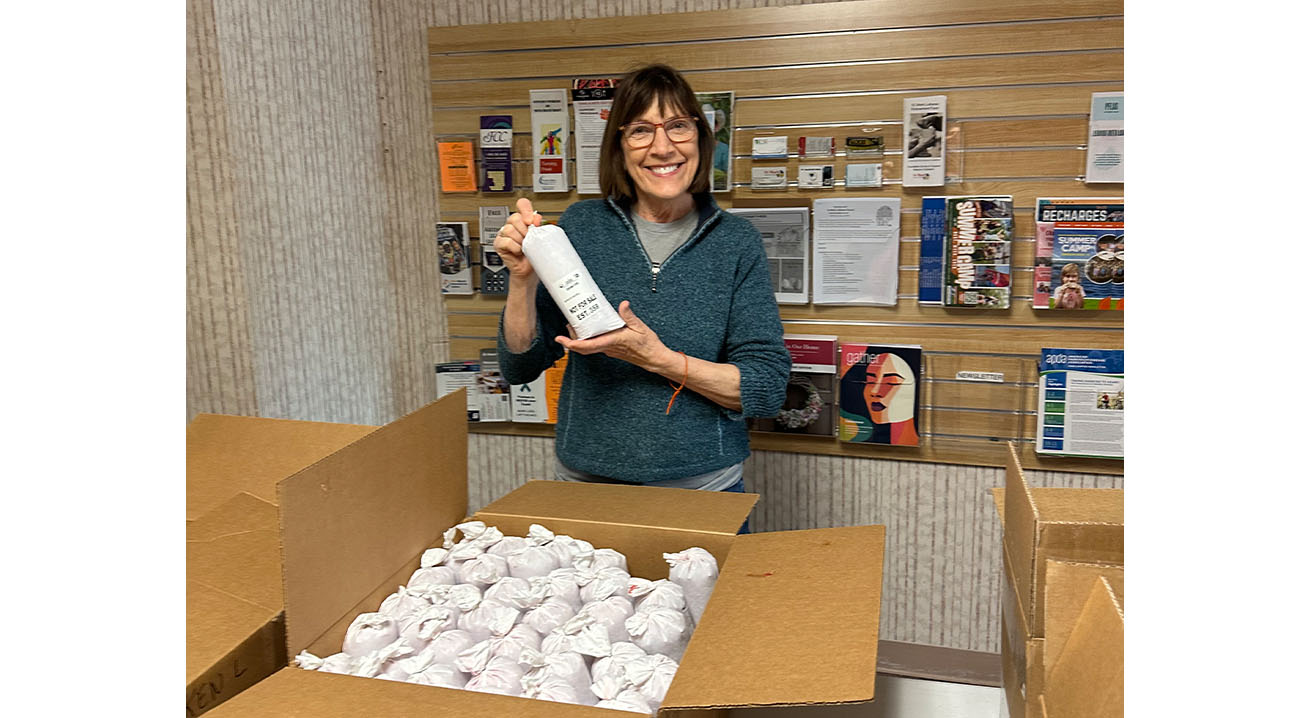



Innovation is in bloom across the rural reaches of the ELCA, and perhaps nothing exemplifies that better than a new food ministry in Iowa. The Western Iowa Synod calls it the Pig Project, and it’s gotten nearly 2 tons of ground pork into food pantries around the synod.
Iowa leads the nation in swine production, and western Iowa is a big reason why. The town of Storm Lake, population 11,500, is home to both the synod headquarters and a pork processing plant that employs more than two thousand people and processes around 17,000 hogs per day.
The Pig Project began with a recurring, troubling observation by Ken Less, an ELCA member and a six-decade veteran of the pork industry. Less is a contract producer for large integrators—companies that own the pigs, control most aspects of the production process and hire farmers such as Less to raise the animals.
“There are a lot of hogs that never get to market for injury reasons or a belly rupture or broken shoulder, something like that,” Less said. “It’s not disease but for some other reason, and that kind of bothers me—it’s a good pig, there’s lots of value there for the meat if someone would do something about it.”
Two years ago, at a synod meeting, Less voiced the idea that maybe the Western Iowa Synod could be that someone.
“We were talking about food shortages,” he said. “I suggested there were thousands of pigs that weren’t going to market that no one was doing anything about, and maybe we can figure out something to do.”
They did. First, Less had to find integrators that were willing to donate animals unfit for market but fit for consumption, which wasn’t as easy as you might think.
The Pig Project has distributed more than 3,500 pounds of meat.
“Some won’t allow it,” he said. “They’ll say, ‘If we allow one producer to do this, everyone wants to do this and it will get out of hand,’ so they won’t let it occur—which is crazy, but that’s their choice.”
Next, you need animal caretakers willing to scan their porcine seas for hogs that fit the niche for donation: ones with value that will nevertheless be euthanized on the farm instead being loaded onto either the market truck or the cull truck, the transport for substandard hogs that are typically sold for lower-value meat products or rendered into pet food, fertilizer and industrial products. Then you need a processing company with some wiggle room in its schedule.
“If a producer calls and says he’s got two of these pigs to butcher, can the processor do it?” Less said. “Can he do something in the next couple of days? Otherwise, the pig is dead and not good for anything. There has to be some flexibility.”
The synod put all the puzzle pieces together in October 2023, and the project has been a resounding success. Bolstered by more than $23,000 in funds from the synod assembly offering, money that goes toward processing costs, the Pig Project has distributed more than 3,500 pounds of meat.
That’s making a big dent in a pair of problems: hunger and food waste. In Iowa, about 1 person in 8 faces food insecurity, including 1 in 6 children. Nearly 400,000 Iowa residents do not consistently know where their next meal will come from, a statistic that’s particularly unsettling when you consider that roughly one-third of all the food produced in the U.S. goes to waste—an amount equivalent to about 130 billion meals each year.
“I delivered meat two weeks ago,” said Less, “and one of the people I delivered to said it was just about like a miracle because they couldn’t get meat from their normal source for food pantry delivery.”
“I’ve had people in tears when I’ve made deliveries,” added Julie Cook, administrative assistant for the synod. “Ken and our processor, who cut us a deal because we’re the church, are in northwest Iowa, so we’ve basically served that area so far. Our hope is, by pushing it out [at the synod] assembly, we can grow it in the synod and really get this going. People were really excited at assembly when they figured out what we were doing.”
A counternarrative of the church
Even as Less looked for a way to alleviate hunger in his state and mitigate waste in his industry, the ELCA churchwide organization was preparing for its own official foray into creative problem-solving: the launch of its Innovation Lab.
Innovation Lab staff are the newest churchwide organization team, providing collaborative workshops and resources with the goal of exploring new and useful ways to experience community, justice and love. The team has been operating with full programming for two and a half years.
Rebecca Payne serves as ELCA director for the Congregations Lead Initiative, which seeks to equip and inspire congregations with innovation and design-thinking tools. “Design thinking” refers to tackling challenges with a human-centered approach that stresses empathy, creativity and iterative testing. The initiative aims to create adaptable, relevant and thriving faith communities through the renewal of congregational ministry and community partnerships.
Along with Rahel Mwitula Williams, interim executive director for Innovation, and Tyra Dennis, program manager for innovation and ideas, Payne recently hit the road for a series of engagement trips in communities across the church. The trio traveled from coast to coast, visiting nine synods around the country.
“We wanted to get out and visit folks in context, to listen and learn from folks about what innovative work is already happening,” Payne said. “We want to build relationships, get a better perspective, get to know people and share what the Innovation team is all about. Part of what we want to do is serve as connectors. If congregations in, say, Virginia and Washington state are doing different, innovative things that the other probably doesn’t know about, we can connect them and help form churchwide networks.”
Payne says she is fascinated by the lay leaders in rural congregations who hatch new ideas and push back against the notion that the church is sliding toward irrelevance. One example she cites is Nazareth Lutheran Church in Cogswell, N.D., population 69. She describes the town as “a dozen houses on unpaved roads. Their long-term pastor retired, and they knew they couldn’t call another one, but with help from the [Eastern North Dakota] synod, they learned about synod-authorized ministers.”
“I find it counter to the narrative that the church is dying, to see congregations adapting and changing.”
Synod-authorized ministers (SAMs) are nonordained lay leaders who serve under the supervision of synod bishops’ offices to provide Word and Sacrament ministry in instances where calling a rostered minister is not realistic. Last June, no fewer than a half-dozen Nazareth members were commissioned as SAMs.
“In this really tiny region, they’re pastor-poor but ministry-rich,” Payne said. “They’re reallocating money for salary, benefits and housing to helping their community and helping support other congregations.”
Three congregations in Jamestown, a community of 15,000 people that serves as the seat of southeastern North Dakota’s Stutsman County, have banded together with five others in nearby Ellendale, Gackle, Medina, Montpelier and Kulm to form Christians in Action. This collective pools resources, including its own SAMs working alongside rostered ministers, to better serve its communities.
The congregations work together on worship planning and host community activities such as youth retreats and book clubs. They share a youth minister, seminary interns and a preaching team.
In the Rocky Mountain Synod, six congregations in the eastern Colorado towns of Brush, Akron and Sterling (including a congregation of the United Methodist Church) have come together to form the Prairie Parish.
“The biggest joy of my work is seeing thriving happening, and it’s happening a lot more than people think it is,” Payne said. “You hear a lot of doom and gloom about the church, and some of it’s warranted, but a lot of it isn’t, and it’s a joy to share stories about places making it work. I find it counter to the narrative that the church is dying, to see congregations adapting and changing.
“They may look different than they used to, and that can be scary, but they’re finding new ways to thrive, trying something different and doing something useful with their time and energy and love for their neighbors.”
Trying different things
Payne hasn’t yet made an engagement trip to the Northwestern Minnesota Synod, but when she does, it’s safe to say she’ll collect more spirit-bolstering stories, many of them happening under the umbrella of Rural Revival.
The Rural Revival program is based on a vision of people leaning on one another—sharing gifts, ministry and resources as community, as evangelists and as neighbors. That vision is in keeping with the synod’s strategic plan, which calls for striving “to enhance the general health and resiliency of congregations with special attention on small-member rural congregations.”
“Rural ministry is huge here,” said Rebel Hurd, the synod’s director for evangelical mission (DEM). “Ninety-six percent of our congregations are rural. When I came here four years ago, I wanted to listen to what was brewing in those congregations.”
Not long after starting as Northwestern Minnesota’s DEM, Hurd met Melissa Pickering, then a student at Luther Seminary in St. Paul, Minn. For her studies, Pickering needed to interview someone in the synod about rural ministry, and she connected with Hurd. Their conversation turned toward vitality in rural congregations and how such vitality is often overlooked or under-developed. “It’s there, it’s not missing, it’s just never really highlighted,” Hurd said.
Pickering, now a rostered minister, and Hurd developed the Rural Revival process with the goal of nurturing vitality in the types of congregations that dominate the Northwestern Minnesota Synod. One thing they wanted was to visit different congregations and do the work a mission developer would undertake when planting a church.
“What is the landscape?” Hurd said. “Who are your neighbors? If you were a brand-new church, who would you reach?”
“Rural ministry is huge here. Ninety-six percent of our congregations are rural.”
Hurd and Pickering, who serves as mission developer for Rural Revival, applied for a grant from the churchwide organization and received funding for Rural Revival through its Christian Community and Leadership (CCL) home area. A segment of CCL’s focus is congregational vitality, defined in part as the ability to engage the surrounding community with service and outreach while being innovative, adaptable, spiritually welcoming and purpose-driven.
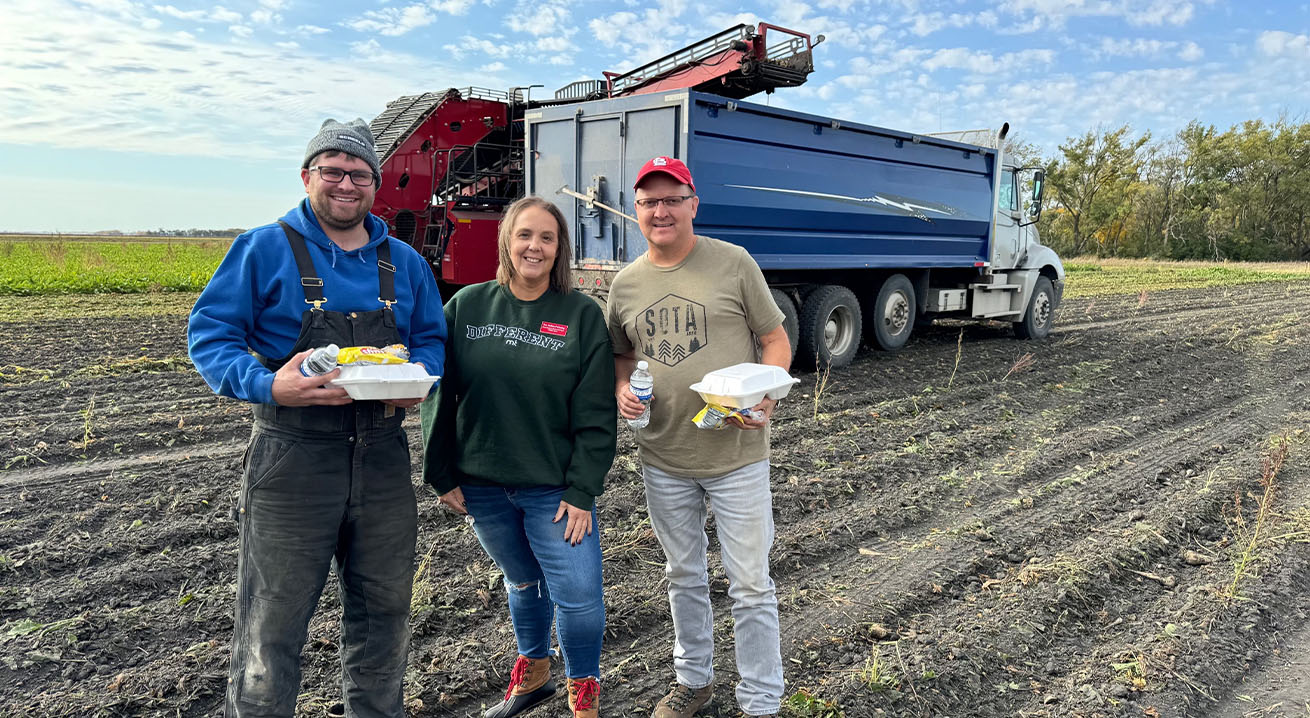
One ministry of Rural Revival is the Fueling Our Farmers program, which offers both meals and prayer for stressed-out farmers during harvest season. Another is brainstorming with congregations that might be ready to reinvent themselves along a more modern church model.
“I’ll have a meeting with a congregation, share what it is we do, and then I ask them to imagine with me, to take me back to the year the church was planted, and I’ll hear about covered wagons and no electricity,” Hurd said. “Then I’ll ask them about what’s different in their church now than it was then, and it’s pretty much silent.
“Women wearing dresses and men being in charge was the church in the context of 100 years ago, but it’s not church in the current mission field. So they have to figure out what church is in the current mission field, and do they want to do some things differently? Most of the time, they want to, but getting congregations to try new things can also be outrageously difficult.”
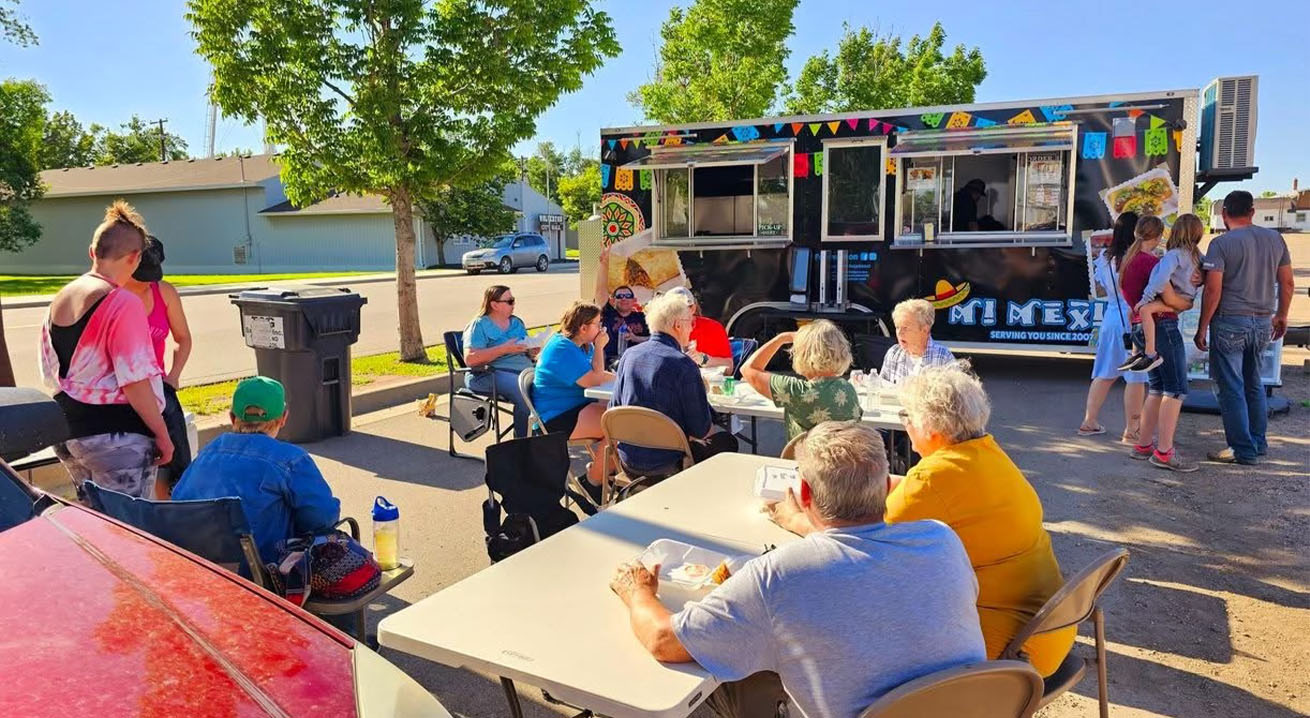
Faith Lutheran in Wolverton began worshiping on Wednesdays and bringing in food trucks, serving the kind of fare that would otherwise be inconvenient for the town’s roughly 120 residents to obtain. The congregation also started sharing its pastor, Devlyn Brooks, with the town’s only homeless shelter, Churches United for the Homeless.
One of the first congregations Hurd visited following the launch of Rural Revival was First Lutheran in Kensington, population 270. At a meeting with church members, she asked if anyone there had ever felt called to ministry but, for whatever reason, never followed that call. To Hurd’s astonishment, three people raised their hands. One of them, Vern Hedlin, was close to 80. Two of them are now SAMs.
“They have two different leaders,” Hurd said. “They could not get a pastor to come lead them, so for them to make that happen is huge. They’re trying different things, they’re not stuck in their ways, they’re learning to be agile and they’re learning it no longer has to be like it was 100 years ago.”
Editor’s note: This story is part of a series highlighting innovative rural ministries in ELCA congregations and communities today.