
 Logout
Series editor’s note: This article kicks off the 2026 theme for “Deeper understandings”: faithful witness in challenging times. In the coming year, various authors will explore what it means for the ELCA, and each of us as Lutherans, to face the headwinds of societal fracture, loneliness and political contention, and to bear witness to the good news of Jesus Christ that forgives, frees and transforms not only us individually but the whole world. We hope you will be encouraged and empowered to plant your feet firmly on the rock of our faith and speak joyfully and hopefully about the power of the gospel to foster peace and justice in a world desperately in need of both.
—Kristin Johnston Largen, president of Wartburg Theological Seminary, Dubuque, Iowa, on behalf of the ELCA’s seminaries
These are challenging times for witness to the gospel.
One reason is bad press. There are many negative examples of public imaging and evangelism from certain forms of Christianity—and many of us don’t want to be associated with them. In fact, we may be quicker to clarify what our faith is not about than what it is about. At a gathering of pastors I once attended, there was extensive conversation critiquing existing examples of public witness. When these pastors were asked for more constructive alternatives, there was only silence.
Despite our sour experiences, the call of Jesus to be his witnesses in the world remains. The call is not just for “special” Christians. Nor is it an optional add-on for outgoing people. The call of Christ to bear witness extends to all Christians. It is part of our heritage and DNA as followers of Jesus, whether we realize it or not.
Bearing witness is both broader than evangelism and inclusive of it. Though evangelism involves explicit sharing of the gospel of Jesus Christ, witness may involve this as well as embodying that message through faithful living. Bearing witness involves direct and indirect ways of speaking, sharing and embodying the gospel and how it has changed our lives.
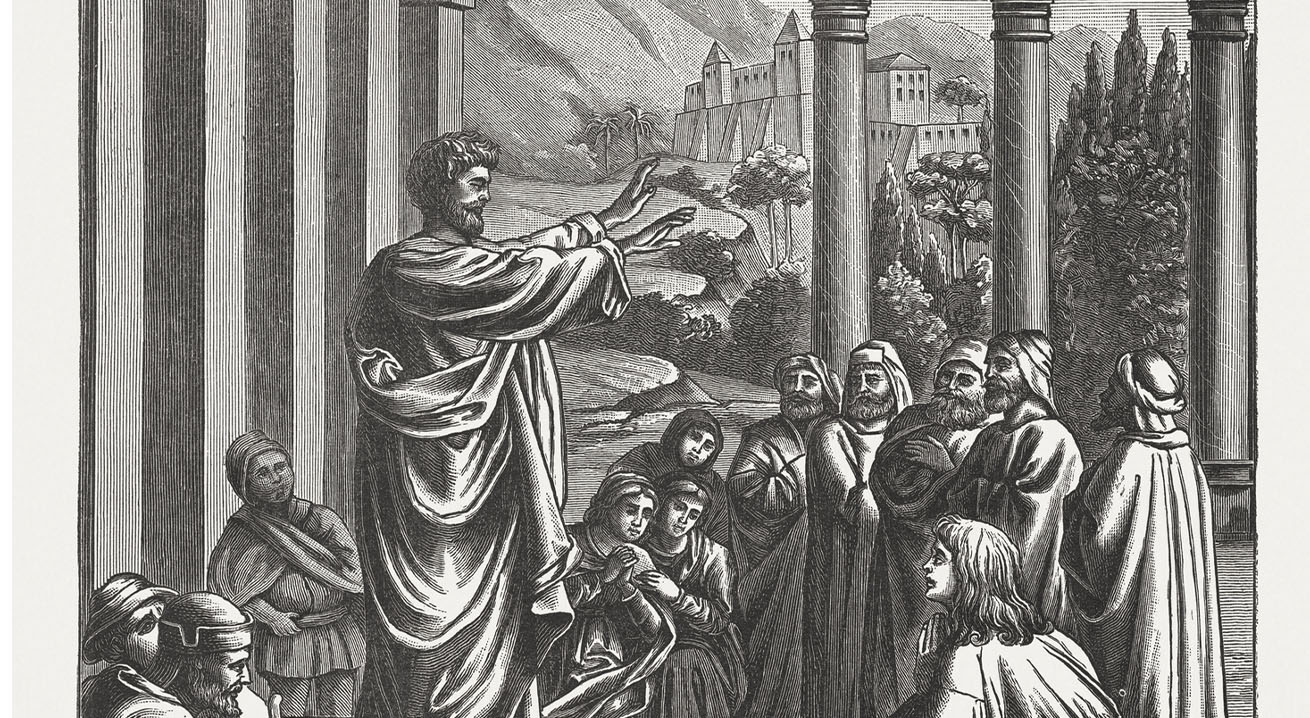
In the opening scene of the book of Acts, just before Jesus ascends, he addresses his followers: “You will receive power when the Holy Spirit has come upon you, and you will be my witnesses in Jerusalem, in all Judea and Samaria, and to the end of the earth” (1:8). At this defining moment, Jesus calls his followers “witnesses”—not preachers or proclaimers, not salespeople or spokespeople. Witnesses. This language implies sharing what they have seen and heard in relation to Jesus. They don’t need to memorize and regurgitate stock messaging. They don’t need to give grand speeches. Like witnesses in a court of law, they are simply expected to recount what they have seen and heard in relation to Christ.
This call extends to Jesus’ followers today—Lutherans included. In a 1522 church postil, Martin Luther suggested that the church is a “mouth house” because it “has and bears the living voice of the gospel.”
He wrote: “It is the way of the Gospel and of the New Testament that [the gospel] is to be preached and discussed orally with a living voice. Christ himself wrote nothing, nor did he give command to write, but to preach orally” (Luther’s Works, Weimar Edition, 10-1-1:48). For Luther, the church was the “house” where the gospel comes to life through the words and witness of its people. As the church, how are we continuing to be a “mouth house” for the gospel today?
To bear witness is to testify to the gospel of Jesus Christ in word and deed. This may or may not be primarily verbal. It need not be aggressive or insensitive. It ought not be manipulative or coercive. It does not try to control the results. It leads with humility, not assumptions of superiority. And it begins most faithfully by taking people, their stories and their experiences seriously.
Witness involves being a “mouth house.”
Contrary to conventional ideas, no one-size-fits-all formula exists for faithful Christian witness. It can take shape in a wide variety of ways. In fact, in a world filled with religious messaging and harmful experiences of religious movements, faithful Christian witness needs to take shape in diverse ways.
In Acts, the early church’s witness did not simply happen through speeches. It also took shape through sharing resources, tending to immediate needs, and extending healing and restoration in Jesus’ name (2:42-47; 4:32-37; 9:32-43; 11:27-30). Followers of Jesus engaged other people not as things to be fixed but as conversation partners, deep thinkers and potential equals in a new community (8:26-40; 10:1-48; 17:16-34).
Early Christian believers bore witness in private and public spaces, as individuals and as communities, among people nearby and far away. Most important, this witness was not a program or project of human ingenuity; it was a work of the Holy Spirit in which people joined. As Justo L. Gonzalez wrote in The Story Luke Tells: Luke’s Unique Witness to the Gospel (Eerdmans, 2015), “the purpose of the outpouring of the Spirit [in Acts] is not to know the hidden secrets of God, but rather to give witness to Jesus.”
In Scripture and today, faithful witness to the gospel of Jesus Christ leads with listening, sensitivity, appropriate humility, authenticity and a boldness inspired by the Holy Spirit. Faithful witness involves being a “mouth house” that builds bridges instead of dividing walls, taking people and their experiences seriously. Faithful witness, finally, is part of our Christian and Lutheran heritage—whether or not we always excel at it.
After all, the God who through Christ has invited us to be witnesses will, through the Holy Spirit, prove faithful in, with and around our efforts.
Get this column in your inbox: Visit livinglutheran.org/create-account and sign up for the free email digest “LL Stories.” Receive the digest weekly, biweekly or monthly, and select the categories that interest you. (“Deeper understandings” is a “Theology & Beliefs” column.)