
 Logout
Series editor’s note: The 2026 theme for “Deeper understandings” is faithful witness in challenging times. This year, various authors will explore what it means for the ELCA, and each of us as Lutherans, to face the headwinds of societal fracture, loneliness and political contention, and to bear witness to the good news of Jesus Christ that forgives, frees and transforms not only us individually but the whole world. We hope you will be encouraged and empowered to plant your feet firmly on the rock of our faith and speak joyfully and hopefully about the power of the gospel to foster peace and justice in a world desperately in need of both.
—Kristin Johnston Largen, president of Wartburg Theological Seminary, Dubuque, Iowa, on behalf of the ELCA’s seminaries
The fatal shootings by federal agents of Renee Nicole Good on Jan. 7 and Alex Pretti on Jan. 24 opened up the wounds of social divide, not only in Minneapolis, where the events took place, but in the entire nation. Ultimately, this divide is not caused simply by one’s political affiliation or one’s stances on immigration. The question it raises is more basic and touches the core of our value systems: it asks, who is my neighbor?
Of course, this is not a novel question, as shown in Luke 10:29-37 (the parable of the good Samaritan). But every new generation must answer it anew. Martin Luther argued that, because Christians are justified by faith, we are freed from the self-preoccupation to do good deeds to earn salvation. The freedom of a Christian, he taught, is to become Christ to one another, serving our neighbor. The neighbor is not defined by proximity or affinity but is anyone who is in need, regardless of their background. In challenging times, Lutherans bear witness to the gospel by loving our neighbors.
All around us, we experience attempts not only to justify limiting love but to explicitly hate and denigrate others. Social media is flooded with examples of indiscriminate targeting of immigrant neighbors by Immigration and Customs Enforcement (ICE) and the Department of Homeland Security (DHS), rendering immigrant families fearful of leaving their homes to attend school and go to work. Parents are being separated from their children. Black and brown neighbors are unjustly profiled. These chilling events make us challenge the truth of who our neighbors are—and, ultimately, of who we are when faced with the mistreatment of others.
On Jan. 15, the six ELCA bishops of Minnesota put forth a statement that reminds us of Christ’s teaching about neighborly love in light of the unprecedented crisis created by ICE and DHS in Minnesota. In their letter, the bishops write: “We know we are God’s children, and we know that you are too. We pray that this truth will continue to anchor, guide and compel all of us as we work for justice for all people in every place.”
Seeing each other as neighbors prevents us from branding people as enemies or threats. To be a neighbor means seeking understanding, cooperation and mutuality. It means that we serve people, support communities and address their needs. It means that the vulnerable are cared for. The gospel reminds us that Christians are free for a life of service to and with the neighbor, and in doing so, we bear witness to God’s love for all.
Webs of solidarity
In this context, there is no shortage of examples of resilience and solidarity. Many faith communities in the Minneapolis area have been actively involved in bringing comfort and support to individuals and families dealing with the uncertainties and traumas generated by ICE’s actions. Our Saviour Lutheran Church in South Minneapolis is one example.
Inspired by the “stumble stones” in Germany—small plaques embedded in sidewalks to mark locations where Jews were abducted during the Holocaust—Our Saviour parishioners found their own way to memorialize those detained by ICE. A member came up with the idea of posting signs where someone was taken. The signs read “A person was abducted here by ICE” and indicate the date it occurred. The fluorescent yellow, orange and green signs stand out sharply against winter snow.
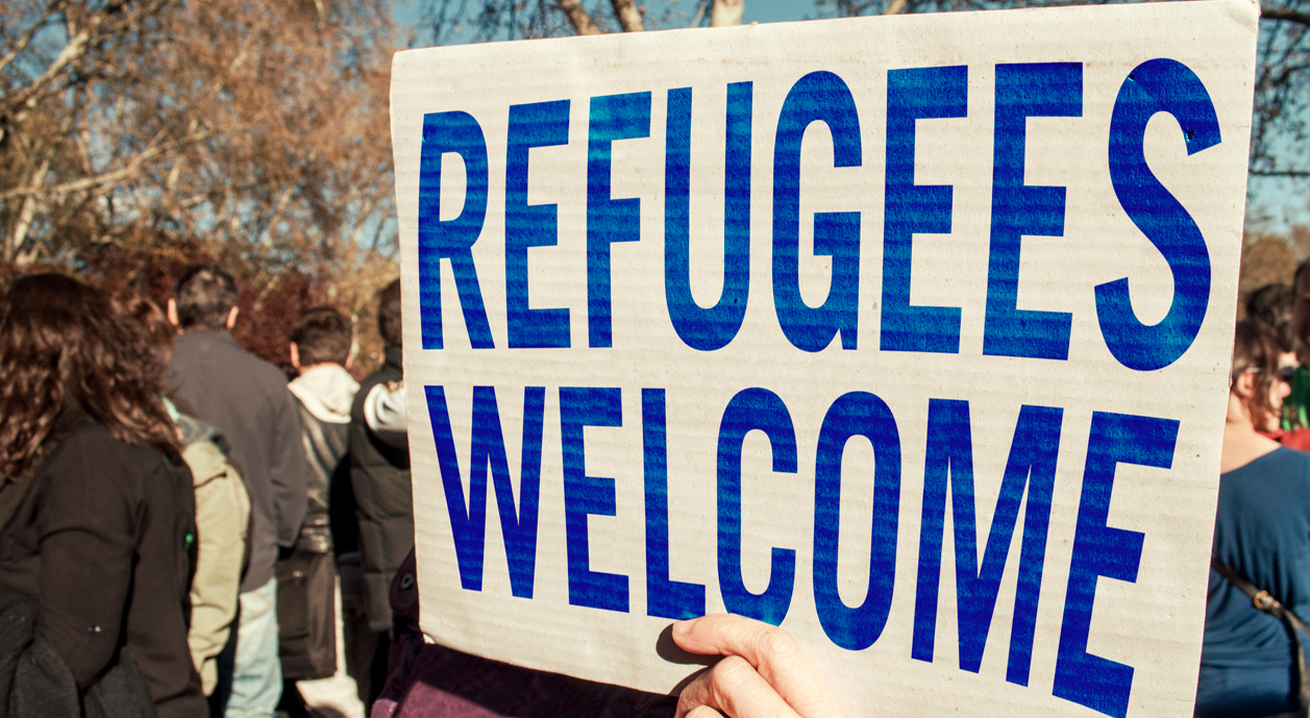
U.S. Lutherans have a deep-rooted heritage of accompanying people who seek safety and hope in this country, particularly refugees facing dehumanization and violence. The legacy of compassion exemplified through organizations such as Global Refuge has facilitated the resettlement of more than 750,000 refugees in the United States since 1939. Among them are members of the Somali and Hmong communities currently targeted by ICE. Given this shared history, the lyrics “We belong to them, and they belong to us,” from a recent singing vigil through the streets of South Minneapolis, is more than an aesthetic choice. It is both witness and commitment to works of love in action.
Christians are called to action in favor of the neighbor in need. We do so not only as Lutherans but as people who seek the flourishing of all human beings. In this effort, it is important to create webs of solidarity, joining others in our shared commitment to justice and peace.
Isaiah, a multifaith political and social justice organization, has been instrumental in uniting religious communities around policy advocacy and civic engagement, playing a substantial role in raising awareness and aiding their most vulnerable neighbors.
Vigils and peaceful protests continue in the streets of Minneapolis, uniting Christians and members of other faith communities. This action echoes the words of Martin Luther King Jr. that “injustice anywhere is a threat to justice everywhere.” In such work, there is a shared commitment that every human being deserves to be treated with dignity and respect. Lutherans are not alone in this, but we show up and bear witness to the gospel of Jesus Christ.
Get this column in your inbox: Visit livinglutheran.org/create-account and sign up for the free email digest LL Stories. Receive the digest weekly, biweekly or monthly, and select the categories that interest you. (“Deeper understandings” is a “Theology & Beliefs” column.)