 Logout
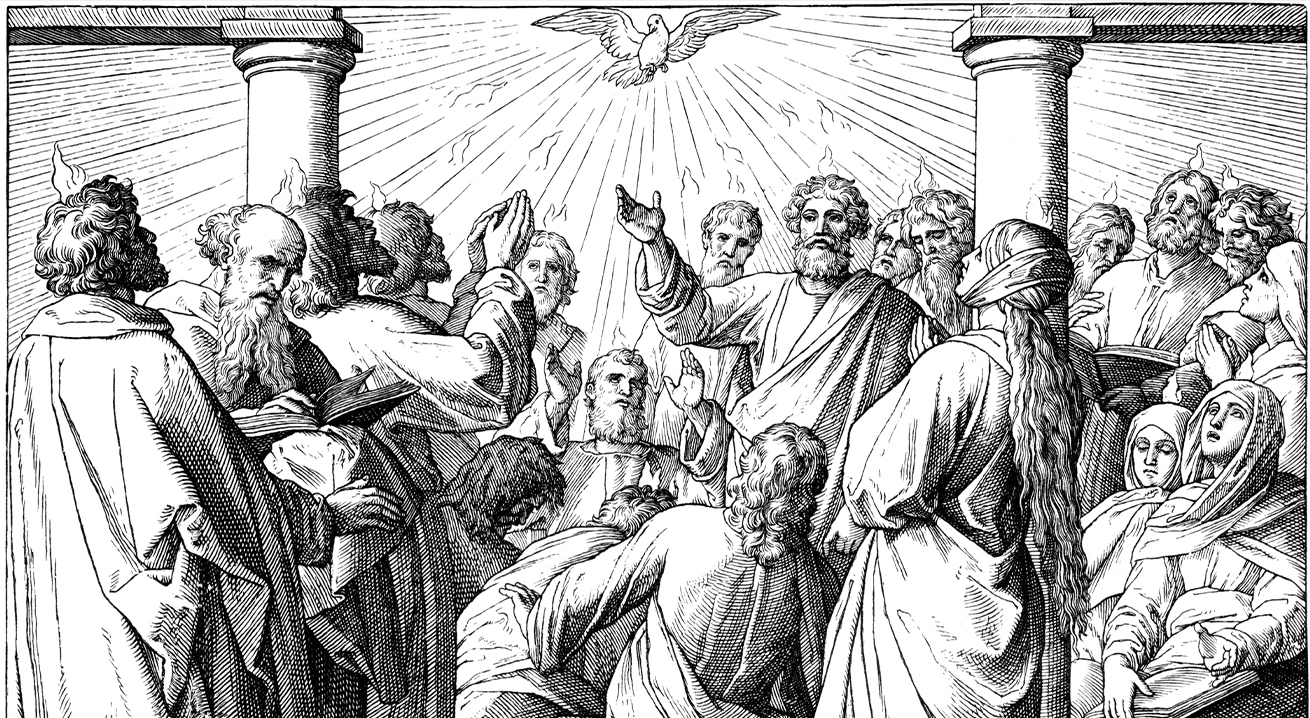
In the story of Pentecost in Acts 2, the Spirit doesn’t knock at the door. Instead, there is a “sound like a rush of a violent wind.” It doesn’t whip around aimless but fills “the entire house” where Jesus’ disciples had gathered. Then, “divided tongues, as of fire, appeared among them, and a tongue rested on each of them.” At that point, each of them “were filled with the Holy Spirit.” This meant that they “began to speak in other languages, as the Spirit gave them ability” (Acts 2:2-4).
This last clause causes me pause. I find myself making a mental list of all the things for which I do not have ability: because of several early surgeries in my life, I cannot and do not play contact sports. My manual dexterity is compromised. I’m weaker on one side of my body. I have a lazy left eye, especially when I’m tired. My physical balance is in a steady state of tilt. A relatively recent stroke has rendered me more tired. The list of things I’m ill-suited for feels deep and wide.
When people learn that I’m a writer, some will sometimes say they could never do that. “I’m not creative,” they might say. Or they tell a story about an unfortunate experience with some other creative expression—a failed art project in school, an unkind comment by a teacher on an essay they once wrote, an inability to sing on key, a mishap in home repair, fixing a flat tire or even a bungled attempt at restoring a broken relationship. Over the umbrella of creativity, we pour out our experiences that have not gone as we had hoped. We judge ourselves unable to be creative in any sense of the word. We attempt to extinguish the embers of the Spirit’s flame.
“I just can’t do it,” I said to a friend recently when I couldn’t get my car to start. They came to me, opened the hood of my car, and suggested some possible ways forward. I marveled at how they diagnosed what might be wrong. They connected me with someone who towed my car to a local garage. The mechanic said they could look at my car and promised to fix what was wrong. They ran tests, realized what was wrong, and fixed it. I couldn’t have done any of what my friend, the tow truck driver and the mechanic did to take care of my car. The only thing I could do was to ask for help. The only thing I could do was try.
In the waters of baptism, we are named and claimed as children of God. Each one of us is “sealed by the Holy Spirit forever.” We are each given unique gifts. Or, as the author of Acts describes it, “as the Spirit gave them ability.”
John’s Gospel proclaims, “From [God’s] fullness we have all received, grace upon grace” (1:16). Grace is not a superpower we possess. It is a gift we are given. Made in the image and likeness of God, we are bearers of God’s creativity in the fullness of our lives. The question is not whether we are creative or not. Rather, we are invited to consider the ways God has uniquely gifted us for creative expressions that bless and beautify the world God so loves.
We are invited to try—not to earn God’s love, but because our lives already bear the blessing and beauty of God’s Spirit.
We are invited to try—not to earn God’s love, but because our lives already bear the blessing and beauty of God’s Spirit.
I once turned in an assignment in which I wrote about a difficult time in my life. I apologized for what I had written. I was convinced that what I had made was not art, but a mess. I even said as much to my professor: “I’m sorry for this essay. It’s not any good. I probably shouldn’t call myself a writer because of it.” The professor smiled, thinking I was being funny. Once he read the essay, though, he found me before the next class.
“This is not a mess,” he told me. “It’s much better than you think.” I started to argue with him. He stopped me. “What you’ve written is an essay,” he said. I knew this, but I didn’t realize that the word essay comes from the French word essayer, meaning to try. What I’d done was to try writing about my life experience, using the gifts I had been given to invite others to reflect on their own lives.
This is creativity: to try, by God’s grace, to use the gifts we’ve been given. It doesn’t necessarily even need to be good. A mess is a creative expression all its own.
In the conversation we had together, standing outside the classroom I was about to enter, my professor also opened wide for me a door into understanding the creative process. “In creativity, nothing is lost,” he said.