 Logout
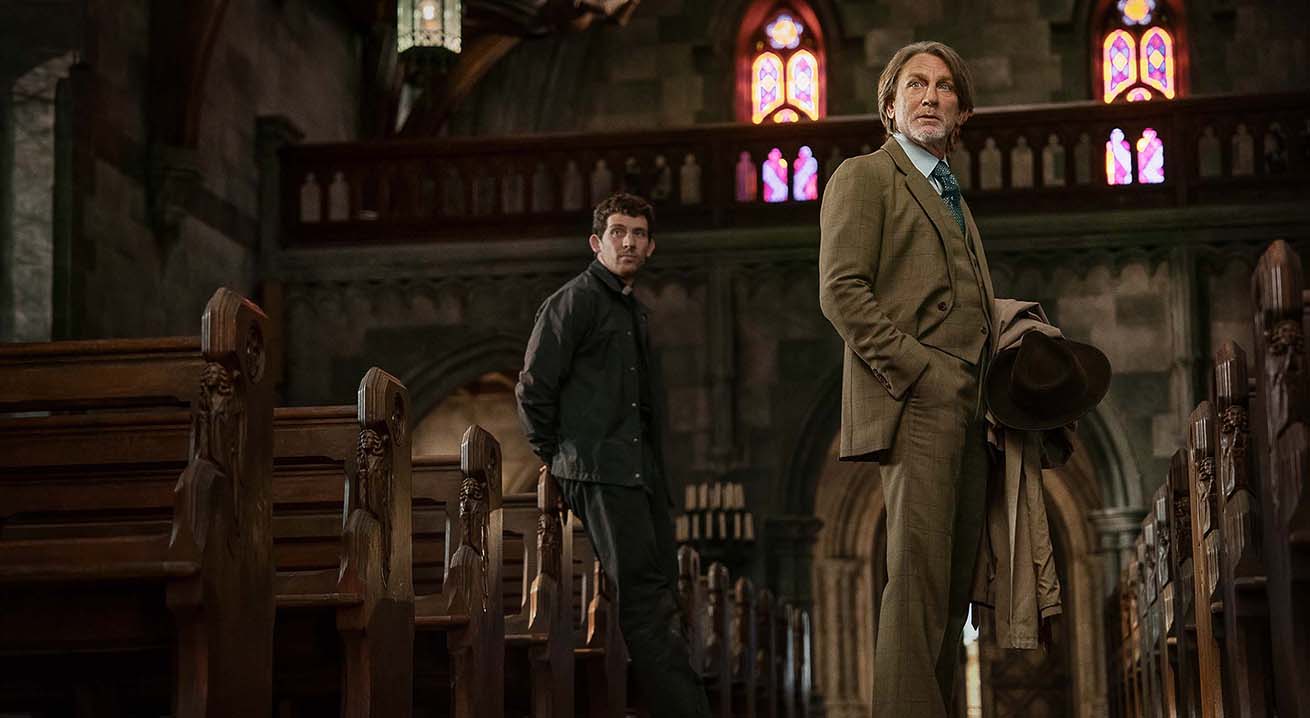
When sitting down to watch Wake Up Dead Man, viewers will likely expect a murder mystery full of twists and turns. After all, this is the third in writer-director Rian Johnson’s “Knives Out” film series, which follows the exploits of Benoit Blanc, a Hercule Poirot-type master detective with a Southern drawl (Daniel Craig). Wake Up Dead Man centers on a young Roman Catholic priest, Jud Duplenticy (Josh O’Connor), who is implicated in a murder after being sent to a struggling, unhealthy parish in upstate New York. The community of Our Lady of Perpetual Fortitude is rife with secrets and led by the demagogue Monsignor Jefferson Wicks (Josh Brolin).
As the plot thickens and the body count rises, viewers are right to expect Blanc to chew the scenery, famous actors to play absurd roles (Glenn Close is a highlight here), and for the mystery to be revealed by the time the credits roll. Wake Up Dead Man delivers on all of that. What they might not expect from the movie is a sincere illustration of divine grace.
(A disclaimer and warning: We won’t reveal the “whodunnit,” but this review does describe the film’s plot, including its final act, so there will be spoilers. Proceed at your own risk!)
In addition to unraveling Wicks’ murder, the movie gradually reveals the backstory of its central character. Duplenticy came from a rough background—he was a boxer who says he still has those “fighting instincts.” Eventually the audience learns that he killed a man in the ring and became a priest because of the transformative power of God’s forgiveness. He frequently contrasts (physically and metaphorically) the fists-up boxer’s stance with the open arms of Christ on the cross. Duplenticy doesn’t want to fight the world. He wants, through his vocation and through the church, to show the healing mercy of God—the same grace he has experienced.
O’Connor’s performance is compelling. As a character, the young priest is shaded with real nuance, and his vocation and calling come through again and again. In one scene, Duplenticy is on the phone, desperately trying to get a key piece of information for the case. The woman on the other end is being far from helpful, and he is clearly impatient and frustrated. But when her voice cracks and she asks, “Will you pray for me?” the mystery immediately takes a back seat. He walks into another room, listening intently as she shares her struggles. It’s one of the most authentic depictions of ministry in popular media memory. No matter the frustrations, no matter the urgency, Duplenticy is a priest. This person asks for spiritual care—of course he will pray with her.
As we see in scenes such as that phone call, it’s clear that Duplenticy’s faith is genuine. He really does believe in God’s power to redeem and heal human brokenness. This is played against the agnostic skepticism of Blanc, who doesn’t believe anything he can’t deduce through reason and evidence. Blanc seeks justice; Duplenticy emphasizes grace.
These dynamics come to a head in the film’s final act when the genre dictates that the detective should gather all the characters in a room to reveal the true culprit. It’s at this point that Blanc has a “road to Damascus” moment—not one that convinces him to have faith in God but perhaps to have a little bit of faith in humanity. He declines to name the killer so they can make their own confession of guilt. “My revelation came from Father Jud,” Blanc says. “His example to have grace. Grace for my enemy. Grace for the broken. Grace for those who deserve it the least, but who need it the most.”
Sure enough, the killer steps forward and confesses. They have also taken poison that will end their life, so this is a deathbed confession. Duplenticy, stunned, asks Blanc, “What do I do?” He responds, “What you were born to do. Be [their] priest. Take [their] confession.”
The movie brilliantly blends the cinematic trope of a criminal confession with the Catholic sacrament of confession. (We Lutherans don’t count confession as a sacrament, although Martin Luther did value private confession highly and encouraged its practice.) In the final moments of life, the killer makes their confession to Duplenticy: “These sins I confess to you, Father. I have lied; I have killed. … Forgive me, Father. Forgive me, Lord.”
Wake Up Dead Man is an unexpected meditation on the meaning of grace.
In a standard crime drama, the killer confesses and is led away in handcuffs. Here a different script is followed. Instead of a perp walk, Duplenticy gives absolution: “God, the Father of mercies, through the death and resurrection of his Son, has reconciled the world to himself. … May God grant you pardon and peace. And I absolve you of your sins.”
For many viewers, this ending may be jarring. It certainly doesn’t meet the expectations of the genre. Theologically, however, it’s the most fitting finale. Duplenticy believes deeply in grace, in the power of God’s mercy to heal the broken. And grace, by definition, is for the unworthy. As Blanc says, it’s for those who deserve it least. How, then, could the movie deny grace to its villain?
Wake Up Dead Man is an unexpected meditation on the meaning of grace. Grace must be for the most unlikable, most selfish, most guilty people—because it is for all of us. We are all unworthy of God’s grace. That’s what makes it so powerful.
Perhaps the ending will be unsatisfying to some. But the film’s thesis statement can be found in its epilogue. We find that the congregation, led by Duplenticy, has now changed its name to Our Lady of Perpetual Grace. In a world of lying, cheating and killing, of imperfect clergy and selfish parishioners, of brokenness, what we all need, perpetually, is grace.
Wake Up Dead Man is streaming on Netflix.