 Logout
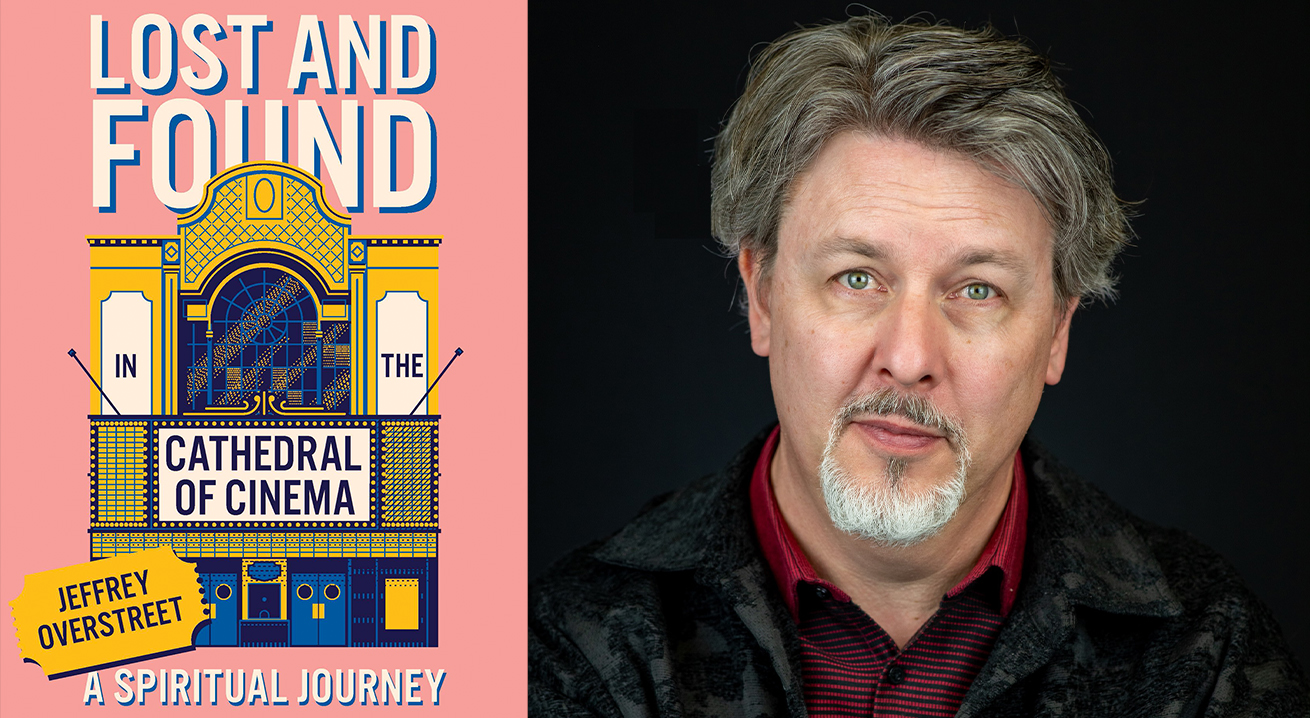
Much of Jeffrey Overstreet’s professional life has centered on cinema, from his extensive film writing—including as critic for Christianity Today—to the courses he teaches at Seattle Pacific University. But film isn’t just his job, it’s integral to his life and vision of faith.
Overstreet’s new book, Lost and Found in the Cathedral of Cinema: A Spiritual Journey (Broadleaf), follows his faith journey through a series of stories about movies that have been meaningful at different parts of his life. Though his story is unique, readers are likely to find relatable experiences in this intimate, big-hearted book. Living Lutheran spoke with Overstreet about how his book takes film very seriously and reflects his deep enjoyment of it.
Living Lutheran: Could you tell readers about Lost and Found in the Cathedral of Cinema?
Overstreet: Each chapter tells a story, from my childhood to the present day, holding up a film alongside my life. Looking through the lens of that film, I’m able to see my life more clearly—and looking through the lens of my life, I’m able to see the film more clearly. Hopefully, that opens up the film for readers so that they have their own realizations.
This is a weird book. There’s a lot of personal stories. There’s a lot of film criticism, but the hybrid of it all is meant to celebrate that God is at play in 10,000 movie theaters, so to speak, and that these are not mindless escapes or distractions, they are lenses through which I make meaning of the world.
What advice would you offer someone new to looking at film as a way to think about and experience faith?
In my book, I dive deep into films that I think will be familiar and accessible to many readers: Pinocchio, Moonrise Kingdom, Do the Right Thing. I try to help them see those films with new eyes. I want them to see how mindfulness and critical inquiry—that is, curiosity about film history, artistry and other critical perspectives—can lead us toward revelation and wisdom.
When I was a child, The Black Stallion whetted my appetite for more contemplative forms of art—maybe not slow cinema but slower cinema. Dead Poets Society made a passion for poetry feel like something that did not threaten masculinity, and that made an impression on me as a teenager. The animated films of Tomm Moore and Hayao Miyazaki are rich with poetic and spiritual implications, and I’d argue that there is no separation between the style and substance.
The discovery of cinematic spirituality comes more by way of how we experience films than which films we experience. The post-viewing conversation is a rare occasion, for American moviegoers especially. Watch films with other people, then set aside at least an hour for conversation afterward. … Ask each other where you saw any matters of the Spirit being explored in the film. Was this a film about love? Faith? Ethics? Was there any sense of justice? As you consider the arc of the film, what do you think the film might be suggesting about human nature, the world or the meaning of life?
Don’t worry about having the “right answers” in these conversations. These are subjective matters; be gracious with yourself and others so that your experience can grow and change. That’s what we do in my film classes. I love watching students wake up to just how much they’ve been missing at the movies. So many of them dislike a movie while they’re watching it, but then, after our discussion, they love it and can’t wait to watch it again.
Do you have recommendations for where they should start?
Check out Arts & Faith’s “Top 100 Films.” That site is overseen by Ken Morefield, who goes way back with me in conversations about faith and art. There are all kinds of lists on his site that have been assembled by cinephiles who are interested in matters of faith, and it’s a treasure trove. But not all of those films will be easy for beginners. Some are quite challenging, even abstract. Start with films that you find watchable and engaging.
The discovery of cinematic spirituality comes more by way of how we experience films than which films we experience.
When it comes to English-language films, there have been certain directors over the last 30 years whose work seems to have inspired a lot of casual moviegoers to become cinephiles curious about questions of spirituality and ethics. I’d name Spike Lee, Sofia Coppola, Wes Anderson, Terrence Malick, Martin Scorsese and the Coen Brothers (Joel and Ethan). Ryan Coogler and Greta Gerwig are popular recent additions to that list, I think, and I’d recommend people check out the films of Chad Hartigan (who made This Is Martin Bonner and Morris from America) and Kogonada (who made Columbus and After Yang).
How are you hoping your readers will engage with the book?
I hope that they’ll dive into [a] chapter [on] a movie they’re already excited about. I want them to discover something new about one of their favorite things and then get curious—and maybe start from the beginning.
But above all, what I want out of this, selfishly, is for readers to read some or all of it and then write to me about their own experiences. I want to hear what they have seen in films that’s relevant to their own lives. Because that’s going to help me not only appreciate that film more, but then I’m going to be getting to know somebody, which is always the best thing to come out of this. I may not be able to answer all the emails immediately, but I really do look forward to those conversations.