 Logout
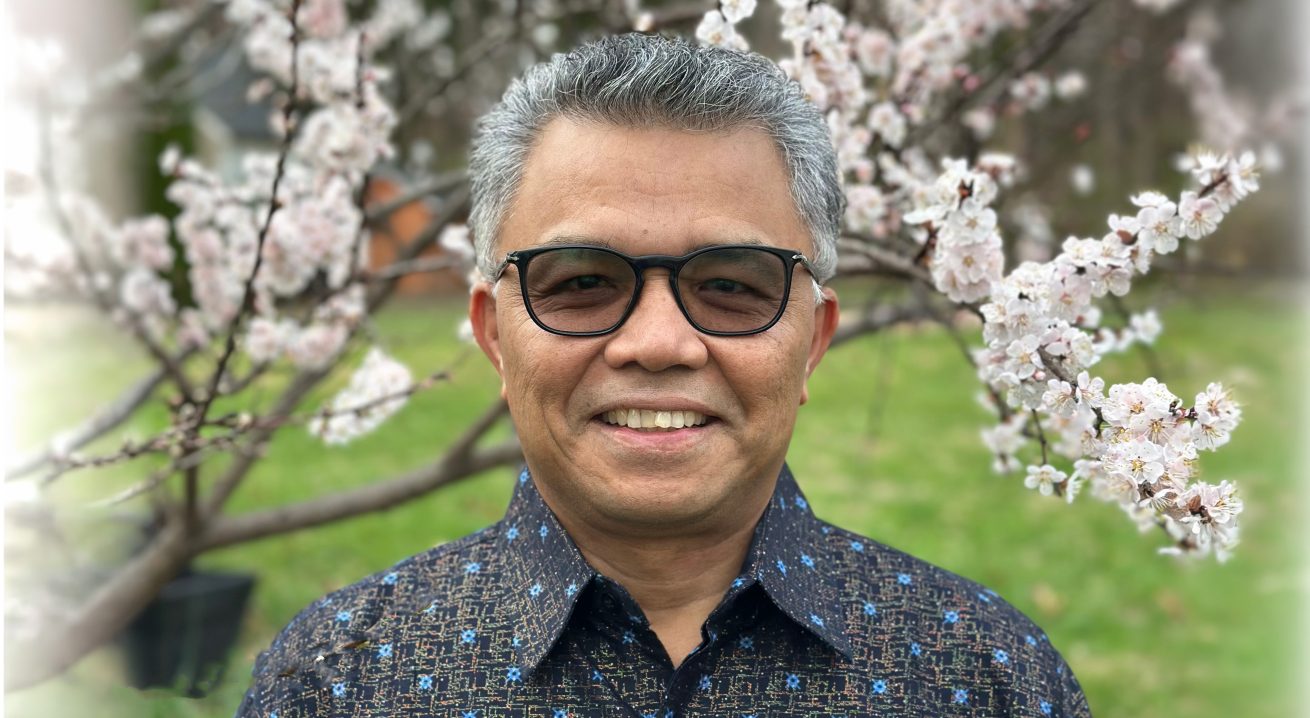
When Bimen Limbong began serving in Jeffersontown, Ky., a congregant approached him with a concern: his accent made it difficult to follow his sermons.
He didn’t respond defensively. He responded pastorally.
“I began printing my sermon every single Sunday for distribution before the service started,” he said. “I still do this because my message is important, and I wouldn’t want anyone to miss out.”
That simple practice became both an act of accessibility and a quiet gesture of care. It reassured parishioners that their understanding mattered while preserving his spoken word in print each week.
Limbong is no stranger to navigating misunderstandings. “Even after a certain age and years in your new home … you always have the accent,” he said.
But he is clear that the accent is not the problem. “If you hear somebody with accent, that person likely speaks at least two or three languages,” he said. “So it’s a gift. And maybe you could learn something new from them.”
A theological preference
Limbong grew up in Sumatra, Indonesia, one of nine children. He didn’t plan to become a pastor. “I wanted to become a businessman,” he said. “I wanted to make a lot of money so I could help my family.”
His call unfolded gradually through youth ministry, mentors and theological study. He graduated from Batak Theological Seminary in Pematang Siantar, North Sumatra, in 1995 during a time of political and religious unrest in Indonesia. He then accepted an invitation to serve St. Mark Lutheran Church in Anchorage, Alaska.
“Alaska is just like a chunk of ice,” he remembered thinking.
He was aware the move would demand cultural, linguistic and emotional resilience. In Alaska, he encountered Indigenous community members who shared how Lutheran missionaries had once forbidden them from speaking their native languages. The stories felt painfully familiar. “I thought, there it was again,” he said. “Same story. Different place. Always English—only English.”
Limbong had witnessed similar tensions in Indonesia. “Missionaries had come to Indonesia and Indonesian people filled their churches, but the traditional Indonesian instruments that these congregants knew and loved were not allowed,” he recalled.
For Limbong, this wasn’t merely cultural preference—it was theological. The Protestant Christian Batak Church in which he was raised was, and still is, heavily influenced by German church traditions in its liturgy, worship and music. While defending his seminary thesis, he challenged professors and church leaders about the importance of incorporating local culture—especially traditional instruments—into worship. Drawing on Psalm 150, he noted that the instruments in the Batak Bible translation correspond to those familiar in Batak culture. To him, this passage affirmed that praising God with the instruments of one’s culture is not only appropriate but faithful.
From Alaska to Kentucky, where he now serves, Limbong’s ministry has continued to reflect the conviction first voiced during that thesis defense: worship should honor the culture and language of the people offering praise.
“We don’t have to be Germans to be Lutheran,” he said. “We don’t have to be somebody else … we can just be ourselves because we’re enough.”
Culture, he believes, isn’t separate from theology. It is how people embody their love for God.
“God created us to be different, and we do not need to abandon our culture or our language to be beautiful,” he said. “The differences are beautiful.”
True acceptance
When Limbong arrived in Kentucky, not everyone welcomed his call.
“When they voted on me and my leadership,” he recalled, “one of the congregation members said, ‘We don’t want an Indonesian to tell us about Jesus.’”
Another member stood to respond: “We don’t need an Indonesian person to tell us about Jesus, but we need Pastor Bimen.”
For Limbong, true acceptance meant being recognized in full—not just as a pastor but as an Indonesian pastor. He couldn’t separate his leadership from his identity.
Years later, the man who had opposed his call visited Limbong’s office. His health was failing, and he had just finalized his will.
“He told me, ‘Pastor … I had originally opposed your leadership here, but I was wrong and I’m so glad you followed your calling,’” Limbong said.
The man apologized and made a request: “If something happens to me—when I pass on—I would love for you to preside at my funeral.”
Limbong asked why.
“The first Sunday, you met me,” the man said. “And then the following Sunday, you already called me by my name.”
A small detail. But it signaled presence, attention and care.
Today, Limbong serves Christ Lutheran Church in Jeffersontown, Ky. He is president of the Association of Asians and Pacific Islanders (AAPI), acting chair of the Indonesian Caucus within AAPI-ELCA, chair of the global companion relationship between the Indiana-Kentucky Synod and the Protestant Christian Batak Church, and former dean for the synod’s South Central Conference.
He works closely with the ELCA’s Ministries of Diverse Cultures and Communities, where leaders such as Teresita (“Tita”) Valeriano continue to elevate Asian and Pacific Islander (API) voices across the denomination.
API ministry cannot be reduced to one language, culture or worship style. Limbong names the tension clearly: “There is … the hunger to belong.” But belonging is not assimilation, and acceptance cannot come at the cost of culture.
“Our hope and dream is that we will … be transformed [and will] change together without losing ourselves,” he said.
Every Sunday, as congregants receive both the spoken word and a printed page, his ministry quietly embodies that vision.
It is not about becoming someone else. It’s about becoming fully who God created you to be—and inviting the church to grow alongside you.
Did you know?
About 19,500 ELCA members are of Asian or Pacific Islander heritage. About 85 Asian congregations and ministries in the ELCA minister in Asian languages, including Burmese, Cambodian, Cantonese, Filipino, Hmong, Indonesian, Japanese, Korean, Lahu, Laotian, Mandarin, Taiwanese, Thai and Vietnamese. Some of the congregations also provide ministry to second-generation Asians. In addition, many Asians are members of more than 3,000 English-speaking ELCA congregations across the United States. Often there are no Asian culture-specific Lutheran churches in these areas.