By Caitlin Sellnow and key illustrations by Lauren Cox
HolyRollers
ELCA Communities Use Tabletop Games for Ministry
Chapter I
A Tavern Table
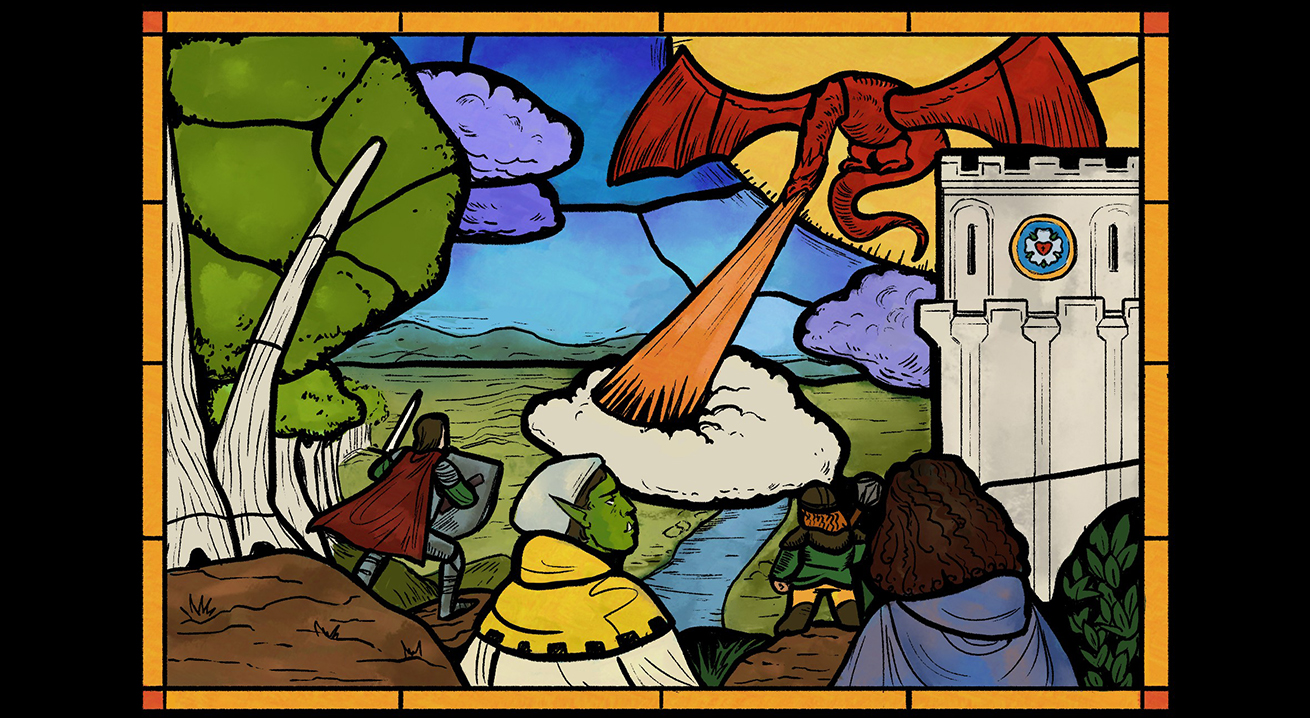
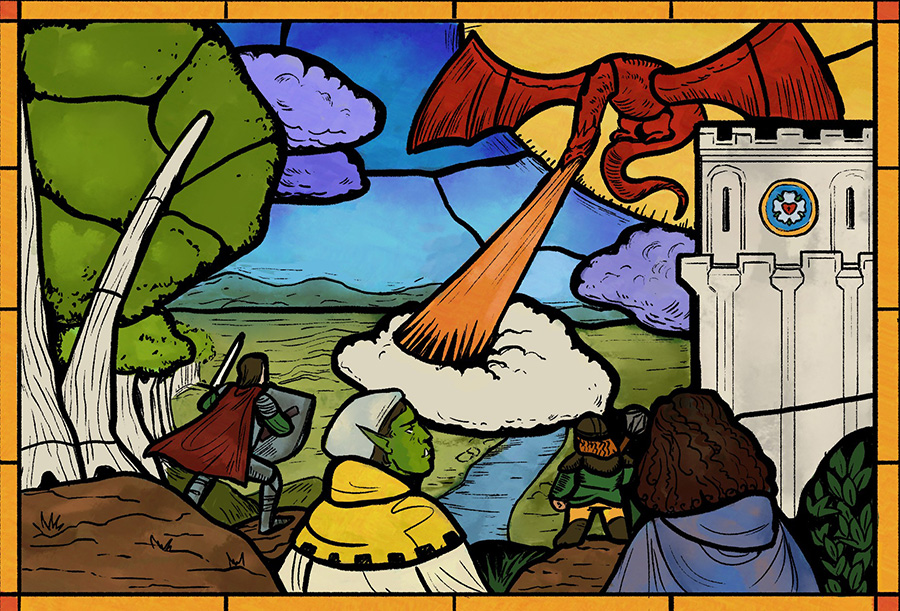
This story begins at a tavern table, as many do. It's been a long day at a gathering of people from across the windy plains that surround your home. Usually you're tucked in your own small village, busy with the daily joys and concerns of your neighbors there. This week though, you've traveled to this once-yearly assembly where you're meeting new people and seeing old friends for the first time in a while.
Tonight you're gathering in the dim light with a few colleagues who live in other, faraway villages. As you catch up, one friend mentions a game he's heard of—with quests and magic and epic battles. He'd like to try playing it, but he needs someone who knows how to set it up and guide him through it. As it happens, you used to play this game many years ago. You realize you might be the guide he's looking for.
What do you want to do next?
Chapter II
The Dungeon Master Pastor
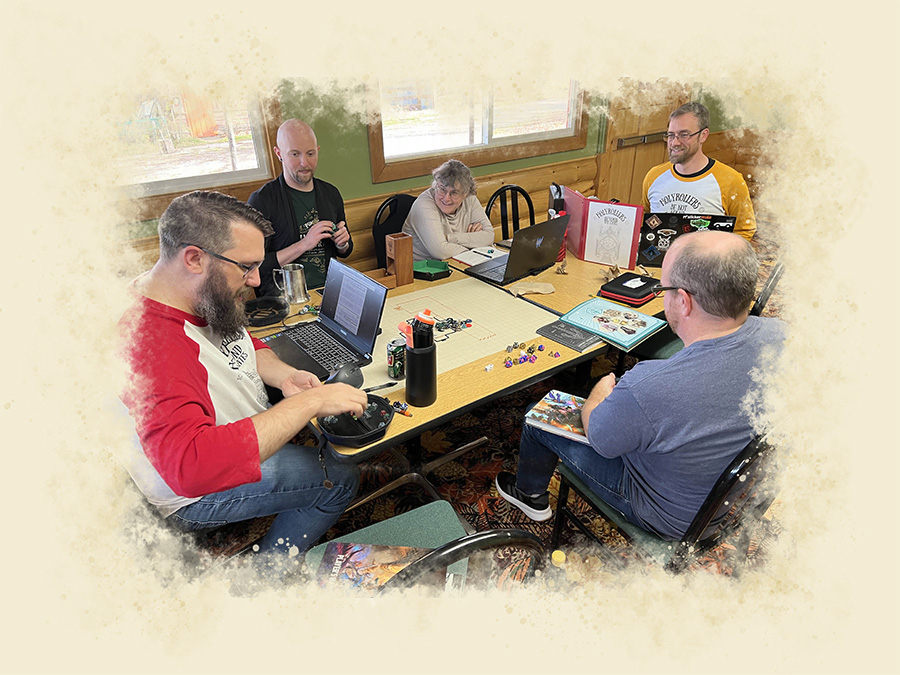
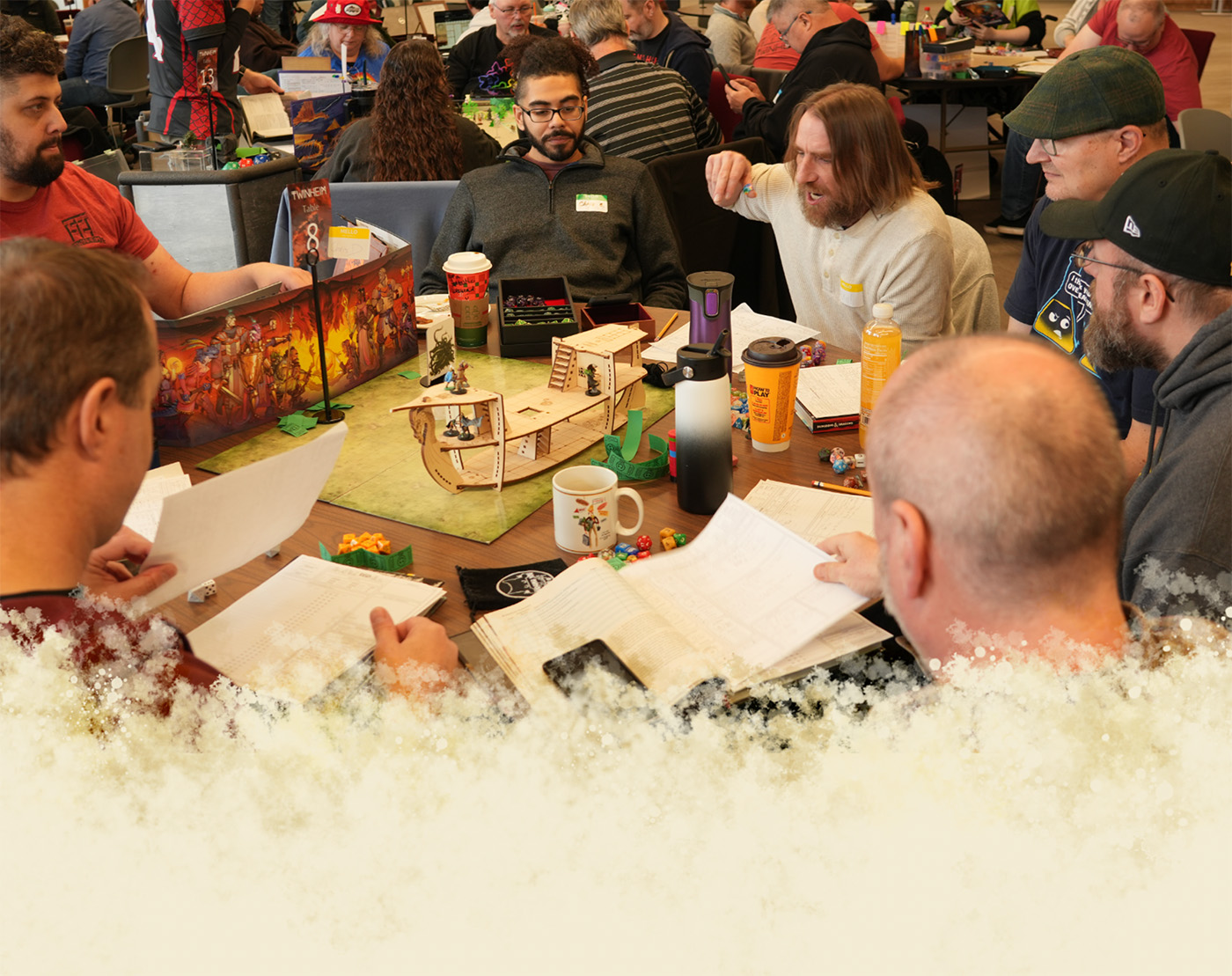
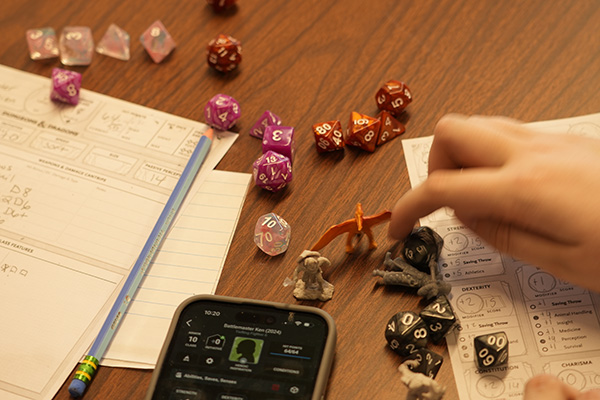
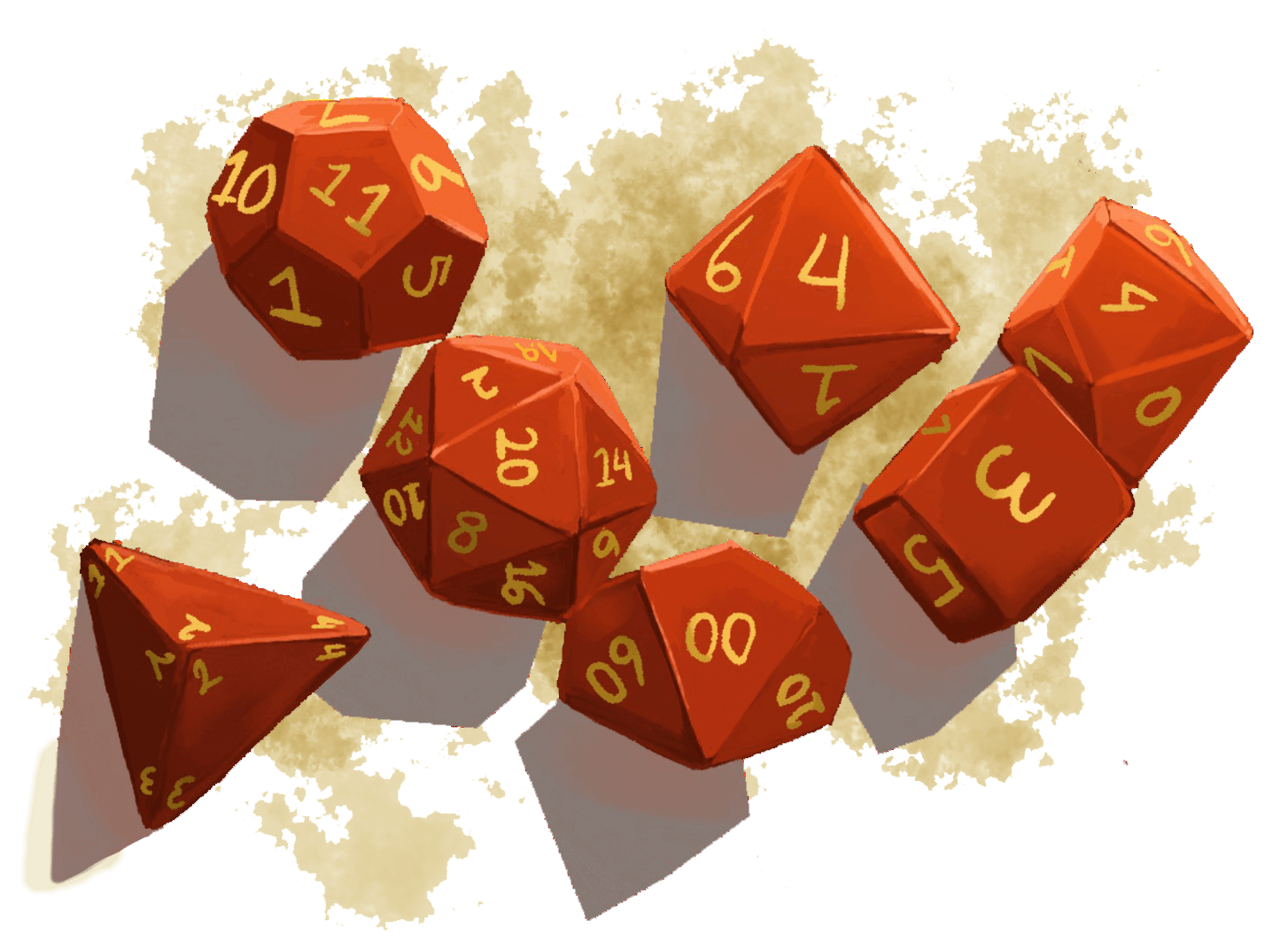
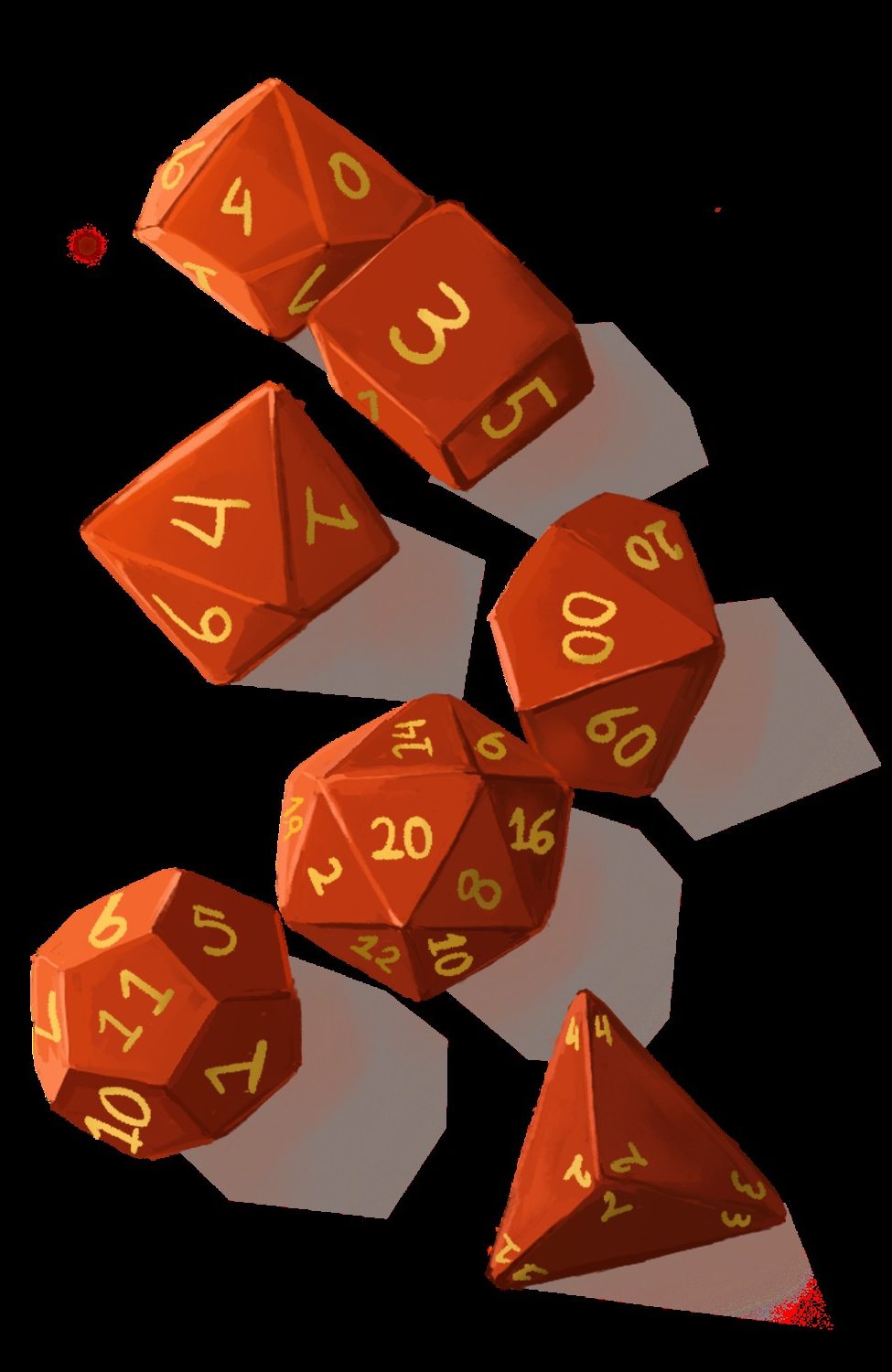
This scene could be part of a game of Dungeons and Dragons (D&D), a tabletop roleplaying game that blends collaborative storytelling with strategy and chance. If you were playing D&D and the dungeon master (DM) leading your campaign presented this scenario to you, you would decide your character’s next action. For example, you might try to convince your friend to play the game with you right there. Your DM might then ask you to roll a 20-sided die to see how good your argument is. If you roll an 11 or above, you’ll be persuasive. If you roll a 10 or below, not so much.
This tavern scene also happens to be how Rory Philstrom, a pastor of Prince of Peace Lutheran Church in Burnsville, Minn., began his real-life journey toward becoming the “Dungeon Master Pastor.” Several years ago, he was serving a four-point parish in North Dakota when he met up with some other pastor friends at a synod assembly. One mentioned that he’d been listening to a podcast featuring comedians playing D&D. He wanted to find a way to play the game himself.
The game was first published by Tactical Studies Rules in 1974. In the 2010s, TV series such as Stranger Things, as well as podcasts and web series where people play D&D for an audience, started a new wave of interest.
Philstrom himself hadn't played since he was in elementary school—when his grandmother gifted him a starter box—but he told his friend he could set it up.
Philstrom assembled a small group of pastors serving in rural areas. A new virtual tabletop system allowed them to connect online and play across the many miles between their homes.
“You find yourself there, even when you don't want to." — Rory Philstrom on how D&D and life intertwine
The more he played and the more fulfillment he got from it, the closer his vocation as a pastor and his role as a DM drew together. Philstrom explains this by using the D&D term “bleed,” which describes how elements of life seep into the magic circle of gameplay and vice versa. When you play D&D, he said, “You find yourself there, even when you don’t want to.”
Chapter III
Rolling for Joy
In 2018, Philstrom’s first campaign was approaching its conclusion, and the players decided to meet for an in-person grand finale. Philstrom found a retreat space, but not everyone from the group could make it. When they decided to conclude their campaign another time, he pivoted, putting out announcements inviting others to join him at the already-reserved retreat space for a different D&D setting.
Thirteen people from across the country, almost all pastors, joined Philstrom for three days and nights. They interspersed times of play with rest and worship, and they talked about the many places where D&D and theology meet. Before the retreat was over, they started asking when they could do it again.
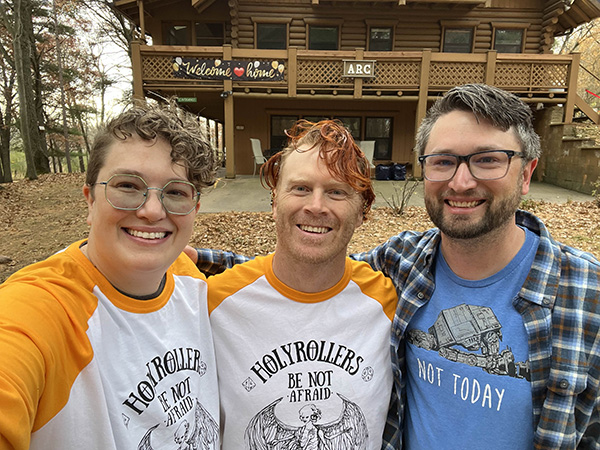
Philstrom has helped lead a “Holy Rollers” D&D retreat every year since then. The group has expanded to include more than just pastors, and Philstrom’s D&D ministry has grown too. The retreats are now part of the larger Roll for Joy project, which hosts regional meetups, provides D&D ministry resources and more. Philstrom is also researching how D&D can be used as a tool for ministry discernment as he works toward a Doctor of Ministry degree.
Alex Smith, a pastor of Peace Lutheran Church in Sioux Falls, S.D., had never played D&D when they first heard about the retreats.
They had been curious about the game though, and the retreat seemed like a fun way to earn a continuing pastoral education credit. As soon as Smith started to play, they were hooked. Sharing the game with other people of faith, and using it for spiritual reflection, made the experience especially meaningful. “I loved the pairing with reflection on who you are, who God has made you to be,” they said.
“Sharing the game with other people of faith, and using it for spiritual reflection, made the experience especially meaningful." — Alex Smith, Pastor of Peace Lutheran Church
Smith quickly felt called to lead games as a DM and eventually joined the Roll for Joy leadership team with the title “roleplay paladin.” In that role, Smith focuses on creating a safe and welcoming environment for everyone. “As a queer person who is also on the autism spectrum, there isn’t always a place for you to show up in the world as your full self,” they said.
Smith values the instant community formed around a D&D table, and they want to make sure that players can bring their complete, authentic selves there.
Tales from the Table
Chapter IV
Rolling for Discipleship
Ben Loven, who serves as pastor of Our Savior Lutheran Church in Rochester, Minn., and as “steward of lore” on the Roll for Joy leadership team, also counts Philstrom as his first DM. Loven played D&D for the first time when he was invited to be part of the campaign among rural pastors. He soon became a DM, too, and began using D&D in his ministry. Loven now regularly leads games among adults and youth at Our Savior. During Sunday school, he gives students the opportunity to play through Bible stories as D&D games.
Last year, Loven and other rostered ministers in his synod began producing a D&D real-play podcast, with Loven as the DM, called The Lore of Jesus: Roll for Discipleship. The podcast campaign began with four Lutheran congregation council members getting sucked through a portal into a fantasy world where no one had heard of Jesus.
The podcast asked, “What does it mean to follow Jesus when you can’t go to church?” Every few episodes, the players took a break from the game to reflect on the connections between D&D, their spirituality and ministry. These episodes were some of Loven’s favorites.
Loven’s players often surprised him, in a good way. As he prepared for a battle in a mysterious lighthouse, he said, “I had a plan for if they won, I had a plan for if they lost.” But he didn’t have a plan for if they sat down and surrendered—which is what they did. And in the end, it made the story work in an unexpected way that was true to their characters.
As a pastor and a DM, Loven loves creating stories with others. In both roles, he said, he has some extra knowledge and tools that allow him to serve as a guide but, “at the end of the day, I’m just one of the people involved in telling this story.”
Chapter V
Expanding Outreach & Imagination
Across the country, other ministry leaders like Philstrom who played D&D as kids are finding deeper meaning in the game as adults.
Bill Dohle, pastor of King of Kings Lutheran Church in Pueblo, Colo., played when he was growing up in the ’80s and ’90s, an era when some saw the game’s fantasy themes as dark and immoral.
Dohle didn’t believe the game was dangerous, but he had mentally walled it off from church and his calling as a pastor. Then he attended a workshop at a Rostered Minsters Gathering on using D&D in ministry. Crucially, the workshop gave him the chance to play again, and it opened the door between D&D and his faith life.
After the gathering, Dohle started a game with some members of his congregation. One of those players, Michelle Ramos, was inspired ministry. She recruited new players and hosted a one-time outreach event through King of Kings to give people the chance to try the game before jumping into a long campaign. People came from the congregation and beyond. Now, 15 people regularly play two games led by Dohle and Ramos. The players range widely in experience and age. There are three parent-child pairs, including Dohle and his son.
The games aren’t overtly biblical or religious—Dohle doesn’t think they have to be to enrich the players’ faith lives. But D&D gives his congregation a way to invite people in who might not have seen space for themselves in the church community before.
It also expands the players’ capacity for curiosity, empathy and imagination—traits he believes are vital in faith and spiritual life too. “You have to imagine what happens when you read Scripture,” he said. “If your imagination is limited, you’re not going to get it.”
It also expands the players’ capacity for curiosity, empathy and imagination—traits he believes are vital in faith and spiritual life too. “You have to imagine what happens when you read Scripture,” he said. “If your imagination is limited, you’re not going to get it.”
Chapter VI
Telling the Story
For all these ministers, D&D is a holy experience, whether they’re playing as Bible characters, orcs, elves or congregation council members. They find many elements of the game—exploring identity, empathy through imagination, building community and sharing joy—to be sacred.
Philstrom sees parallels between D&D and Jesus’ ministry. Jesus gathered people around tables where he “inspired people through stories to dream about a different world,” he said. At the D&D table, too, people come together to imagine that a better way is possible. He believes simply telling a story with a happy ending is a way to preach the gospel of resurrection.
Recently he began hosting “Adventuring League” meetups in Burnsville, where people gather for gameplay and fellowship. Most are members of nearby ELCA congregations, but some have come from out of state after finding the events on Facebook.
The players sit at tables, often in new combinations, and settle into easy conversation. After each game, there’s the hopeful promise of another adventure: As long as you keep coming back to the table, the story goes on.
This story begins at a tavern table, as many do. It’s been a long day at a gathering of people from across the windy plains that surround your home. Usually you’re tucked in your own small village, busy with the daily joys and concerns of your neighbors there. This week though, you’ve traveled to this once-yearly assembly where you’re meeting new people and seeing old friends for the first time in a while.
Tonight you’re gathering in the dim light with a few colleagues who live in other, faraway villages. As you catch up, one friend mentions a game he’s heard of—with quests and magic and epic battles. He’d like to try playing it, but he needs someone who knows how to set it up and guide him through it. As it happens, you used to play this game many years ago. You realize you might be the guide he’s looking for.
What do you want to do next?
This scene could be part of a game of Dungeons and Dragons (D&D), a tabletop roleplaying game that blends collaborative storytelling with strategy and chance. If you were playing D&D and the dungeon master (DM) leading your campaign presented this scenario to you, you would decide your character’s next action. For example, you might try to convince your friend to play the game with you right there. Your DM might then ask you to roll a 20-sided die to see how good your argument is. If you roll an 11 or above, you’ll be persuasive. If you roll a 10 or below, not so much.
This tavern scene also happens to be how Rory Philstrom, a pastor of Prince of Peace Lutheran Church in Burnsville, Minn., began his real-life journey toward becoming the “Dungeon Master Pastor.” Several years ago, he was serving a four-point parish in North Dakota when he met up with some other pastor friends at a synod assembly. One mentioned that he’d been listening to a podcast featuring comedians playing D&D. He wanted to find a way to play the game himself.
The game was first published by Tactical Studies Rules in 1974. In the 2010s, TV series such as Stranger Things, as well as podcasts and web series where people play D&D for an audience, started a new wave of interest. Philstrom himself hadn’t played since he was in elementary school—when his grandmother gifted him a starter box—but he told his friend he could set it up.
Philstrom assembled a small group of pastors serving in rural areas. A new virtual tabletop system allowed them to connect online and play across the many miles between their homes.
The more he played and the more fulfillment he got from it, the closer his vocation as a pastor and his role as a DM drew together. Philstrom explains this by using the D&D term “bleed,” which describes how elements of life seep into the magic circle of gameplay and vice versa. When you play D&D, he said, “You find yourself there, even when you don’t want to.”
Rolling for joy
In 2018, Philstrom’s first campaign was approaching its conclusion, and the players decided to meet for an in-person grand finale. Philstrom found a retreat space, but not everyone from the group could make it. When they decided to conclude their campaign another time, he pivoted, putting out announcements inviting others to join him at the already-reserved retreat space for a different D&D setting.
Thirteen people from across the country, almost all pastors, joined Philstrom for three days and nights. They interspersed times of play with rest and worship, and they talked about the many places where D&D and theology meet. Before the retreat was over, they started asking when they could do it again.
Philstrom has helped lead a “Holy Rollers” D&D retreat every year since then. The group has expanded to include more than just pastors, and Philstrom’s D&D ministry has grown too. The retreats are now part of the larger Roll for Joy project, which hosts regional meetups, provides D&D ministry resources and more. Philstrom is also researching how D&D can be used as a tool for ministry discernment as he works toward a Doctor of Ministry degree.
Alex Smith, a pastor of Peace Lutheran Church in Sioux Falls, S.D., had never played D&D when they first heard about the retreats. They had been curious about the game though, and the retreat seemed like a fun way to earn a continuing pastoral education credit. As soon as Smith started to play, they were hooked. Sharing the game with other people of faith, and using it for spiritual reflection, made the experience especially meaningful. “I loved the pairing with reflection on who you are, who God has made you to be,” they said.
Smith quickly felt called to lead games as a DM and eventually joined the Roll for Joy leadership team with the title “roleplay paladin.” In that role, Smith focuses on creating a safe and welcoming environment for everyone. “As a queer person who is also on the autism spectrum, there isn’t always a place for you to show up in the world as your full self,” they said.
Smith values the instant community formed around a D&D table, and they want to make sure that players can bring their complete, authentic selves there.
Rolling for discipleship
Ben Loven, who serves as pastor of Our Savior Lutheran Church in Rochester, Minn., and as “steward of lore” on the Roll for Joy leadership team, also counts Philstrom as his first DM. Loven played D&D for the first time when he was invited to be part of the campaign among rural pastors. He soon became a DM, too, and began using D&D in his ministry. Loven now regularly leads games among adults and youth at Our Savior. During Sunday school, he gives students the opportunity to play through Bible stories as D&D games.
Last year, Loven and other rostered ministers in his synod began producing a D&D real-play podcast, with Loven as the DM, called The Lore of Jesus: Roll for Discipleship. The podcast campaign began with four Lutheran congregation council members getting sucked through a portal into a fantasy world where no one had heard of Jesus. The podcast asked, “What does it mean to follow Jesus when you can’t go to church?” Every few episodes, the players took a break from the game to reflect on the connections between D&D, their spirituality and ministry. These episodes were some of Loven’s favorites.
Loven’s players often surprised him, in a good way. As he prepared for a battle in a mysterious lighthouse, he said, “I had a plan for if they won, I had a plan for if they lost.” But he didn’t have a plan for if they sat down and surrendered—which is what they did. And in the end, it made the story work in an unexpected way that was true to their characters.
As a pastor and a DM, Loven loves creating stories with others. In both roles, he said, he has some extra knowledge and tools that allow him to serve as a guide but, “at the end of the day, I’m just one of the people involved in telling this story.”
Expanding outreach and imagination
Across the country, other ministry leaders like Philstrom who played D&D as kids are finding deeper meaning in the game as adults.
Bill Dohle, pastor of King of Kings Lutheran Church in Pueblo, Colo., played when he was growing up in the ’80s and ’90s, an era when some saw the game’s fantasy themes as dark and immoral.
Dohle didn’t believe the game was dangerous, but he had mentally walled it off from church and his calling as a pastor. Then he attended a workshop at a Rostered Minsters Gathering on using D&D in ministry. Crucially, the workshop gave him the chance to play again, and it opened the door between D&D and his faith life.
D&D gives the congregation a way to invite people in who might not have seen space for themselves in the church community before.
After the gathering, Dohle started a game with some members of his congregation. One of those players, Michelle Ramos, was inspired to become a DM herself and helped grow the ministry. She recruited new players and hosted a one-time outreach event through King of Kings to give people the chance to try the game before jumping into a long campaign. People came from the congregation and beyond. Now, 15 people regularly play two games led by Dohle and Ramos. The players range widely in experience and age. There are three parent-child pairs, including Dohle and his son.
The games aren’t overtly biblical or religious—Dohle doesn’t think they have to be to enrich the players’ faith lives. But D&D gives his congregation a way to invite people in who might not have seen space for themselves in the church community before.
It also expands the players’ capacity for curiosity, empathy and imagination—traits he believes are vital in faith and spiritual life too. “You have to imagine what happens when you read Scripture,” he said. “If your imagination is limited, you’re not going to get it.”
Telling the story
For all these ministers, D&D is a holy experience, whether they’re playing as Bible characters, orcs, elves or congregation council members. They find many elements of the game—exploring identity, empathy through imagination, building community and sharing joy—to be sacred.
Philstrom sees parallels between D&D and Jesus’ ministry. Jesus gathered people around tables where he “inspired people through stories to dream about a different world,” he said. At the D&D table, too, people come together to imagine that a better way is possible. He believes simply telling a story with a happy ending is a way to preach the gospel of resurrection.
Recently he began hosting “Adventuring League” meetups in Burnsville, where people gather for gameplay and fellowship. Most are members of nearby ELCA congregations, but some have come from out of state after finding the events on Facebook.
The players sit at tables, often in new combinations, and settle into easy conversation. After each game, there’s the hopeful promise of another adventure: As long as you keep coming back to the table, the story goes on.
You have attempted to access a feature of this website that is only available to members of livinglutheran.org.
A free membership gives you a customized dashboard for curated content based on your interest, the ability to like and save articles, an optional subscription to a weekly email digest “LL Stories”, and more.
Our new and improved website has an updated login system.
If you are a subscriber to the LL Stories email digest from before the introduction of the new website in December 2025, your account is intact, but your password will need to be reset unless you have a login for another ELCA website.
If you have a login for another ELCA website like community.elca.org, directory.elca.org or others you can use the password associated with that login.
Create a free account to access to exclusive online content, like and save articles, and optionally subscribe to our weekly email newsletter - LL Stories.


 Logout
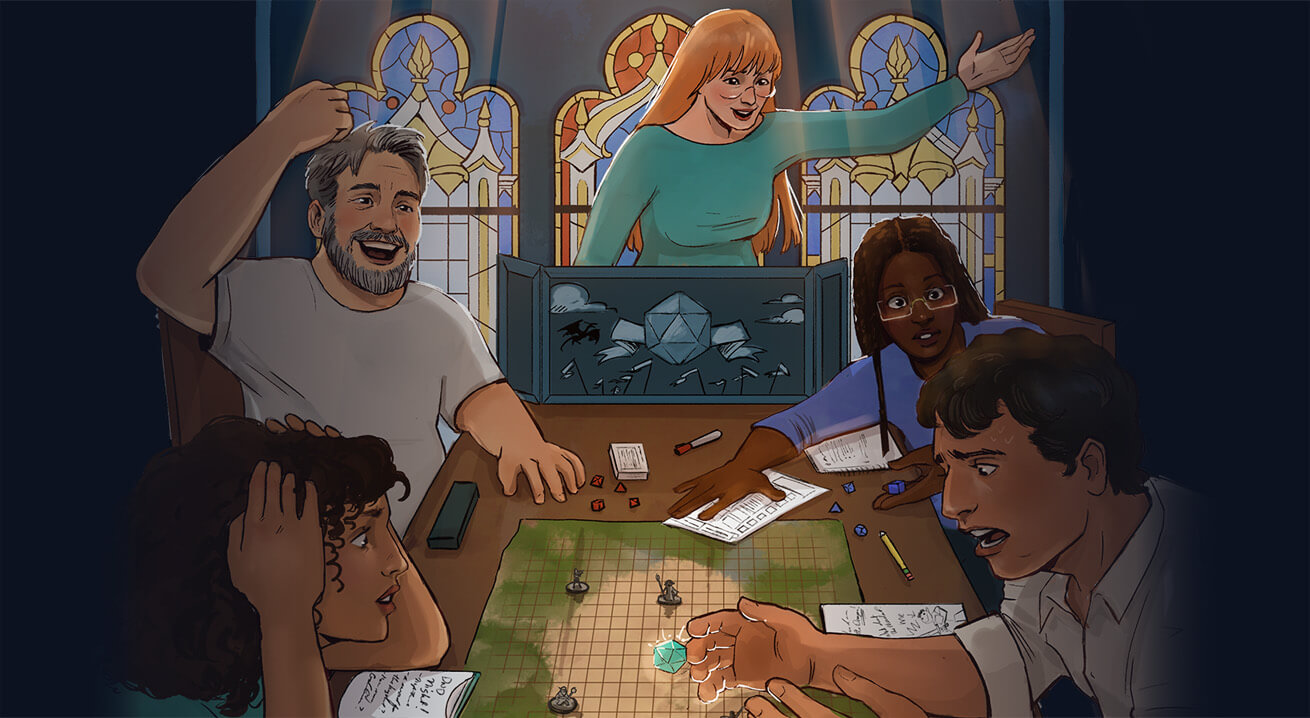
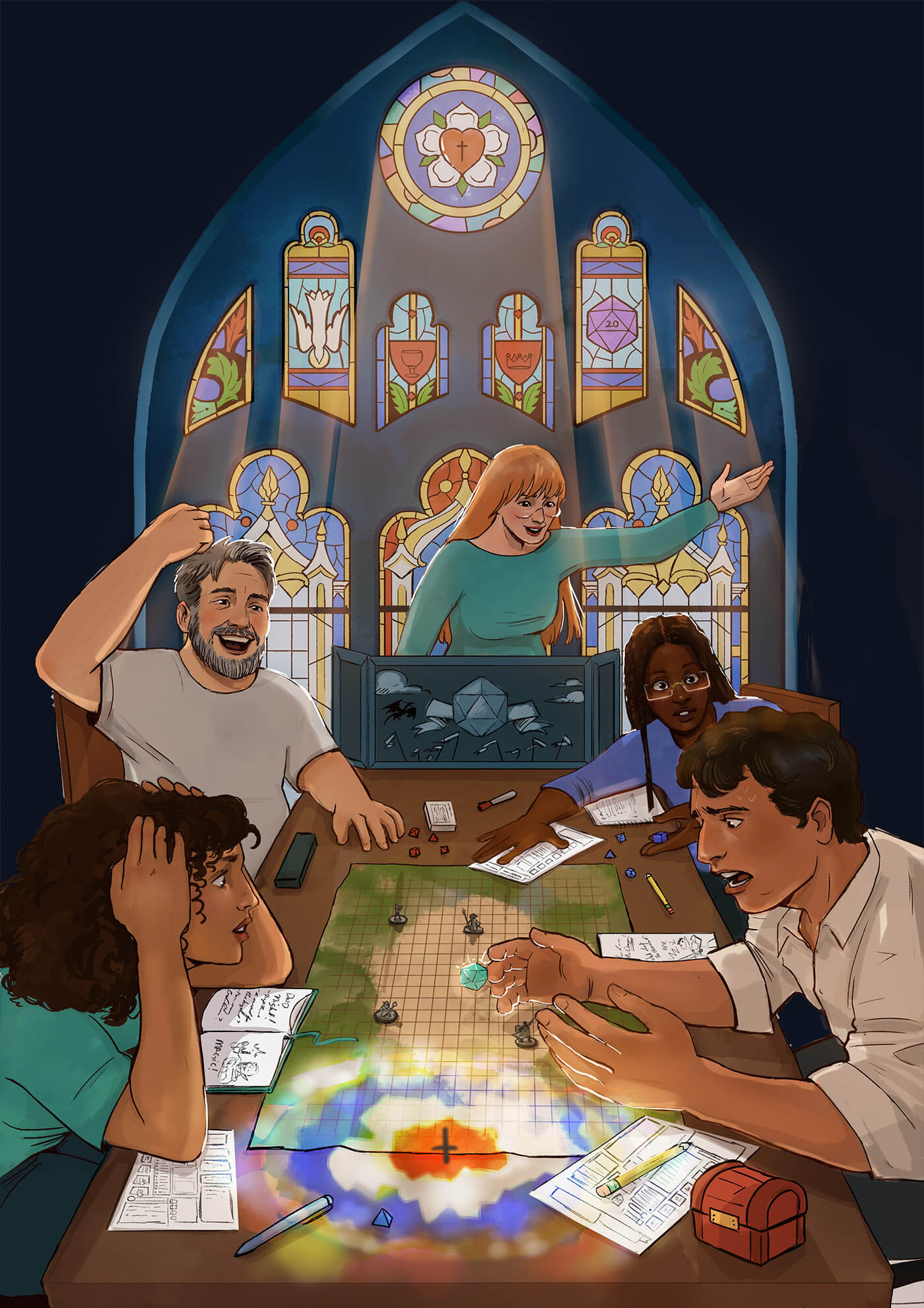




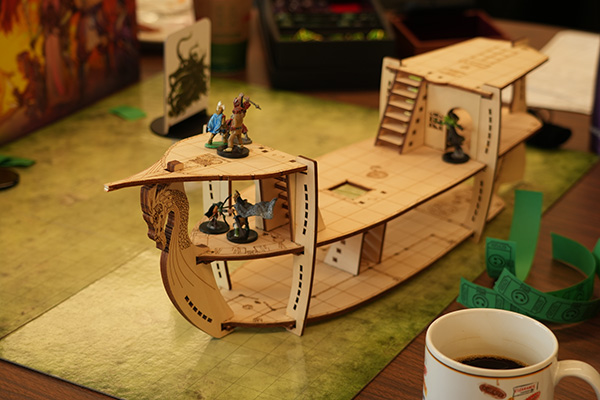





 This scene could be part of a game of Dungeons and Dragons (D&D), a tabletop roleplaying game that blends collaborative storytelling with strategy and chance. If you were playing D&D and the dungeon master (DM) leading your campaign presented this scenario to you, you would decide your character’s next action. For example, you might try to convince your friend to play the game with you right there. Your DM might then ask you to roll a 20-sided die to see how good your argument is. If you roll an 11 or above, you’ll be persuasive. If you roll a 10 or below, not so much.
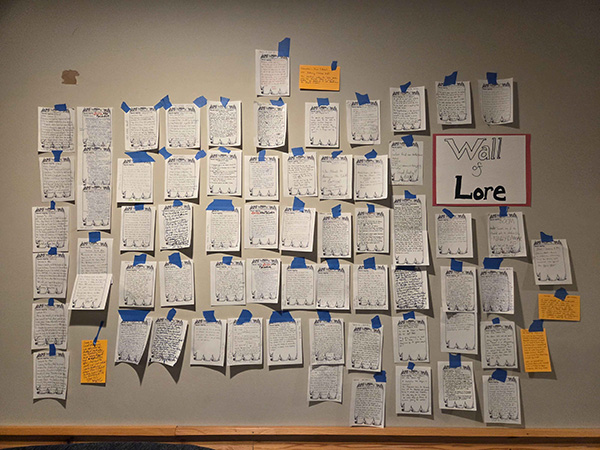
 Ben Loven, who serves as pastor of Our Savior Lutheran Church in Rochester, Minn., and as “steward of lore” on the Roll for Joy leadership team, also counts Philstrom as his first DM. Loven played D&D for the first time when he was invited to be part of the campaign among rural pastors. He soon became a DM, too, and began using D&D in his ministry. Loven now regularly leads games among adults and youth at Our Savior. During Sunday school, he gives students the opportunity to play through Bible stories as D&D games.