 Logout

In the northeastern corner of Oklahoma, at the end of the Trail of Tears, stands an enduring haven of hope.
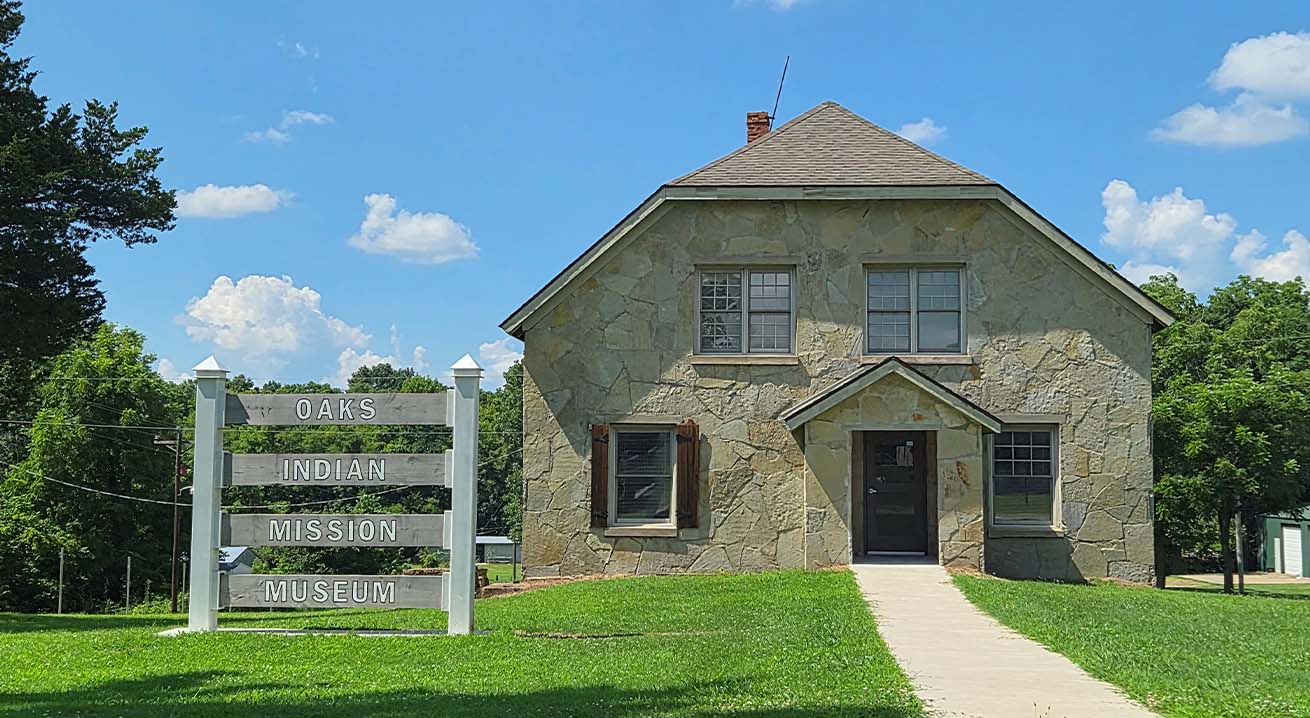
Oaks Indian Mission, a ministry of the ELCA, offers residential care for Native American children, support for local families of the Cherokee Nation and transitional housing for families of various backgrounds. Eben Ezer Lutheran Church, established in 1903, serves the mission and the Oaks community.
The 20-acre site also includes a museum commemorating the early contributions of Danish Lutherans and celebrating the ongoing evolution of the mission and the lives it touches.
This year marks the 100th anniversary of the mission’s children’s home, which provides food, shelter, clothing and education annually to roughly 50 boys, ages 7 to the upper teens, from more than a dozen tribes. The children, most of whom have been living in poverty, arrive at the home via placement by their guardian or tribe.
Additionally, for the last five years, Oaks Family Services Humanitarian Aid has supplied immigrant families, domestic violence survivors and people facing other challenges with food and fully furnished temporary housing on the Oaks campus.
“It’s such a healing place, with such a long history,” said Dan Cooper, the mission’s executive director. “It’s been 225 years of this ministry, helping people in need, children in need. Helping Native Americans is our history and is still very important to us, and I’m really pleased at what we are trying to do here by helping even more people.”
The mission’s history
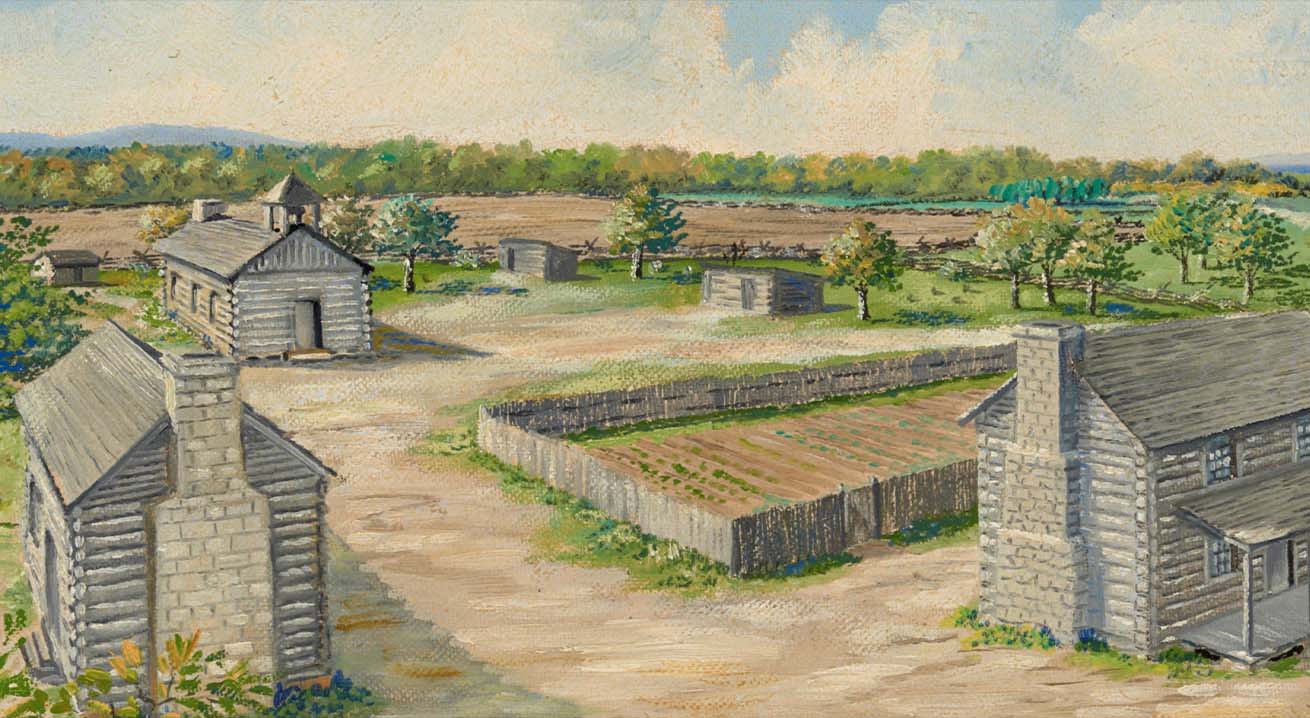
Twenty miles from the nearest grocery store and 6 miles from the closest gas station, Oaks traces its roots to a partnership between the Cherokee Nation and Moravian missionaries that led to the establishment of the Springplace (Ga.) Mission in 1801.
Moravian missionaries had emigrated from Europe in the 1700s to work among Native Americans in Georgia and the Carolinas. In the late 1830s, the Moravians at Springplace stood by the Cherokee people when the U.S. government rolled out its Indian Removal Act policies, whose purpose was relocating tribes in the Southeast to reservations west of the Mississippi River.
The missionaries chose to accompany the Cherokee on the brutal banishment that became known as the Trail of Tears. Exact numbers are unknown, but historians estimate that 16,000 Cherokee people were marched westward and 4,000 of them died of exposure, exhaustion, disease or starvation.
In all, the Indian removal policies resulted in about 95,000 Native Americans being driven from their homelands, and 15,000 deaths.
Seven hundred forty miles from its original location, Springplace Mission was reestablished in 1842 as New Springplace near the site of the current town of Oaks. The Moravians ultimately closed Oaks Indian Mission five decades later, but a Danish Lutheran, Niels Laurits Nielsen, stepped in to spearhead educational, spiritual and other forms of service to the local Cherokee people.
In 1902, the Moravians transferred the mission to the United Danish Evangelical Lutheran Church (UDELC). Often referred to as the Blair Church (it was launched in Blair, Neb., in 1884), the UDELC later became part of the American Lutheran Church and then the ELCA.
A story of hope
Against a historical backdrop of Christian complicity in the colonization, forced assimilation and cultural erasure of Native Americans, the story of Oaks Indian Mission illustrates what can happen through multicultural empathy and respect, said Ashley Cooper, Dan’s wife and the mission’s director of operations and development.
“Without our relationship with the Moravians and then the Danish Lutherans and other Lutherans, I wouldn’t exist, my family wouldn’t exist,” said Ashley, whose ancestors traveled the Trail of Tears. “The whole story of Oaks Indian Mission is tied to my family story and the legacy of Oaks helping Cherokee families. And now I get to do exactly the same thing: help people from other cultures.”
That help, of course, requires funding. With a monthly operating budget of $80,000, Dan Cooper sees fundraising as one of his foremost duties. “That money comes from all different states and churches,” he said.
The imprint of the Blair Church’s involvement remains strong. “In 1926, when the children’s home started, it really captured people’s imagination, and the Nebraska Synod and its congregations continue to be very supportive,” said John Mark Nielsen, a member of First Lutheran Church in Blair who serves on the Oaks Indian Mission board. “We’re so pleased to be celebrating the centennial of the children’s home and the dynamic, evolving impacts of the mission. This has been a long and positive relationship between the Cherokee Nation and other Native Americans and Christians.”
Ashley Cooper agreed, citing personal experience. “I understand other people’s struggles, the negative interactions between some Christians and Native Americans,” she said. “But for my family, it was a blessing, and it’s still a blessing, to this day.
“It’s the story of generations of Cherokee children who had nothing and found hope and family and community, of churches that are faithful in giving after more than two centuries, and of a faithful God who is still faithful and has never stopped working for Oaks Indian Mission.”