 Logout
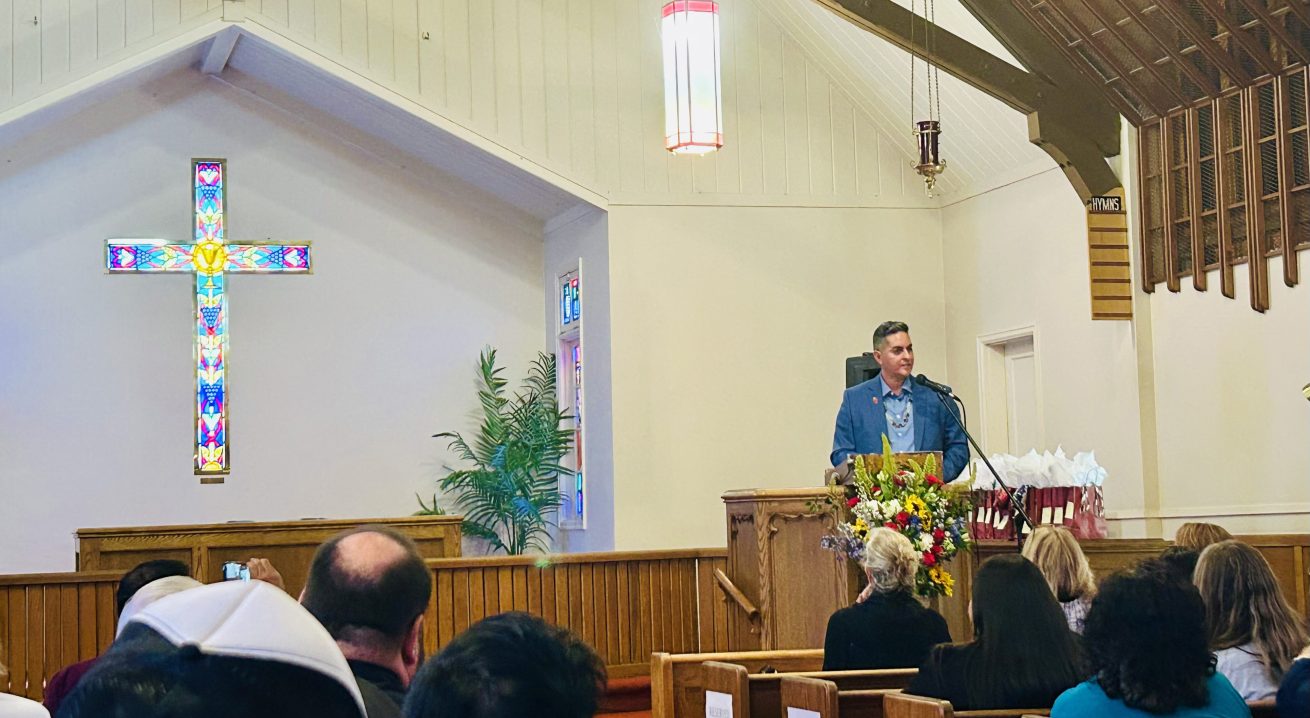
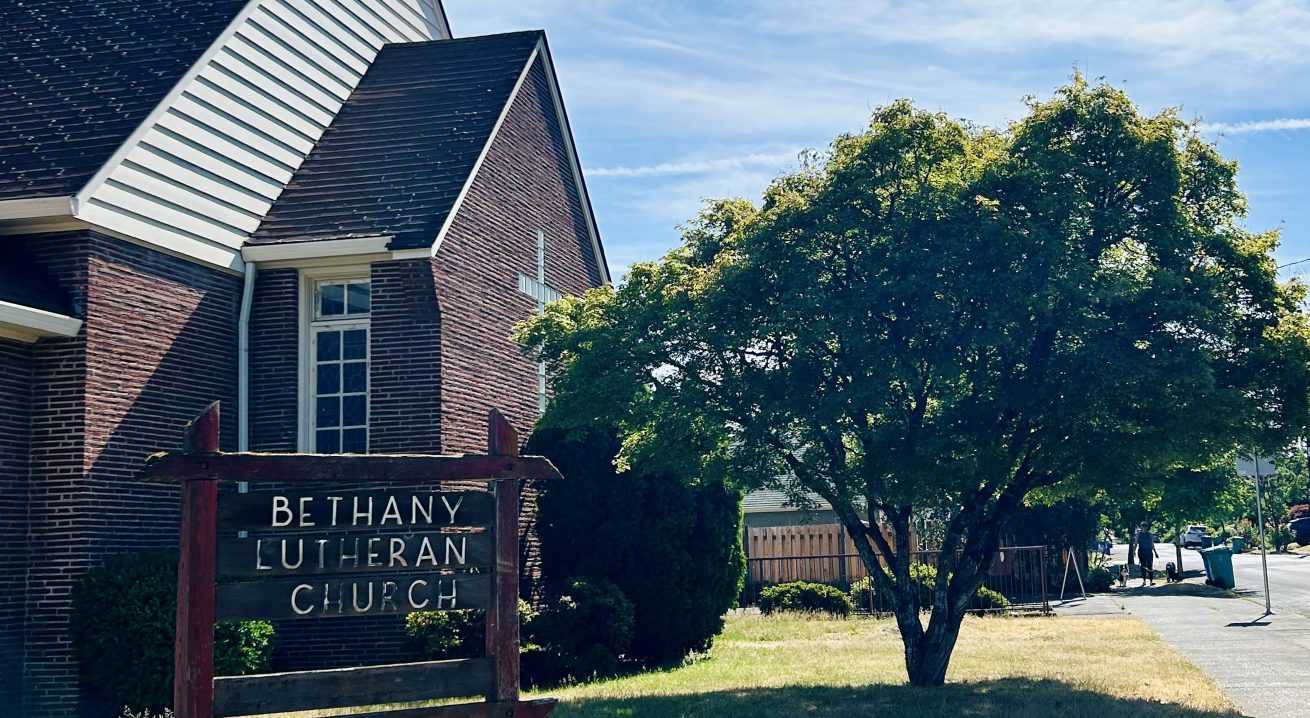
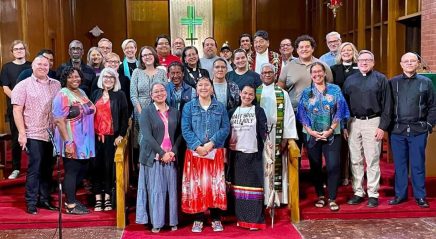
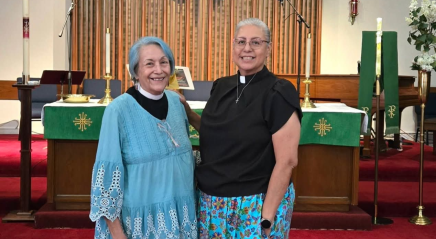
On June 24, leaders from the Oregon Synod and the Native American Youth and Family Center (NAYA) gathered in Northeast Portland to sign documents returning the land of the former Bethany Lutheran Church to Native stewardship.
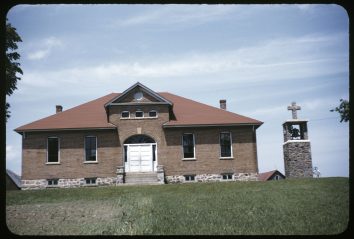
Like many congregations across the country, Bethany reached the end of its life as a worshiping community in its building. The closure brought grief and difficult decisions, but the property was entrusted to the Oregon Synod because the people of Bethany believed there would be life beyond themselves.
Over the past several years, the synod has been engaged in what it calls “land liberation,” a process that invites congregations to look more deeply at the history of the land they occupy and to reconsider assumptions about ownership and stewardship. In 2025, the Oregon Synod Assembly passed a resolution encouraging congregations and ministry sites to explore the “genealogy” of the land. Who first stewarded it? How did it come into church ownership? What histories, memories and stories does it hold?
Bishop Laurie Larson Caesar describes the work as an invitation to move beyond assumptions of ownership and toward deeper listening. “Sometimes our call is to let go,” she told those gathered before the signing.
The decision to transfer the Bethany property, which sits on land historically stewarded by Chinookan-speaking peoples, including the Clackamas, Kathlamet and Multnomah tribes, did not emerge in isolation. In 2022, the Oregon Synod and later the ELCA Churchwide Assembly overwhelmingly passed a memorial supporting land back efforts and encouraging concrete action beyond symbolic gestures. For many congregations, that journey begins with a land acknowledgment. The synod’s discernment around Bethany raised a deeper question: What comes after acknowledgment?
The answer, synod leaders concluded, required moving beyond words and into relationship.
To help guide the process, the synod worked closely with Indigenous advisers and formed the Land Liberation Team, which helped steward conversations around possible futures for the property. Rather than approaching the work as a transaction, leaders sought to discern what repair, reconciliation and accompaniment might look like in practice.
At the transfer ceremony, Larson Caesar offered perhaps the clearest articulation of that conviction: “When something is stolen and it is returned, it is not a gift. It is a return.”
A commitment to the community
The property’s new steward, NAYA, has spent decades responding to the needs of Portland’s urban Native community.
Speaking at the ceremony, state Rep. Tawna Sanchez, NAYA’s director of family services, reflected on that history and on the organization’s long-standing commitment to responding to community needs.
NAYA was founded in 1974 by parents and volunteers concerned about the educational success of Native youth and low graduation rates. Today the organization has grown into one of the region’s leading Native-led service providers, offering housing, family services, education, workforce development and cultural programming. NAYA is also leading the development of the Indigenous Cultural Corridor in Northeast Portland, envisioned as a network of Native housing, cultural spaces, public art and community investment.
Repeatedly throughout the event, NAYA leaders emphasized that their work begins by listening to the community and responding accordingly. The proposed future of the Bethany site reflects that same approach.
“This was an existing relationship,” he said. “And this will now be a deeper relationship.”
While plans have not been finalized, NAYA hopes to develop affordable intergenerational and elder housing on the property. “What does it mean to age in place?” Sanchez asked. “That is the future.”
Oscar Arana, NAYA’s chief executive officer, connected the land transfer to two parallel journeys. In 2016, the ELCA publicly repudiated the Doctrine of Discovery. The following year, NAYA began envisioning its Indigenous Cultural Corridor. “These visions moved forward on separate paths,” Arana said, “until connections and relationships brought them together.”
For both organizations, relationship remains the key word. As Paul Stromberg, vice president of the Oregon Synod, observed, the partnership with NAYA did not begin with the transfer of land. “This was an existing relationship,” he said. “And this will now be a deeper relationship.”
The significance of the Bethany land return extends beyond Portland. Leaders from both organizations expressed hope that the process itself might serve as a model for the wider church.
A similar process took place in Minneapolis, when Our Saviour Lutheran Church in south Minneapolis built a relationship with the Indigenous Protector Movement. In May, three years into the relationship, the church transferred an adjacent double lot and triplex house to the Indigenous-led group, which focuses on advocacy work and community safety.
The Oregon Synod has already committed itself to helping congregations learn the histories of their land and build relationships with Indigenous communities. The goal is not to prescribe a single outcome, but to cultivate a posture of listening, humility and discernment.
Reflecting on the synod’s work, Stromberg noted that leaders learned “the difference between deciding and discerning.”
That distinction may ultimately be one of the most important lessons of the Bethany story.
The congregation entrusted their future to a vision larger than itself, believing there could be life beyond their own ministry. Now, as plans for housing, community space and continued partnership begin to take shape, a new chapter is being written on land that has carried many stories.
If the synod’s experience offers a lesson for the wider church, it may be this: faithful stewardship begins by listening to what the Spirit is already doing and having the courage to follow where it leads.