 Logout
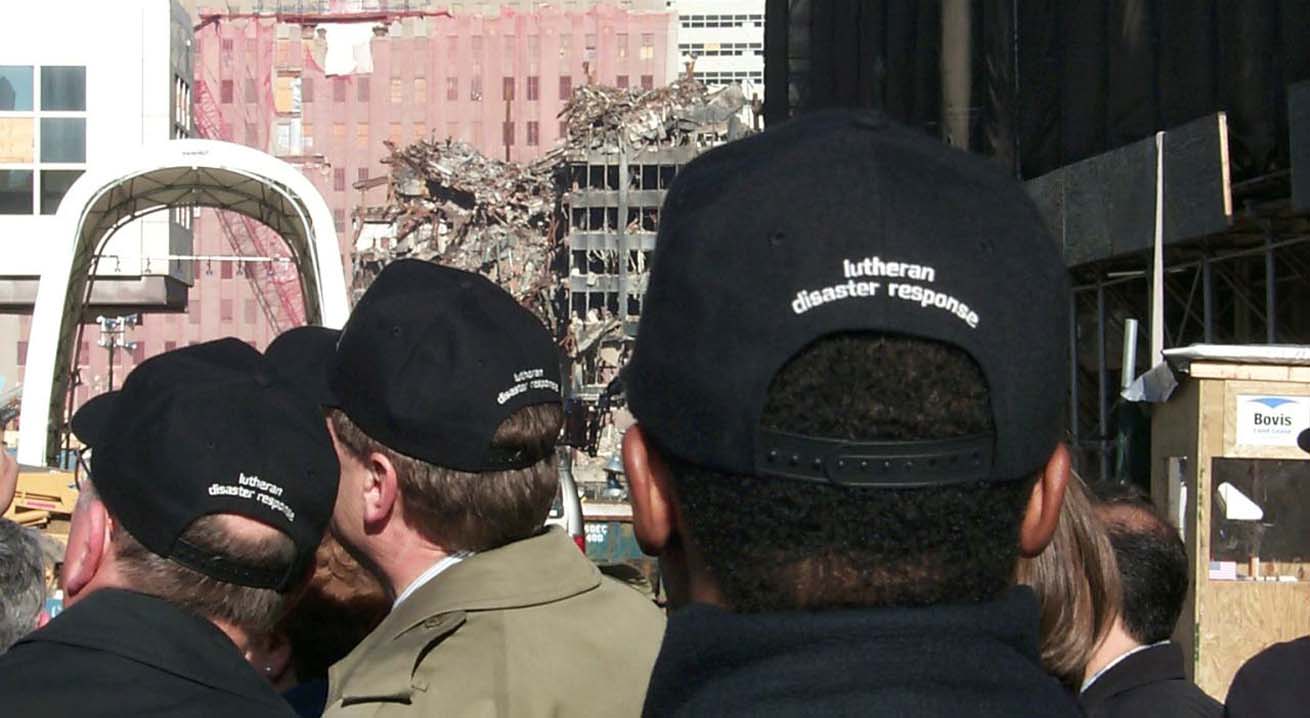
Twenty-five years ago, on Sept. 11, 2001, our lives as Americans were radically changed. The destruction of the World Trade Center in New York City, the attack on the Pentagon near Arlington, Va., and the crash of Flight 93 near Shanksville, Pa., are among the most significant events in many of our lives. The needs of those directly affected by the attacks (lost loved ones, traumatized children, lost income, people harmed or terrified), as well as all who felt the ripple effects, were incalculable.
Death totals were higher than the populations of many of the towns in which our congregations are located. The Lutheran Counseling Center in the New York metropolitan area received 100 calls per day for emotional and spiritual help. Nine Lutheran social ministry organizations were part of the response. A new agency, Lutheran Disaster Response (LDR) of New York, was established to focus on coordinating the response. As in every disaster, new needs arose as the recovery progressed.
By the end of 2001, nearly $8 million was given directly to the ELCA and the Lutheran Church–Missouri Synod to help meet those needs. The fraternal benefit societies Aid Association for Lutherans and Lutheran Brotherhood (which merged to become Thrivent in 2002) provided an estimated $10.7 million toward a coordinated Lutheran response, with each contributing $1 million of corporate funds. LDR granted $2.7 million for specific needs in New York, New Jersey and Washington, D.C.
By the end of 2002, LDR granted to the three responding areas a total of $6.8 million, and a total of $9.5 million by the end of 2003.
Following that, LDR-New York continued to provide services and coordinate multiple organizations to assist unmet needs until September 2008.
The Lutheran response in New York
At the height of Lutherans’ New York response, over 137 separate programs were operational. Working with additional interfaith funding, private organizations and international donations, the total income for this Lutheran response neared $27 million. Long after other agencies and denominations closed their offices, LDR continued its ministries. Lutherans were among the first to respond and the last to leave.
The initial response components included offering counseling for children, adults and families directly impacted; providing for the emergency needs of individuals and families; supporting the 21,000 students in Lutheran schools (47 children lost primary caregivers), including counseling and tuition assistance for families who lost their livelihood; and ministering to ground zero rescue workers.
First-year response also included case management for unmet needs of the bereaved and unemployed; individual emergency assistance; respite care for clergy, rostered ministers and school staff; and long-term training of clergy for trauma response. Materials were prepared for Camp New Ground, a day camp offered through Lutheran congregations and schools for children who experienced trauma. Staff also prepared and distributed recovery materials; supported interfaith initiatives in New York, New Jersey and Washington, D.C.; backed Church World Service’s multidenominational programs; and advocated for immigrants and undocumented people.
Lutherans were among the first to respond and the last to leave.
In the second year of the response, new components were added. These included the coordination of dozens of organizations to provide assistance for unmet needs; the development of Project LIFE, a case-management program that helped people access available assistance; 38 Camp New Ground day camps; expanded individual and group counseling services; caregiver training and respite care; and training for congregational ministry teams to provide care in their communities.
In addition, services provided included case management to distribute grants from nonprofit organizations to the economically impacted; care for clergy and schoolteachers who provided on-the-ground ministry; direct support for victims’ families; counseling for people traumatized by the disaster; and assistance to undocumented workers and others who lost employment due to the disaster.
The Lutheran response in New Jersey and Washington, D.C.
More than 700 commuters from New Jersey died when the World Trade Center towers collapsed. In response, Lutherans provided support for leaders and individuals and assistance for unmet needs (in partnership with 128 individuals and agencies). A post-traumatic stress counseling network of 15 behavioral healthcare agencies and 15 congregations provided bereavement support groups, grief support, economic assistance, disaster preparedness and immigration support.
The 9/11 attack on the Pentagon resulted in the loss of lives, neighbors and colleagues, and jobs and income. Children in Lutheran schools were also affected. At one school of 200 students located near the Pentagon, children on the playground heard the impact of the plane, saw the fire and heard the sirens. LDR offered them extensive long-term trauma counseling. It also ministered to local entry-level workers, immigrants and new citizens affected by economic issues.
God’s enfolding arms and healing hands
Sept. 11, 2001, brings to mind images of dust-covered firefighters climbing stairs to rescue people from the World Trade Center towers and exhausted emergency workers climbing huge piles of rubble searching for survivors. But there are also images of pastors and chaplains offering words of hope or consolation to stunned and shocked survivors. There are teachers calming upset students. There are congregations gathering for worship and neighbors praying with neighbors. There are piles of letters, offers of help and generous donations.
Where was God in all this? I believe God was in the ashes and the dust, in the destruction and the blood, reaching out in sorrow and compassion as our hands reached out to help. We who are in Christ are people of hope, changed by a resurrected Lord who is always present with God’s people. Where was God? God was there—and God is still there.
From the moment the first plane struck, the church responded as the church. And that response continued for the long haul. We, the church, do not come empty-handed to real-life situations, even those as terrible and global as 9/11. We are blessed to be called to serve in such challenging times. Through donations and prayers, Lutherans around the world who weren’t on the ground in the affected areas were there too—along with the firefighters, the recovery workers, the chaplains, the pastors, the counselors and the victims’ families.
As in every disaster, those who suffer are supported by God’s healing grace. Those who respond are God’s enfolding arms and healing hands, providing comfort and renewal by word and deed.