 Logout
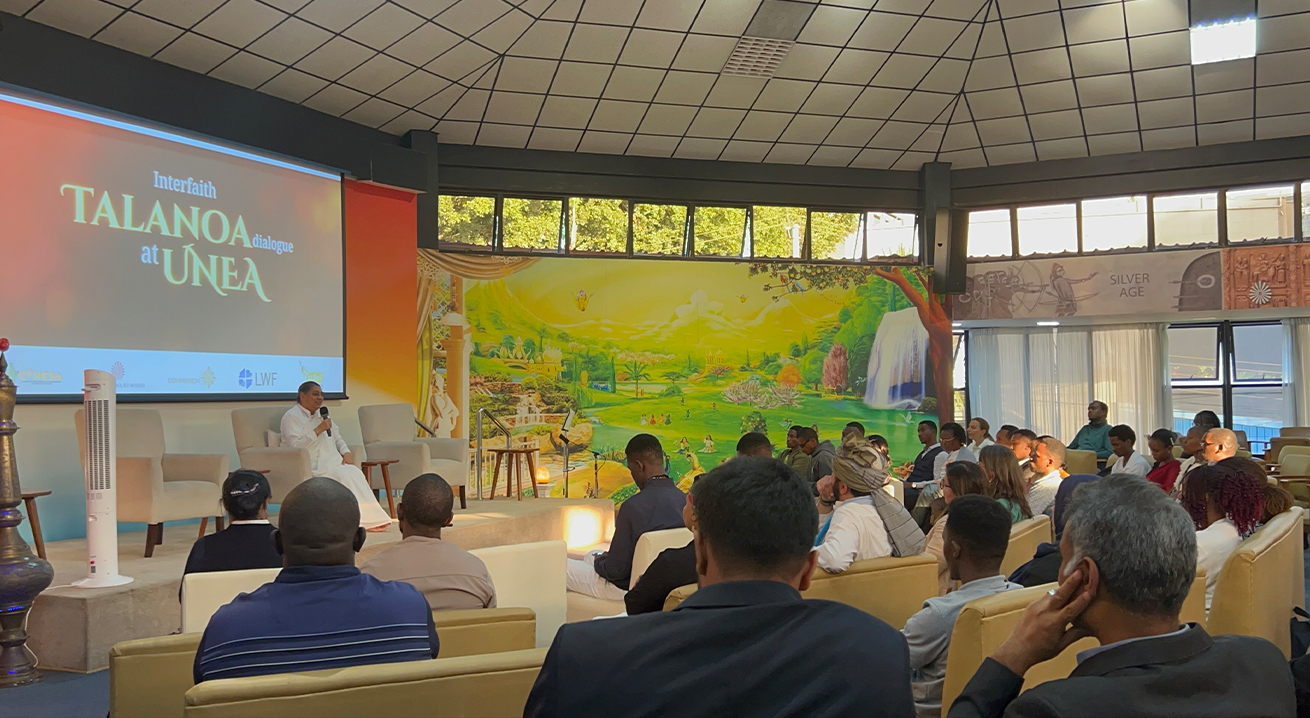


Faith actors have a critical role to play in grounding global action in ethics, justice and the lived realities of vulnerable communities, particularly those that are most affected by environmental degradation.
“Within communities, [faith actors] offer protection to marginalized groups and to people who advocate for the right to protect the planet but are often misrepresented as troublemakers,” said Flawa Malle, a youth leader from the Evangelical Lutheran Church in Tanzania.
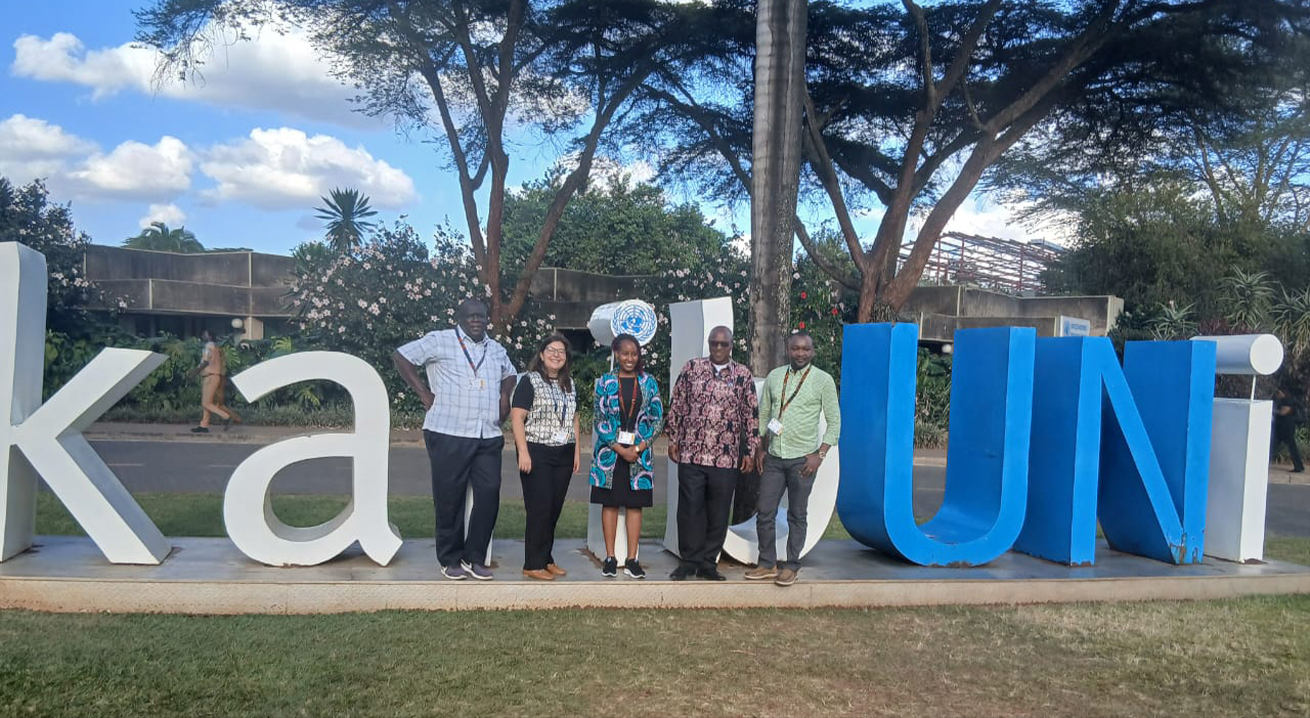
Malle was reflecting on her participation in the seventh session of the U.N. Environment Assembly (UNEA-7) last December as a member of the Lutheran World Federation (LWF) delegation. She said the LWF and other faith-based organizations at the global conference emphasized their responsibility in advocating for communities who own and safeguard resources and those who challenge harmful narratives against them. “Caring for the environment begins with protecting the people who defend it,” she said.
UNEA-7 met under the theme “Advancing Sustainable Solutions for a Resilient Planet.” During the conference, the LWF—together with the Catholic Youth Network for Environmental Sustainability in Africa, the Southern African Faith Communities’ Environment Institute, the Anglican Communion, and Brahma Kumaris—hosted an event bringing together 80 faith leaders.
Using the Talanoa dialogue methodology—a concept employed in Fiji and the Pacific to encourage inclusive, participatory and transparent dialogue—participants reflected on the thematic clusters of the U.N. conference. This reflection was done through three guiding questions: Where are we? Where do we want to go? How do we get there? Discussions focused on values, ethics, existing entry points for faith actors within UNEA, and opportunities for stronger collective action and coordination.
The faith leaders reflected on their engagement in multilateral environmental processes, underscoring the importance of people-centered approaches, ethical leadership and meaningful inclusion within global environmental governance. They highlighted both the potential of faith-based engagement to influence policy and practice, and the ongoing challenges of translating international commitments into tangible change at the community level.
Shared responsibility
Collins Omondi, advocacy officer for protection and social cohesion in the LWF Kenya-Somalia country program, said confronting environmental and climate crises requires courage, cooperation and respect for all forms of knowledge.
“From restoring transboundary waters to elevating Indigenous wisdom, empowering communities and strengthening multilateral action, we are reminded that resilience is a shared responsibility,” he said. “The future we want depends on the choices we make now and on our collective commitment to protect the planet that sustains us.”
For the first time at UNEA, the LWF co-hosted a side event with ecumenical partners under the theme “Ethical Pathways to a Just and Resilient Planet.” Panelists demonstrated how faith-based organizations strengthen community resilience in the face of climate-driven and environmental disruption. They discussed initiatives that address the link between environmental and social crises, advocacy for the protection and inclusion of climate-displaced people in development planning, and ethical leadership and justice-centered policies.
At the side event, Jean de Marie Kabunga, LWF project manager in Chad, shared how local approaches are yielding tangible results through a climate adaptation project implemented by the LWF country program across Cameroon and Chad. “The project has strengthened community resilience by increasing household incomes, restoring degraded soils through nature-based solutions and protecting local ecosystems,” he said. “It has enhanced human security and advanced women’s empowerment through conflict-resolution efforts.”
“Confronting environmental and climate crises requires courage, cooperation and respect for all forms of knowledge.”
Elena Cedillo, LWF program executive for climate justice, noted that UNEA-7 highlighted how people-centered and nature-based approaches can mitigate the impact of climate change while protecting biodiversity loss and land degradation, particularly in developing countries.
The assembly adopted resolutions on various topics including coral reefs, wildfires, glaciers and the broader cryosphere, coherence and synergies, artificial intelligence, youth participation, minerals and metals, and chemicals and waste.
At the same time, Cedillo said, several resolutions were “weakened” during negotiations. “Language on binding commitments and timelines was often diluted to reach consensus,” she said, “and persistent disagreements over responsibility, equity and means of implementation limited stronger accountability.
“Translating resolutions into national action remains a major challenge, as many outcomes rely on voluntary measures without clear monitoring or enforcement.”
This story originally appeared at lutheranworld.org.