 Logout


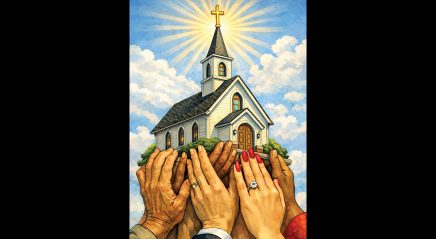
Editor’s note: After publication, Living Lutheran learned that the fall issue cover image for this story included AI-generated imagery. Living Lutheran takes a strong stance against knowingly using AI-generated content of any form. We acknowledge mistakes happen and have implemented new techniques to detect possible AI-generated content to minimize the chance this happens again. We regret this image made it onto the cover and have removed it from the online version of the story.
In a world that feels increasingly divided, the power of connection has become more important than ever. That was the message Presiding Bishop Yehiel Curry brought to this year’s ELCA synod assemblies, emphasizing how connection—between people, churches and communities—allows us to bridge divides and overcome challenges to do God’s work with our hands.
“We are a connected church,” Curry says in his 2026 synod assembly video. “What does it mean to be a connected church? For me, it means understanding that the ELCA boldly lives out its mission in God’s world through our three expressions: congregations, synods and the churchwide organization.
“This is who we are, and this is what we are called to be: a connected church that walks together, shows up for one another and trusts that God is always at work within us. God is constantly weaving us together for the sake of the world. We are a blessing so that we might be a blessing to others.”
The idea of connectedness has shaped Curry’s approach to leadership and his vision for the church, creating a shared sense of purpose and commitment that spans its expressions and their ministry.
“Connectedness is not a program or a slogan; it is a way of being church that recognizes our shared calling and our shared responsibility,” he wrote in a letter to synod assemblies. “This is not my church. It is yours. It is ours, together.”
That spirit of connectedness is already at work across the ELCA in myriad ways. From partnerships between congregations and community organizations to global exchanges that bring the good news and helping hand of God to communities in other nations, Lutherans are living this ethos of a connected church. And that connectedness has allowed them to amplify the work of God in everything they do.
Feeding connection
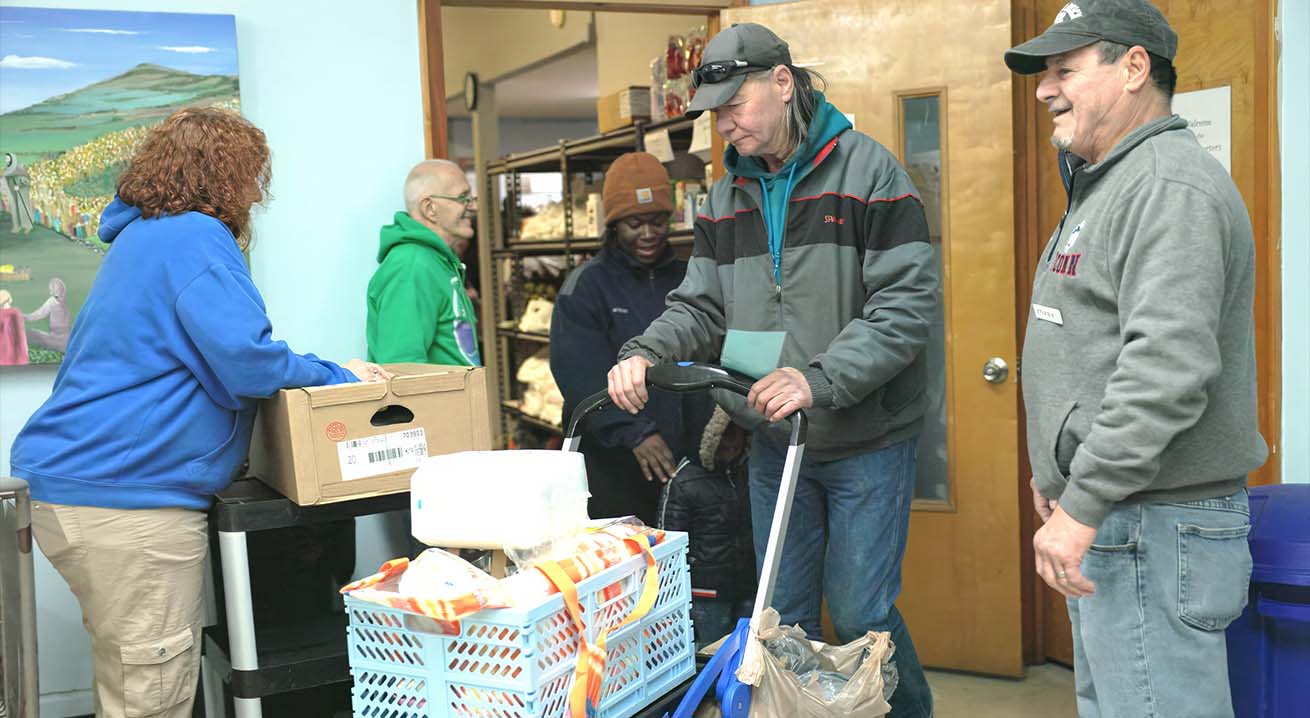
At Shepherd of the Sea Lutheran Church in Murrells Inlet, S.C., dozens of people line up three days a week to shop for groceries. A choice-model operation, the congregation’s Carol Hummel Food Pantry doesn’t provide a prepackaged box but allows those it helps to select their own items. It’s a small difference that makes a huge impact on the people it feeds.
“You have the dignity of choosing your own food, based on your family and household size,” said Brad Bellah, a pastor of Shepherd of the Sea. “And we were committed to expanding that model.”
The food pantry started as a partnership during the early 1980s with Mobile Meals of the Grand Strand, a meal delivery nonprofit similar to Meals on Wheels. Shepherd of the Sea served as host congregation for the operation, assisting with food distribution in the area. That program expanded during the 1990s to include providing prepackaged food bags to unhoused people in the area.
As the operation grew, Bellah said, Shepherd of the Sea began looking for ways to maximize its resources to have a greater impact on the communities it served. At the time, donations from the congregation funded food purchases at traditional grocery stores, which offered no discount to nonprofits.
“God wants us to depend on one another.”
“We could feed so many more people so much more food,” he said. “With that comes accountability and facility inspections, which some people pushed back on. But I said, ‘Why would that matter? We want to do this the right way.’”
A solution arrived in the form of Lowcountry Food Bank, a nonprofit in eastern South Carolina. Through that partnership, Shepherd of the Sea’s food pantry expanded from a few shelves of canned goods in the fellowship hall to a massive operation that last year served more than 45,000 people and distributed more than 460,000 pounds of food.
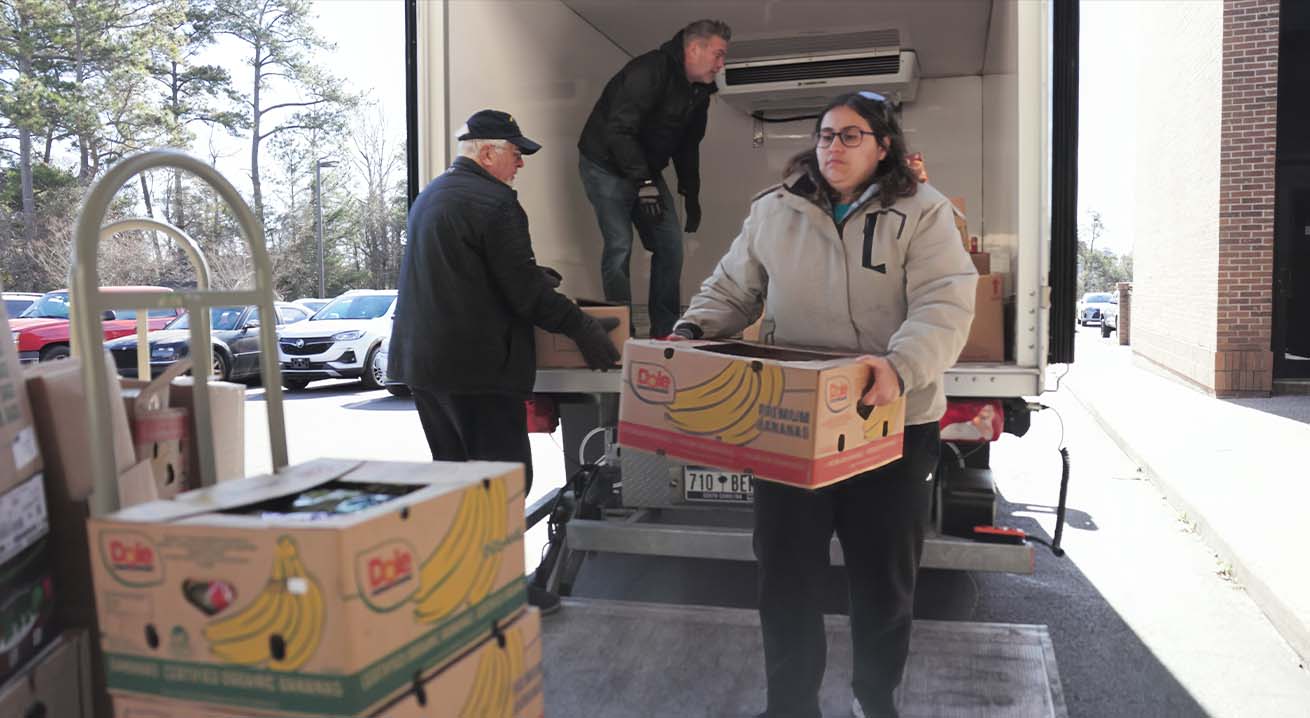
Along with the resources already provided by the congregation’s pantry and kitchen, Shepherd of the Sea obtained grant funding to purchase a refrigerated truck that allows it to transport large quantities of fresh food.
“We received two different grants from the ELCA along the way to be able to expand these ministries to serve,” Bellah said.
A new opportunity for expansion came through a partnership with Trinity Lutheran Church in nearby Georgetown, S.C. Recently impacted by several large business closings, Georgetown saw an uptick in those struggling to put food on the table due to unexpected job loss and rising grocery prices. Shepherd of the Sea operates a quarterly food pantry at Trinity using the same choice model.
Bellah said that Shepherd of the Sea’s partnerships, not only with Trinity but also with the ELCA and community groups such as the Lowcountry Food Bank, testify to the power of connection and what it can make possible.
“God wants us to depend on one another,” he said. “It’s God’s church being God’s church in the community. And isn’t that what we’re called to be?”
Facilitating connection
Growing up, Alex Aivars forged a strong faith foundation at another Trinity Lutheran Church, this one in Kalamazoo, Mich. “My family was very involved,” he said. “We attended church every Sunday. I fondly remember attending Sunday school classes and middle and high school youth group. I was also confirmed there.”
That connection stayed with him into adulthood as he pursued a career in web development. “I looked around for other churches to attend but eventually came back to Trinity,” he said. “A little while after I returned, I was a part of the founding of a young-adult group that grew to have a monthly potluck and Bible study.”
While he was working as a web developer at Western Michigan University, Aivars said, his faith deepened and evolved in a way he didn’t expect.
“I went to a Gay Christian Network conference, where I got my concrete call to ministry,” he said. “I hadn’t really thought about ministry before, but the last night of the conference, it really hit me.”
Aivars said he sat with that feeling for a few days before consulting with his pastors. “As I was discerning a call to ministry, Trinity helped guide me through the candidacy process.” The community continued to walk with him through the lasting connection they’d made. Eighteen months later, Aivars attended a discernment retreat with his synod and made the decision to go to seminary.
“It’s all about open communication.”
Aivars enrolled at the Lutheran School of Theology at Chicago, partly because of its committed affirmation of LGBTQIA+ students, and quit his job to pursue seminary studies full time. Though he had a part-time job, Aivars needed help to pay his tuition and new living expenses. Grants from his synod and the churchwide organization helped offset some of his costs, and the rest were covered by student loans.
Upon graduation, Aivars began his first call, as a part-time pastor of St. Stephen Lutheran in Lansing, Mich. His synod and the churchwide organization continued to support him with grants that eventually paid off his loans.
“Getting those grants every year to pay down my debt really helped,” he said. “I’m now seven years into ordained ministry, and my student loans are all paid off. That opens up my financial future, so I can do things like start saving for a house.”
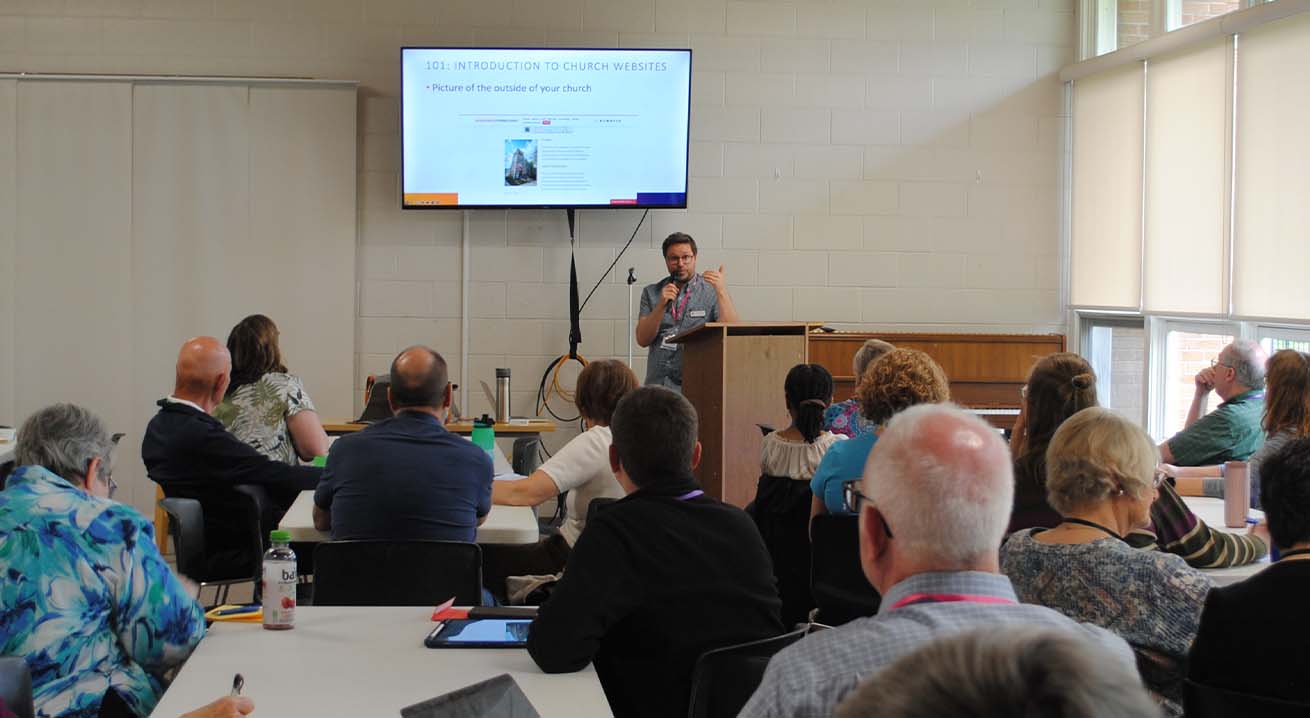
Today Aivars has paired his calling to ministry with his technological expertise, serving as director of technology for the North/West Lower Michigan Synod. He finds that his experience as a pastor gives him insight into what churches need from technology, which an outside provider might not fully understand.
“I have the perspective of being in the parish and working to update the website, setting up the livestream,” he said. “I’ve been in it, and I know what pastors go through, especially if you’re in a small parish.”
Aivars is setting up a technology team within the synod to offer greater support for congregations, and he believes its work will help create connection both online and offline. “It’s all about open communication,” he said.
Global connection
More than a century ago, Lutheran missionaries traveled from the United States to the Central African Republic. Since its inception, the ELCA has maintained a relationship with the country and others in Africa, and today the Western North Dakota Synod maintains a companion-synod relationship with the Evangelical Lutheran Church of the Central African Republic (ELC-CAR).
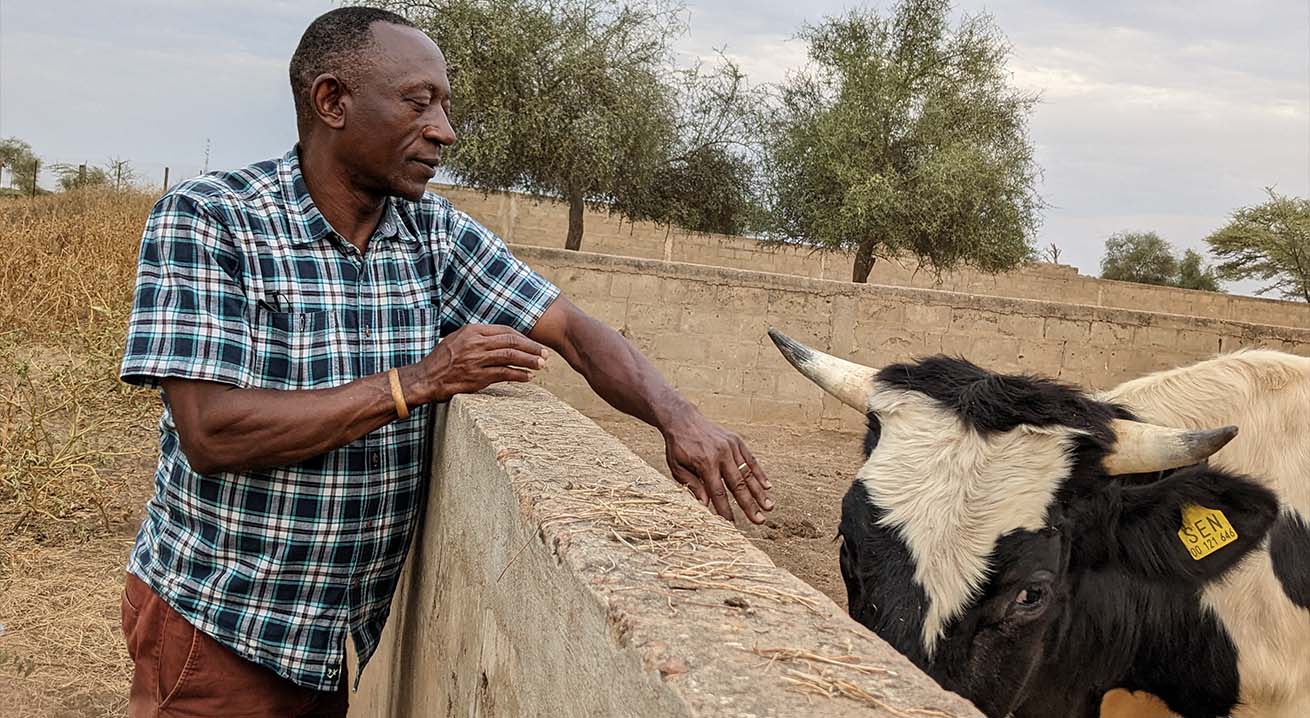
Over the years, that relationship has deepened through boots-on-the-ground mission work. Willie Langdji, ELCA regional representative for West and Central Africa, has played a major role in that effort. Based in Cameroon, Langdji works closely with ELC-CAR congregations in the region as well as their counterparts in the United States, and he said that many threads connect those U.S. Lutherans to their African siblings.
“That connection is done in many different ways, and one of them is just being there,” he said. “Relationships are very important in this region, [especially] person-to-person relationships. Your being there puts a real face to that relationship.”
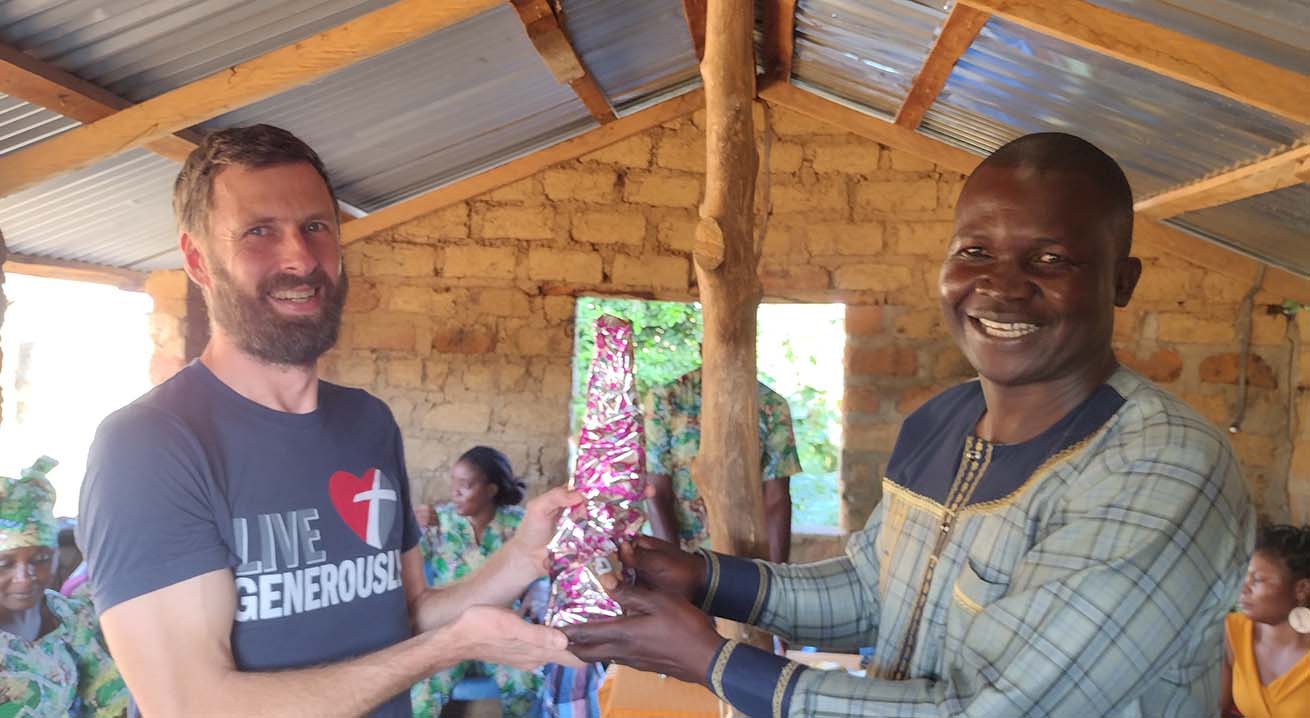
Matthew Nygard, financial specialist for the synod, knows that well. Nygard has traveled to Cameroon and the Central African Republic for mission work, and in 2023, he joined a group that included his father—ELCA missionary Mark Nygard—and Craig Schweitzer, now executive director for the Christian Community and Leadership unit, on a visit to the Central African Republic to celebrate the centennial of the global partnership. Nygard said spending time in Africa further solidified his connection to Lutherans there and the communities they serve.
“To see the vibrancy of the church there and the amazing leadership they have, and to visit the congregations—it was amazing, it was extremely joyous,” he said. “People who don’t seem to have anywhere near the means that we have, they have so much thankfulness and praise. They are just filled with life through their faith and the gospel.”
“If we’re going to live out of faith, getting outside the doors of our church is essential for us to remain vital and committed.”
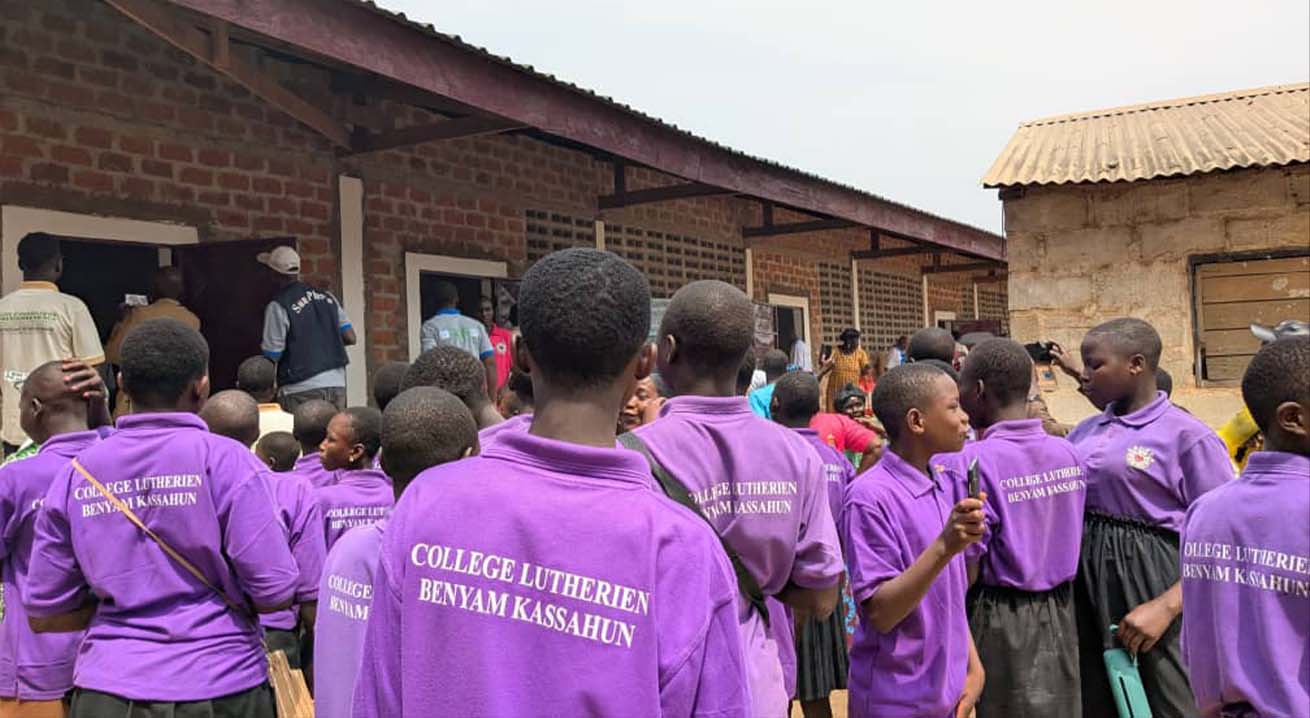
The companion-synod relationship between the Western North Dakota Synod and the ELC-CAR has served as a catalyst for positive change across the Central African Republic. In recent years, the church has supported a variety of projects in the region, ranging from clean-water packaging to the opening of a high school in a remote area not served by government-funded educational resources.
“The church has been running primary schools in very remote communities,” Langdji said. “It is very difficult to access, and nobody goes there—the government doesn’t go there, the other big [nongovernmental organizations] cannot go there. But the church goes there because that’s where the need is.”
Langdji said that once those students finished sixth grade, there was no school where they could continue their education. So in partnership with the ELCA, companion synods in the United States and congregations in the region, the first private Protestant high school in the nation opened to serve students who would not otherwise receive secondary education.
When Langdji was growing up in Africa, he said, his community modeled the meaning of connection every day, and he gets that same feeling from his role with the ELCA. “I grew up in a community where communal life is so important, where everything is done together,” he said. “Parents take care of the kids—one kid is everybody’s kid. And I feel such an important connection to my faith journey when I’m part of a community.
“I learn from the community, and people come to me and learn things from me. That sharing has been a very enriching experience for me over these years.”
Nygard echoed that sentiment. He found that the partnerships in Africa embodied the spirit of a connected church and illustrated how the ELCA’s three expressions can work together to do God’s work, no matter where it needs to be done.
“When we live into our baptism, we realize that we don’t have a choice whether we reach out and help our neighbor, even if our neighbor is across the world—we have to respond to that need,” Nygard said. “If we’re going to live out of faith, getting outside the doors of our church is essential to that, [in order] for us to remain vital and committed.”
Study guide
Download a free study guide for this article.