 Logout
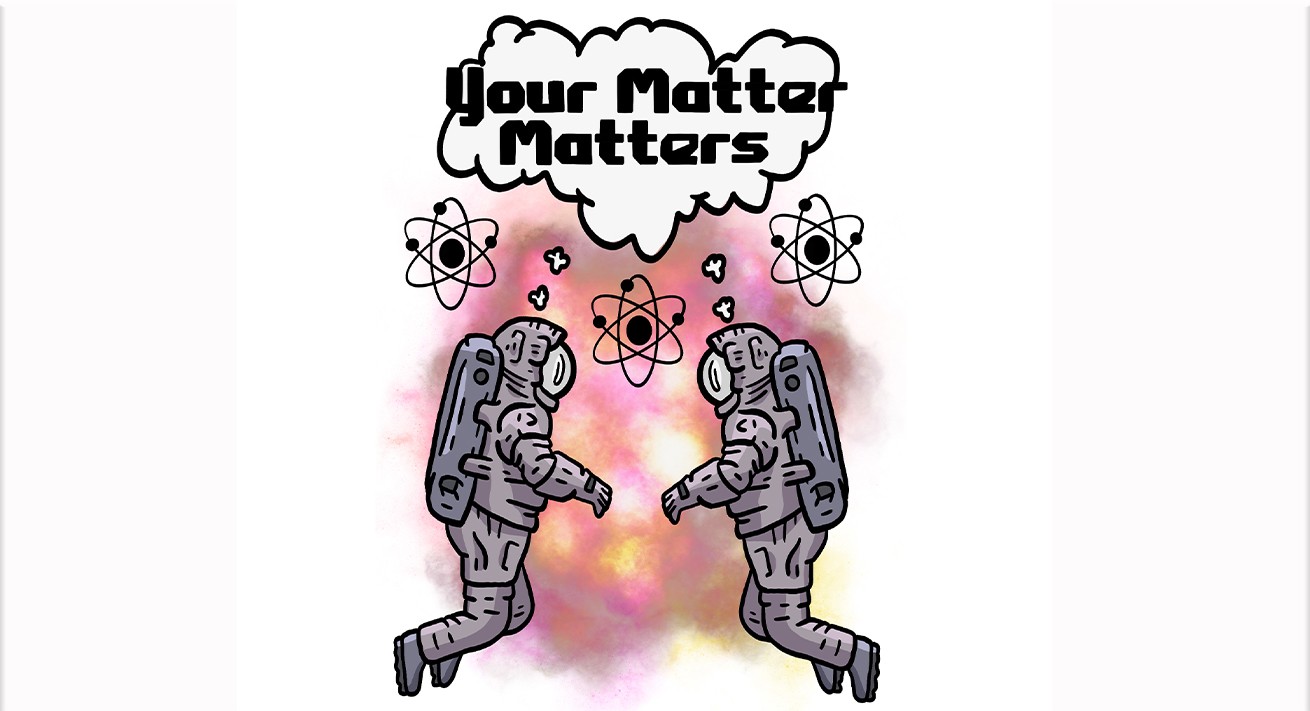
How can faith and science move beyond conflict and into meaningful conversation? This was the question ELCA pastors Will Rose and Thomas Johnston were pondering when they created the podcast Your Matter Matters.
Launched in January with funding from the North Carolina Synod, Your Matter Matters explores the nuanced relationship between faith and science, emphasizing the importance of dialogue rather than having to choose between the two. Hosted by Rose, a pastor of Holy Trinity Lutheran Church in Chapel Hill, N.C., and Johnston, pastor of St. James Lutheran Church in Rockwell, N.C., the podcast was developed as a resource for discussion in small-group settings, Sunday school classes and community dialogue.
In the show’s first season, the co-hosts speak with experts, including scientists, theologians and fellow clergy and leaders, and address questions related to topics such as evolution, cosmology, artificial intelligence, pain and suffering, and healthcare. Living Lutheran interviewed Rose and Johnston by email about the making of the podcast.
Living Lutheran: How did you decide to start Your Matter Matters?
Johnston: I spend most of my time in my car. Over the years, I’ve grown accustomed to listening to podcasts, which began back in seminary. One of the podcasts I listened to is Language of God by BioLogos, an organization that bridges the divide between science and faith.
I had worked with Will, who brought me into a more formal conversation on science and faith. His church in Chapel Hill had received a science and faith grant from Fuller Theological Seminary [in Pasadena, Calif.], and his church started a blog. I reached out to him to contribute to it, and he later recommended me for the Lutheran Alliance for Faith, Science and Technology steering committee.
I had ruminated on ideas for a podcast, and during one of my drives, I called Will and said, “Hey, I have this idea for a faith-and-science podcast.” … We wanted it to serve congregations, small groups and those with curious minds to dive into [questions] that pastors normally receive.
Listening to the podcast doesn’t mean you will come away with all the answers—we don’t seek to be the final word on any of these topics. But we do hope it will spark some wonder, curiosity and awe, and let people know they are not the only ones asking these questions.
What are some of your favorite or most memorable conversations you’ve had on the show so far?
Johnston: There were many conversations that stood out. In addition to science and faith, I am also interested in public policy. I found the conversation with epidemiologist Dr. Emily Smith refreshing [as both] an interviewer and, later, as a listener. While our other guests talked about how faith and science went together, almost as an assumption, Dr. Smith mentioned that science reinforced faith.
One of the difficulties facing public health experts is accessing federal databases, which of late have not produced up-to-date information. I asked Dr. Smith how she gathers her data given the lack of information from agencies like the Centers for Disease Control and the National Institutes of Health. She said that she works with colleagues and relies on data produced by states. Public health, like many other institutions, has taken a hit from a decline in public trust over the past several years. Yet those institutions remain a bulwark in local communities. Our perspective changes from experience, though trust never truly disappears.
Rose: I really love all of the questions we addressed—they are all important and interesting, and our guests were outstanding. These questions and topics are the ones that always come to the surface when doing a Q&A or members meet with me over coffee to discuss questions they’re wrestling with.
We hope it will spark some wonder, curiosity and awe, and let people know they are not the only ones asking these questions.
I loved our conversation with Dr. Ted Peters (an ELCA pastor and systematic theologian) in the episode discussing cosmology and astrotheology. As much as I have read and pondered this subject, he blew my mind when he said, “Maybe Genesis, Chapter 1, isn’t where we have been but perhaps where we are headed.” God isn’t done with us and the universe yet, so we will have plenty more opportunities to grow and learn and expand our understanding of ourselves, our place in the universe and the God behind it all.
We also wrapped up the season’s final episode with a hymn we commissioned through funds from Science for the Church. My congregation commissioned a faith-and-science hymn called “From Wonder to Wisdom” using contemporary mainstream science, and I’m really proud that we allowed this hymn to sing us out and to have the last theopoetic word for season one.
How do you hope listeners—and Lutherans, in particular—engage with the podcast?
Rose: We know this isn’t the first or last podcast or resource tackling the topic of faith and science, but we wanted to put together a miniseries that highlighted [some] top questions and encourage congregations to use the episodes as a curriculum. … We’re hoping people will listen to an episode and come together with a small group and discuss what they heard, what stood out for them, what resonated [with them] and what might lead to other questions to dive into.
We want this podcast to give people pastoral care, [assuring them] that they aren’t the only ones with these questions and that they have permission to engage them and explore them together. Lutherans love a “both/and”: We are both saint and sinner, we proclaim law and gospel, etc. We want our listeners to know that there are a lot of smart people and lots of resources that fully engage the “and” in “faith and science” rather than feeling they have to choose between the two. We wanted to model for our listeners how to engage in these conversations in a healthy way.
Johnston: What I hope listeners get out of this podcast is that these questions are not new. We are doing nothing new; rather we are building on an already-solid foundation of Jesus Christ at work in the world. Martin Luther never did anything terribly new; rather his eyes were opened to the work God was already doing, and, as many of Luther’s biographers have mentioned, he himself was always asking questions, diving deep into the heart of God. There is nothing wrong with asking questions, so we encourage listeners to ask.
The podcast was originally envisioned as a seven-episode miniseries—but will there be more episodes?
Rose: We told ourselves that if there was a good response and people wanted more seasons, we would do a season two. There are, for sure, more questions and topics to explore, plenty more resources to dive into and neat people to talk to. We have gotten a great response to the podcast, so we think a season two is on the horizon. If there’s a question or topic we didn’t explore in season one that you’re interested in or curious about, please reach out to us and let us know, and we’ll add it to the growing list for the next season.
All seven episodes of Your Matter Matters are available now. The podcast is sponsored in part by the Lutheran Alliance for Faith, Science and Technology.