 Logout
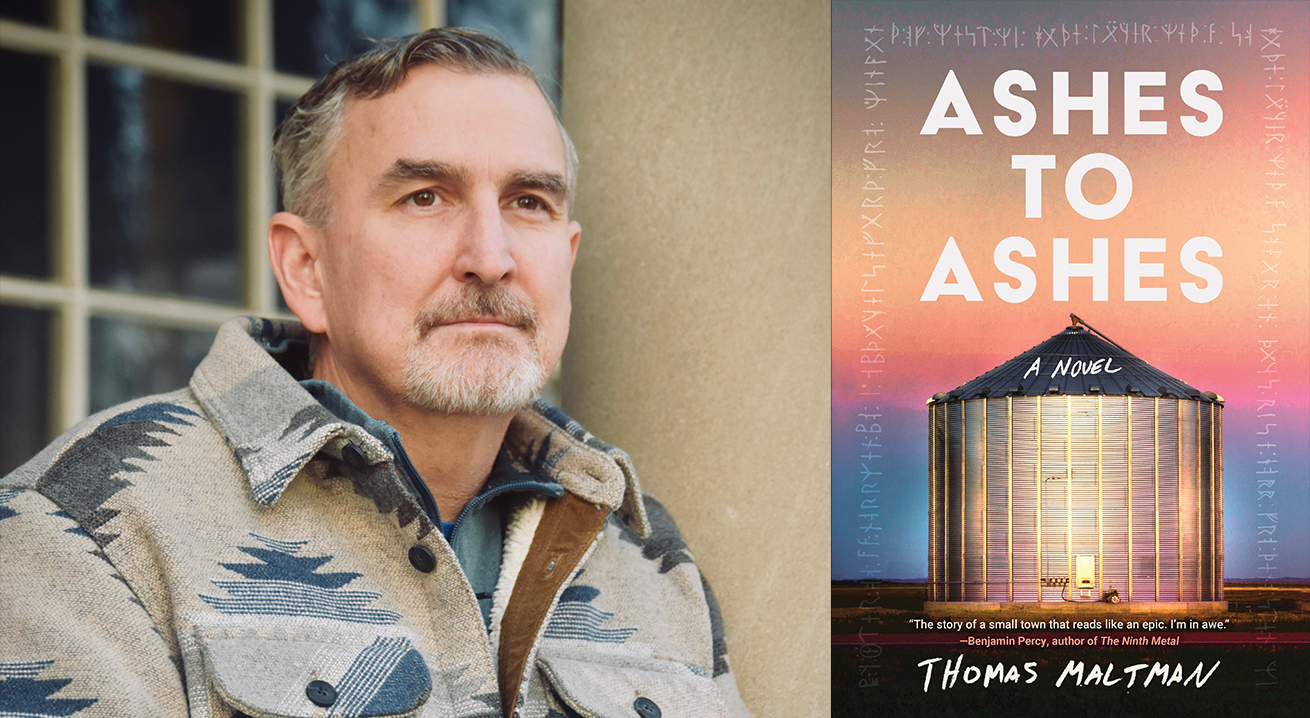
Thomas Maltman’s latest novel, Ashes to Ashes (Soho Press, 2025), largely takes place against the backdrop of a Lutheran congregation. Maltman—whose spouse, Melissa, is pastor of Servant of Christ Lutheran Church in Champlin, Minn., where he serves as a confirmation faith guide—drew on his own congregational experience when writing the book.
All four of his award-winning novels—including The Night Birds, Little Wolves and The Land—grapple with themes of violence and injustice, and the empathy and understanding that provide their counterpoints, in the rural Midwest. Living Lutheran interviewed Maltman via email about Ashes to Ashes and how he arrived at its unique concept.
Living Lutheran: How do you describe Ashes to Ashes to readers?
Maltman: One bookseller introduced my novel like this: small-town magical realism, misfit teenagers and a Viking saga all rolled into one. I love that summary!
The book begins with the premise that members of a small, rural Lutheran congregation are unable to wash off the ashen crosses applied to their foreheads on Ash Wednesday.
What resonated with you about this idea?
While I’m married to an ELCA pastor, I didn’t grow up Lutheran. My first ever Ash Wednesday experience proved unforgettable for several reasons.
First, my wife forgot to order the bag of ashes needed for the service. These are supplied by a liturgical company that mails them to the church. So she enlisted me to help make the ashes the night before. There we were in the garage of the parsonage. We had an old Folger’s can that I crammed in with fronds from the previous year’s Palm Sunday service. Those palm leaves wouldn’t catch fire at first, so I kept pouring lighter fluid on them until they went up with a whoosh! At the service the next night, the ashen cross that Melissa marked people with didn’t wash off right away. The cross lingered, as if the congregation had been imprinted. Eventually, the marks did wash away, yet I never forgot that first Ash Wednesday.
Every year afterward I kept wondering, what would happen … if the ashen cross marked on people didn’t wash away? Regardless of what you believe, how would you live if every day you woke up to a fresh reminder of your mortality? How would you behave toward others seeing that mark on them? Would you think you were blessed or cursed? Would you feel called to do something you’ve never done before?
The story combines themes of rural ministry, ancient mythology, mysticism, mystery, COVID-19 and the search for self. How did you decide to focus on these areas?
In the book of Ecclesiastes, one verse speaks of a triple-braided rope, which cannot easily be broken. I love braided narratives for this very reason. I knew in the beginning that the primary braid or story strand would focus on a worshiping community marked with ashes—and especially three teenagers, one of whom firmly believes the mark is a sign from God.
“This may be the most Lutheran novel I have ever written.”
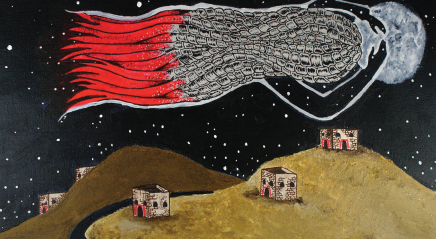
Another braid explores the legend of the Kensington Runestone, which some historians believe was carved in Minnesota by Viking explorers who came here in 1362—though many scholars consider the stone a fraud. Why do people believe what they do? This is one of the central themes of the novel, which also imagines what might have happened if Vikings had come here 100 years before Columbus. What would the world have looked like then? These three braids weave together to make what I hope is a memorable story.
How does your faith inform your writing?
In graduate school, I took a class in memoir, and at first, I didn’t know what to write about. “You’re married to a Lutheran pastor living in the rural Midwest,” my professor told me, “why not write about that?” I did, and I was surprised by how much those early essays resonated with readers.
For a time, I considered going to seminary myself, but I realized I could speak to people through my stories. All four of my novels center spiritual questions in the narrative: Why does God allow suffering? How do we explain the problem of evil? What do we do about fundamentalism, which can lead believers astray? I became keenly aware of some of the reasons why people lose their faith, and I wanted my stories to also speak to them.
How do you hope readers—and Lutherans, especially—will engage with Ashes to Ashes?
Since Lent is a time of spiritual renewal and reflection, I hope readers find grace and healing in these pages. I wrote the novel during a fraught time in our nation’s history, at the start of the COVID lockdowns. I wanted to write a story that would feel like a refuge for readers, even if hard things happen in the narrative. Set during a Lenten season, there are 40 chapters in Ashes to Ashes to mirror the 40 days of Lent. This may be the most Lutheran novel I have ever written.
In the book Mystery and Manners: Occasional Prose, Flannery O’Connor describes the role of faith in writing like this: “Your beliefs will be the light by which you see, but they will not be what you see and they will not be a substitute for seeing.” I consider our faith a marvelous mystery, one I hope readers also experience through my stories.