 Logout
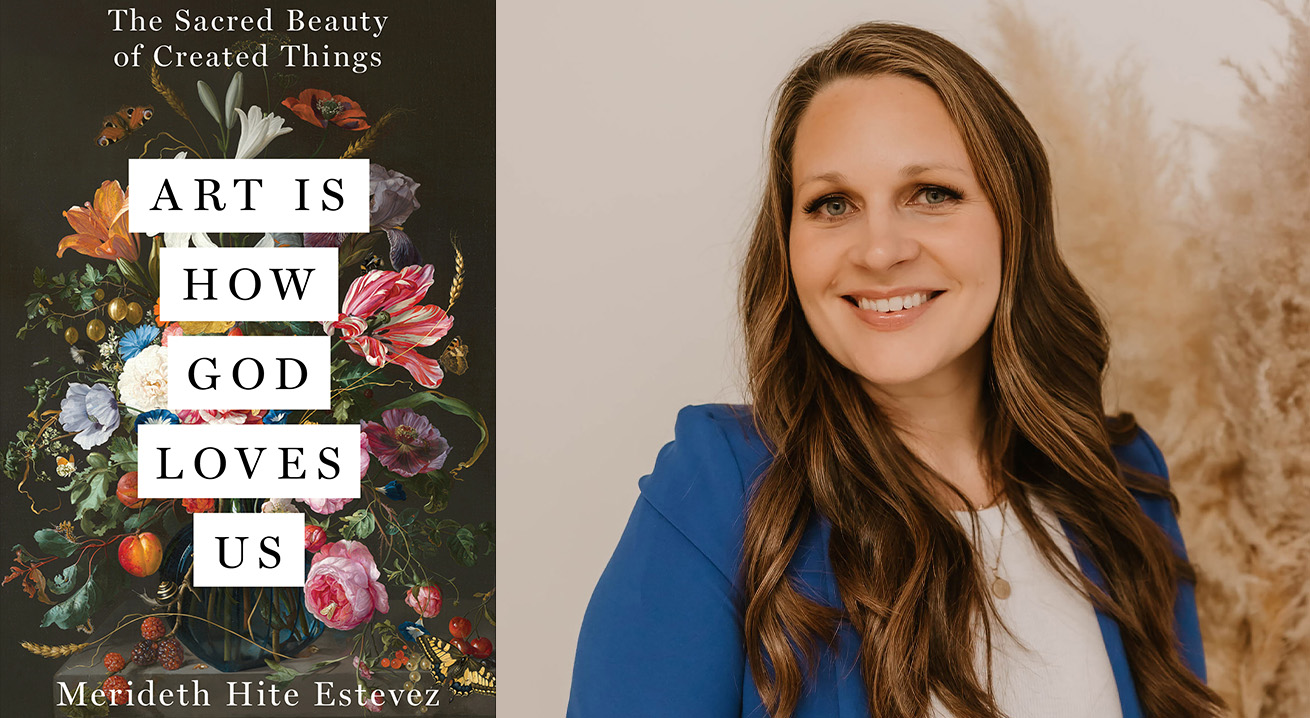
As a professional oboist, Merideth Hite Estevez had always thought of herself as an artist. At a certain point in her career, however, she realized that she was pursuing artistic perfection rather than experiencing art as the spiritual practice it had once been for her.
Today, as a musician, creativity coach, founder of Artists for Joy and artist in residence at Kirk in the Hills, a Presbyterian Church (U.S.A.) congregation in Bloomfield Hills, Mich., Estevez helps others connect to what she came to understand: that art is an opportunity for us to connect with God and others, without having to prove anything.
Living Lutheran interviewed Estevez by email about her new book, Art Is How God Loves Us: The Sacred Beauty of Created Things (Broadleaf).
Living Lutheran: How do you describe Art Is How God Loves Us to new readers?
Estevez: Art Is How God Loves Us is an invitation to consider creation and creating as a gateway to God’s love. Each chapter is based on a work of art—from music to architecture to poetry to rivers and sunsets—that was a spiritual gateway for me. It’s a meditation on the power of art, human-made and natural.
How did you decide to write a book on that topic?
As a classically trained musician with degrees from some of the best schools in the world, I’ve spent my life chasing perfection—aiming for a beautiful tone, precise execution and an impossibly high artistic standard. It wasn’t surprising that somewhere along the way, I found myself creatively lost and spiritually adrift. Even though I was a lifelong Christian, at some point in my training, music moved from a spiritual practice through which I felt God’s presence to a tool for measuring my worthiness. I realized that focusing only on perfection stripped art of its true purpose: connection with an Artist God.
In my work supporting other creatives as a coach, as well as my own spiritual journey, I kept coming back to the idea that beauty isn’t something we have to earn or strive for—it’s a grace already given. Art is not an elite human accomplishment; it is simply atoms responding to transcendence (ART), a language of divine pursuit. I wanted to write a book that reframes creativity and created things not as a high-pressure performance or out-of-reach academic exercise but as a sanctuary—a place where we can experience God’s love without having to prove anything.
How did you land on structuring the book in its three distinct parts?
The three-part structure mirrors the trajectory of the creative life and the spiritual journey:
“Spark”: The chapters in this part explore the initial awakening—those moments of wonder, awe and play where creativity or beauty first grabs hold of us and opens our hearts to something bigger.
“Shadow”: Part 2 was my favorite (and was most difficult) to write. It invited the reader to hold space for the harder, heavier realities—grief, self-doubt, longing, despair and dry seasons. It honors the truth that art doesn’t just shine in the light; it gives us a container to process pain and find sacred presence in the dark.
“Source”: The last part anchors us back in the divine origin of it all. It’s about integration—recognizing God as the ultimate creator, Jesus as “Creator Sets Free” (his name in the First Nations Version of the New Testament) and seeing our own creative and created lives as a continuous, grounding connection to that source.
You also delve into the idea of art being active—communal and lived. How have you found that to be a necessary aspect of your understanding of art?
For a long time, I thought of great art as something static and unmatchable—a finished piece on a museum wall or a pristine recording I’d never live up to. But Art Is How God Loves Us is about art as a living, relational encounter. Creation wasn’t a one-time event that happened in Genesis and then stopped; it’s an ongoing, dynamic spiral, a song that God is still singing into the world every day through rivers, sunsets, poetry and even human hands.
Art Is How God Loves Us is about art as a living, relational encounter.
When we view art as communal and incarnational, it shifts from an isolated accomplishment to a form of active communion. Whether we’re making something with our hands, gathering in a pew or letting our tears flow from hearing beautiful music, we aren’t living and creating in a vacuum. We are stepping into a sacred conversation that has been going on long before us and will continue long after us.
That shift is essential for artists but also for anyone creating a life: it takes away the pressure to be original or perfect or talented or good enough. You don’t have to invent a whole new melody; you simply have to offer your honest, lived experience—your joy, your grief, your very human, flawed self—to the chorus that’s already singing. It reminds us that our individual creative expression isn’t just for us; it’s how we belong to God and to one another.
Could you describe the “ars nova” prompts that close each chapter? How do you hope readers engage with them and the study guide to personally experience the book’s themes?
Ars nova means “new art,” used throughout time to name art moving in a new direction. At the end of each chapter, the ars nova prompts serve as practical, gentle invitations to step out of reading mode and into doing or noticing mode.
They aren’t rigid assignments or artistic tests—you don’t need to consider yourself an artist to do them. My dream was that these simple, contemplative practices could help you integrate the chapter’s theme into your actual day and make art more accessible. Whether used individually or alongside the study guide in a book group, my hope is that these prompts move the ideas from your head into your hands and heart, helping you encounter God’s love through created things in real time.