Logout

Editor’s note: One way the ELCA is a connected church is through Lutherans’ shared love of music. As Reformation Day approaches, we’re sharing a series of articles exploring how Martin Luther’s musical influence connected congregations in the past and continues to do so today; readers’ reflections on their favorite hymns; and the 20th anniversary of Evangelical Lutheran Worship. In today’s post, we look at Gen Z’s ties to our historic liturgy and theology.
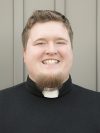
I wasn’t raised Lutheran. In fact, I wasn’t even raised Christian, except perhaps nominally. As a child, I attended church for a few years, but after some unhealthy experiences, my family stopped attending. I stepped away from the faith as well—for good, or so I thought.
In high school I began feeling a pull toward the Divine. I had always believed in God but wanted to know more about who God is. So I began researching every religion I could learn about. I discovered many beautiful things, but by the time I arrived at college, I felt the Spirit calling me in a different direction.
Christianity was the only religion I had never given a chance. But as a sophomore, I felt God place in my heart the notion that this religion could be different from what I was raised with.
To learn more about Christianity, my girlfriend (now wife) and I made a list of 10 churches to visit. Holy Trinity Lutheran Church in Muncie, Ind., sat at the top of the list solely because, as a student of history, I had always found Martin Luther to be compelling and was drawn to Lutheranism’s historical connection to the early church, the Confessions and Scripture.
One Sunday morning, we decided to walk through the doors of a new faith community, and the rest, as they say, is history. From the moment we arrived at Holy Trinity, we were embraced by a love we had never experienced in a church before. The pastor and the congregation were so inviting, and we encountered God’s grace in a way that felt tangible and deeply personal. The beauty of the worship also took our breath away.
Several Gen Zers have shared with me their profound spiritual experiences of the liturgy and how it has been formative for their faith.
We began attending Holy Trinity as often as our schedules allowed, and the community became a second family to us throughout our college years. Over time we were baptized, were married and began serving on ministry teams. We fell in love with the congregation and, more important, we fell in love with Jesus.
Holy Trinity followed the historic liturgy, which was new for both me and my wife. You could feel God moving in the service—the historic hymns, the ancient patterns, the means of grace (God coming to us in word and sacrament). All of it left a mark on us and formed us into the believers we are today. The community and its liturgy were so transformative that, after a few years, I received the call to attend seminary. Now I am an ELCA pastor.
A formative experience
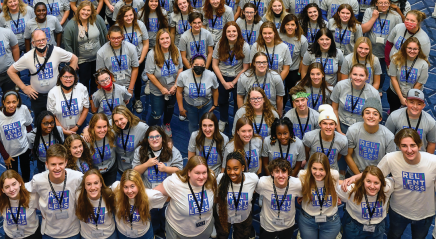
It’s important to note that my wife and I belong to Gen Z, which includes people born from 1997 through 2012. We began attending church only in our late teens and early 20s, but time has proved that we aren’t alone in our experience. Over the past two years of my ministry, we have welcomed into the congregation a variety of young adults, many not raised in the ELCA or Christianity in general.
There are many reasons why a young adult might walk into an ELCA congregation. Based on my experience and that of the young adults who now attend the congregation I serve, a couple of reasons stand out above the rest. One is Lutheranism’s historic liturgy and theology. Several Gen Zers have shared with me their profound spiritual experiences of the liturgy and how it has been formative for their faith. One couple told me they had finally found their spiritual home because of the ancient worship.
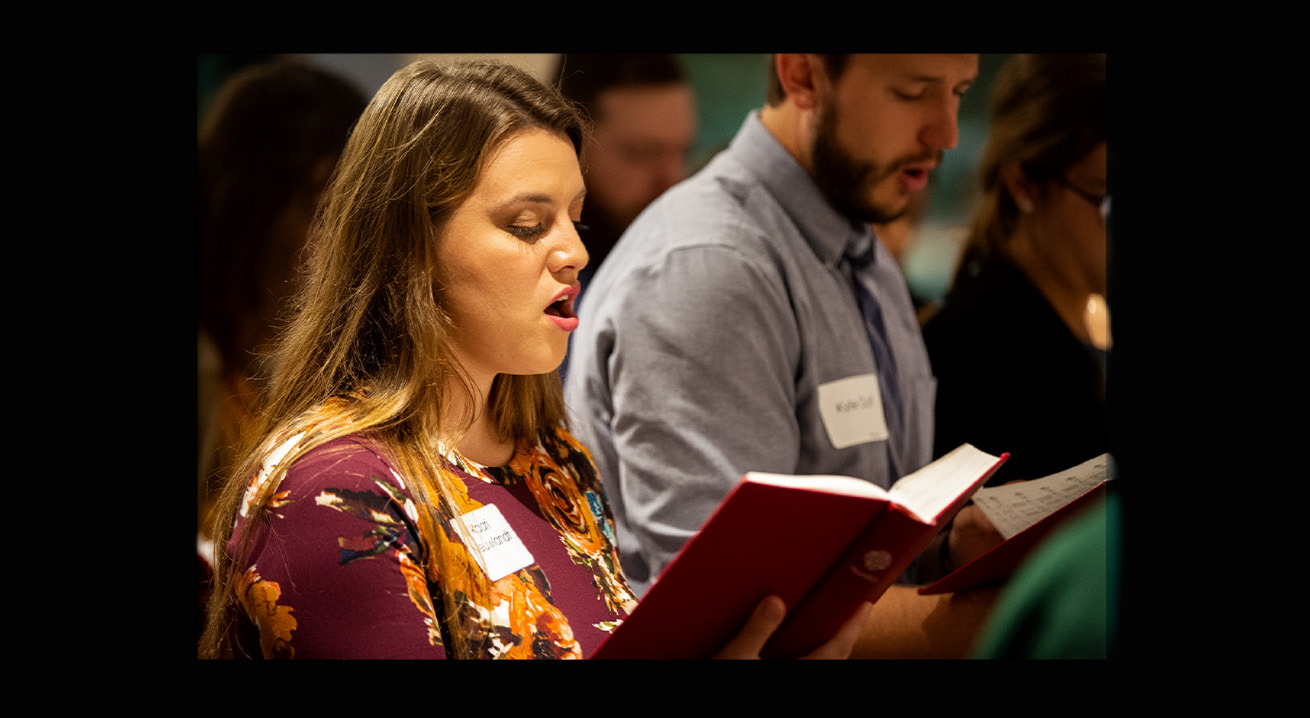
The liturgy is a communal activity. The community comes together to encounter God by singing together, praying together and receiving the sacraments together.
As Gen Zers, we have been raised in a world that feels increasingly shallow and prone to unpredictable change. It’s hard to feel grounded when so much of society is fixated on social media, relationships are built online rather than in person, and family members live farther and farther away from each other. With increasingly busy lives, we feel as if we never have time to stop.
The historic liturgy provides the grounding we are longing for, allowing us to slow down for even just an hour so we may encounter God. I know it certainly did for my wife and me. By following these ancient practices, we are rooted in something bigger than ourselves, something that connects us to the saints who have gone before us, something ancient yet timely.
A pattern of life
It’s comforting to know that, for centuries, the liturgy, with its hymns and, most important, the sacraments, has provided a pattern of life that has shaped and comforted believers through their own times of turmoil, through the ways in which they experienced the world changing under their feet. It helps us realize that we aren’t the only generation to feel that the world is changing and that, just as the liturgy has grounded people’s faith for centuries, it continues to ground our faith today.
It is this depth that I and many others find to be so powerful. The liturgy doesn’t feel gimmicky. It feels completely authentic, which matters a lot. The same is true for our theology. Our confessions proclaim a biblical theology, connected to the early church, that carries depth and meaning and is unbelievably relevant to our contemporary world. Ours is a theology that has been pondered over and lived out for centuries and still carries meaning for the world today.
Above all, the liturgy is a communal activity. The community comes together to encounter God by singing together, praying together and receiving the sacraments together. At its best, the liturgy brings together a strong community by placing Christ at the center. This is exactly what I and many others have so powerfully experienced—a community, rooted in Christ, that makes us feel welcomed, supported and profoundly loved.
When you combine the depth of Lutheran theology with the authenticity of the historic liturgy, you find, just as we did, that God has a way of transforming your life, surrounding you with community and shaping you to be the disciple God calls you to be.