 Logout
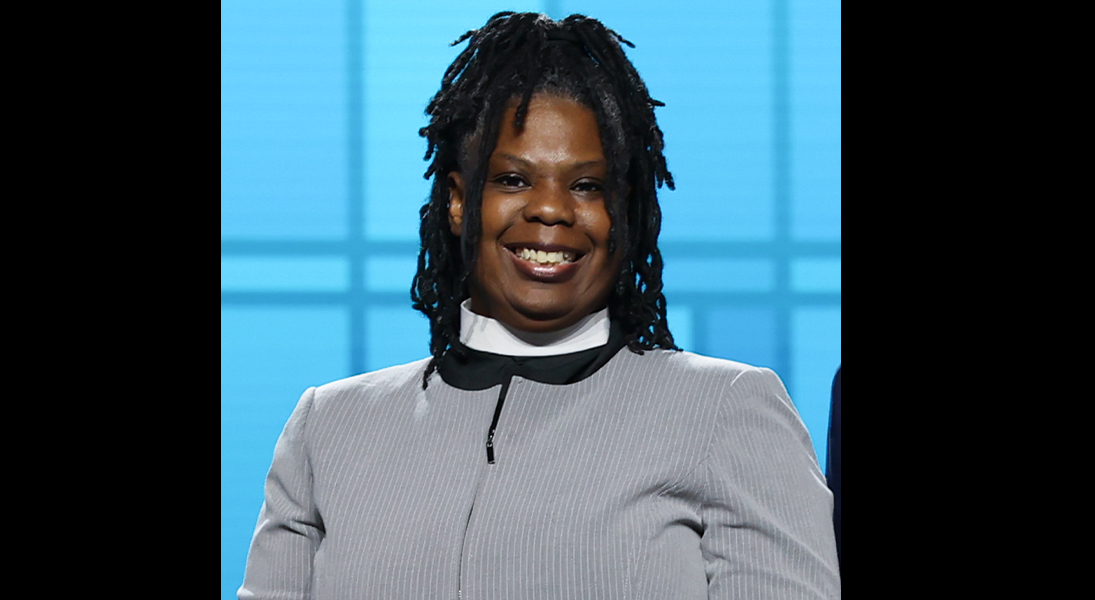
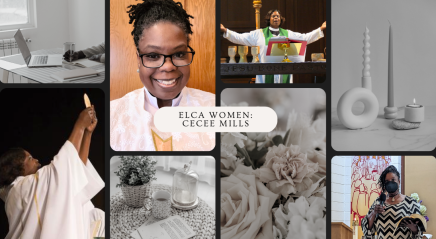
Despite the fact that Lucille “CeCee” Mills preached her first sermon at age 9, she didn’t always plan on pursuing ordained ministry. Like Yehiel Curry, presiding bishop of the ELCA, Mills first served the church as a lay leader. But as each new door of leadership opened, she listened for where the Spirit might be calling her next.
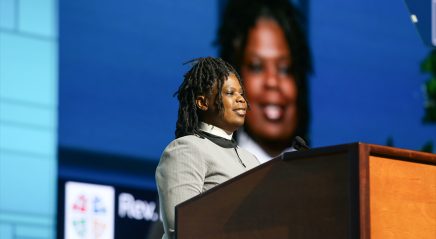
The most recent call came in August, when Mills was elected to a six-year term as secretary of the ELCA by the Churchwide Assembly in Phoenix. Prior to her election, she had served the ELCA North Carolina Synod as assistant to the bishop for the call process and as interim director for evangelical mission. Before that, she worked as an interim pastor, as a program associate for ELCA African Descent Ministries and as pastor of Rejoice Lutheran Church in Chesapeake, Va.
“I started out in a congregation that was a children’s center initially,” Mills said of her home congregation, Prince of Peace Lutheran Church in Greensboro, N.C. “And because of that, we weren’t the church of the future, we were the church. And it evolved into an organized congregation.”
Growing up, it was instilled in Mills and others at Prince of Peace that everyone could make an impact on the church’s ministry, regardless of their age or background. “Being part of it was seeing that the imagination is the only limitation of what God can do with [our] gifts,” she said. “That was our only inability to see that there is something possible in each and every person, whether that person is someone who was formally educated or learned through life circumstances.”
“When he said that to me, I realized that that’s what I felt the yearning of the Spirit to do.”
As a young adult, Mills became a lay leader at Prince of Peace. She imagined that she would end up as a lawyer and serving the church as an attorney. One day, Henry Boschen, then mission developer for the North Carolina Synod, sought Mills’ opinion on a disagreement happening in the congregation.
After discussing the topic, Mills said Boschen asked something else. “He said, ‘Now that I’ve said that, let me ask you a different question: Have you ever thought about being a pastor?’ “When he said that to me, I realized that that’s what I felt the yearning of the Spirit to do.”
Despite her interest, Mills worried that her lack of a degree might prevent her from becoming a minister. “I talked with Pastor Beth Kearney, who was an assistant to the bishop then, and had seen me throughout my childhood,” she said. Kearney wasn’t surprised by the situation, Mills said.
“She said, ‘Well, yeah, of course—we always knew you could be a pastor,’” Mills remembered. “And that was my whole story throughout my seminary experience, was this series of holy exceptions that showed me that God wanted me as I was.”
Mills pursued certification from the Theological Education for Emerging Ministries (TEEM) program, which prepares individuals for ordained ministry in the ELCA with a focus on emerging ministry contexts such as ethnic-specific, multicultural, and urban and rural settings. She earned her certificate from Lutheran Theological Southern Seminary in Columbia, S.C., in 2002 and was ordained two years later.
“For such a time as this”
The same openness to God’s call that Mills had felt as a child guided her during each stage of her ministry. “I will go wherever God opens for me,” she said. “God opening this for me was a huge confirmation of my sense of call and staying in this church.”
As secretary, Mills will interpret the constitutions and other governing documents of the ELCA and maintain its rosters, its archives, and the minutes and records of certain meetings. She considers the Office of the Secretary vital to what she sees as a new season for the church.
“There has been this yearning, I think, for the church to figure out who it is and who it is becoming,” she said. “The conversation on reconstitution, as it relates to the Commission for a Renewed Lutheran Church, alludes to a self-understanding that if we are a reforming church, we should not be satisfied at being the church of who we were.
“My role as secretary is helping to usher that process in a healthy way, in a way that includes all voices across the church.”
Mills believes the church shouldn’t look to its governing documents only in order to be “rule followers, but really listening to the Spirit to see what God is saying through those documents.” This will ensure that they “continue to express God’s Spirit for all of us, whether we are senior pastors of congregations that worship thousands or we’re solo pastors in rural congregations that worship 20, and making sure that we feel that equity and sense of call.”
She feels that her various leadership positions have prepared her for this role and this moment. “I felt like God was calling me to this unique task, to bring all the gifts that God had blessed me with, and the things that I had learned in life, and to come into [this position].”
When she was elected, Mills said, she listened and heard a clear response. “I just felt God saying, ‘I’ve called you here for such a time as this.’”