 Logout
Editor’s note: This the final installment of a three-part series of Lutherans reflecting on their families’ experience of Japanese American incarceration.
When Stacy D. Kitahata, an ELCA member and third-generation Japanese American, thinks about her parents, two distinct worlds come into focus: one rooted in city life and the other in agricultural labor. For her, both worlds were shaped by America’s “othering” of the immigrants who undertake the nation’s essential labor.
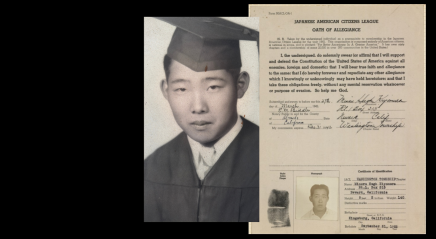
Her mother’s family lived in Los Angeles, part of a Japanese American community that built its livelihood through small businesses. Her grandparents ran a laundry, one of many immigrant-owned operations that provided essential services while offering a measure of stability. Her father’s family was part of the agricultural labor force, working on a hog ranch in Southern California and living on land they didn’t own.
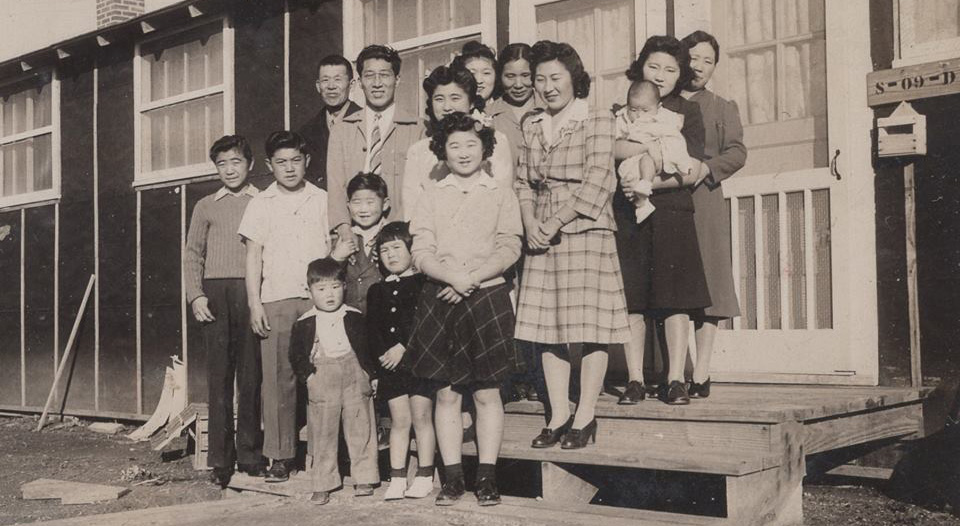
Yet, how each family made a living didn’t matter. Both were swept into incarceration camps following the signing of Executive Order 9066 after the attack on Pearl Harbor. The order authorized the forced removal of all people deemed a threat to national security.
Families were given limited time to settle their affairs before reporting to designated assembly centers. What they couldn’t carry was often lost. Kitahata said her grandfather entrusted his laundry equipment to a neighbor, with the understanding it would be returned. When they finally came home, both the neighbor and their equipment were gone.
In knowing and telling their own stories … we can see how our stories intersect. And that helps us to connect.”
Her mother’s family reported to the Pomona fairgrounds and her father’s to the Santa Anita racetrack, where they were corralled into tight spaces. “They were actually put into animal stalls,” Kitahata said. Families were given feed sacks to fill with straw for mattresses.
Without consent or prior notice, her mother’s family was eventually sent to Wyoming and her father’s to Arkansas.
“No, be quiet”
That generation rarely spoke publicly about their experience. “My mom remained in a place of, ‘No, be quiet. Don’t bring attention to us because that will bring violence upon us,’” Kitahata said.
Of course, not everyone kept silent. Within the camps, there were acts of resistance, including those who refused to affirm loyalty under government questioning—individuals historically referred to as the “no-no boys.”
In Kitahata’s family, resistance was her grandfather’s long game. Years after the laws began changing in the late 1940s and he was released from the camp, he finally qualified for U.S. citizenship. But he chose not to apply. Kitahata said this decision was the direct result of his incarceration without due process.
Yet, silence remained, in the name of self-preservation and overall safety.
But later generations, including Kitahata’s, began asking more questions as they got older. They wanted to better understand their loved ones, provide appropriate support and even seek answers as to why their resistance hadn’t been louder. These younger generations voiced disappointment and confusion with what some perceived to be compliant model-minority behavior in reporting to the camps without objection. They wanted answers at every retelling of their family’s history.
“It was my generation that asked, ‘What the heck? Why didn’t you say anything?’” Kitahata said.
A historical pattern
Prejudicial policy didn’t originate with Japanese Americans during World War II, and it certainly didn’t stop after the camps closed. Kitahata points to a broader historical pattern in the United States that began with the treatment of Indigenous peoples. “And it did not stop there,” she said.
Today, Japanese American communities are actively connecting this history of oppression to current events, particularly policies on immigration and detention.
For Kitahata, the same dynamics—fear of the “other,” economic resentment, the targeting of communities whose labor is essential but undervalued, and the devaluing of the very people in those communities—continue to surface in new forms.
“I know it is my story also—it lives in my bones and has shaped me.”
Kitahata firmly believes that remembrance is tied to responsibility. Her family placed strong emphasis on civic participation, particularly voting, as a way of exercising rights that had once been denied. “You have the right,” she said. “You better go exercise it.”
She also emphasizes the importance of understanding personal and collective histories. “Why do all people need to know their own story?” she asked. “Because in knowing and telling their own stories … we can see how our stories intersect. And that helps us to connect.”
History is not only about honoring those who lived it. It’s about recognizing patterns that continue to shape the present—and choosing how to respond. “I used to think that this was my parents’ story, my grandparents’ story and their generations,” Kitahata said. “I know it is my story also—it lives in my bones and has shaped me. I know that the ways this ‘story’ continues today can distort me or I can face it with the strength of conviction that what was deemed wrong then is absolutely wrong now.
“It is even more wrong now because we already confessed that these actions were the result of race prejudice, war hysteria and a failure of political leadership.”
Today, Kitahata and other Japanese Americans are sounding the alarm every time government actions remind them of the shameful camps in a not-so-distant American past. To ensure history does not repeat, they believe that we must listen, heed their warnings and act like the world and future generations are watching.
Stories retold
From the Ministries of Diverse Cultures and Communities (MDCC): Across this series, the stories of Gail Kiyomura, Stacy Kitahata and Deanna Kim Bassett converge in significant ways.
Each tells of families who were uprooted, robbed, and villainized because of who they were perceived to be. Each reflects the quiet endurance of parents and grandparents who rebuilt their entire lives while carrying the weight of what had been taken from them. For each storyteller, that legacy continues to shape their understanding of their own identity, belonging and responsibility.
And the lessons they shared go well beyond their own survival.
Each storyteller spoke to the importance of vigilance and recognizing when familiar, distressing patterns reappear. They called for courage to speak up when rhetoric dehumanizes and policies exclude. They reminded us of the power of community, not only to support one another but to intervene when others are at risk.
Together, their witness challenges the church to resist the kind of “othering” that made incarceration possible in the first place. It calls us to refuse the narratives that divide neighbor from neighbor. And it insists that faith alone is not sufficient to combat injustice.
For Living Lutheran readers, church leaders and congregants, the call is both personal and communal:
- Learn the history—fully and truthfully.
- Pay attention to the language shaping public life today.
- Listen deeply to the experiences of those most affected by injustice.
- Stand alongside those who are targeted or excluded.
- Live out your faith in worship, as well as in the decisions you make, conversations you enter and communities you shape.